

The Definitive Guide to Salt Chlorine Generators
 Matt Giovanisci
  November 22, 2024
 Salt chlorine generators have risen in popularity over the years as a better and easier way to keep pools clean. Some people prefer not to use chemicals in their pools, while others just want to make the cleaning process a little easier on themselves. That’s where salt chlorine generators—also called salt water chlorinators, salt chlorinators, or salt generators—come into play.
This is the ultimate guide to keeping your pool sparkling clean throughout the year that contains everything you need to know about taking care of your pool the right way. Including saltwater pools.
How Salt Chlorine Generators Work
It’s important to note that salt chlorinators do not create a chlorine-free pool. They use dissolved salt to create chlorine to clean the pool.
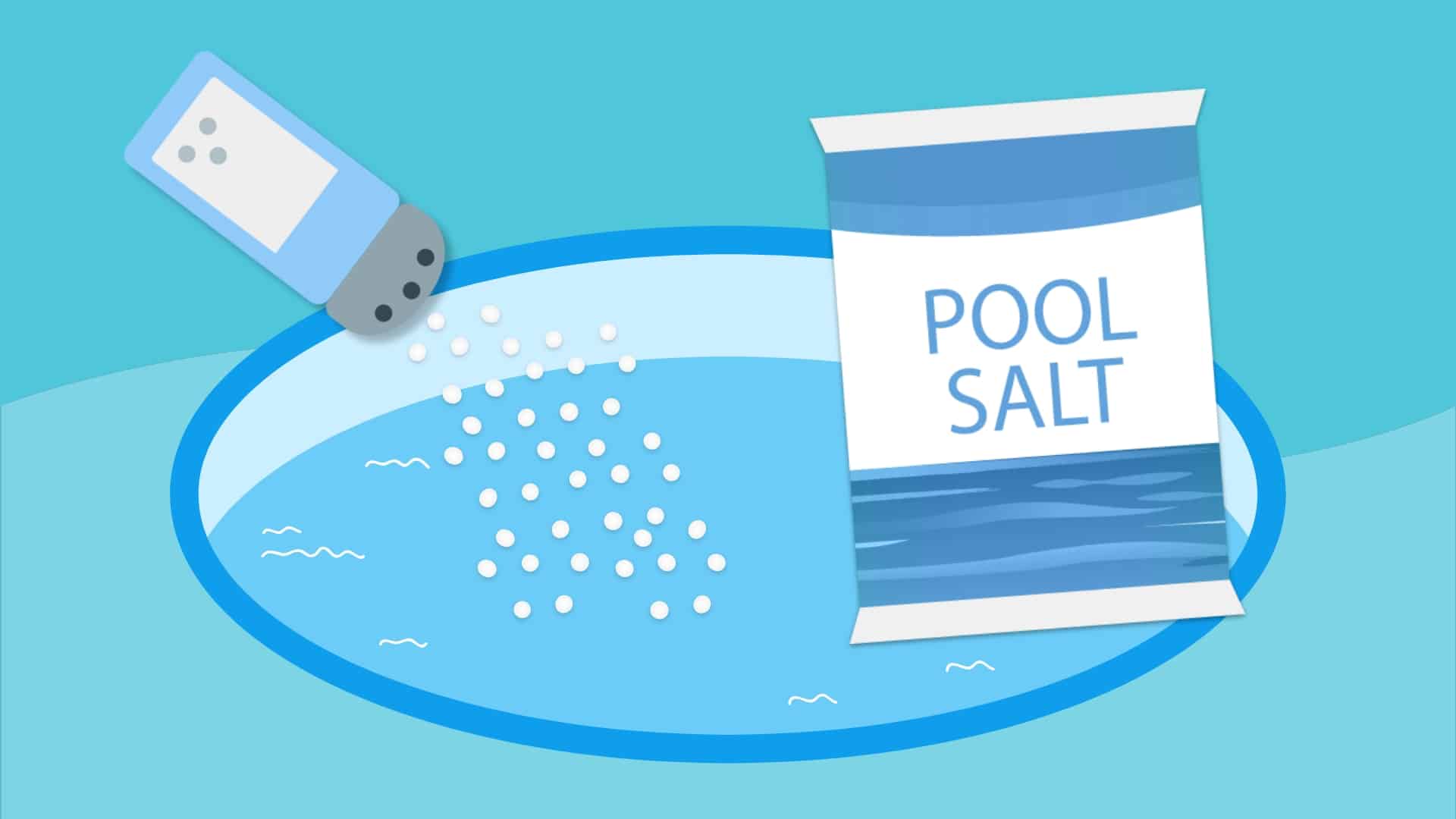
A salt water chlorinator makes hypochlorous acid (HClO) by using table salt or sodium chloride (NaCl) and electrolysis. The salt water passes through an electric current creating chlorine gas (Cl2), but you’re also forming hydrogen gas (h2) and sodium hydroxide (NaOH).
Using electrolysis, dissolved salt is converted into hypochlorous acid (HClO) and sodium hypochlorite, the sanitizing agents used to rid the water of dirt and bacteria.
Anatomy of a Salt Chlorine Generator
Now that we understand how the basic chemical process works, let’s take a deeper look at the basic parts of a salt generator.
The Cell
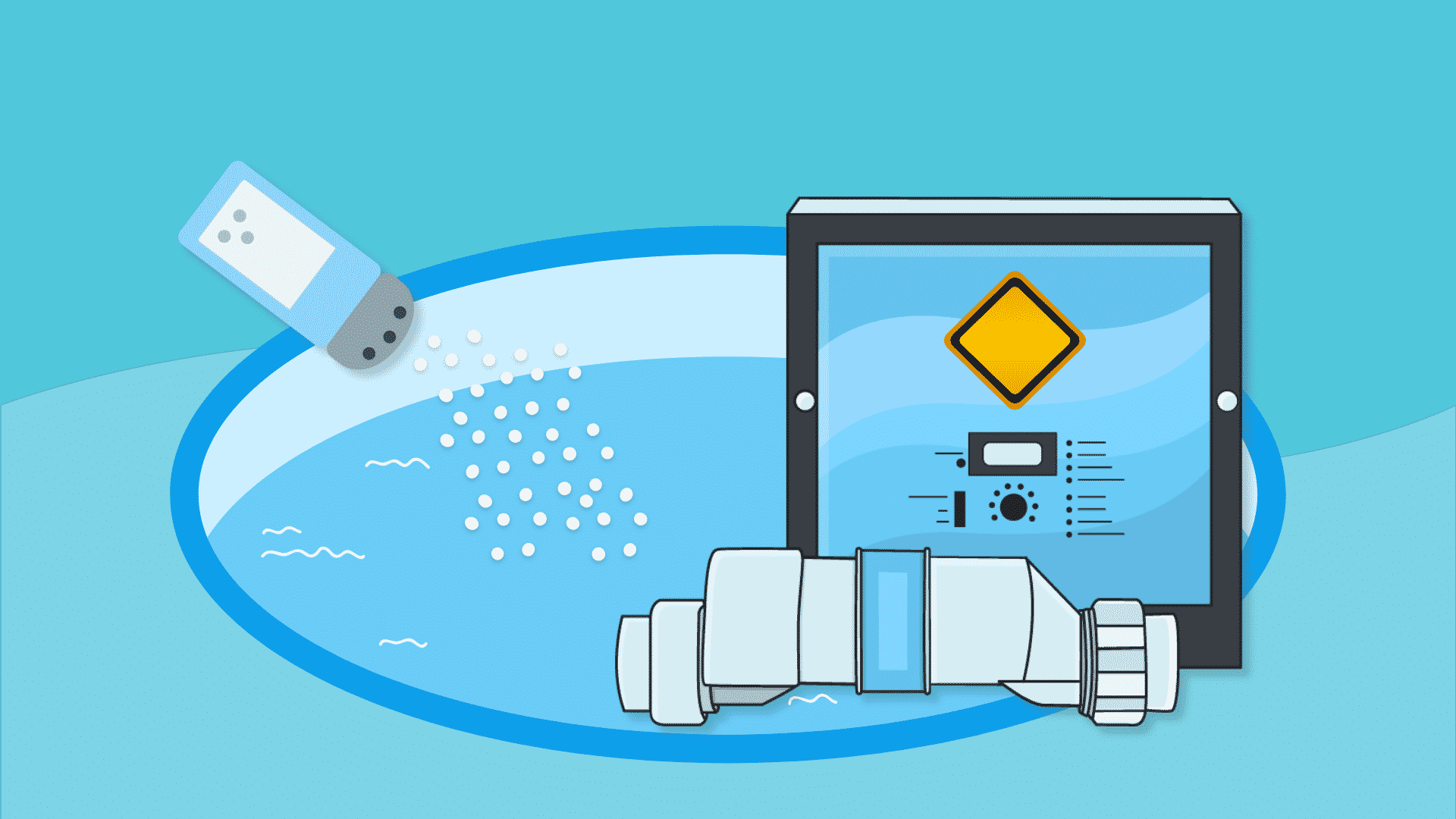
The cell is the part of the system that actually converts salt into chlorine. Water passes through the cell and over solid plates that are coated with ruthenium or iridium. These naturally occurring metals are charged from the control board and allow the salt to convert to chlorine through electrolysis.
The Control Board
The control center of the system, its primary purpose is to provide electricity to the salt chlorine generator for the conversion process. It also allows you to control the amount of electricity sent to the cell, thus allowing you to increase or decrease the amount of chlorine in the pool.
5 Maintenance Tips for Salt Chlorine Generators
To make your salt water chlorinator last, you’ll need to perform regular maintenance on it just as you do every other part of your pool.
- Try to maintain a consistent salt level of between 2,700 parts per million (ppm) and 3,400 ppm, with 3,200 ppm being ideal.
- Clean the chlorinator cell at least once a season or as needed.
- During lightning storms, turn off the chlorinator to reduce the risk of power surges that could damage the control board.
- Keep calcium levels as low as you can while still maintaining proper levels for your pool as per the salt chlorine generator’s manufacturer’s instructions.
- Only use a salt chlorinator with reverse polarity to reduce scale buildup on the cell.
How Long Do Salt Chlorine Generators Last?
A well-maintained salt water chlorinator system should last you anywhere from 3 to 7 years. When it’s time to replace the cell or the board, you can expect to spend anywhere from $500 to $1,100 depending on what part you need to replace and your particular system.
What you don’t want to do is cause them to go out before the end of their lifespan. Improper cleaning—or too-frequent cleaning—of the cell is the leading cause of early replacement.
The circuit board, on the other hand, is just like any electronic device. It could last years, or something may cause it to burn out. Making sure it’s properly covered and off during electrical storms is your best defense against early outages.
How Much Does a Salt Chlorine Generator Cost?
There’s no denying salt chlorinators are much easier to maintain compared to other filtration systems. But that convenience comes with a commensurate cost.
When installing a salt chlorine generator, you can expect to pay more for the equipment and initial setup. Since the cell and the control board don’t last forever, you can also expect higher costs when it comes time to replace them as well.
Still, that added cost can make your daily pool maintenance so much easier you may decide it’s worth it.
For the salt generator itself, you may spend between $800 and $1,000, depending on the brand. The salt is pretty inexpensive, depending on how big your pool is.
The bigger the pool, the more money you’ll spend each year on large bags of salt, but you won’t spend money on chlorine. That’s the tradeoff in the long run.

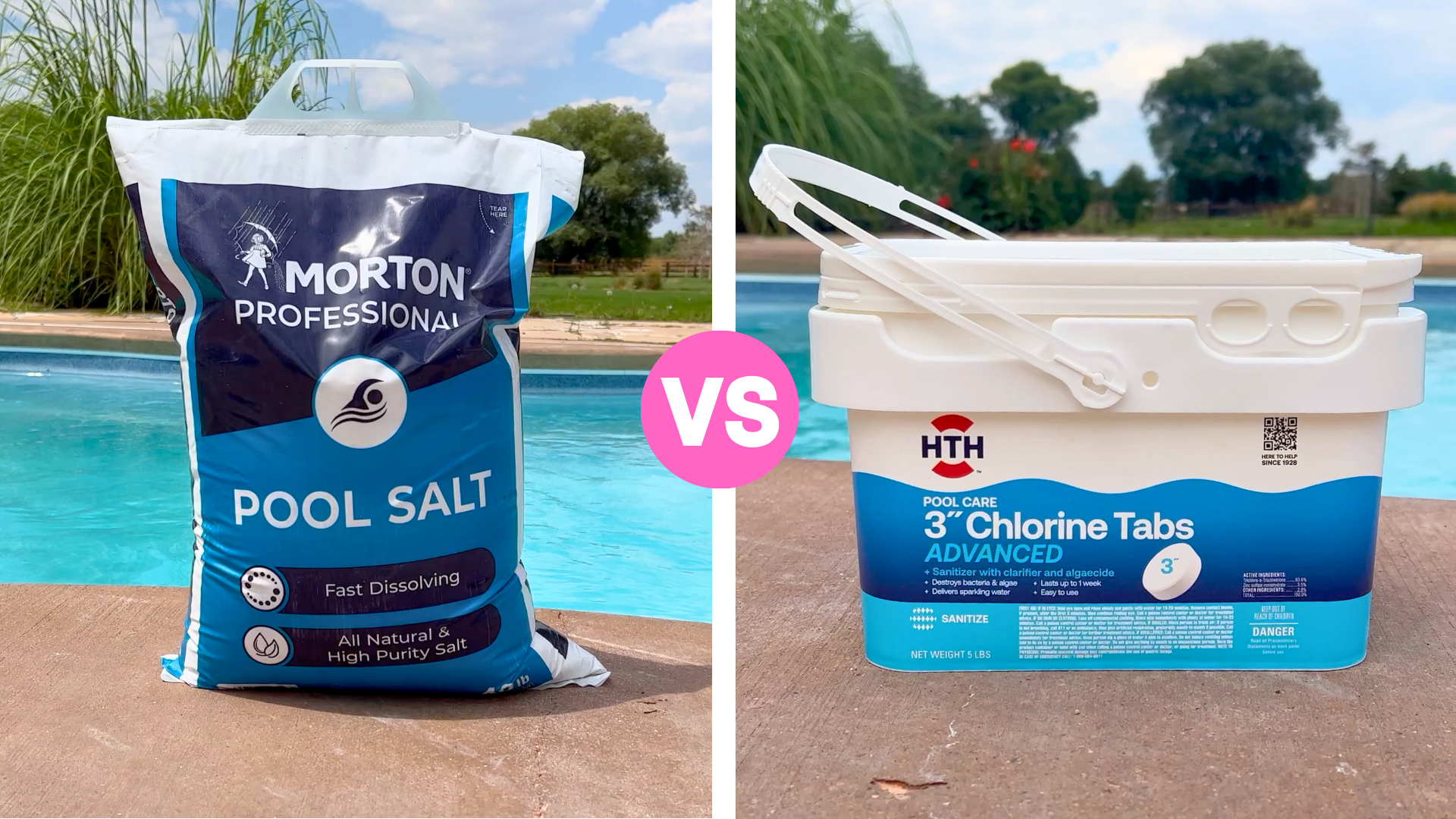
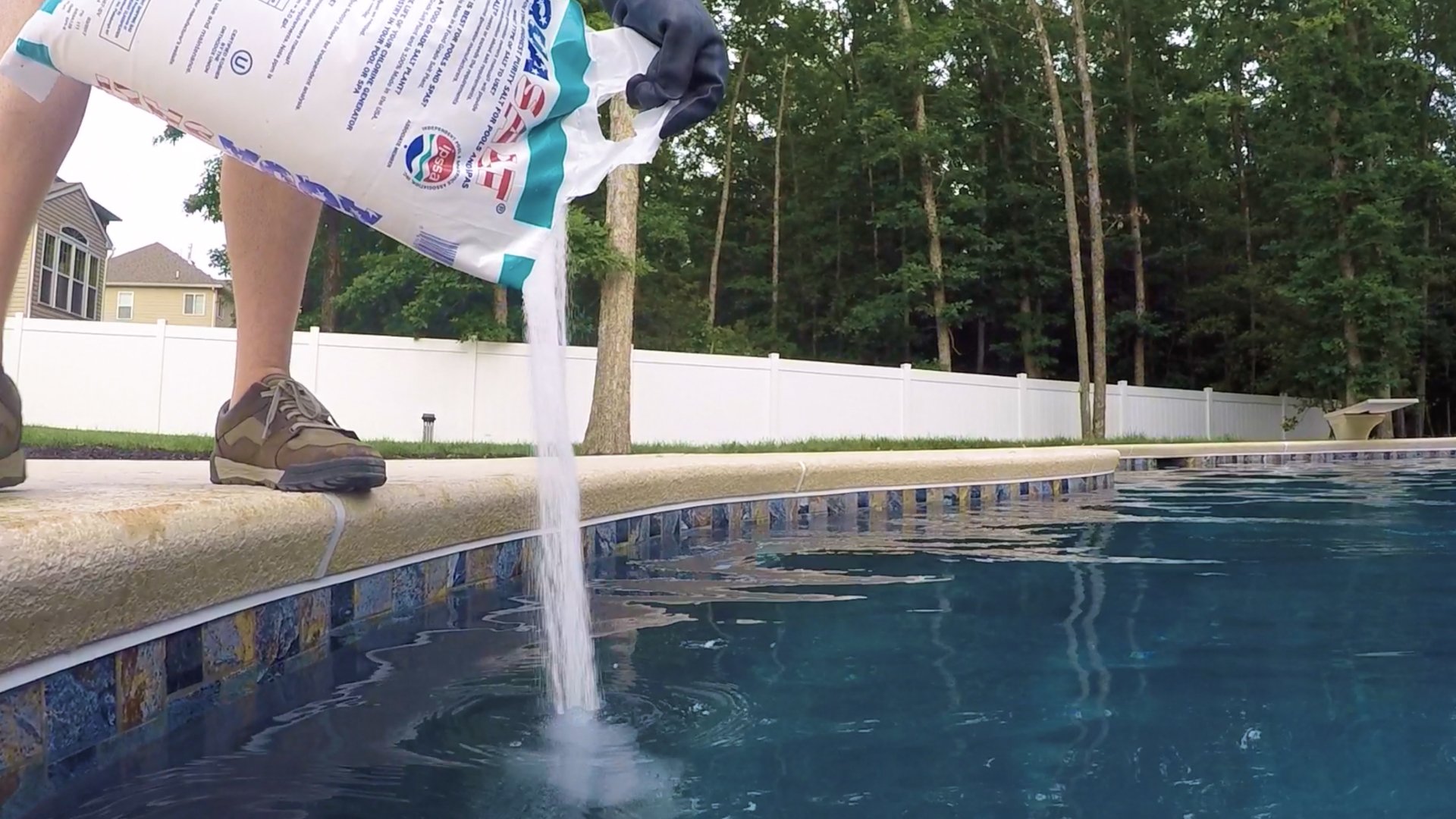
Professional Pool Salt crystallizes early to match the fastest dissolve rates on the market - no more waiting for hours for chlorine tablets to dissolve and produce beautiful clean water.
5 Reasons To Convert To a Saltwater Swimming Pool
If you’re thinking about building a new swimming pool or have an existing pool and want to convert it to salt water, consider the potential benefits.
1. Add Less Chlorine, Less Often
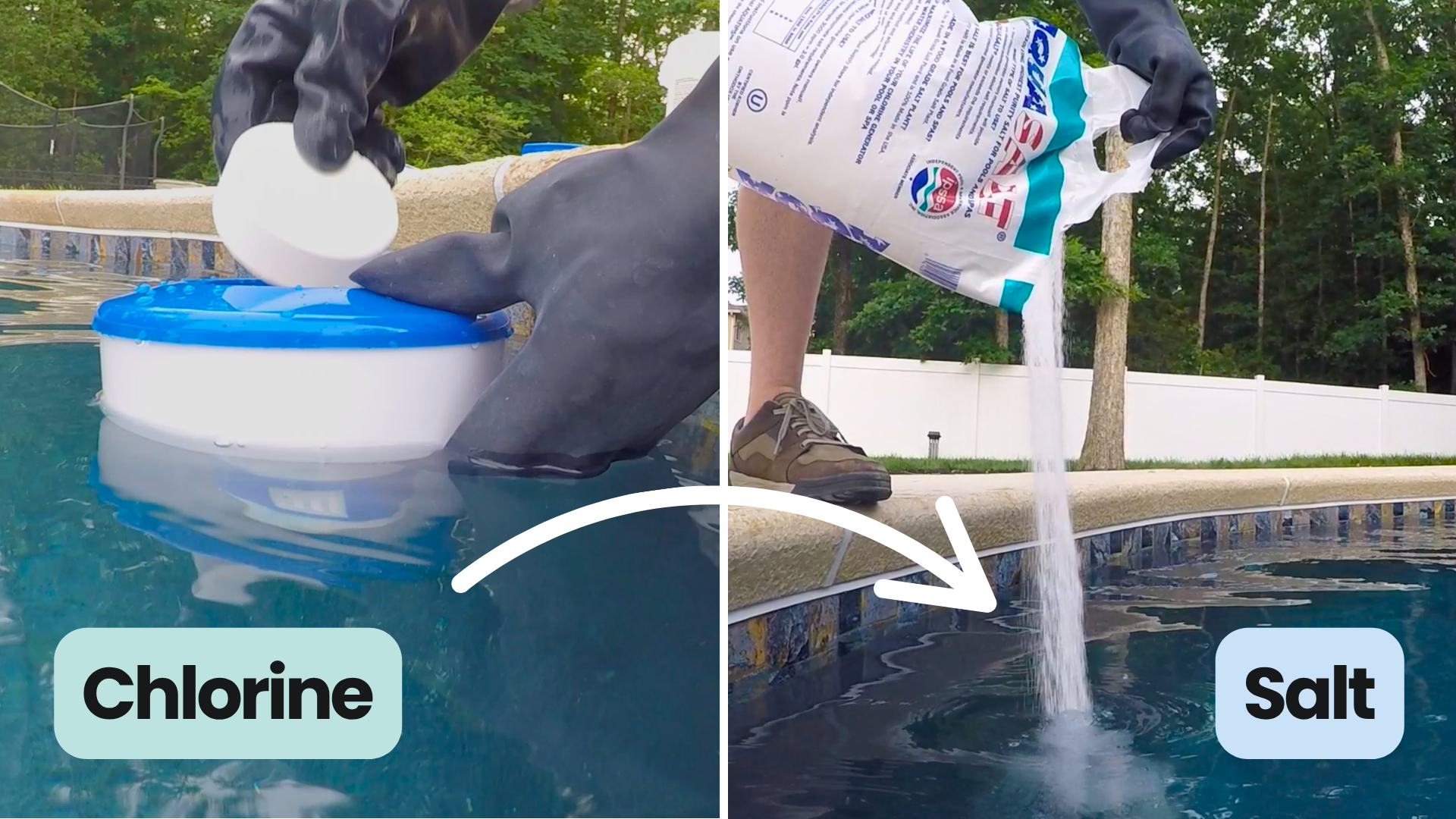
Pool owners without a saltwater chlorine generator system use liquid chlorine or tablets to maintain sanitizer levels in the pool. While effective, buying, transporting, storing, and using chlorine is not fun. For example, liquid chlorine is volatile, loses potency extremely quickly, and is dangerous to skin, eyes and to breathe.
While a salt water swimming pool may need to occasionally have the chlorine levels manually adjusted you can usually accomplish this using tablet or granular
forms of chlorine so you don’t need to use liquid chlorine at all.

Stock up and save money on chlorine tablets for the season by getting the standard 3-inch stabilized chlorine pucks.
2. Save Money On Pool Chemicals
Salt is the base ingredient used to create chlorine in a salt chlorine generator. Since salt doesn’t dissipate in the water like other pool chemicals, the initial dose of salt you put into your pool will remain there throughout the season. Only when you physically remove water from the pool do you lower the salt level.
In a regular pool season, you may need to add a single bag or two of salt to top off your system and keep the salt in the range at or as close as possible to 3,200 ppm. Even the next season you may only need to add one or two bags to start off the year.
Professional Pool Salt crystallizes early to match the fastest dissolve rates on the market - no more waiting for hours for chlorine tablets to dissolve and produce beautiful clean water.
3. Salt Water Pools Are Easy On The Eyes, Skin, and Hair
One of the biggest advantages of salt water pools is that they’re much softer on the eyes and much less drying to the skin than traditional chlorine pools.
People with skin problems, or swimmers with a sensitivity to chlorine, notice the soothing benefits of salt water systems. If you’re used to swimming in regular pools, you’ll notice less eye redness, less itchy and dry skin, as well as less bleaching to bathing suits.

4. Less Chlorine Smell
One of the biggest complaints of chlorinated swimming pool water is the chlorine smell, even after you get out of the water.
While this smell is actually a result of a buildup of chloramines in the water, salt water pool owners note markedly less chlorine smell after swimming.
5. Less Pool Chemical Maintenance
Using a salt chlorine generator will allow you to take a lot less time to balance and maintain the water in your pool.
This mostly has to do with the sanitizer being mostly automated through the salt water system, leaving you to worry only about the calcium hardness, pH balance, and total alkalinity under regular conditions.
Since the chlorine (which is what typically causes variations in pH and total alkalinity) is automated and released into the system in small and steady doses, you’ll notice fewer fluctuations in pH and total alkalinity levels, making the water much easier to manage overall.

This is a proven way to make the water less acidic when swimming in pools. This chemical helps maintain the right level of pH.
Ready To Switch Your Pool To Saltwater?
A salt chlorine generators can help you lighten the pool maintenance load, it will come with a slightly higher cost over traditional chemical-based systems.
Still, if you’re looking for a chlorine alternative, this is one of the best options out there. Why not give a salt water chlorinator a try? You may find it’s easier on you, your pool guests, and your pool.
Happy Swimming!