


How to Buy The Best Pool Heater in 2026
 Matt Giovanisci
  November 18, 2025
 Why do you want a pool heater? Hate swimming in a cold pool? Perhaps to extend the pool season. Whatever your reasons, you have three main options available to you:
- Solar Pool Heaters.
- Gas Hool Heaters (propane and natural gas).
- Pool Heat pumps.
The key to choosing the right one is knowing how they work, finding the right size for your pool, the pros and cons of each. Plus, how much money you’ll spend or save.

Stop wasting time and money on confusing water chemistry and maintenance. Our effortless system guarantees to keep your pool balanced, sanitized, and crystal clear all year. Works for all pools, including saltwater.
What is The Best Swimming Pool Heater?
The best pool heater is the one you own. But if you don’t have one yet, we’ve put together a list of some of our favorite pool heaters to help you find the perfect one for your backyard water playground.
Note: These pool heaters are available to buy on either Amazon and InTheSwim.com. Check both sites for availability. All the links are affiliate links which means if you click a link and make a purchase, we earn a commission at no additional cost to you. It helps us keep the lights on 💡
The Best Propane Pool Heater
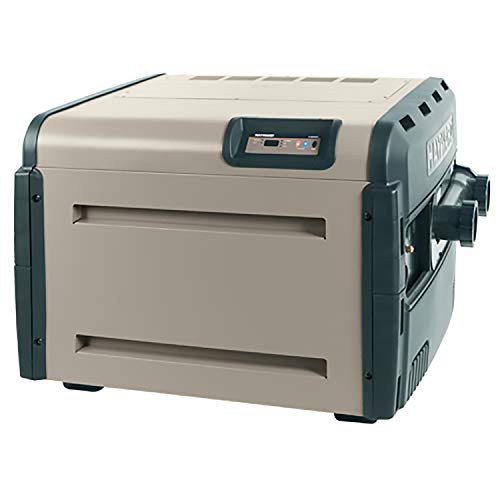
This heater is super reliable and long-lasting. The cupro nickel heat exchanger protects against corrosion caused by unbalanced water chemistry. And it provides major energy savings with low NOx emissions to meet air quality standards.
Providing 400,000 BTUs of heating power, this Hayward pool heater can heat just about any pool of any size. The system is designed for very low emissions and energy-efficient running so while your gas bills may go up, they’ll still be lower compared to other heating systems.
This gas heater has a standard cupronickel heat exchanger for superior efficiency. Its patented polymer header and bypass valve are designed for hydraulic reliability. It’s environmentally responsible low NOx emissions meet or exceed air quality emission standards in all Low NOx regions.
The Best Natural Gas Pool Heater
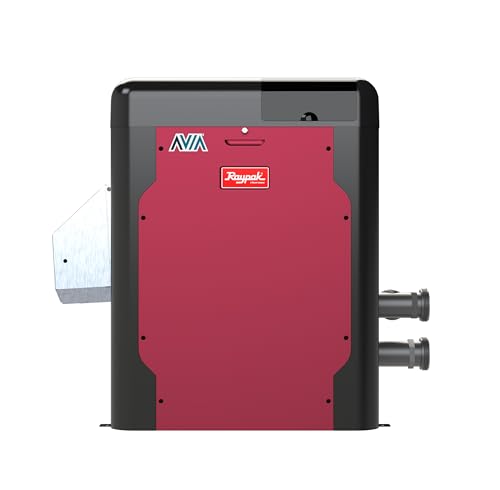
The Raypak gas heater is a high-efficiency pool heater with a small footprint. This heater includes a digital control panel (LCD) for temperature selection and heater settings.
Its compact size makes it ideal for both inground and above ground pools. The Raypak features a digital thermostat dial.
A soft opening gas valve makes lighting the pilot easy and safe, and the system delivers reliable and fast heat. The thick-walled copper heat exchanger is corrosion resistant and features a built-in bypass valve that balances the flow and adjusts for a wide range of pump sizes and flow rates. It comes with a one-year warranty.
The Best Electric Pool Heat Pump

This easy-to-install heat pump uses less energy than natural gas and propane heaters. The Hayward HeatPro Heat Pump will quickly and energy-efficiently heat inground pools.
Designed for maximum heat transfer, efficiency, and reliability, this Hayward electric heat pump puts out 140,000 BTU for reliable, even heating. It incorporates titanium counter-flow heat exchangers for optimal performance, even in harsh conditions. It also has heavy-duty, super-quiet scroll compressors and stainless steel hardware.
Its injection-molded, UV-resistant body panels are impervious to rust and deterioration. The evaporator fin is corrosion resistant as well. The round design makes it fit easily through gats, and it takes up less space on an equipment pad.
Note: If you live in a climate where the fall and winters drop below temperatures of 60º F (15.5º C), electric heat pumps start to lose their effectiveness. So if you’re looking to extend your pool swimming season into colder weather, I suggest investing in a gas pool heater.
The Best Solar Pool Heater
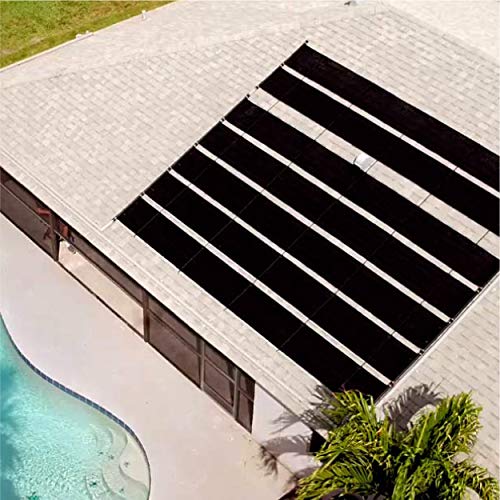
This solar pool heater features 80 square feet of solar panels that'll raise pool water temperature 6-10°F (4-6°C).
With just 80 square feet of solar panels, this pool heater system can be mounted on a roof. The polypropylene heat collector raises pool water temperature by 6°F to 10°F (4°C to 6°C). This energy-efficient system requires an installation kit, which is sold separately.
What Are BTUs: Pool Heater Thermal Units?
BTU, which stands for British thermal unit, is how pool heaters are sized. One BTU (sometimes also written as Btu) is the amount of heat required to raise the temperature of one pound of water by one degree Fahrenheit.
Pool heater outputs range from 75,000 BTU to 450,000 BTU. The amount of heat generated often depends on the type of pool heater you have.
Solar Pool Heaters
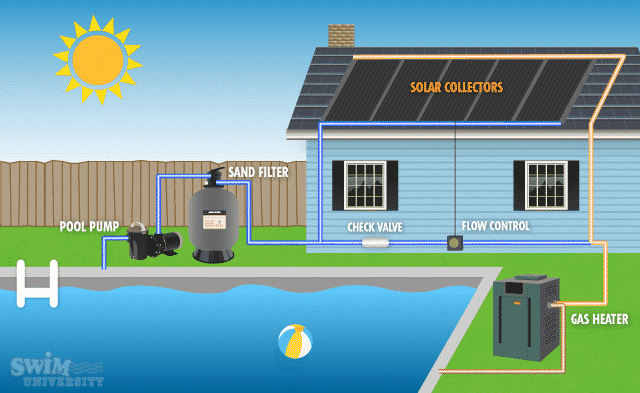
Solar pool heaters work by pumping the water from your swimming pool to your filter, and partially diverting it through solar collectors that warm the water before it goes back into the pool.
Types of Solar Pool Heaters
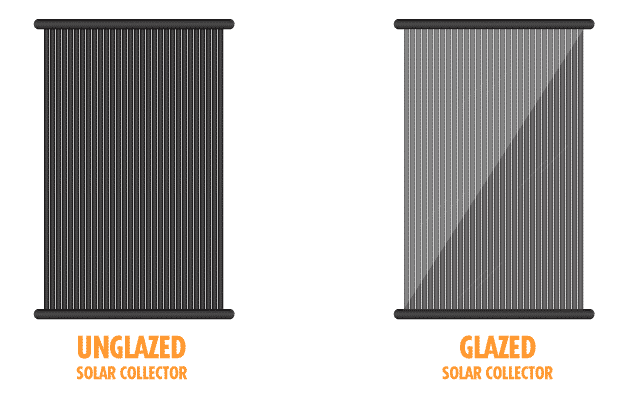
- Unglazed collectors are heavy-duty rubber or plastic panels with an ultraviolet (UV) light inhibitor.
- Glazed collectors are made with copper tubing on an aluminum plate with an iron-tempered glass covering.
Glazed collectors are more expensive, but also more durable than unglazed collectors. Both include freeze protection to protect against colder weather areas.
How Much Does a Solar Pool Heater Cost?
It usually costs between $3,000 and $4,000 to buy and install a solar pool heating system.
How to Find The Right Size Solar Pool Heater
The surface area of your solar collector should equal around 75% of your yard, more if you keep your pool open year-round—up to 100%. You can preserve yard space if your home’s roof is large enough to accommodate the appropriate number of collectors.
For example, if you have a 16′ x 32′ inground swimming pool in the southern United States, you would need a 100% equal surface area. So multiply 16′ by 32′ to get the square footage of 512. This means you’ll need 512 square feet of solar collectors.
But if the same size pool is located in the northern United States, which only has the pool open for 6 months out of the year (if you’re lucky), then you’d only need about 75% of the surface area, equaling 384 square feet of solar collectors.
You’ll also need the right size pool pump for a solar heating system. If you’re replacing your current heater with a solar system, you may need a larger pump or a separate pump to help push the water through the solar collectors.
Solar Pool Heater Pros
- Great for heating a pool in warm climates.
- Eco-Friendly and energy efficient
- Energy savings pay for the installation
- Uses a free source of energy; inexpensive to operate
- Lasts about 15 to 20 years
Solar Pool Heater Cons
- You need to have a lot of direct sunlight; otherwise, you’ll need a backup gas heater or heat pump
- Costs a lot up front; repayment can take years
- Only works when the sun is out and it heats the water very slowly
- Takes up a lot of room in your backyard and doesn’t look all that attractive
Gas Swimming Pool Heaters
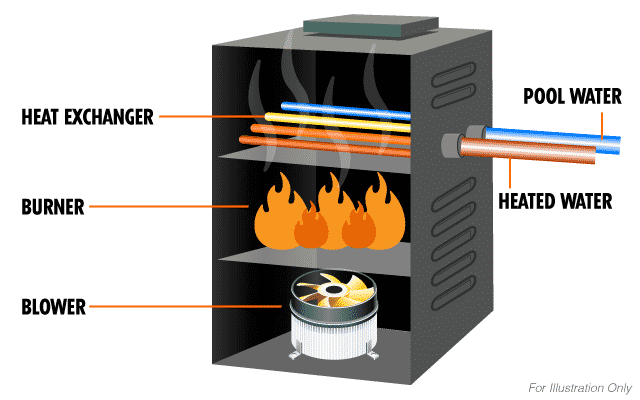
Fairly inexpensive to operate, a gas pool heater uses natural gas or propane. Water passes through while a combustion chamber burns and warms the water before returning to the pool. In other words, the water passes through a burning hot tube, then back to your pool.
Gas heaters are also efficient and will get the job done quickly. If you live up north where temperatures are cooler, you can heat the pool up quickly, and then use a solar cover to maintain the heat to cut down on operating costs.
Natural Gas or Liquid Propane Pool Heaters?
The type of fuel you use will depend on the availability and the price of fuel in your area. The good news is both types of heaters usually cost about the same.
If your home has natural gas, you can also use it to heat your pool. If you don’t, you’ll have to buy a large, ugly propane tank and install in your backyard, which will need to be filled up regularly.
On the other hand, propane is usually 2.5 times more expensive than natural gas, depending on supply and demand.
Millivolt or Electronic Ignition Pool Heaters?
Millivolt means you have a small amount of gas that keeps a pilot light lit so that it’s always available to fire up while an electronic ignition lights the burners with a spark, just like a gas grill.
We recommend going with an electric ignition so you use less fuel and don’t risk a gas leak.
Low NOx vs. Normal Emissions Pool Heaters
A “Low NOx” gas heater is designed to release low emissions, which also makes them more efficient than regular pool heaters. This also means your pool will heat more quickly.
If that wasn’t enough of a sell for Low NOx, they also meet the NOx Emission standards set by the California South Coast Quality Air Management Commission for 2001 and the Texas Natural Resource Conservation Commission Code. So if you live in those two states, you’ll need a Low NOx heater anyway.
Other Gas Pool Heater Features
- Dual vs Single Thermostat – Most heaters have dual thermostats for both a pool and a spa. However, smaller heaters will only have one.
- Wind Resistant – Look for heaters that have either a forced draft system or a wind-resistant design. This eliminates all outside weather variables that can affect the heating of your pool.
How Much Does a Gas Pool Heater Cost?
On average, the cost to run a natural gas heater is $300-$600 per month, and possibly even more for a propane heater.
New inground pool gas heaters can cost between $1,500 and $3,500, depending on the size, type, and brand.
How to Find The Right Size Gas Pool Heater
Just like any pool heater, you need to first know the surface area of your pool in square feet. You’ll also need to figure out the average air temperature in your area.
- Decide what you roughly want your pool water temperature to be and what the average temperature outside will be during the coldest month.
- Subtract the average temperature for the coldest month from the temperature you want your water to be to figure out the temperature rise needed.
- Calculate the pool surface area in square feet by multiplying the length and the width of your pool.
- Then, use this formula to figure out the BTUs you’ll need your heater to put out: pool area (sq. ft.) x temperature rise x 12.
For example, the average temperature in New Jersey during the month of October is 65°F. If you own a 16’x32′ inground pool in New Jersey, and you want the temperature of your pool to be 80°F all the time, the temperature rise calculation is:
80 (degrees) − 65 (degrees) = 15 degrees in temperature rise.
Using the BTU formula, the calculation would be:
512 (pool surface area in square feet) × 15 (Temperature Rise) × 12 = 92,160 BTUs of heat needed to be generated by your new pool heater.
Gas Pool Heater Pros
- Heats water quickly and at any outside temperature.
- Low emissions.
- Inexpensive to buy.
- The best option for large pools.
- Great for pools with an attached hot tub or spa.
Gas Pool Heater Cons
- Uses gas.
- Expensive to operate.
- Might have an ugly propane tank in your yard if you don’t have natural gas.
- Not eco-friendly.
- A short lifespan (about 5 years on average).
Do You Have Natural Gas?
We’re not trying to be too personal. We’re talking about gas lines running to your home.
Before you buy a gas heater, it’s good to know the distance from the gas meter to where the heater will be installed. Even if you’ve sized the heater correctly, depending on the distance from the meter, the gas line size may not support the heater.
Important factors to consider:
- How far is the run from the gas meter to the heater?
- What is the gas line size?
- New install—do you have power at the heater location?
By the time you’ve spent up to $2,000 for a heater, you don’t want to learn it’s going to cost $500 to $1,000 to run a new gas line. Knowing the correct size of the heater to purchase, distance, and gas size beforehand will save you time, trouble, and money. Contact your utility company to get more information before you buy a gas heater.
Pool Heat Pumps or Electric Pool Heaters
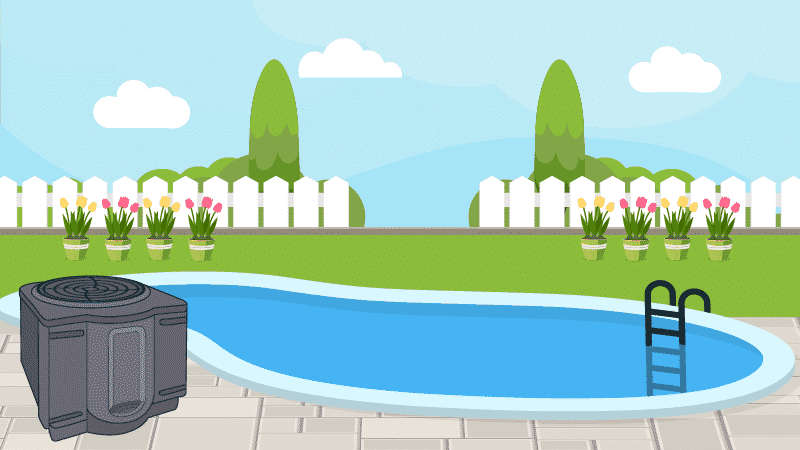
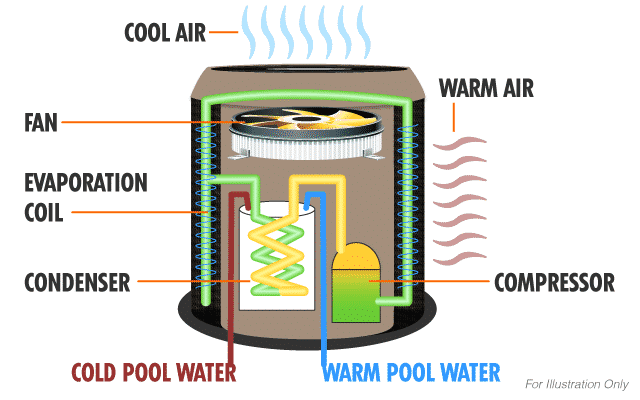
Water from your pool passes through the heat pump, just like a gas or solar heater. The heat is created by a fan that takes the outside air and directs it over an evaporator coil. The liquid refrigerant inside the coil absorbs the heat from the air and turns it into a gas.
The warm gas heads over to a compressor, which increases the heat, then make its way through a condenser. The condenser takes that hot gas and adds it to your pool water.
As the hot gas passes back through the condenser, it transforms back into a liquid and heads back to the evaporator to start the whole process again. Pretty cool, huh?
How Much Does a Pool Heat Pump Cost?
They can cost less to run than gas heaters, but may also cost more upfront because of their unique heat-generating ability. They also last longer than gas heaters, too.
Pool heat pump prices range from $2,000 to $3,000 and can go as high as $4,000 to $5,000.
Of course, the cost to run it will depend on where you live. For example, if you live in a warmer climate, it will cost less to run.
Maintaining an outdoor pool in Florida at 80°F (27°C) year-round can cost about $1,400 annually, but only about $300 if you use a solar cover.
In the Northeast United States, maintaining an outdoor pool at 80°F (27°C) from May to August costs about $1,100 annually, but only around $120 with a solar cover.
How to Find The Right Size Pool Heat Pump
Just like a gas heater, heat pump pool heaters are rated by BTU output. However, they’re also rated by horsepower (hp). Standard sizes include 3.5 hp/75,000 BTU, 5 hp/100,000 BTU, and 6 hp/125,000 BTU.
To calculate an approximate heater size for an outdoor swimming pool, follow the same steps as above for finding a gas heater size.
Pool Heat Pump Pros
- Eco-friendly; renewable energy source.
- No emissions.
- A good alternative in areas that won’t work well with a solar heater.
- Inexpensive to run.
- Approximately 20-year lifespan.
Pool Heat Pump Cons
- Requires electricity (220V outlet).
- Doesn’t work well in colder temperatures.
- Expensive to buy.
- Heats the pool water slowly.
Add a Solar Pool Cover and Digital Thermometer for Energy Efficiency
If you invest in any pool heating system, we highly recommend you also invest in a solar cover or liquid solar cover. If you imagine your pool as a giant cup of coffee that’s heated up by the pool heater, then a solar cover would act as the lid on the cup, helping to keep that heat in.
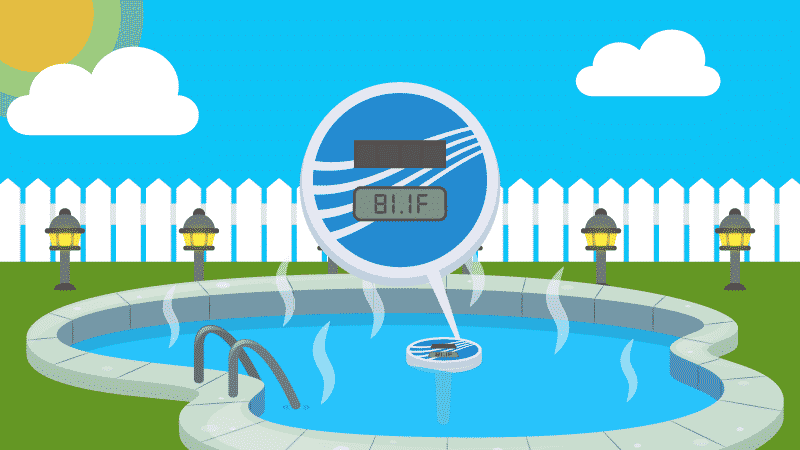
A digital thermometer is another good investment so you can keep an eye on your water temperature to help you maintain the heat. It will also help you determine what your preferred pool temperature is.
While you may assume 80°F (27°C) is right for you, your digital thermometer might advise otherwise, which could also save you money when heating your swimming pool.
What Is The Cheapest Way to Heat a Pool?
A solar cover is the cheapest way to heat a pool. By adding this floating cover to your pool during the hottest part of the day, pool owners can raise the water temperature by 10 Fahrenheit. And if you keep the cover on at night, it prevents water evaporation and cooling. This of a solar cover as keeping a lid on your coffee. Stays hotter longer.
What’s the Best Pool Heater for You?
Choosing the perfect pool heater will depend on where you live and what type of heat source is available to your home.
- If you live in the north with access to natural gas, choose a gas heater.
- If you live in the north with no natural gas, invest in a heat pump.
- If you live in the south, you’ll benefit from either a heat pump or solar heater.
If you’re concerned about your budget, we recommend a pool heat pump with a solar cover. It may be a heavy investment upfront, but it will pay for itself in the long run.
No matter what type of pool heater you decide to invest in, you need to practice good water chemistry. Pool water with low or high pH can cause eroding or scaling inside your heater. And high chlorine (including salt water pools), can also cause damage to your heater.
So make sure you always practice good water chemistry. Here’s our complete pool water chemistry guide for more information.
Are Pool Heaters Worth It?
If you live in an area that gets cold, even a little, and you’d like to keep your pool open longer or year-round, then they’re worth every penny. Just because the temperatures are getting colder doesn’t mean you have to close your pool for the season.
With the right pool heater, you can swim comfortably and enjoy your pool regardless of the temperature outside.