

The Fastest Way to Kill Pool Algae
 Matt Giovanisci
  April 15, 2026
 Low chlorine levels, poor water chemistry, or bad filtration cause pool algae. It can also be introduced into your pool by swimwear or toys that are used in natural bodies of water. If you notice the early stages of algae, it’s time to act fast. Leave it for too long, and it will multiply rapidly, turning into a full-scale algae bloom.
Unfortunately, typical doses of chlorine will not kill pool algae. And running your pool filter will not eliminate algae spores.
To get rid of algae in your pool, follow these step-by-step deep cleaning procedures. Then, use these smart pool algae prevention measures to avoid algae blooms in the future. Watch the step-by-step video tutorial below, or keep reading for the complete troubleshooting guide on how to get rid of algae in your pool.
This is the ultimate guide to keeping your pool sparkling clean throughout the year that contains everything you need to know about taking care of your pool the right way. Including saltwater pools.
What Causes Pool Algae?
Algae spores are everywhere. They can get into your pool through rain, dirt, and even wind. But those pervasive algae spores become a problem when they multiply in your pool water, turn into an algae bloom, or start growing on your pool walls. Low chlorine levels, improper pH levels, dirty filters, or pool circulation create the perfect conditions for algae growth. Algae can also be introduced by contaminated swimwear or toys that were used in a river, pond, lake, or ocean with algae.
Algae prevention is much easier than treating an existing large algae problem. That’s why it’s so important to keep your pool water balanced, clean your filter system, and wash off any swimwear or toys that have been used in natural bodies of water.
What Are The Different Types Of Pool Algae?
Knowing what type of pool algae you have will help you treat it. First, figure out what color algae is in your pool. Then, keep reading for a complete step-by-step walkthrough on how to get rid of algae.
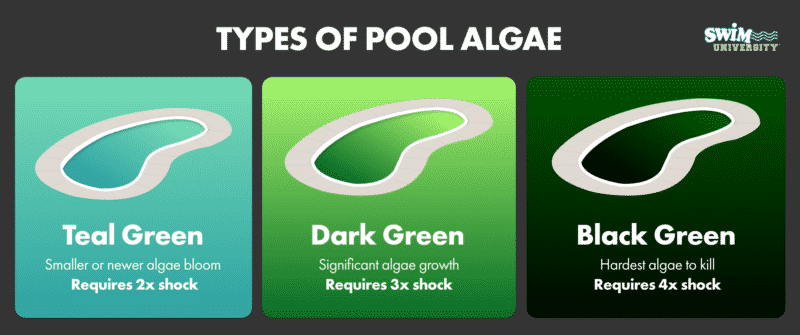
Green Algae
This is the most common and easiest algae to kill. However, this floating-green algae spreads quickly, clouding up your pool water and causing green slime on pool surfaces. Getting rid of green algae involves vacuuming and brushing your pool, then shocking and filtering your water. Green algae will vary in severity from teal green to dark, blackish green.
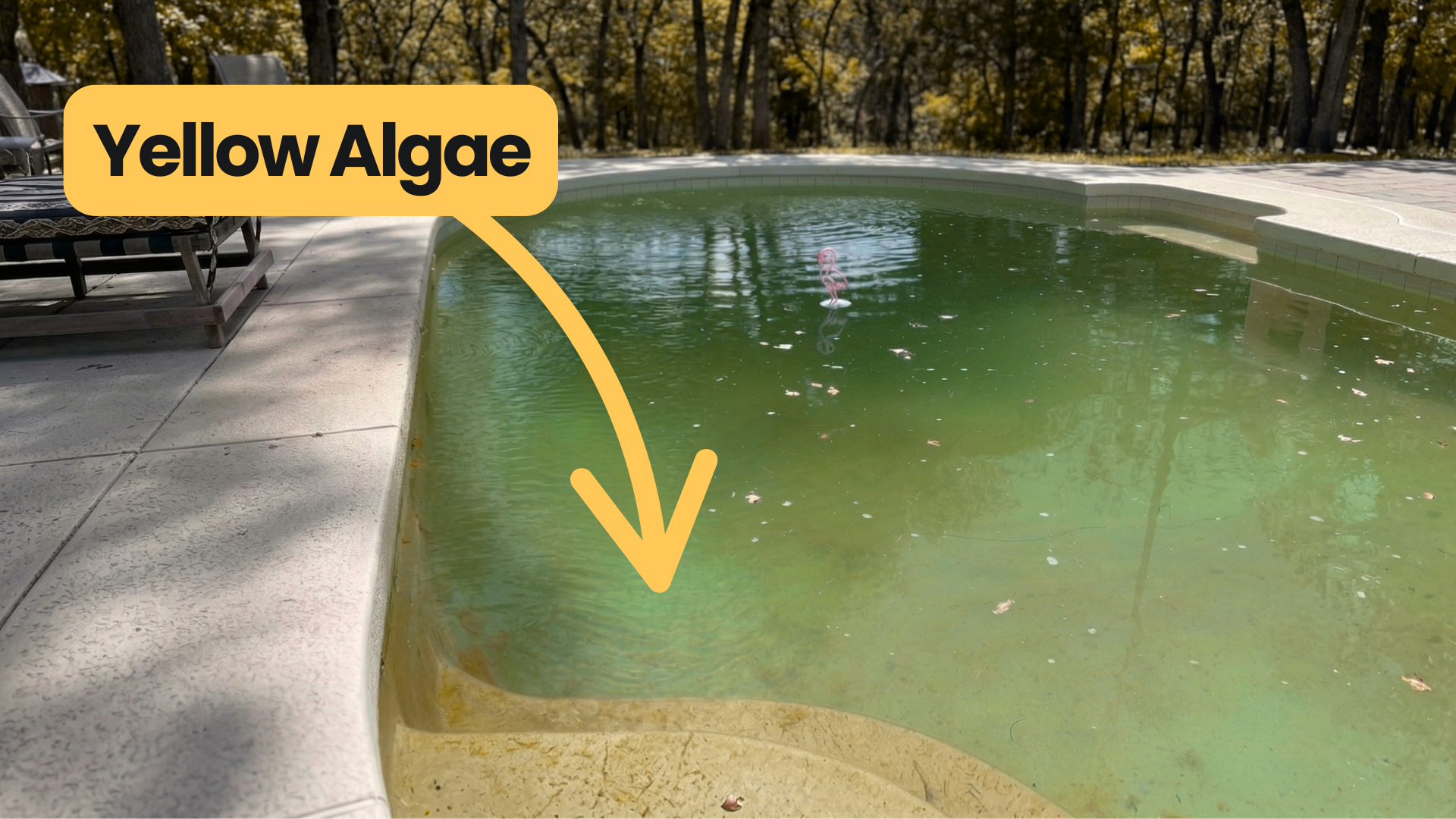
Yellow Algae
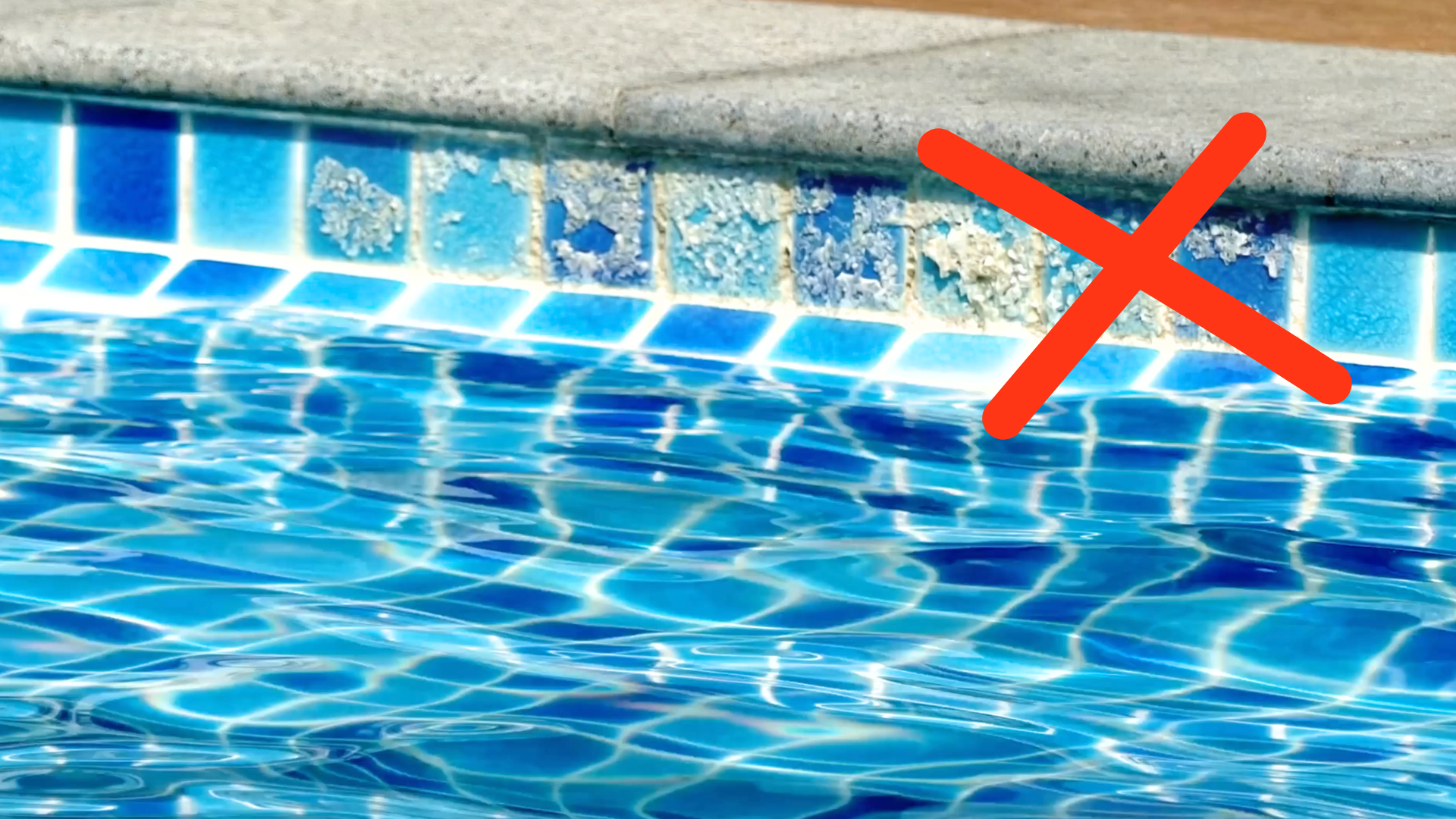
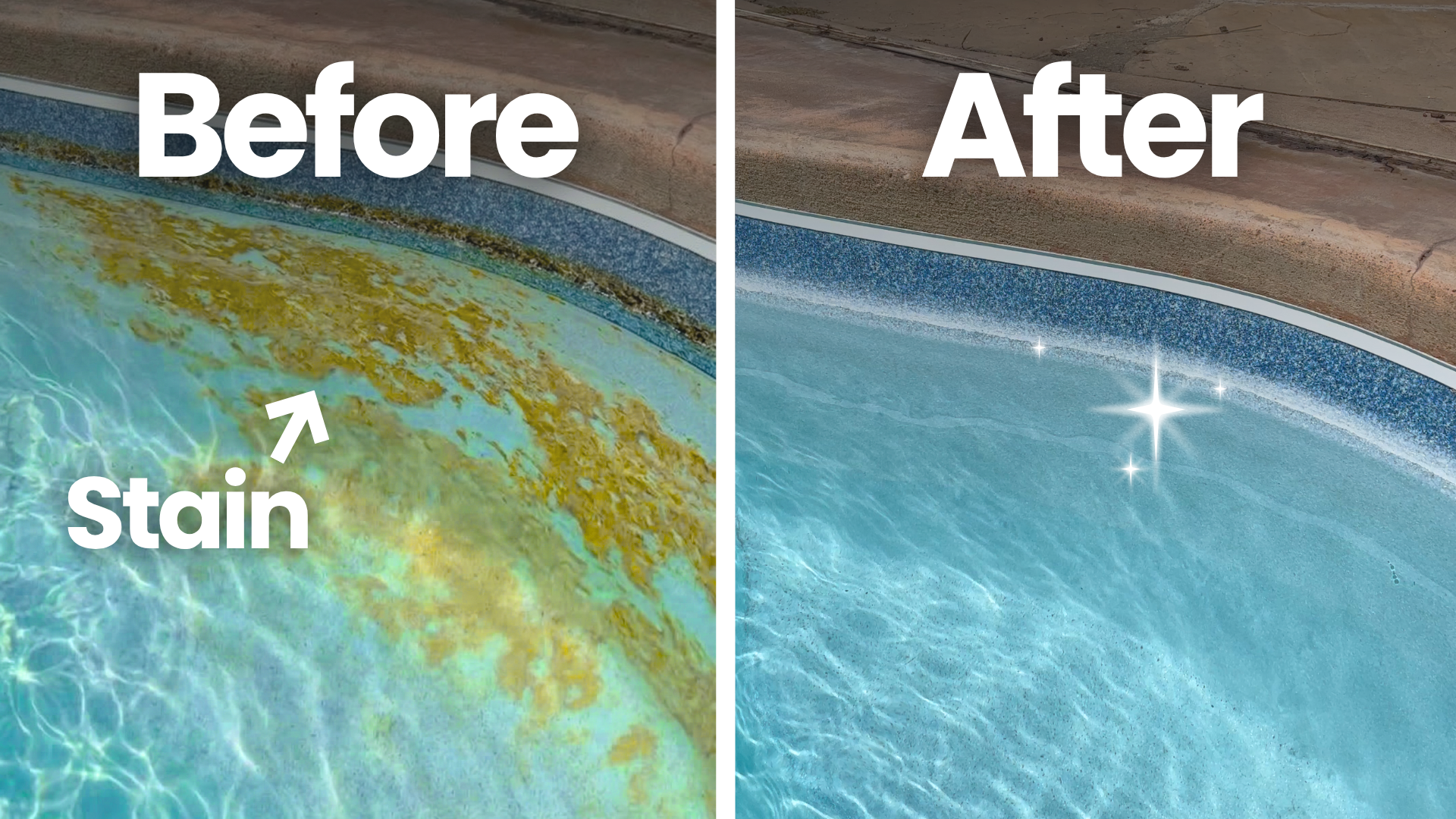
This is also called brown or mustard algae, a rarer form of algae found in humid climates. It looks like globs of pollen or sand that cling to the shady corners of your pool. Unfortunately, it is chlorine-resistant. Killing mustard algae involves multiple rounds of brushing your pool surfaces and adding extra shock to your pool water. If you’re wondering if you have yellow algae, check out our guide on how to get rid of mustard algae in a pool.
Black Algae
This is actually a bacteria. Its roots dig into concrete surfaces, making it extremely tough to kill. Getting rid of black algae requires several rounds of deep cleaning, and it will grow back quickly if you aren’t thorough. If you’re wondering if you have black algae, check out our complete guide on how to diagnose and kill black algae in your pool.
What is Pink Algae?
Pink algae, also known as pink slime, is not an algae at all. This pink slime found on pool surfaces is actually an airborne bacteria. Compared to green algae, there’s an entirely different process to get rid of it, which includes adding a pink algaecide. If you think you have a pink slime problem, check out our guide on how to get rid of pink slime in your pool.
How Do I Get Rid of Algae In My Pool FAST?
You can get rid of algae quickly by vacuuming and brushing your pool, balancing your pool’s water chemistry, and then shocking and filtering your pool water. Just be thorough as you clean your pool surfaces. If you leave behind even a small number of algae spores, it won’t be long before they regrow and bloom again.
1. Vacuum Your Pool Manually
Automatic or robotic pool cleaners aren’t well-suited for cleaning algae. You’ll need to vacuum your pool manually using your filter’s Waste setting. This allows you to bypass your filter, preventing contaminated, algae-filled water from recirculating back into your pool.
When you vacuum your pool manually, pay special attention to areas with algae. Be sure to refill your pool’s water as you vacuum, maintaining your water level at least halfway up the skimmer. If you want to learn how to properly vacuum your pool, check out our guide on how to use a manual pool vacuum.
2. Brush Your Pool Walls and Floor
Scrubbing the algae off your pool walls helps chlorine get deeper into the remaining algae. It also loosens up contaminants so they can be killed and filtered out.
Using a stiff pool brush on a pole, brush the walls and floor of your pool. Pay special attention to corners, crevices, and shady areas where algae is usually worst. As you go, your water will become cloudy, obstructing your view, so brush the tougher spots first.
If you have a concrete or gunite pool, use a pool brush with stainless steel bristles to remove algae from your pool walls. Otherwise, we recommend using a nylon bristle pool brush:
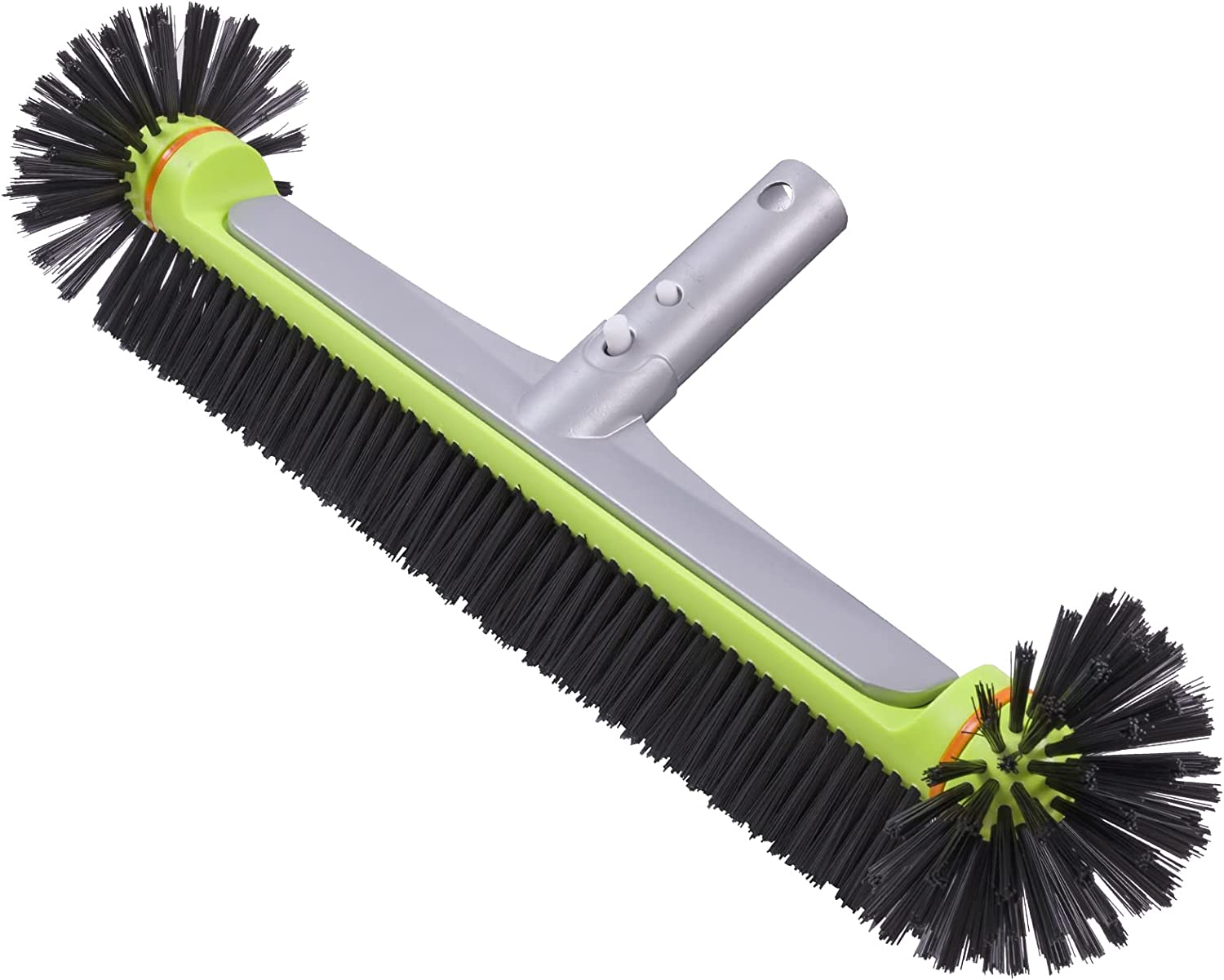
The wide pool brush with 360-degree reach helps clean hard-to-reach surfaces and tough crevices. Perfect for any type of pool, including vinyl liners, fiberglass, and painted concrete.
3. Test and Balance the Water
Use test strips, a digital kit, or a liquid test kit to test your alkalinity and pH. Balancing your water chemistry now ensures your sanitizer will be effective against the algae. High pH or low alkalinity will significantly inhibit pool shock.
4. Shock Your Swimming Pool
Adding shock to your pool super-chlorinates your water. And this extra dose of sanitizer will kill algae growth. The more serious your pool algae problem, the more shock you’ll need.
Pool Shock Calculator
Select your water color and enter your pool’s volume to find out how much cal-hypo shock you need to kill algae. You can also download The Pool Care App for more features.
Teal Green
Double dose
Green
Triple dose
Dark Green
Quadruple dose
We recommend using calcium hypochlorite shock, or cal-hypo shock, as an effective algae treatment. Follow the package instructions to determine the dose for your pool size, then multiply that by two, three, or four, depending on which type of algae you've got.
- Green Algae: Double dose of shock (x2)
- Yellow or Dark Green Algae: Triple dose of shock (x3)
- Black Algae: Quadruple dose of shock (x4)
Here is the type of cal-hypo shock we recommend:

This fast-acting, quick-dissolving swimming pool shock kills bacteria, controls algae, and destroys organic contaminants in pools.
Remember to shock your pool at dusk or night. If you shock during the day, the sun will eat up most of the chlorine before it has a chance to kill the algae. And put your cleaning equipment, like your vacuum head or pool brush, in the shallow end of your pool so your tools will get sanitized while the shock is in the water.
Be sure to run your filter for eight hours or overnight to circulate the shock. If there’s still a significant amount of algae in your pool, repeat the brushing and shocking process again.
If you need help shocking your pool, check out our guide on how to use pool shock.
5. Filter Out The Pool Algae
After your shock treatment kills the algae, it'll turn your water a cloudy blue. Don't panic! That's just dead algae.
When algae dies, it turns from green to gray and the dead, gray algae particles need to be filtered out. Run your filter continuously for a minimum of eight hours or until the water clears up. And you can use our water clarifier to speed up the process. 👇

Clears cloudy pool water by combining particles, making it easier for your filter to remove. Great for all pools. Also compatible with salt water pools.
6. Test Your Pool Water Again
Make sure your water chemical levels are balanced and your chlorine is back to normal before anyone gets back into the water. Adjust your alkalinity, pH, and chlorine levels as needed. You may also want to test your cyanuric acid and calcium hardness levels since you've removed water from your pool and replaced it with fresh water.
7. Clean Your Pool Filter
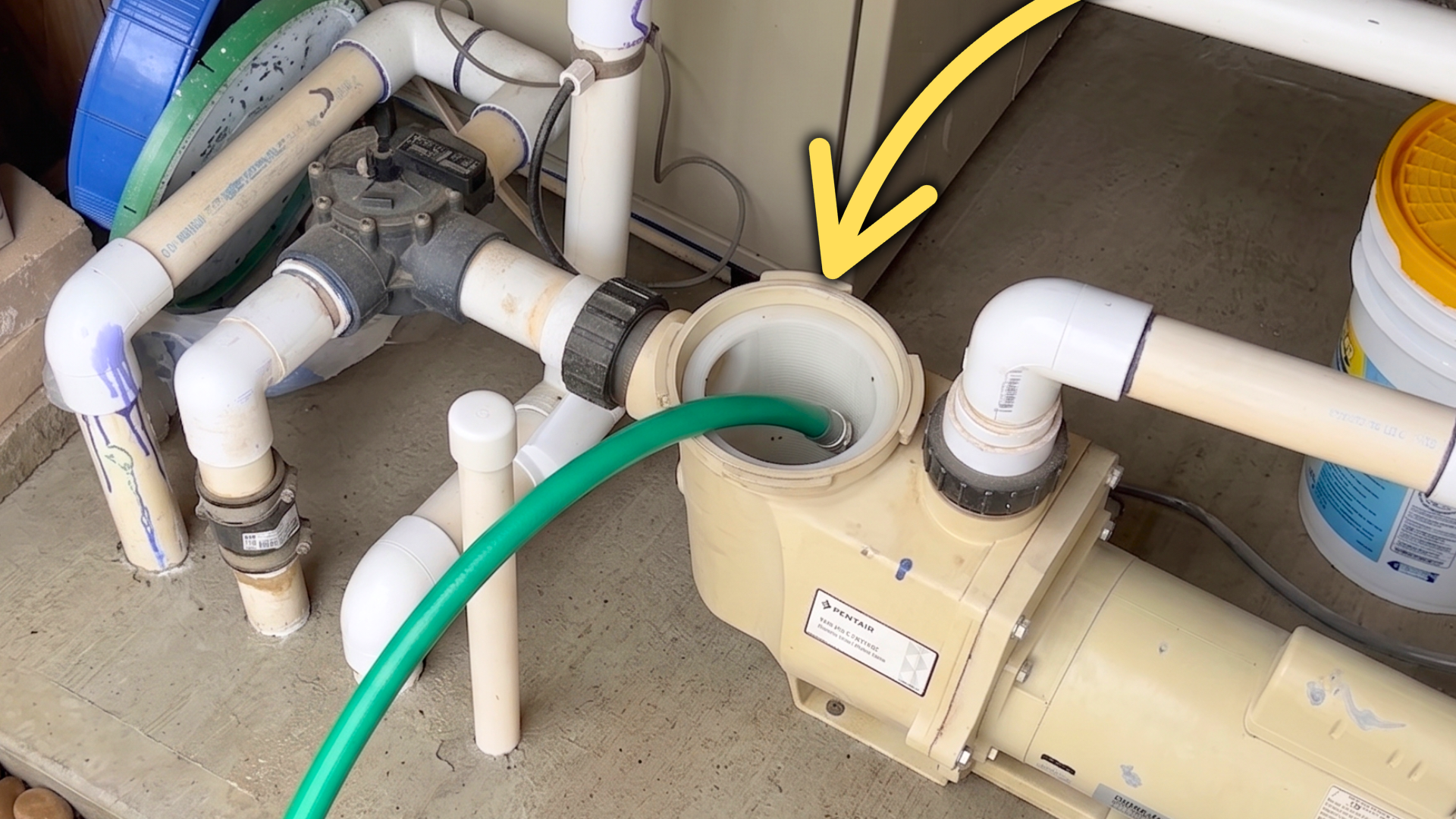
Your filter just processed a lot of contaminated water. And the last thing you want is your dirty filter slowly adding microscopic algae spores back into your pool. Deep clean your filter cartridges by soaking them in diluted muriatic acid, or by replacing them entirely. If you have a sand or D.E. filter, now’s the time to backwash.
Stop wasting time and money on confusing water chemistry and maintenance. Our effortless system guarantees to keep your pool balanced, sanitized, and crystal clear all year. Works for all pools, including saltwater.
Can You Use Algaecide to Get Rid of Pool Algae?
Technically, you can use an algaecide to kill algae. But we don't recommend using it to get rid of a large algae problem. Algaecide is very expensive compared to chlorine. And it can introduce a lot of copper to your pool water. However, algaecide is effective for early-stage algae growth, small amounts of algae, or as a preventive measure. For more information on using algaecide, check out our article The Truth About Using Pool Algaecide.
Algaecide is also handy for killing off lingering algae after you've cleaned your pool. Once you're done vacuuming, brushing, and shocking your pool, wait for your chlorine levels to fall below 5 ppm. Then add a dose of algaecide. Brush your pool to loosen any last bits of algae you can't see. The algaecide will help kill remaining algae particles before they're filtered out.
Here’s the algaecide we recommend. Add this as a final step in the algae clean up process or as a preventative measure in your pool:

A copper-free algaecide to help prevent your pool from turning green.
Can You Use Pool Flocculant to Remove Pool Algae?
Yes, you can use pool flocculant to treat the early stages of algae growth. This additive bonds to floating algae particles, making it easier to vacuum them out of your pool. But if you have anything more serious than a mild green algae problem, we recommend you follow the full cleaning plan.
Here is the

A fast-acting formula that drops cloudy water particles to the bottom of the pool so you can vacuum it out. Safe for all pools.
Here’s how to use
- If you have a multiport valve on your filter, shut off your pump and turn the valve to Recirculate or Recycle. This will mix the floc around without filtering the water. If you need help understanding your multiport valve, check out our guide on how to use a multiport valve.
- Add the recommended dosage of flocculant to your pool.
- Circulate your water for two hours, then shut off your pump and let it sit overnight. The floc will bind to the algae, then settle on the pool floor.
- Turn the multiport valve set to Waste so dirty water doesn't blast back into your pool through your return lines.
- Hook up your backwash hose to the Backwash/Waste port. Direct your wastewater appropriately.
- Vacuum your pool. Work slowly to make sure you get all the thick sediment off the bottom. If the water gets too cloudy, you may need to stop and allow the particles to settle again before continuing to vacuum.
- Add water while you're vacuuming to maintain your pool’s water level.
- Double shock immediately after vacuuming to eliminate any remaining algae. You may also want to brush the pool sides and floor before shocking.
- Run your filter until the water clears.
How to Prevent Algae in Your Pool
Following these basic pool maintenance principles will help prevent future algae issues.
- Test and balance your water once a week, after rainstorms, or after heavy use (like pool parties). Adjust your alkalinity, pH, and chlorine levels as needed
- Shock your pool once a week during peak pool season
- Run your pump 8 to 12 hours per day to fully circulate your water
- Clean or backwash your filter regularly
- Wash and sanitize your swimwear, pool equipment, floats, and toys before introducing them back into your pools
- Add flocculant or algaecide if you notice the early stages of algae growth
Frequently Asked Questions about Algae in Pools
Looking for more help with algae in your pool? Here are some common questions and answers.
Can you swim in a pool with algae?
Technically yes, but it’s not recommended. Algae itself is not harmful to swimmers, but pools with lots of algae can contain harmful bacteria and pathogens like E-coli. And cloudy water caused by algae can be a hazard if swimmers can't see the bottom of the pool. Avoid swimming in a pool that isn’t properly sanitized and cleaned.
How do you treat algae in saltwater pools?
Getting rid of algae in a saltwater pool is exactly the same process as a traditionally chlorinated pool. Remember, a saltwater pool is a chlorine pool. You are just adding salt instead of a chemical to generate chlorine. Like a traditional chlorine pool, you'll want to use calcium hypochlorite shock, also known as cal-hypo shock. For more information, check out our guide on how to remove algae from a saltwater pool.
Does phosphate remover kill algae in pools?
Phosphate removers work by cutting off the nutrient source for algae. The more phosphates in the water, the more there is for algae to consume. But phosphate removers won't solve any underlying water chemistry issues, like low chlorine or improper pH levels. If you keep your water sanitized with chlorine, algaecide, and the occasional pool shock, you won't need a phosphate remover. Be sure to check out our complete guide on phosphates in pool water.
Does shock kill algae in pools?
Yes, shock is the key ingredient to killing algae in pools. Shock raises the free chlorine levels in your pool water to the point where contaminants like algae die off. Depending on the severity of your algae growth, you’ll need to add 2-4 doses of shock. And it’s normal to see cloudy water after killing algae with shock. The water should clear up after you run your filter. Just be sure to vacuum and brush your pool before using shock. This helps remove and loosen up large amounts of algae.