


Basic Pool Chemistry 101
 Matt Giovanisci
  March 15, 2026
 Wouldn’t it be great if you could just fill your pool with water, and then never worry about algae growing, or bacteria building up, or the water just becoming a gross breeding ground for all kinds of nasty contaminants and organisms? Sure, testing the water and adding pool chemicals on a regular basis might be time-consuming and tedious, but it’s absolutely necessary.
A little up-front work means a lot less remediation later when your pool becomes infested with algae, or so imbalanced, the only solution is to drain it and start over. While keeping your pool clean and sanitized may not be the most fun tasks, they’re also not difficult. All it takes is a little basic pool chemistry knowledge, the right equipment and supplies, and a desire to keep your pool clean and swimmable.
Pool Chemicals: The Key to a Clean Pool
You could fill your pool with fresh, clean water, and then skim and vacuum it every day, and the water would still get dirty. Leaves, twigs, and other debris fall into your pool. Bugs take their last swims in it. Birds fly overhead and bomb it.
And every time someone swims, they leave behind body oils, hair, dead skin, shampoo, soap, everything we humans put on our bodies and slough off on a daily basis.
The only thing keeping those contaminants from turning your pool into a black lagoon is sanitizer, probably the most important pool chemical you’ll ever use.
And in order for the sanitizer to work, other water attributes must be balanced: pH, alkalinity, and calcium hardness.
Finally, you’ll add pool chemicals to treat algae, to clear your pool, and to prevent staining, if you have hard water.
All of these factors work together to create balanced pool chemistry so you can swim in peace, so knowing what to use and how is crucial.
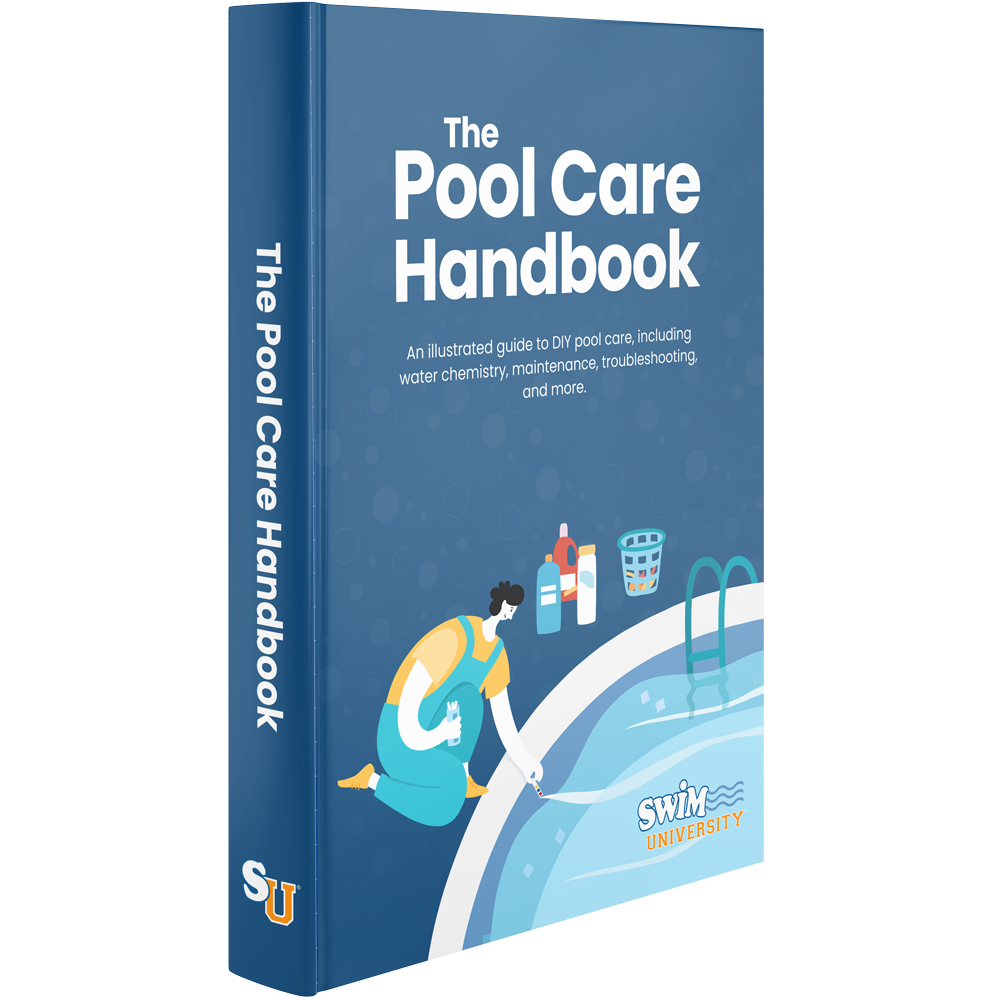
This is the ultimate guide to keeping your pool sparkling clean throughout the year that contains everything you need to know about taking care of your pool the right way. Including saltwater pools.
Sanitizer
Regardless of the type you use, sanitizer’s job is to keep the water, well, sanitized. This means free of bacteria, viruses, algae, and other nasty things that can grow in untreated pool water. You have a few sanitizers to choose from.
Chlorine
The most popular pool sanitizer due to its efficacy and low cost, chlorine sanitizes your pool by oxidizing contaminants. It enters molecules and destroys them from the inside out. Chlorine is effective at killing viruses, bacteria, and algae and will also help prevent algae from growing in the first place.
Chlorine comes in two forms:
- Granules: You pour them directly into your pool water, where they dissolve and are distributed by your pool’s filtration system. This isn’t a very effective method, though. It’s time-consuming, and there’s a chance the chlorine won’t be evenly distributed, leaving pockets of not-so-sanitized water around your pool, as well as pockets of super-chlorinated water, which can damage your pool liner.
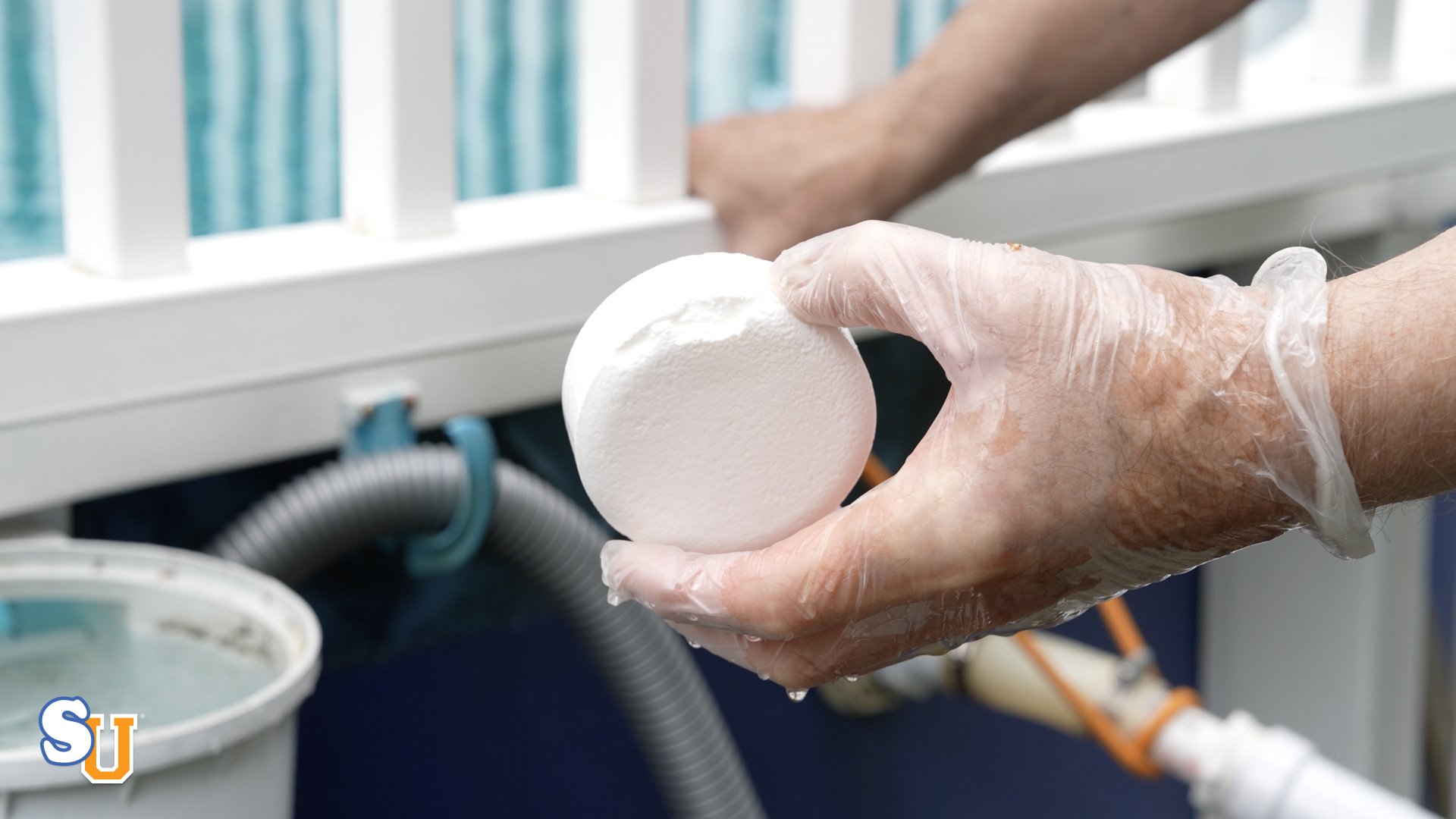
- Tablets: Available in 1-inch or 3-inch sizes, chlorine tablets can be added to a floating chlorine dispenser, directly into your pool’s skimmer basket, or to an automatic chlorinator.
Any of the methods for using chlorine tablets will provide more even distribution. Still, we highly recommend you use an automatic chlorinator for the best dispersion rate, to handle the tablets less often, and to save you time.
ProTip: The ideal chlorine level in your pool water is 3 parts per million (ppm). Anything less than that, and your pool water isn’t really clean. Anything more than that, and you need to dilute the water a little or use a chlorine neutralizer to get the level down. When it comes to chlorine, there is such a thing as too much of a good thing.
You’ll also find two types available: stabilized and unstabilized chlorine.
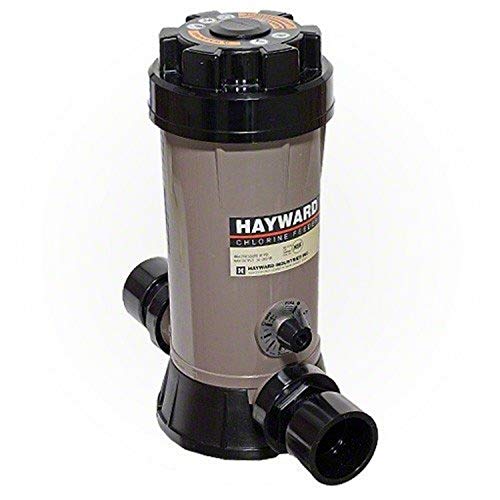
This automatic chlorinator is perfect for the pool owner who hates fussing with chlorine tablets. With its dial control valve, you can easily adjust the chlorine level depending on your pool's size.
Stabilized Chlorine
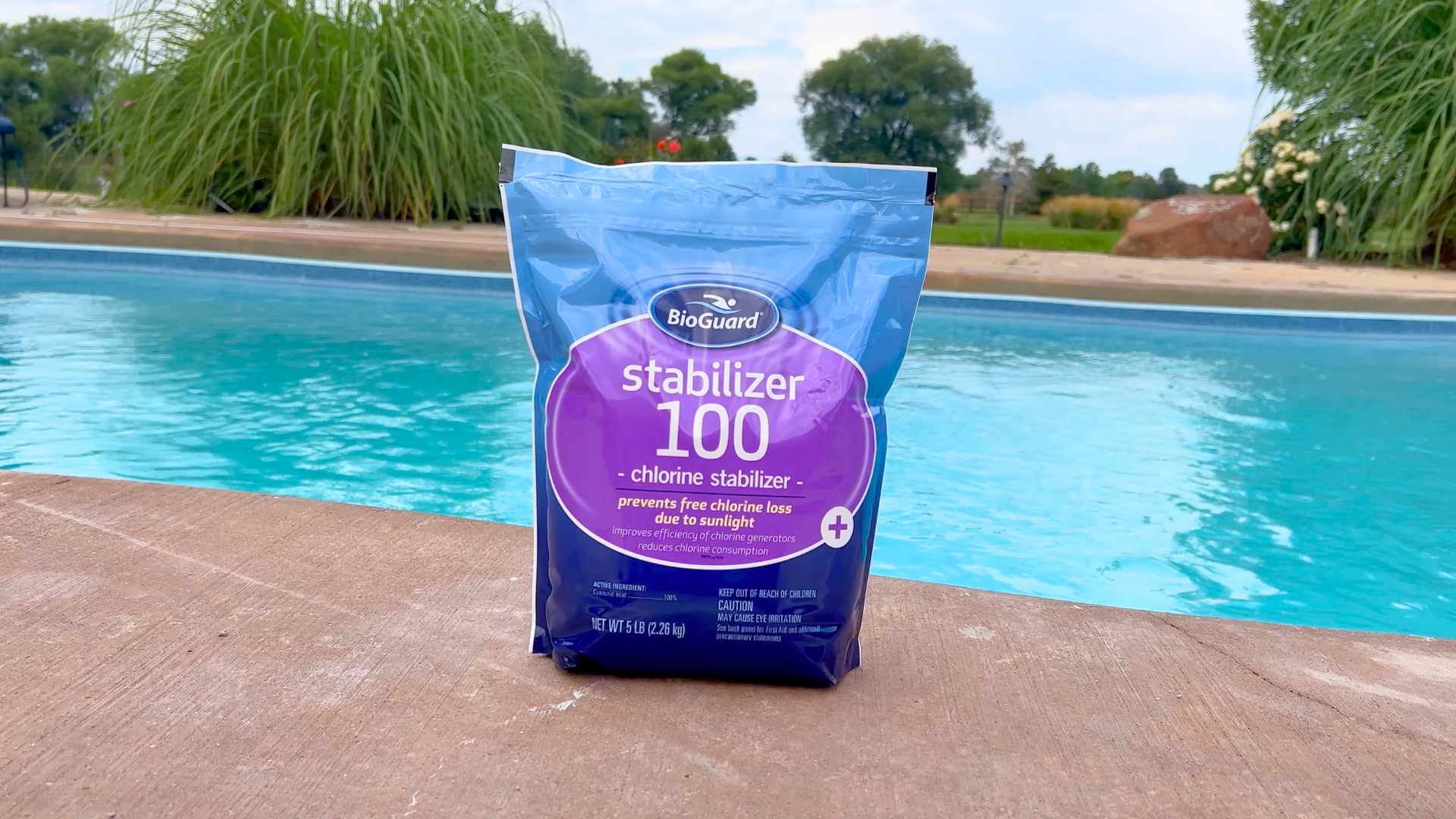
If you have an outdoor pool, to prevent the sun from burning off the chlorine in the water, you need stabilized chlorine. It has cyanuric acid, also known as chlorine stabilizer or pool stabilizer, added to it.
The cyanuric acid protects the chlorine so it stays in the water three to five times longer, which means it’s more effective at keeping the pool clean, and doesn’t need to be replaced as often. This saves you money and time.
ProTip: If the chlorine you buy doesn’t specifically say “stabilized” on the label, check the active ingredient. If it’s Trichloro-S-Triazinetrione or simply Trichlor, it’s stabilized.
Important: If too much cyanuric acid builds up in your water, it can reduce the chlorine’s effectiveness. If this happens, the only way to reduce the level is to dilute your pool water by removing some and replacing it with fresh water. Or, if there’s so much cyanuric acid that diluting the water won’t help, you may have to drain the pool altogether.

Stock up and save money on chlorine tablets for the season by getting the standard 3-inch stabilized chlorine pucks.
Unstabilized Chlorine
This type of chlorine is vulnerable to the sun’s ultraviolet rays. They’ll burn the chlorine out of the water, reducing its sanitizing ability. This means you’ll have to add more chlorine to your pool more often, which means you’ll have to spend more money.
So why would you ever want to use unstabilized chlorine? Well, if you have an indoor pool, you don’t have to worry about the sun eating up the chlorine.
It can also be used as pool shock, especially since you shock your pool at night (you do, don’t you?), so again, there’s no worry about the sun.
ProTip: If the chlorine you buy doesn’t specifically say “unstabilized” on the label, check the active ingredient. If it’s Calcium Hypochlorite or simply Cal-Hypo, it’s unstabilized. This type of chlorine is most often available in granules rather than tablets.

Add the Cyanuric Acid Yourself
Rather than using stabilized chlorine and risking the level of cyanuric acid building up too much, you can use unstabilized chlorine and add cyanuric acid to the pool yourself. This gives you more control over the amount of cyanuric acid in your pool water.
ProTip: The ideal cyanuric acid level in your pool water is 100 ppm or less.
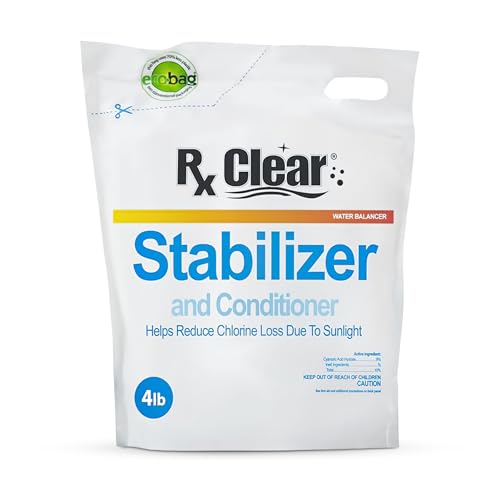
Keep your chlorine from being burned off too quickly by the sun's UV rays. CYA will help you keep a better chlorine reading in your pool.
Chloramines
During the oxidation process, chlorine dissipates and eventually becomes a waste product called chloramines.
When you approach a pool, and you smell that distinctive “pool smell,” it’s not the chlorine; it’s the chloramines. They’re also what sting your eyes and dry your skin when you swim. They’re also not the best thing to breathe in.
To keep chloramines under control, you must add chlorine to your pool on a regular basis, according to how much it needs, which you’ll determine by testing your water. And if the chloramines get really bad, and your pool gets really stinky, you’ll need to shock it to get rid of them.
The good thing is, you’ll be shocking your pool on a regular basis anyway (Right? Right!), so that will help manage chlorine and chloramine levels.
Bromine
The most popular alternative to chlorine, bromine works by ionizing contaminants. This means it breaks molecules’ chemical bonds and forces them apart, thereby destroying them.
The benefit bromine has over chlorine is that as it works, it doesn’t break down quite as quickly, so it remains active longer.
The downside is that as it breaks down, it creates waste products called bromamines. While not as nasty and smelly as chloramines, they still reduce bromine’s effectiveness. The solution is the same: shocking the pool.
It’s also important to know that bromine tablets for your pool won’t be pure bromine. They’ll contain a small percentage of chlorine for an extra sanitizing boost.
ProTip: The ideal bromine level in your pool water is 5 ppm, and never let the level drop below 3 ppm.

Bromine tablets that sanitize pools, hot tubs, and spas across a wide range of conditions while being gentle on skin and eyes, especially great for kids and sensitive swimmers.
Biguanide
Does this sound like a medical substance? That’s because it is. Well, it was. Preservative-free polyhexamethylene biguanide, better known as PHMB, is also known simply as biguanide is a chlorine-free sanitizer. It was originally developed as a surgical disinfectant, and is similar to hydrogen peroxide.
Biguanide works by forcing contaminants to bind together into water-insoluble clumps. This makes them easier for the filter to grab. The downside is it can cause the filter to clog frequently.
So why would you use it?
- It doesn’t produce chloramines.
- It’s gentler on your skin, hair, and eyes.
- It doesn’t degrade in sunlight.
- It doesn’t turn blond hair green in the pool.
But it has its drawbacks too.
- It’s more expensive than other sanitizers.
- It’s not as effective as other sanitizers.
- It loses its efficacy over time.
- It can cloud your pool water.
Biguanide is sold under numerous brand names, the most popular—or at least, the best known—being Baquacil, which offers a complete line of pool chemicals designed to work with biguanide, from algaecide, to alkalinity increaser, to pH decreaser, and even test strips that measure biguanide levels.
Be sure to fully research biguanide before you convert your pool from any other sanitizer to make sure you’re prepared for the different pool maintenance requirements.
ProTip: The ideal biguanide level in your pool water is 30 ppm to 50 ppm. Never let it drop below 30 ppm, or you’re not getting any water sanitization at all.

Minerals
Have you ever looked at the label on a bottle of vitamins, and seen metals like iron and copper listed? That’s because they’re minerals, and are essential to our bodies’ health in small doses.
Pool mineral systems use metals to sanitize water. Specifically, silver and copper.
Silver is a known bactericide, and copper is sometimes used as an algaecide. When those metals come into contact with water, they release positively charged ions, which destroy negatively charged contaminants.
Mineral sanitizer systems may also include borates and magnesium chloride as active ingredients, which have a few added benefits such as algae-fighting properties and skin soothers, respectively.
It’s important to know that mineral systems aren’t complete sanitizer systems. They’re meant to supplement chlorine or other sanitizing pool chemicals, thereby reducing the need for as much of the other sanitizers.
ProTip: When using a mineral sanitizer system, the ideal chlorine level in your pool water is 0.5 ppm.
Now that you have the basics of sanitizers down, let’s look at some of the other facets of balanced pool chemistry, and the pool chemicals that will help you achieve them.

pH
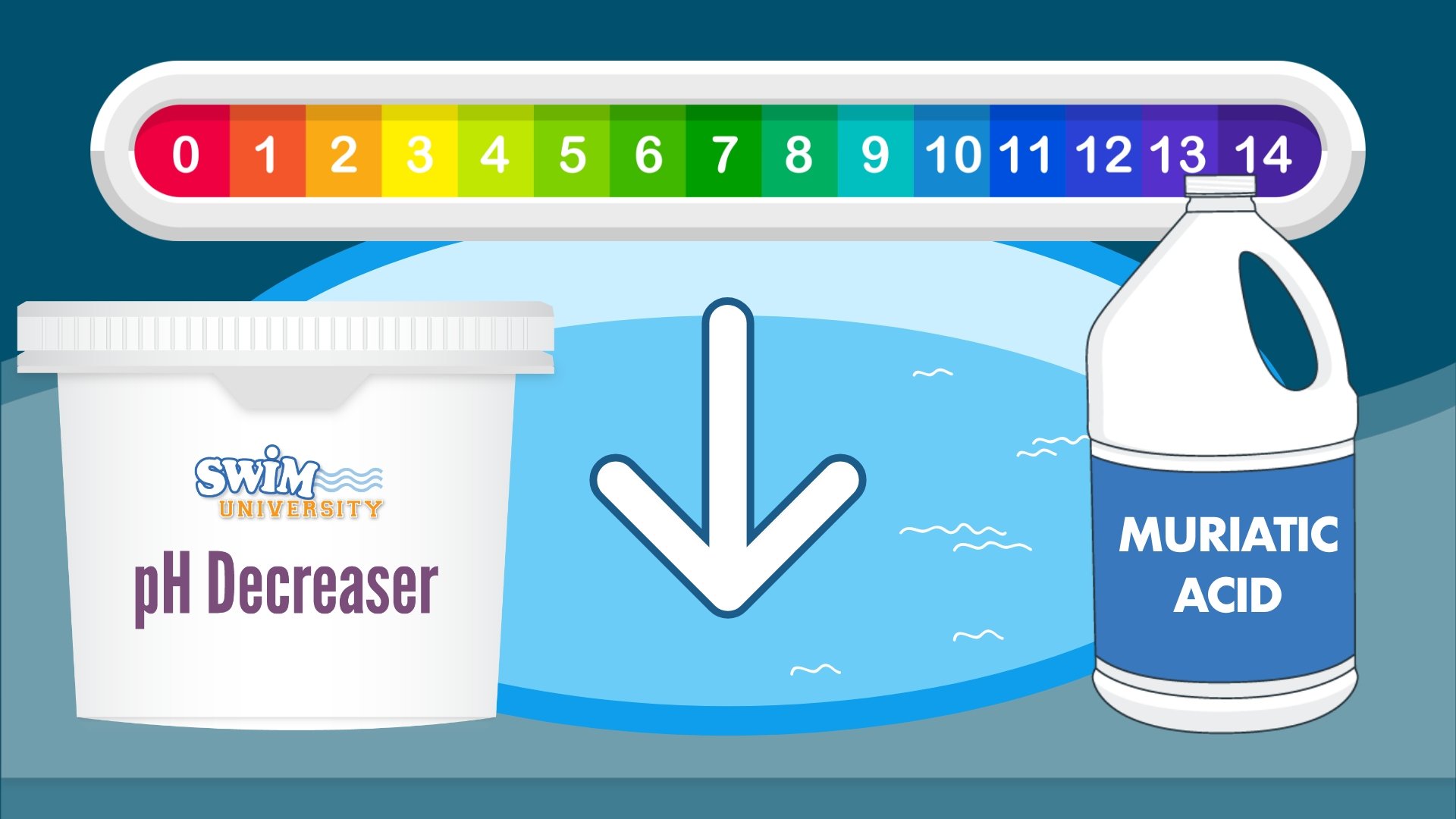
If you remember from high school chemistry class, pH is a measurement of whether a substance is basic or acidic. The scale ranges from 0 to 14, with 7 being neutral. Anything below 7 is acidic, and above 7 is basic.
To illustrate that a little better, humans’ eyes and mucus membranes have a pH of 7.4. If it were lower, our tears would be acidic and it would burn when we cried. If it were higher, our eyes and nostrils would dry out.
Anything that enters your pool can affect the pH level. Rain, dirt, leaves, people, anything. For this reason, it’s important to stay on top of your pool’s pH level to make sure it stays within the optimal range.
Keep a supply of two pool chemicals on hand: pH increaser and pH decreaser. You’ll likely use less decreaser because of how alkalinity is adjusted, but it’s good to keep some in your supply cabinet just in case.
ProTip: The ideal pH level in your pool water is 7.4 to 7.6. This creates an optimal environment for chlorine to do its job.

This is a proven way to make the water less acidic when swimming in pools. This chemical helps maintain the right level of pH.
Alkalinity
This pool chemical’s main job is to prevent pH from drastically moving up and down the scale by acting as a buffer, absorbing major changes to the water before they can affect the pH.
To keep alkalinity steady, keep a supply of alkalinity increaser or baking soda on hand. Yes, you can use baking soda to increase alkalinity!
If both your pH and alkalinity are low, alkalinity increaser and/or baking soda will raise both, another reason to adjust alkalinity first.

An affordable alternative to traditional chemicals, baking soda will naturally raise the alkalinity and pH in your water. It's also useful for cleaning tiles and surfaces.
Alkalinity decreaser isn’t available as a separate pool chemical, so if your pH and alkalinity are both high, pH decreaser will lower both. Lower the alkalinity first by adding
This situation can be tricky to correct, and it may take several tries to get both levels back to normal, so make adjustments gradually to avoid throwing things even further out of whack.
If the alkalinity is astronomically high and nothing is lowering it, you can also try to reduce it with muriatic acid.
Important: Because alkalinity protects pH, you must always adjust alkalinity first, then adjust pH, if necessary. Sometimes, getting alkalinity where it needs to be also brings the pH in line.
Pro Tip: The recommended alkalinity range in your pool water is 100 ppm to 150 ppm, with 125 ppm being ideal.
Calcium Hardness
A measurement of how hard or soft your pool water is, calcium hardness may vary depending on where you live, and what water source you use to fill your pool. For example, well water is often higher in minerals, including calcium, than water that comes from a spigot.
If the calcium level in your water is too low, it can lead to scaling and corrosion of your pool walls and equipment. This is remedied by adding calcium hardness increaser.
If it’s too high, you may end up with cloudy pool water, which can be addressed by shocking the pool, adding water clarifier or flocculant, and a few other methods.
Important: High pH can lead to high calcium hardness. Before you try to address a high calcium level, adjust the pH first (after the alkalinity).
Pro Tip: The ideal calcium hardness level in your pool water is 175 ppm to 225 ppm, and 200 ppm to 275 ppm for concrete and plaster pools.

Adding calcium hardness to your pool water will protect and extend the life of your pool walls including vinyl, fiberglass, and concrete.
Shock the Pool, Not the Monkey
No matter how well you keep your pool chemistry balanced, it’s a good idea—no, it’s necessary—to shock your pool on a regular basis. Shocking is also sometimes referred to as superchlorinating the pool because all it means is you’re adding a high dose of chlorine to the pool all at once.
This is a good method for keeping the water clean, but it’s also a remedy for things like pool algae, and certain bodily mishaps that may occur in the pool, especially when small children swim.
To get the best results, we recommend using calcium hypochlorite shock at least once a week. If you’re maintaining a chlorine-free pool, you’ll also find chlorine-free shock available.
ProTip: Pool shock is made with unstabilized chlorine or no chlorine at all. It’ll get eaten up by the sun’s UV rays very quickly. So always shock your pool at night or dusk, and run the pump overnight to fully distribute it and allow it to dissipate.
Important: Products that contain calcium (like calcium hypochlorite shock) can raise your pool’s calcium hardness level over time. If you use those products, keep a closer eye on calcium hardness levels so you can correct them before they become a problem.

This fast-acting, quick-dissolving swimming pool shock kills bacteria, controls algae, and destroys organic contaminants in pools.
Other Pool Chemicals You’ll Need
If you only used chemicals to manage sanitizer, pH, alkalinity, and calcium hardness, you could theoretically keep your pool clean and healthy all season long.
But we don’t live in a perfect world, and there’ll be times when you need to help your pool fight things like algae, cloudiness, and staining. Luckily, you have a variety of specialized pool chemicals at your disposal.
Algaecide
Your best defense against algae is sanitizer, especially chlorine. Keeping the chlorine level in your pool where it should be will keep algae at bay. But things happen, water becomes unbalanced, and algae sneaks in, undetected until you’ve got a full bloom growing and spreading through your pool.
We recommend shocking the pool to kill algae. And depending on the type of algae growing, you may have to double or even triple shock the pool to fully eradicate it.
But until you get those chlorine levels back up where they need to be, you can use an algaecide. Despite its name, it won’t completely kill the algae, but it can at least keep the algae from continuing to grow and spread.
ProTip: If the water you use to fill your pool is hard, and contains high levels of minerals, be sure to use a copper-free algaecide. This will help avoid raising mineral levels even more, and possibly staining your pool’s walls and floor.

A copper-free algaecide to help prevent your pool from turning green.
Clarifier and Flocculant
Why are these two separate pool chemicals? Don’t they do the same thing? Well, yes and no. There’s a major difference between pool clarifier and pool flocculant: One treats the symptom while the other treats the cause.
Water clarifier is good to have on hand if, say, you wake up to a cloudy pool on the day you’re hosting a pool party. You don’t want your pool to look uninviting, and you don’t want your guests to hurt themselves jumping into the pool when they can’t see the bottom. So you can use pool clarifier to quickly clear up the water. Just know that it’s only temporary, and once the clarifier dissipates, the cloudiness will return.

Clears cloudy pool water by combining particles, making it easier for your filter to remove. Great for all pools. Also compatible with salt water pools.
So what you really need to do is treat the cause. That’s flocculant’s job.
When you add pool flocculant—also simply called floc—to your pool, it causes all the water-clouding particles to clump together and sink to the bottom of the pool. The only way to get rid of them is to vacuum the pool.
ProTip: You may see some flocculants include the phrase “pool clarifier,” but you’ll never see pool clarifier labeled as “flocculant.” If it’s floc you need, look for that word on the label.

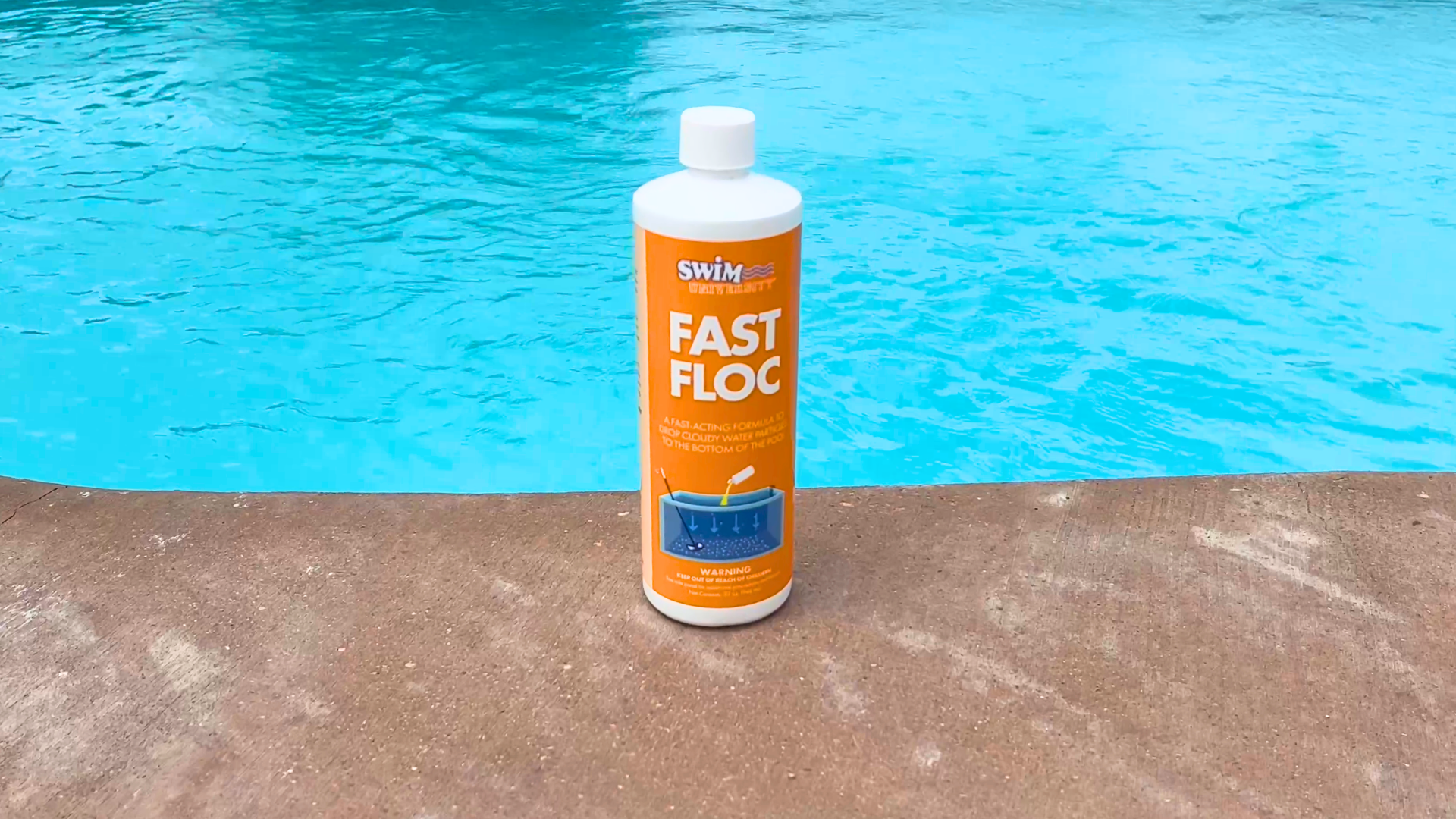
A fast-acting formula that drops cloudy water particles to the bottom of the pool so you can vacuum it out. Safe for all pools.
Metal Sequestrant
If your water contains metals such as iron and copper, you may see some rust-colored or green pool stains. You’ll need to clean the pool to get rid of the stains, but you can prevent them from reoccurring by using a metal sequestrant.
This pool chemical attaches itself to metal particles in the water so they can’t settle on surfaces and stain them. If you use hard water or well water to fill your pool, you may want to keep some sequestrant handy.
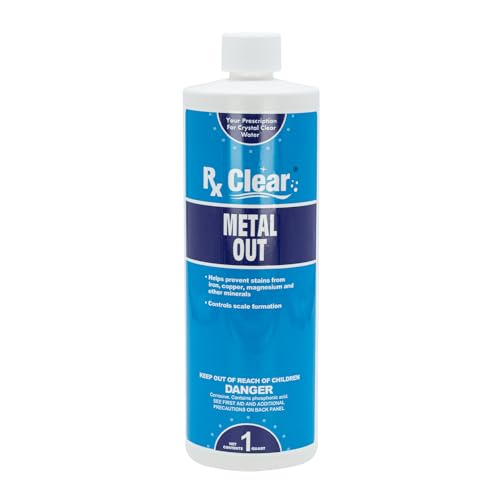
Helps prevent staining by removing iron, calcium, manganese, copper and other metals from your pool water. Also helps protect plumbing and pool walls from rust, stain, and scale. Used for all pool openings and closings.
Testing, Testing
Knowing which pool chemicals to use when is only half the battle. There’s no way to know what the chemical levels are, and whether you need to add or remove anything without pool water testing.
You’ll probably test your pool more often than you do anything else to it. Before you add chemicals? Test it. After you add chemicals? Test it. After a rainstorm or big pool party with lots of swimmers? Test, test, test.
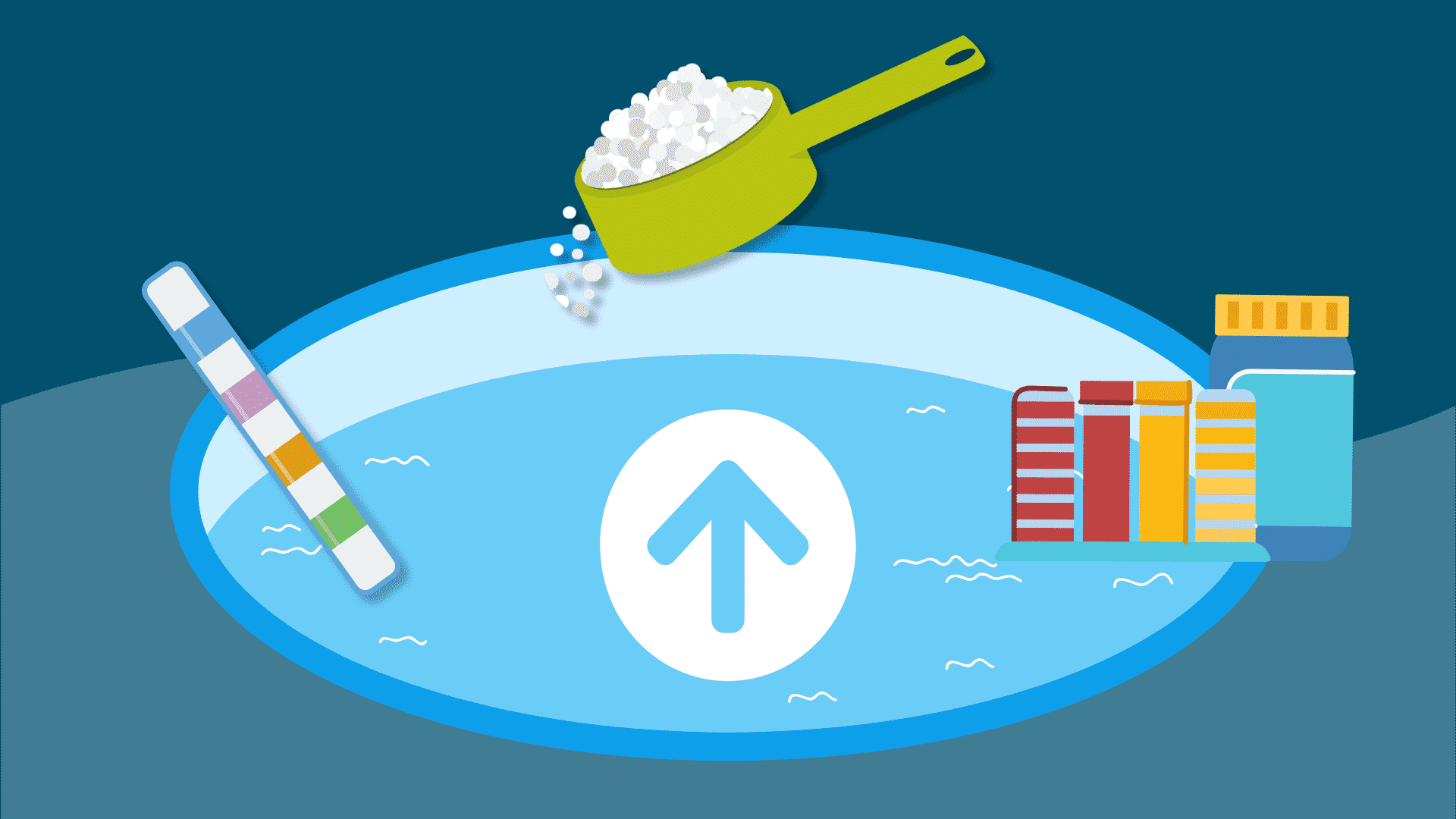
The quickest and easiest way to test your pool water is with test strips. If you want a more comprehensive and accurate reading, use a liquid test kit. If you’re into tech and gadgets, you can even get a digital water testing kit.
And at least once a quarter, take a pool water sample to your local pool store and have them test it for you with their even more comprehensive and accurate testing abilities.

This complete water testing kit helps keep your pool or hot tub clean and safe to swim in, with easy-to-follow color instructions and all the supplies you need in one box.
You’re a Pool Chemistry Wiz!
Hey, no one ever said having a pool would be easy. But it also doesn’t have to be difficult. Knowledge and the right pool chemicals make all the difference in the world.
Don’t let your pool intimidate you. You’re supposed to manage it, not the other way around. Just remember that no one expects you to know everything overnight. Even more important than having the right tools is knowing where to find the right information. And you’ve already done that, so you’re on your way!
Happy Swimming!