


How to Balance the Calcium Hardness Level in Your Pool
 Matt Giovanisci
  May 14, 2026
 Keeping your total calcium hardness balanced protects your pool surfaces, equipment, and water clarity. It doesn’t need weekly attention like chlorine or pH. But when it’s off, you’ll start to notice damaged surfaces, white, chalky buildup, or cloudy water.
Your pool’s total calcium hardness levels should be between 175 and 275 PPM (parts per million). But some pools, like fiberglass and salt water pools, need lower levels than concrete or plaster.
Watch the video below to learn more, or keep reading for a complete guide on calcium hardness.
This is the ultimate guide to keeping your pool sparkling clean throughout the year that contains everything you need to know about taking care of your pool the right way. Including saltwater pools.
What Is Calcium Hardness?
Calcium hardness, also called total calcium hardness, measures the amount of dissolved calcium carbonate in your pool water. “Hard” water has a high concentration of minerals like calcium. “Soft” water has very few minerals.
If your pool water doesn’t have enough calcium, it gets “aggressive” and starts pulling calcium out of your pool’s surfaces to compensate. That causes etching and pitting on plaster, concrete, and grout. Low calcium can also damage metal components like heaters.
Too much calcium causes the opposite problem. The water starts depositing that excess calcium as white, scaly buildup on your pool surfaces and equipment. Over time, this can clog your filters, heaters, salt systems, and plumbing.
What Are the Right Calcium Hardness Levels?
The ideal range for your total calcium hardness levels depends on your pool type:
- Vinyl and fiberglass pools: 175-225 PPM
- Concrete and plaster pools: 200-275 PPM
Plan to test your calcium hardness at least once a month. Most 7-way test strips include a total hardness reading, so it’s easy to check alongside your other levels.

This complete water testing kit helps keep your pool or hot tub clean and safe to swim in, with easy-to-follow color instructions and all the supplies you need in one box.
Does a Vinyl or Fiberglass Pool Need Calcium Hardness in the Water?
Vinyl liner or fiberglass pools can handle even lower levels of calcium, but you still want some calcium in the water. Pool heaters need calcium to protect their internal components. And if you have plaster around the waterline or concrete coping, low calcium will cause etching there, too.
Why Does Calcium Hardness Get Out of Balance?
There are a few common culprits behind both low and high calcium levels.
- Low calcium usually happens after you’ve added fresh water to your pool. This is especially true if your tap water is naturally soft. Heavy rainfall can also dilute your calcium levels since rainwater tends to be soft.
- High calcium can come from a few different sources. If you fill your pool with well water or live in an area with naturally hard water, you’ll likely start with elevated levels. High pH can also cause calcium to fall out of solution and deposit on your surfaces as white flakes or scale. Always check your pH first before assuming you have a calcium problem. Finally, using cal-hypo chlorine shock raises your calcium hardness over time since it contains calcium.
How Calcium Hardness Affects Different Pool Types
Not all pools react to calcium imbalances the same way. Here’s what to watch for depending on your pool surface.
Concrete and Plaster Pools
Concrete, plaster, pebble, quartz, and stone surfaces are the most vulnerable to low calcium. Without enough calcium in the water, the water will literally pull calcium from your pool’s surfaces to satisfy itself, causing pitting and etching. High calcium hardness, on the other hand, causes scaling and cloudy water. Keeping your levels in the correct range is critical for the lifespan of these surfaces.
Fiberglass Pools
Fiberglass pools can tolerate lower calcium hardness levels than concrete or plaster pools. High levels, especially when combined with high pH, can cause surface chalking, discoloration, scaling, and permanent surface damage. Stay in the lower range of the recommended calcium hardness levels. Remember that your equipment and plaster or concrete around the pool need a little calcium in the water.
Vinyl Liner Pools
Vinyl is the most forgiving pool surface when it comes to low or high calcium hardness. That said, you’ll still want to keep levels in the proper range to prevent scaling on your equipment and surfaces.
Salt Water Pools
The salt cell inside a salt water generator is especially prone to calcium buildup. Salt systems also naturally produce higher pH, which makes the calcium scaling problem worse. Check your salt cell every three months for buildup. If your calcium hardness runs high, consider using a stain and scale preventer. Avoid using cal-hypo shock in a salt water pool, since it contributes to calcium buildup in the cell. If you need more help, check out our Salt Water Pool Maintenance guide.
How to Raise Calcium Hardness
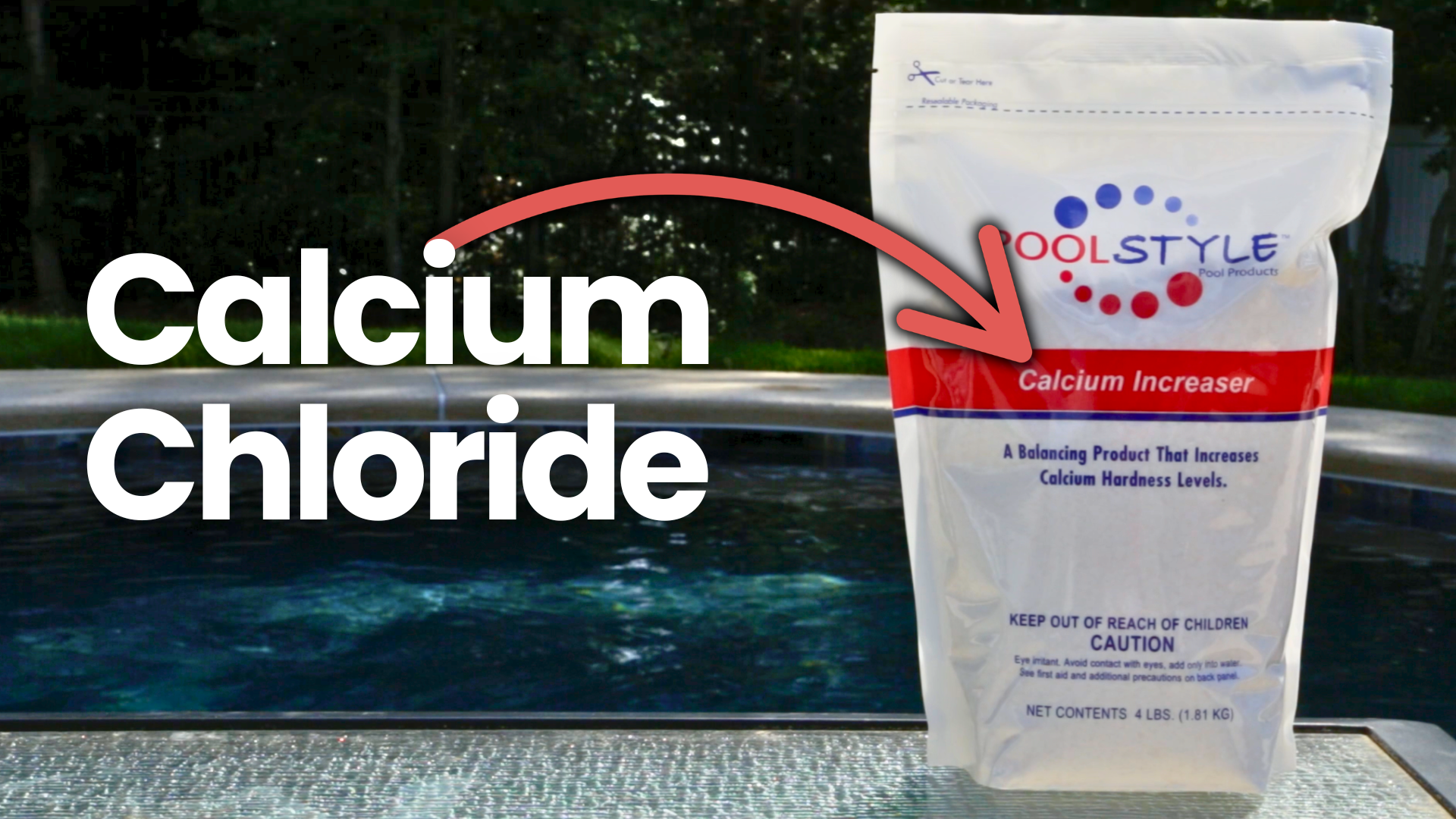
To raise your levels, you’ll add a calcium hardness increaser (calcium chloride) to your pool. If you have a 10,000-gallon pool (37,854 liters), it takes about 1 to 1.25 pounds (0.45 to 0.57 kg) of calcium chloride to raise total hardness by 10 PPM.
Start with less than you think you need. It’s easier to add more than to undo too much. If you have a freshly plastered pool, don’t rush to raise calcium levels. Plaster needs time to cure, and your levels may need to stay lower for the first month or two.
Watch for pH and Alkalinity
Make sure your pH and alkalinity are in range first, but don’t adjust them a few hours before or after adding calcium. This can cause the calcium to precipitate out of solution and deposit all over your pool surfaces and equipment.
Option 1 — Broadcast directly: Add the calcium hardness increaser directly to the pool, spreading it across the deep end with the pump running. Brush it around if you see it settling at the bottom. Letting it sit can damage your pool’s surface.
Option 2 — Pre-dissolve in a bucket: Add the calcium increaser to a bucket of pool water first, then pour the mixture around the pool’s perimeter with the pump running.
Handle Calcium Hardness Increaser Safely
Calcium chloride gets hot when it hits water. Always wear gloves and goggles and keep your skin covered. Add calcium to water, never water to dry calcium. Stir with a wooden dowel or paint stick. Do this in 5-pound (2.3 kg) batches or less, since too much calcium can melt plastic buckets.
For either method, run your pump for at least 8 hours to fully dissolve and distribute the calcium. Then retest the next day and add more if needed.
Calcium Hardness Increaser Dosing Chart
| Increase By (ppm) | 1000 Gallons (3785 L) | 5000 Gallons (18927 L) | 10000 Gallons (37854 L) | 15000 Gallons (56781 L) | 20000 Gallons (75708 L) | 50000 Gallons (189271 L) |
|---|---|---|---|---|---|---|
| 10 | 2 oz. (57 g) | 10 oz. (283 g) | 1 lb. 4 oz. (567 g) | 1 lb. 14 oz. (850 g) | 2 lbs. 8 oz. (1.1 kg) | 3 lbs. 2 oz. (1.4 kg) |
| 20 | 4 oz. (113 g) | 1 lb. 4 oz. (567 g) | 2 lbs. 8 oz. (1.1 kg) | 3 lbs. 12 oz. (1.7 kg) | 5 lbs. (2.3 kg) | 6 lbs. 4 oz. (2.8 kg) |
| 30 | 6 oz. (170 g) | 1 lb. 14 oz. (850 g) | 3 lbs. 12 oz. (1.7 kg) | 5 lbs. 10 oz. (2.6 kg) | 7 lbs. 8 oz. (3.4 kg) | 9 lbs. 6 oz. (4.3 kg) |
| 40 | 8 oz. (227 g) | 2 lbs. 8 oz. (1.1 kg) | 6 lbs. (2.7 kg) | 7 lbs. 8 oz. (3.4 kg) | 10 lbs. (4.5 kg) | 12 lbs. 8 oz. (5.7 kg) |
| 50 | 10 oz. (283 g) | 3 lbs. 2 oz. (1.4 kg) | 6 lbs. 4 oz. (2.8 kg) | 9 lbs. 6 oz. (4.3 kg) | 12 lbs. 8 oz. (5.7 kg) | 15 lbs. 10 oz. (7.1 kg) |
| 60 | 12 oz. (340 g) | 3 lbs. 12 oz. (1.7 kg) | 7 lbs. 8 oz. (3.4 kg) | 11 lbs. 4 oz. (5.1 kg) | 15 lbs. (6.8 kg) | 18 lbs. 12 oz. (8.5 kg) |
| 70 | 14 oz. (397 g) | 4 lbs. 6 oz. (2.0 kg) | 8 lbs. 12 oz. (4.0 kg) | 13 lbs. 2 oz. (6.0 kg) | 17 lbs. 8 oz. (7.9 kg) | 21 lbs. 14 oz. (9.9 kg) |
| 80 | 1 lb. (454 g) | 5 lbs. (2.3 kg) | 10 lbs. (4.5 kg) | 15 lbs. (6.8 kg) | 20 lbs. (9.1 kg) | 22 lbs. 8 oz. (10.2 kg) |
| 90 | 1 lb. 2 oz. (510 g) | 5 lbs. 10 oz. (2.6 kg) | 11 lbs. 4 oz. (5.1 kg) | 11 lbs. 4 oz. (5.1 kg) | 16 lbs. 4 oz. (7.4 kg) | 25 lbs. (11.3 kg) |
| 100 | 1 lb. 4 oz. (567 g) | 6 lbs. 4 oz. (2.8 kg) | 12 lbs. 8 oz. (5.7 kg) | 18 lbs. 12 oz. (8.5 kg) | 25 lbs. (11.3 kg) | 31 lbs. 4 oz. (14.2 kg) |

Adding calcium hardness to your pool water will protect and extend the life of your pool walls including vinyl, fiberglass, and concrete.
How to Lower Calcium Hardness
There’s really only one effective way to lower calcium hardness: partially drain and refill your pool with fresh water that has lower hardness levels.
Whenever you refill, use a hose filter. This helps remove some of the minerals, including calcium, from your fill water before it enters the pool. If you have very hard source water, you may need something more powerful, like a water softener.
After refilling, test all your chemistry levels again. You’ll need to rebalance your pH, alkalinity, and chlorine since the fresh water dilutes everything.
Another option is using a stain and scale preventer. This won’t actually lower your calcium reading. But it will stop the calcium from depositing on your surfaces and equipment, which is often what you’re really trying to prevent.
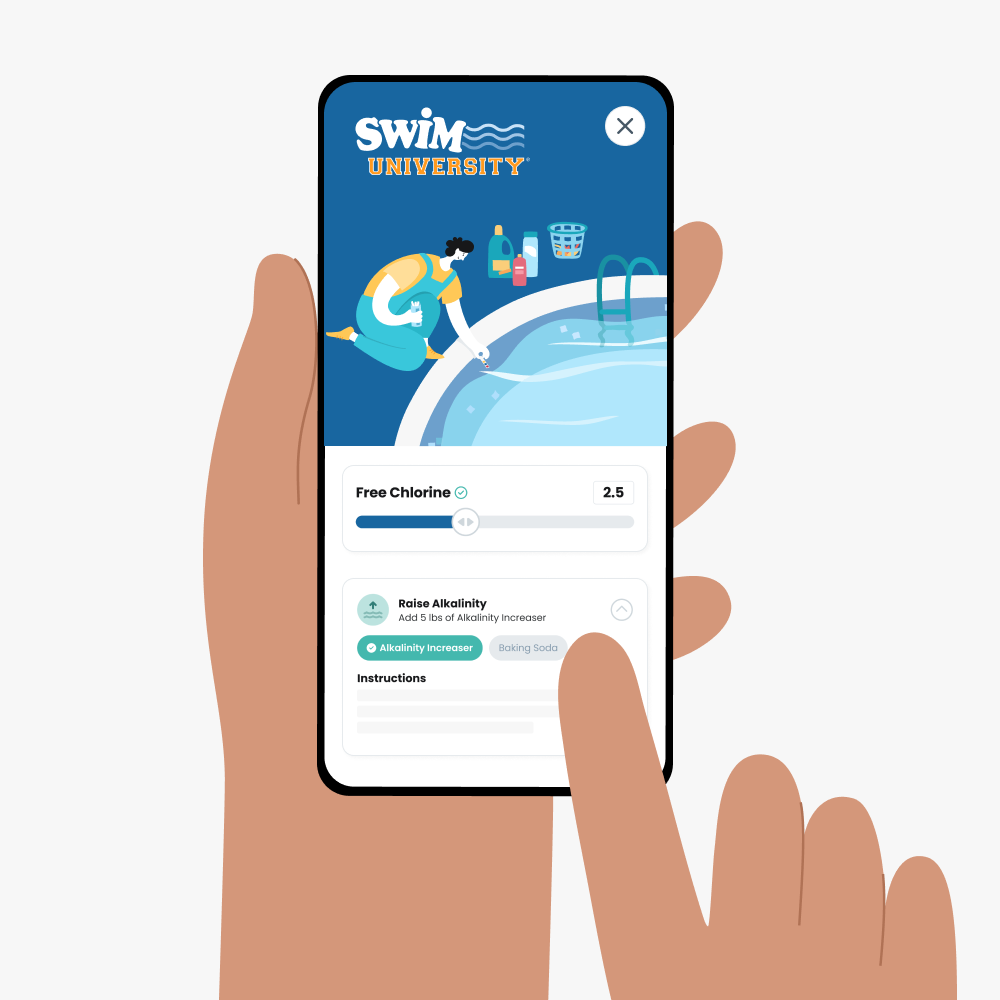
Enter your water test results. Get a custom treatment plan. Know exactly what chemicals to add to keep your pool clear. Saltwater and hot tub compatible.
Key Takeaways
- Test monthly. Check your calcium hardness at least once a month and after adding fresh water to your pool. Most 7-way test strips include a total hardness reading.
- Know your target range. Aim for 175 to 225 PPM in vinyl and fiberglass pools, and 200 to 275 PPM in concrete and plaster pools.
- Low calcium is especially bad for plaster and concrete. Water that lacks calcium will pull it directly from your pool’s surfaces, causing etching and pitting.
- High calcium causes scaling and cloudy water. It can also clog your filters, heater, and salt cell over time. Fiberglass and salt water pools are most sensitive to high calcium.
- To raise calcium, add calcium chloride directly to the pool or pre-dissolved in a bucket. Run the pump for at least 8 hours and retest the next day.
- To lower calcium, partially drain and refill your pool using a hose filter to reduce mineral content in your fill water.