Every hot tub is different. Get a free step-by-step plan for yours.
Get My Free PlanIs your hot tub water looking a little … off? Maybe a sort of cloudy, or a slightly greenish? Whatever the case, it’s just not the crystal clear water you want to soak in.
Sure hope you have some spa test strips handy, because that’s going to be your first step in diagnosing a problem
The majority of problems with hot tub water come about because it’s not balanced. Before you can add the right chemicals in the right amounts, you have to do some hot tub water testing to determine know what’s going on.

Learn our system to keep your hot tub clear while saving money so you can enjoy more soaking time without big costs.
Out of all the hot tub maintenance tasks you’ll perform over the life of your hot tub, spa water testing is the one thing you’ll do more often than anything else. At least, it should be.
The only way you’re going to know whether the water contains any contaminants or what the chemical levels are is to test the water. And that means hot tub test strips are your best buddies.
It’s not as difficult as you may think it is, especially when you have so many testing options available to you:
No matter what testing method you use, the key is to make sure you correctly take the water sample.
What matters just as much as how you collect the sample is that you get it from the middle of your hot tub.
Important: Do not take the sample near any of the jets. Try to get as close to the middle of the hot tub as possible.
It may seem counterintuitive, but test strips can sometimes actually be more accurate than liquid test kits because it can be difficult to match up the colors with the chemical drops. They’re also much easier to use.
In addition, hot tub test strips are usually less expensive than liquid testing kits, but you’ll probably end up going through them more quickly, so cost may not really be a factor in which one you choose.
To use spa test strips:
You’ll most often use regular hot tub test strips that check for things like pH, alkalinity, and chlorine. But if you also need to test for other components such as iron, copper, and salt, you can find specialty strips.
If you go with this option, make sure it includes phenol red and orthotolidine (OTO) to test pH and chlorine, respectively.
You’re shooting for a pH level between 7.4 and 7.6, with 7.5 being ideal.
Important: If the levels are low, the colors will be faint and difficult to see. For better accuracy, be sure to hold the collector up against a white background. Just a sheet of paper will do.
To take a water sample to a dealership for testing, collect the sample the same way you would if you were going to perform spa water testing at home. They may take walk-ins, but call ahead to make sure they’ll be able to help you.
To make sure the water stays sanitized and that alkalinity and pH are always in balance, perform hot tub water testing at least once a week. If your spa gets a lot of use, it’s been rained on, test it more often. And of course, test it whenever you add chemicals.
We highly recommend you take a sample to a store once a month for a professional test, as well as when you open and close your hot tub.
If your hot tub isn’t properly balanced, you can follow our guides about balancing pH in a hot tub and how to lower alkalinity in a hot tub.
If your water comes from a well, you may have higher levels of iron and copper in your hot tub. If you use city water, it may be hard, which means it contains higher levels of calcium and magnesium.
All of those factors can cause problems in your spa, including chemicals imbalances, hot tub stains, and other surface damage, meaning you’ll need to test the water more often.
Prevention costs a lot less than repairs.
If you have greenish or black stains on the shell or cloudy spa water, you may have a copper problem. It builds up in two ways.
First, the water you fill your hot tub with may contain copper. As the water evaporates from your spa, copper is left behind behind. As this continues, copper levels rise, leading to cloudy water and stains.
Because the spa has lost water to evaporation, you’ll add more, which means you add more copper, and then more water evaporates, and that leads to … yup, more copper in your hot tub.
Second, copper elements in your hot tub filter or plumbing may corrode due to a low pH level, and that corrosion will end up in the water. The longer you let it go, the worse it will get.
Most spa test strips don’t test for metals. In addition to the ones you get for pH, chlorine, and other standard factors, you’ll need a set made especially for metal testing.

This water testing kit offers a convenient way to monitor water quality without the need for reagents. It tests for iron and copper with a range of 0 to 5 ppm and 0 to 3 ppm.
It’s essential to test the pH level weekly as that can lead to a copper issue. But as for copper itself, you should only have to test the water once a month.
After testing your hot tub water, if you do find it contains a high level of copper, you have a couple of options to remedy it.
Usually a liquid you add to your hot tub water, a sequestrant binds with metals—specifically, iron, copper, and nickel—in the water to prevent them from oxidizing, or rusting, which is what causes stains. Once the metal particles are bound, they can be removed by the hot tub filter.
Be aware that a sequestrant does not remove metals from the water. And sequestrant breaks down over time, so you may need to add it on a regular basis if you have high metal levels in your water.
Learn what chemicals and minerals are present in the water where you live, and then follow the manufacturer’s instructions to ensure you use the sequestrant properly.

Quickly remove metals like iron and copper from your hot tub water.
If your water source has high metal levels, a hose filter can keep at least some of them out when you fill your hot tub.
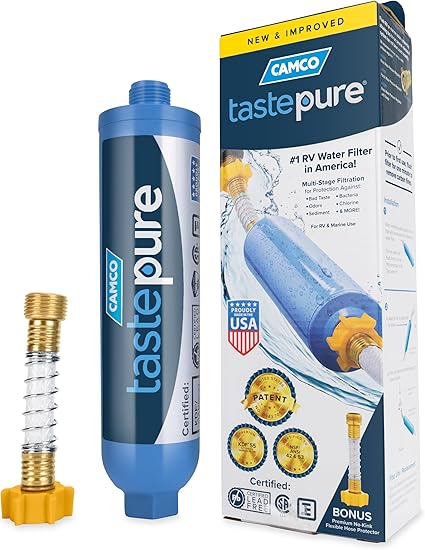
Fill your pool or hot tub with this hose filter that'll filter your water so you can have a fresh start with water chemistry.
Another good reason to test the pH level weekly is that a low level can also cause iron levels to rise, if there’s iron present in the source water.
Again, if your water comes from a well, it may have high metal levels. The process of iron being deposited in the spa is the same as for copper. Only in this case, the water will be brown or rust-colored. Ew.
Usually, the same strips or kit that test for copper will also test for iron. It just makes sense as both are metal elements.
The only difference will be that once you’ve filled the test tube with a sample of your hot tub water, you’ll add a special solution made to test for iron. Then, compare the water color to the color-coded chart included with the kit.
Once a month. But remember, test the pH level more often than that to keep iron from staining the spa shell.
Again, because they’re both metal elements, you can fix an iron problem with the same methods used for copper: metal sequestrant, keep the pH level steady, and use a hose filter when filling your spa.
Depending on where you live, you may have to deal with hard water, which means your water source has high levels of calcium and magnesium. If you see evidence of it on your shower head, you probably also see hot tub scale from time to time.
You may also have the opposite problem—too little calcium in the water. This can cause corrosion on fixtures, surfaces, and equipment. Left too long, it can get to the point where repair isn’t possible, only expensive replacement.
The solution is to keep the calcium hardness level balanced.
For total hardness—the measurement of both calcium and magnesium salts—you’re better off using a professional-grade hot tub water testing test kit rather than spa test strips.
Shoot for between 175 parts per million (ppm) and 250 ppm.
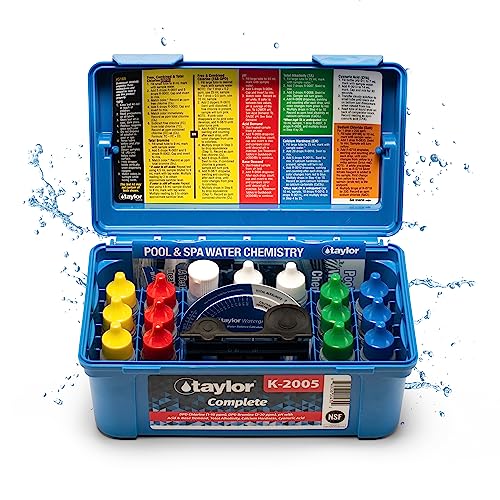
This complete water testing kit helps keep your pool or hot tub clean and safe to swim in, with easy-to-follow color instructions and all the supplies you need in one box.
Once you see scale forming, it’s too late for prevention and you’ll have to move into remedy mode. To keep that from happening, test for calcium hardness at least once a month.
But if your water source is either too soft or too hard, it’s a good idea to test more often, about once every two weeks. If your water has a serious calcium hardness issue, test once a week. You’ll be glad you did.
You have two options here.
If your water source isn’t hard, you can drain a couple of inches of water from your hot tub and replace it with softer water.
Follow the manufacturer’s instructions to ensure you use the proper amount.

Build-up of scale or calcium carbonate can potentially harm both the surface of your spa and its circulation system. The product in question effectively prevents scale by releasing potent compounds that adhere to calcium ions in your spa water, which are often the cause of such issues.
Easy. Just use a calcium hardness increaser. Again, follow the manufacturer’s instructions.

This product effectively safeguards your equipment from corrosion and etching by maintaining optimal calcium hardness levels, ensuring long-lasting protection and durability.
If you have a salt water hot tub, the salt you add to your hot tub is converted to chlorine. But you still need to make sure you don’t have too much or too little salt in the water. Too much can cause the chlorinator to work too hard, while too little might mean the water isn’t properly chlorinated.
To go easy on the chlorinator and keep the water sanitized, you want the salt level to be between 2,000 ppm and 3,000 ppm, with 2,500 ppm being ideal. You’ll need specialty hot tub test strips to measure salt levels. You use these the same way you use standard spa test strips.
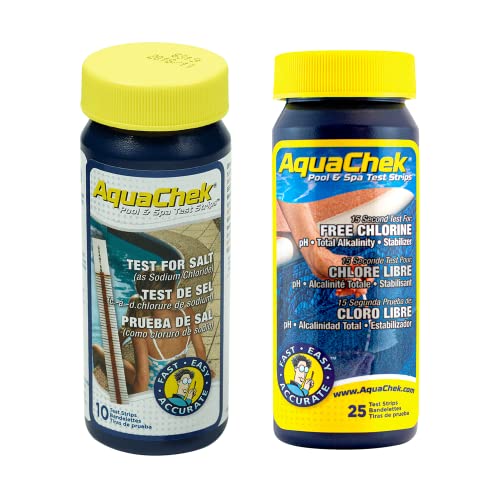
These salt test strips are designed for measuring sodium chloride levels from 400 to 7,000 ppm. They provide accuracy comparable to liquid tests without the hassle of measuring and counting drops.
You can get away with testing the salt level just once a month because it’s not as difficult to balance as other factors like pH. But if your hot tub is outside and uncovered, make sure to test after it rains, or after the spa has seen a lot of use.
Once salt dissolves into water, it stays there, so the only way to reduce a too-high salt level is to drain a little water from the spa, then add fresh water.
Ooh, this one’s a toughie. Yeah, it’s gonna take a while and a lot of work. You ready? You need to … add more salt. Yup, that’s it. Fixed.
After you add salt, give it some time to dissipate, then break out the hot tub test strips again. Just add a little at a time so you don’t accidentally raise the level too much.
This is truly the easiest way to head off problems in your hot tub. Keep a supply of spa test strips on hand, and you’ll always know the status of the water you soak in, and you can address issues before they become headaches.
Happy Soaking!
Answer a few questions and we'll tell you what to test, what to add, and when.
Get My Free Plan
Matt is the founder of Swim University. He's been in the pool and spa industry since 1996. His mission is to make pool and hot tub care easy. Each year, he continues to help people with water chemistry, cleaning, troubleshooting, and more.
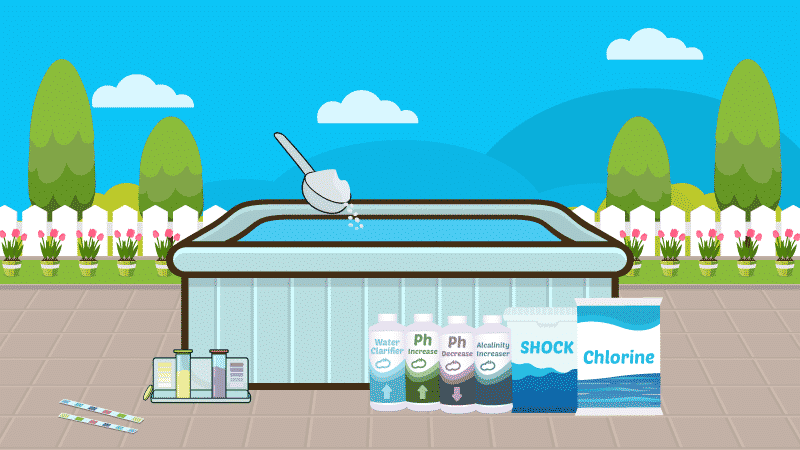
Do you know which hot tub chemicals you need to keep the water balanced? What about when and how to add them? Get a hot tub chemistry education right here.
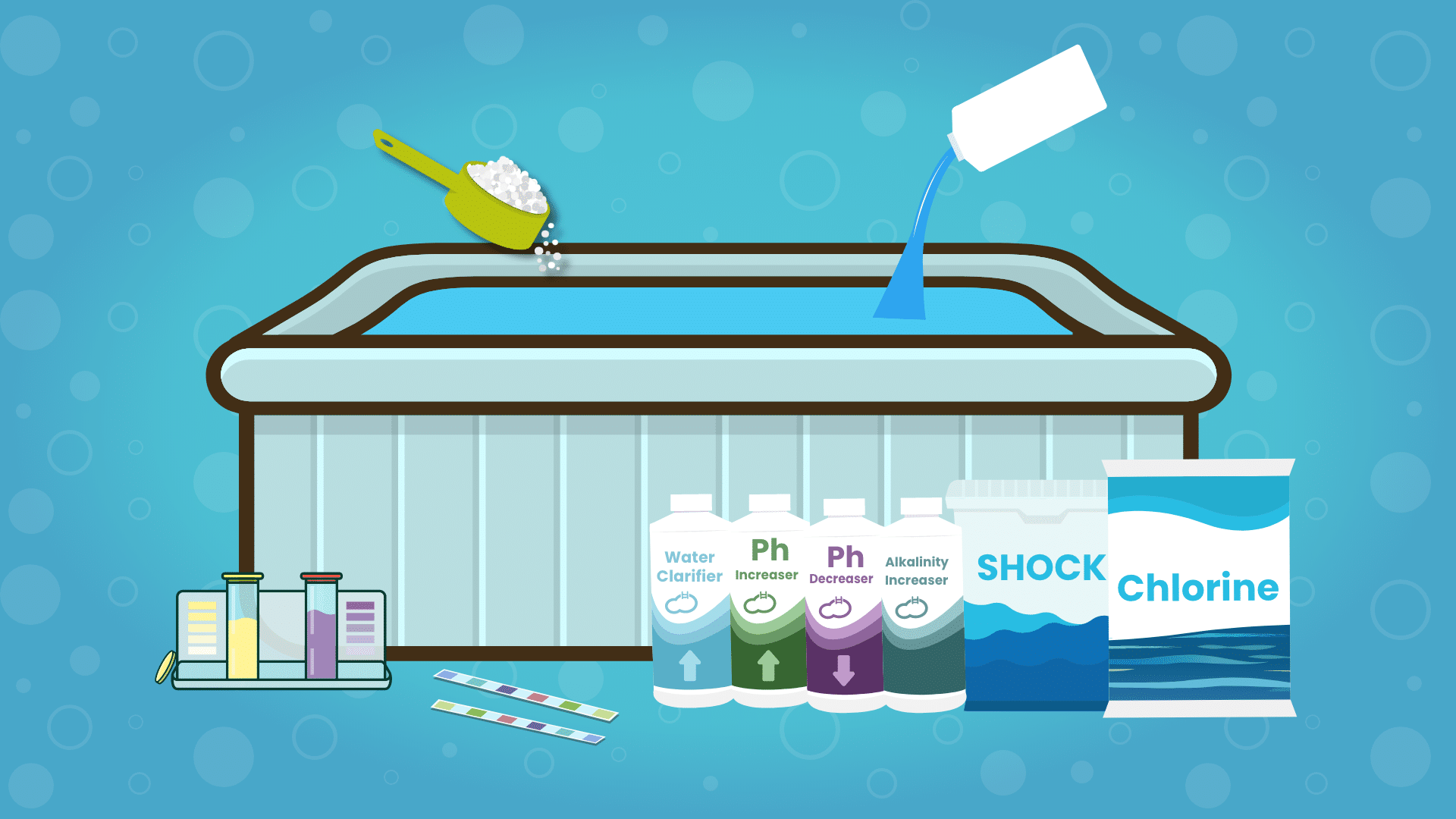
There are a few hot tub chemicals you absolutely must have and some that aren't necessary. Here's the chemicals you need and how to add them.

Thinking about kicking caustic chlorine to the curb? Consider switching to a hot tub mineral sanitizer for clean water, softer skin and easier maintenance.
Adding chemicals in the wrong order can cause cloudy water and prevent them from working. So here’s the right order to add hot tub chemicals.
Using bromine in your hot tub is eaiser than chlorine. But it only works if you know when to add it (with other chemicals). Here’s a quick guide.
Too much bromine in your hot tub? High bromine is bad for the spa itself and its users. Here's an easy way to lower bromine in your hot tub.


