


How to Remove Calcium Buildup on Pool Tile

That white, chalky buildup on your pool tile is calcium scale, and it’s one of the most common pool problems (even in a well-maintained pool).
In most cases, calcium scale is treatable and removable, but it will take some elbow grease. The better news is that once you know what’s causing it, you can prevent it from coming back.
Check out the video tutorial below or keep reading for a walk-through on removing calcium buildup.
This is the ultimate guide to keeping your pool sparkling clean throughout the year that contains everything you need to know about taking care of your pool the right way. Including saltwater pools.
What Is Pool Scale and What Causes It?
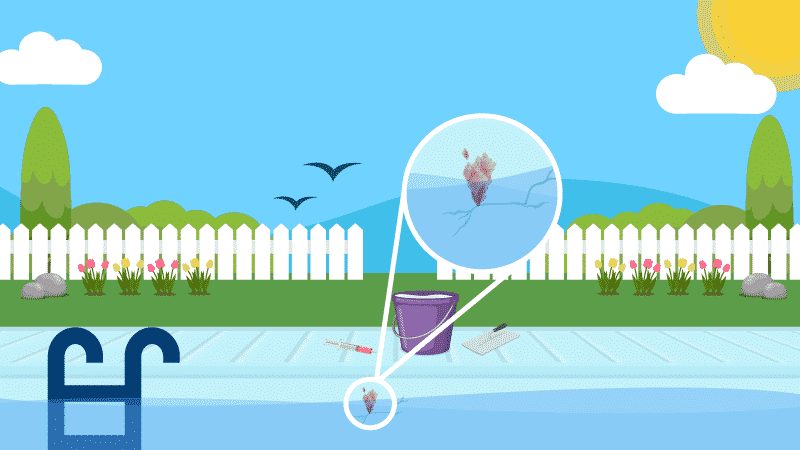
Pool scale is crystallized calcium mineral deposits that form on your pool surfaces. It happens when calcium is no longer dissolved in the water and starts to settle on surfaces or cloud up the water.
You’ll usually see it as a white or grayish-white crust along the waterline, on your tiles, or on your pool walls. In more severe cases, it can affect the bottom of the pool, too.
A few things can cause it. If you fill your pool with hard water, you’re already adding high levels of calcium to the mix. High pH is another big contributor. When your pH climbs too high, calcium becomes less soluble and starts to deposit onto surfaces. Using cal-hypo shock regularly can also raise your calcium hardness over time since it contains calcium.
How to Remove Calcium Scale on Pool Tile
The supplies you need depend on how bad the scale is and what type of pool surface you have. Gather these before you get started:
- Test strips or a test kit to check your water chemistry
- pH decreaser or muriatic acid to lower pH and alkalinity into the treatment range
- Pumice stone for scrubbing scale off concrete and plaster surfaces
- Tile and surface eraser for more delicate surfaces like glazed tile, vinyl, or fiberglass
- A stiff pool brush for brushing down the pool walls
- Liquid scale remover to chemically loosen calcium deposits from pool surfaces
- Safety gloves and eye protection, especially when working with muriatic acid
Step 1: Test and Balance Your Water Chemistry
First, test your water. High pH and alkalinity will make your treatment less effective.
For scale removal, lower your total alkalinity to between 60 and 80 PPM and keep your pH between 7.2 and 7.6. This makes the water “aggressive” enough to start dissolving existing calcium deposits. Once the scale is gone, you can bring both levels back to the normal maintenance range (80–120 PPM for alkalinity, 7.4–7.6 for pH).
To lower both levels, use muriatic acid or a
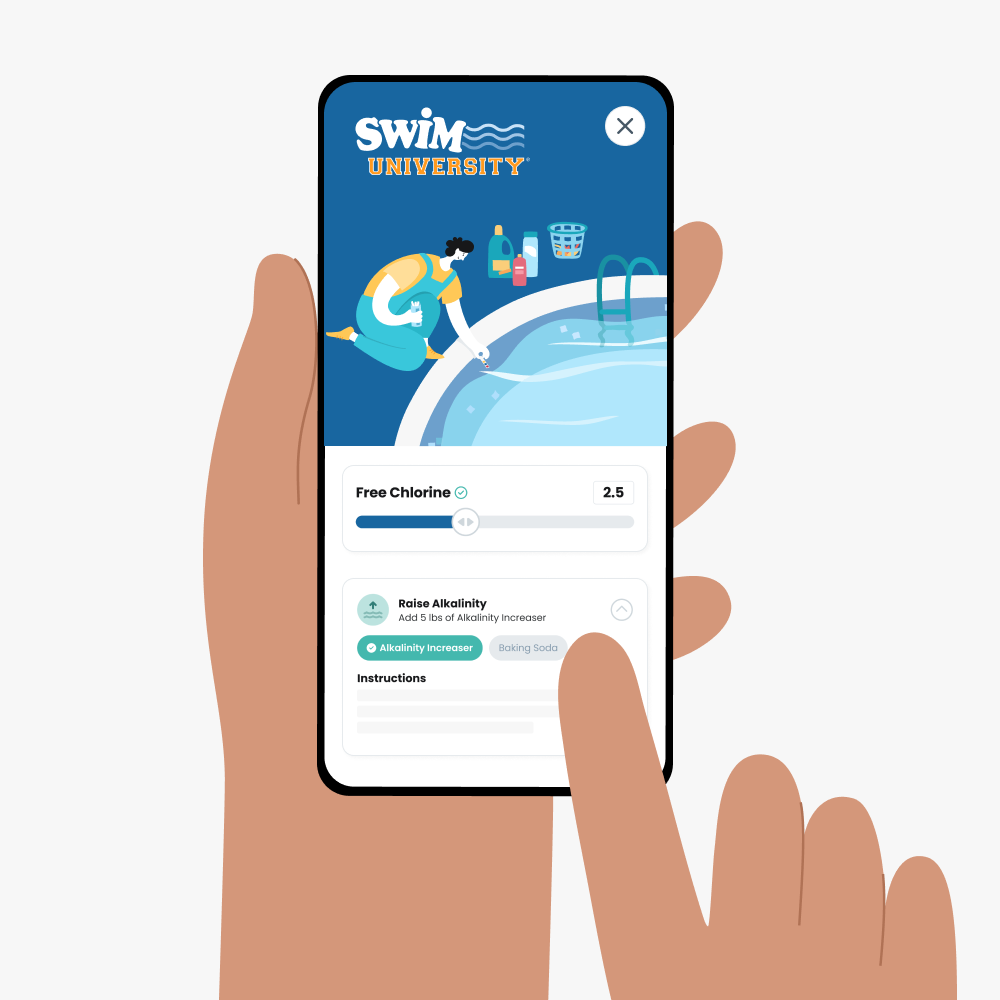
Enter your water test results. Get a custom treatment plan. Know exactly what chemicals to add to keep your pool clear. Saltwater and hot tub compatible.
Step 2: Brush the Pool Walls
Next, grab a stiff pool brush and scrub any visible scale. This loosens the surface layer of deposits and helps the descaling chemical penetrate better.
Don’t worry about removing everything at this stage. You’re just breaking it up. Focus on the areas with the heaviest buildup.
Step 3: Add a Liquid Scale Remover
Also called a liquid descaling agent, this product chemically loosens calcium deposits from your pool surfaces so they can actually be removed with brushing or light sanding.

A pool cleaner that removes calcium, iron stains, and scale from surfaces, tile, and equipment without scrubbing, acids, or draining your pool.
Add at least one half-gallon (1.89 liters) to your pool to start. For heavy or widespread scale, you may need two full containers. Results can take several days or even a few weeks for severe cases.
Keep your pH and alkalinity in that lower treatment range during this period. If your pH climbs back above 7.6 or your alkalinity rises to 120 PPM, the treatment will lose its effectiveness.
Step 4: Run the Filter
Run your pump for 48 hours after adding the liquid scale remover to help it circulate throughout the pool. Hold off on swimming during this time. The water may be more acidic than usual.
Step 5: Scrub the Scale Off
After the descaling agent has had time to work, those deposits should be loosened and will be much easier to remove. Here’s what to use based on your pool surface:
- Plaster or concrete: Use a wet pumice stone to scrub the scale off. Make sure both the stone and the surface are wet. Dry pumice can scratch. A stiff pool brush may be enough for lighter buildup.
- Glazed tile, vinyl, and fiberglass: Use a surface eraser or tile eraser instead. It’s much gentler and safely buffs away buildup without scratching.
- Stubborn rough scale on plaster or concrete: For thick, grey scale that’s really caked on, lightly sand with 80 to 100 grit sandpaper before scrubbing. This is for plaster and concrete only and not tile, fiberglass, or vinyl.
For lighter, softer deposits, a putty knife can also help scrape off loose scale before scrubbing.
Step 6: Spot Treat Stubborn Areas
For any persistent spots that scrubbing didn’t clear, apply liquid scale remover directly to the affected area. Let it sit for a few minutes, then scrub again.
Step 7: Keep Up the Treatment
Finally, keep adding maintenance doses of your liquid descaling agent each week over several weeks. This keeps the calcium suspended in the water rather than letting it settle back onto your surfaces.
You can swim between doses. Just make sure all your other chemistry levels are in range first. Keep monitoring your pH and alkalinity, and keep them in that lower treatment range until the scale is fully gone.
How to Prevent Calcium Scale from Returning
Treating scale is one thing. Preventing it from coming back is the real win.
Scale is almost always a sign that your pH or calcium hardness is too high. Make a habit of testing your pH weekly and your calcium hardness monthly. The ideal calcium hardness range is 175–225 PPM for vinyl and fiberglass pools and 200–275 PPM for concrete and plaster pools.
If you live in an area with hard water, use a hose filter or a water softener when filling your pool. Add a weekly maintenance dose of stain and scale preventer after your initial treatment. It won’t lower your calcium hardness, but it will prevent calcium from settling on surfaces.
Also, consider switching from cal-hypo shock to dichlor shock or liquid chlorine. Cal-hypo contains calcium, which raises your calcium hardness over time. For an extremely heavy scale that doesn’t respond to chemical treatment, professional bead blasting may be your best option.
Key Takeaways
- Calcium scale forms when calcium is no longer dissolved in the water and deposits onto pool surfaces. This is usually caused by high pH, hard water, or cal-hypo shock use.
- For scale removal, lower the total alkalinity to 60–80 PPM and keep the pH between 7.2 and 7.6 to make the water aggressive enough to dissolve deposits.
- Use a liquid scale remover (at least half a gallon / 1.89 liters) to chemically loosen deposits, then follow up with a pumice stone, surface eraser, or brush, depending on your pool surface.
- Run your filter for 48 hours after adding the descaling agent and avoid swimming during treatment.
- Keep adding weekly maintenance doses of scale preventer to keep calcium suspended in the water and off your surfaces.
- Prevent future buildup by testing your water regularly, using a hose filter when filling, and switching from cal-hypo shock to a calcium-free alternative like dichlor or liquid chlorine.