Every hot tub is different. Get a free step-by-step plan for yours.
Get My Free PlanIf you can see water pooling around the base of your spa or your water level keeps dropping, you’ve likely got a hot tub leak. Don’t panic. Hot tub leak repair is possible, and you can often do it yourself without calling a pro.
Common leaks happen around plumbing and equipment (not in the shell itself), so there’s a good chance you can track them down and fix them yourself.
Check out the troubleshooting section in the Hot Tub Handbook for a complete guide, or keep reading for hot tub leak help.

Learn our system to keep your hot tub clear while saving money so you can enjoy more soaking time without big costs.
Here are the most common leaks in a hot tub, in order of most likely:
The most frequent source of leaks is union fittings, especially those connected to your pump and heater. These fittings can loosen over time, and their O-rings can wear down. Here are the
After union fittings, the pump is the next most likely culprit. Check underneath the pump for standing water. A leaking pump seal is a common issue and can usually be replaced. A cracked pump housing, on the other hand, may mean replacing the entire pump.
Start by opening your equipment access panel and visually inspecting all the pipes, fittings, and components. Check this while the system is both running and off. Here are three methods to help you zero in on the source:
With the system on, carefully examine all pipes, connections, and equipment. Look for water drops, dampness, or corrosion. Then turn the system off and look again. Some leaks only show up under pressure.
A pool and spa dye test kit can help you pinpoint the exact location of a leak. Add leak-detecting dye or a few drops of dark food coloring to your spa water near a suspected area. Watch as the dye moves toward the leak source like a current being pulled in.
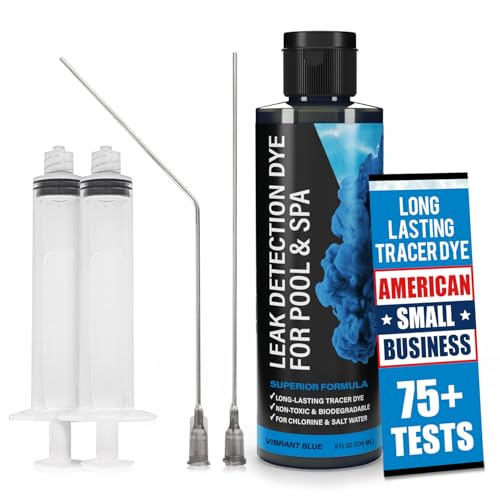
This dye tester helps you find the precise location of structural pool and hot tub leaks. Simply squirt the syringe into the water close to the potential problem area, and the dye will flow towards the source of a leak.
Keep the water as still as possible for the best results. Squirt the dye near the surface, close to the area you’re investigating, and wait. If the leak is nearby, you’ll see the dye travel toward it.
Let your water level drop naturally and mark the level each day. When the water stops dropping, the leak source is likely just above that point.
This works because the water will stop escaping once the level drops below the leak. It won’t pinpoint an exact spot, but it narrows things down quickly.
The right repair method depends on what you find. Here’s how to handle the most common fixes.
Always turn off the power to your hot tub at the breaker before repairing any equipment or plumbing.
Close the gate valves first, then loosen the union by hand. Check the O-ring for damage and replace it if it’s worn out or stretched. Realign the union and hand-tighten it back into place. Never use a wrench, since you could crack the fitting.
If you find a cracked or damaged PVC pipe, you’ll need to cut out the damaged section and replace it with a new piece of pipe. Use rubber hose clamps on each side to secure it in place.
Replace pump seals if they’re leaking and tighten any loose connections. If a heater component is leaking, like the heating element or pressure switch, it will need to be replaced. Multiple leaks in the heater assembly may mean it’s time to replace the whole unit.
If you can’t reach the leak or aren’t sure where it is, try a liquid spa leak repair product. You add it through the skimmer intake or filter well (with the filter cartridge removed). It creates a sealant over small cracks by forming a microscopic adhesive layer when it comes into contact with water. This isn’t always a permanent fix, but it can buy you time while you figure out the real source.
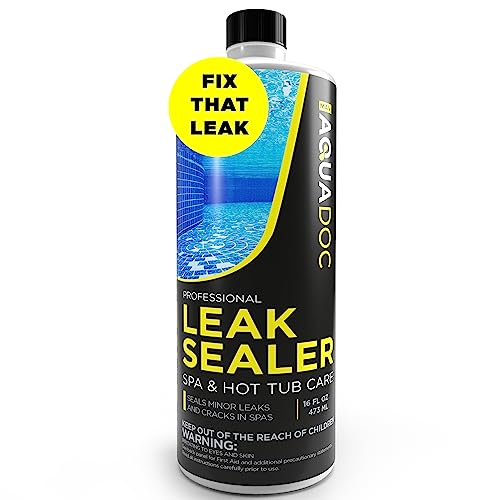
This effective sealant works within 24 hours to quickly address minor leaks, offering a simple and rapid fix without the need for draining.
If you notice more water loss when your jets are running, the leak is likely somewhere in your plumbing system. It’s specifically in a spot that’s only under pressure when the pump is active.
Check your jet fittings and plumbing connections first. Look for loose connections, failed gaskets behind the jets, and cracked PVC pipes leading to the jets. Also, inspect the union fittings connected to the pump and heater, since these are under the most pressure during normal operation.
One quick test: run your hot tub for 24 hours and note the water loss. Then run it for another 24 hours with the pump off. If the water loss is greater with the pump running, the leak is almost certainly in the pressurized plumbing or equipment.
Water appearing at the base of your hot tub means there’s a leak in the equipment bay or the plumbing beneath the shell. Start by removing your access panel and inspecting everything you can see.
Look for water pooling under the pump, near the heater assembly, or around the valve connections. Check the pump seal and housing, inspect the union fittings, and trace all visible PVC pipes for cracks or loose clamps. Use a flashlight to get a clear view of components tucked into the back corners.
If the equipment looks dry but you’re still losing water from the bottom, the leak could be in the plumbing runs beneath the shell. That’s when a liquid spa leak sealant or a professional leak detection service is worth considering.
If your hot tub starts leaking after you drain and refill it, the cause could be as simple as a union fitting that wasn’t tightened properly during winterization or a deep clean. First, check all the unions and hand-tighten anything that feels loose.
It’s also worth inspecting any O-rings or gaskets that may have dried out while the tub was empty. Rubber seals can shrink or crack when they’re not submerged. A quick replacement of any damaged O-rings often solves the problem.
If none of that explains it, use the dye test to trace the leak while the system is running. A fresh fill, combined with active pressure, can sometimes reveal a leak that was hidden.
Answer a few questions and we'll tell you what to test, what to add, and when.
Get My Free Plan
Matt is the founder of Swim University. He's been in the pool and spa industry since 1996. His mission is to make pool and hot tub care easy. Each year, he continues to help people with water chemistry, cleaning, troubleshooting, and more.
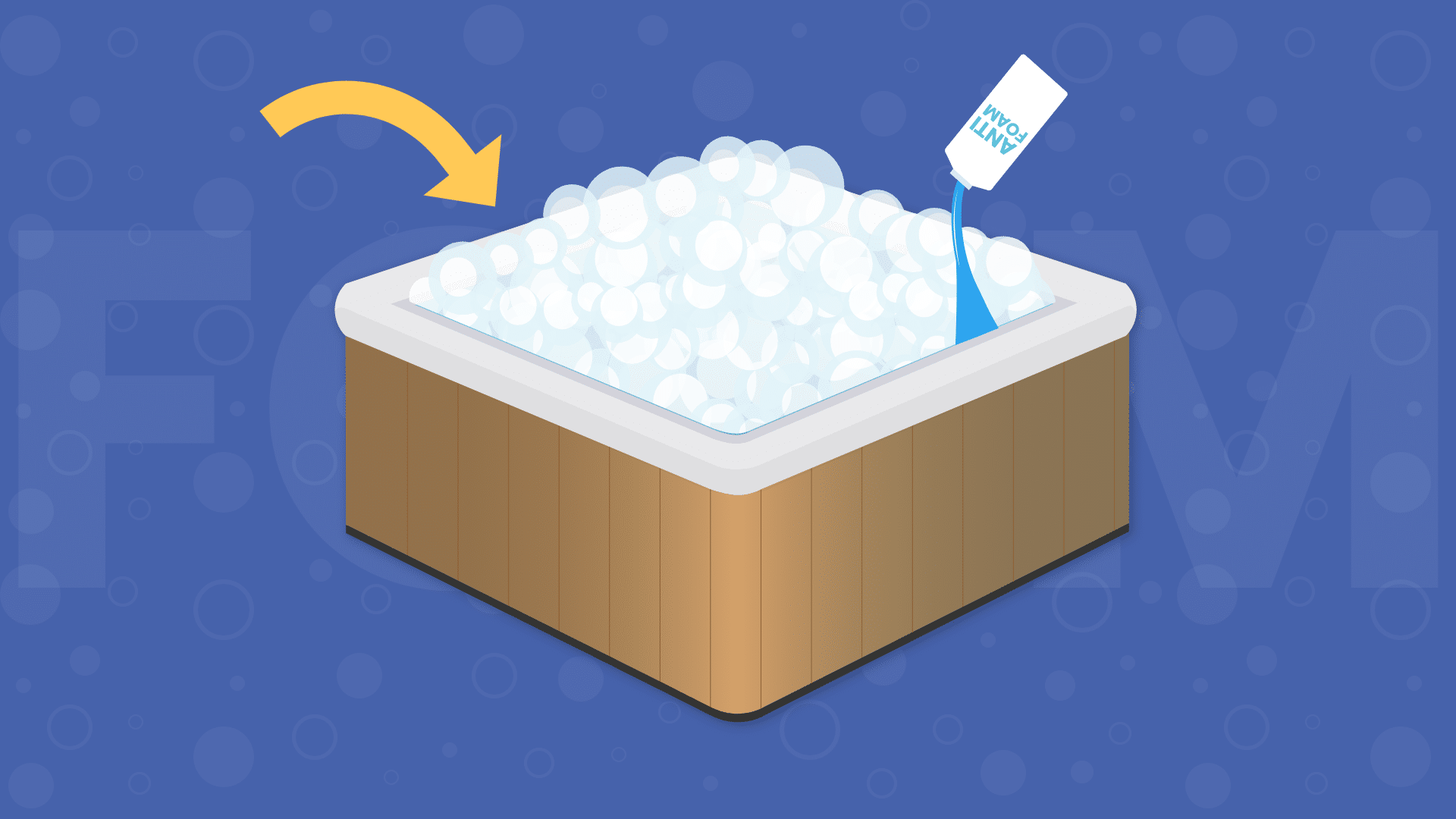
Did you find foam in your hot tub? Don't worry. It's easy to get rid of hot tub foam and even easier to prevent it. Let's learn how...
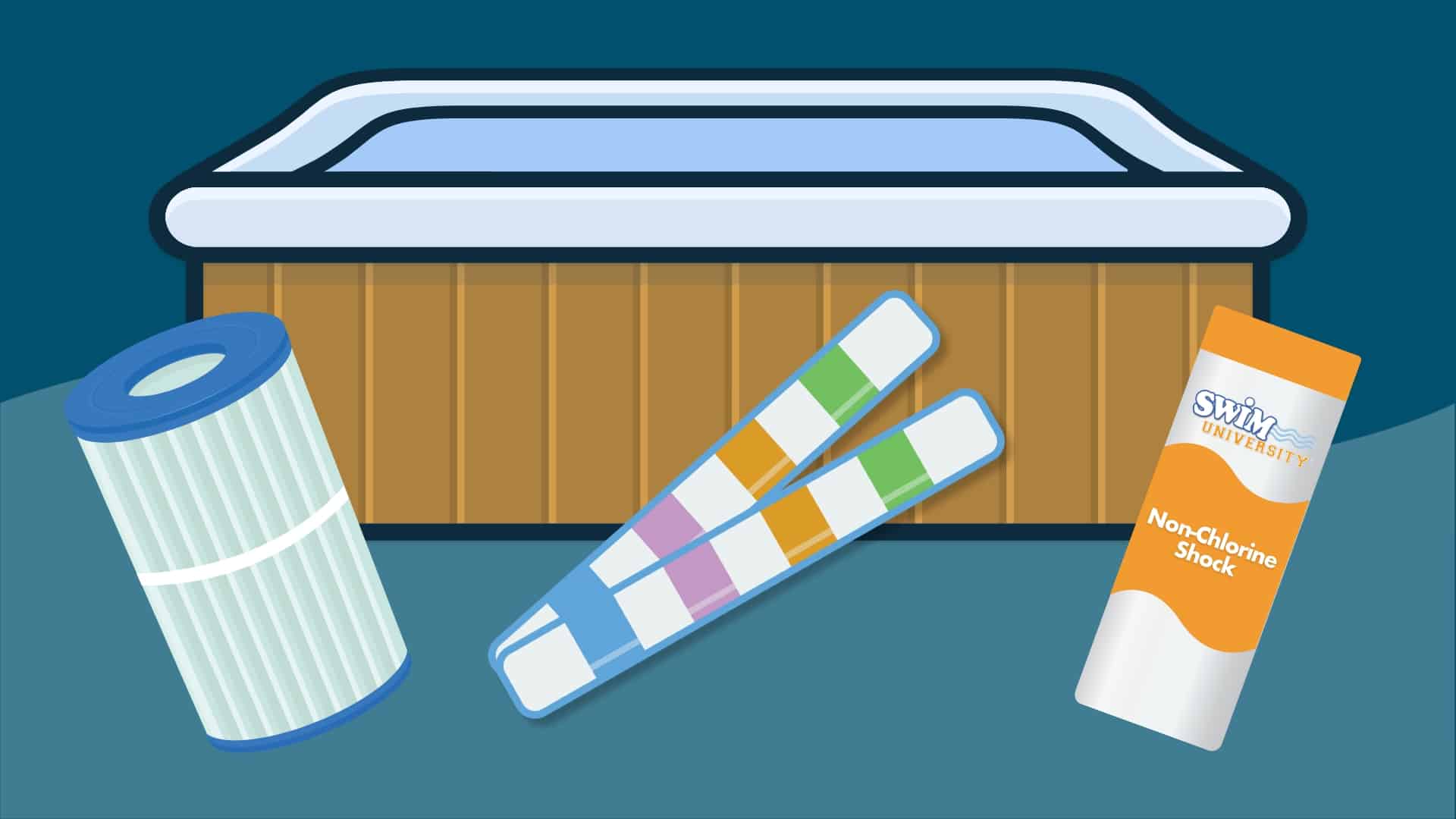
Say goodbye to cloudy hot tub water! Learn how to achieve crystal clear results with a quick filter rinse, proper water chemistry, and a powerful shock treatment. Informal and easy-to-follow guide.

What’s that buildup in your spa shell? Oh, it’s just hot tub scale. It’s not harmful, but the longer you leave it, the bigger the problem you may have.

Let's dive into why Epsom salt and hot tubs don't mix, the science, and effective alternatives for achieving similar benefits.

Is your hot tub sitting stagnant because the spa blower isn't working and you're not sure what to do? All you need is a new blower and about half an hour.
Hot tub troubleshooting on your own can save you big bucks on simple hot tub repairs, plus let you know when to step back and call a pro.


