


How to Use Soda Ash in a Pool to Raise pH

Soda ash is an effective and often cheaper way to raise your pool’s pH. But add it the wrong way, and you’ll end up with a pool that looks like a glass of milk. Here’s everything you need to know to use soda ash in a pool.
An illustrated, step-by-step guide to taking care of your pool yourself. Works for chlorine and saltwater pools.
What Is Soda Ash?
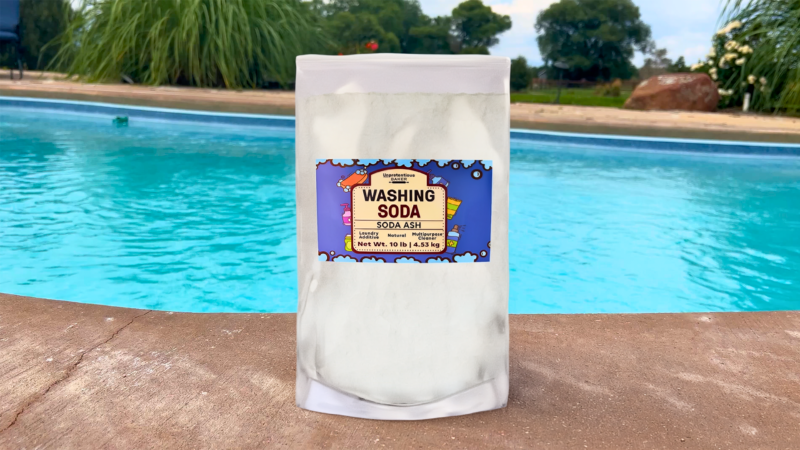
Soda ash, a.k.a. sodium carbonate, is a fine, granular powder with a very high pH of around 11.6. That high pH makes it highly effective at raising your pool’s pH. It’s the primary active ingredient in pH increasers from pool stores.
You may also have heard of washing soda, which is the same compound (sodium carbonate), but it’s not the same as soda ash. Washing soda contains water molecules, which makes it less concentrated and better suited for laundry and household cleaning. Soda ash is the dry version, making it stronger and more effective for pool chemistry. You can use washing soda if that’s easier to find, but you’ll need a larger dose.
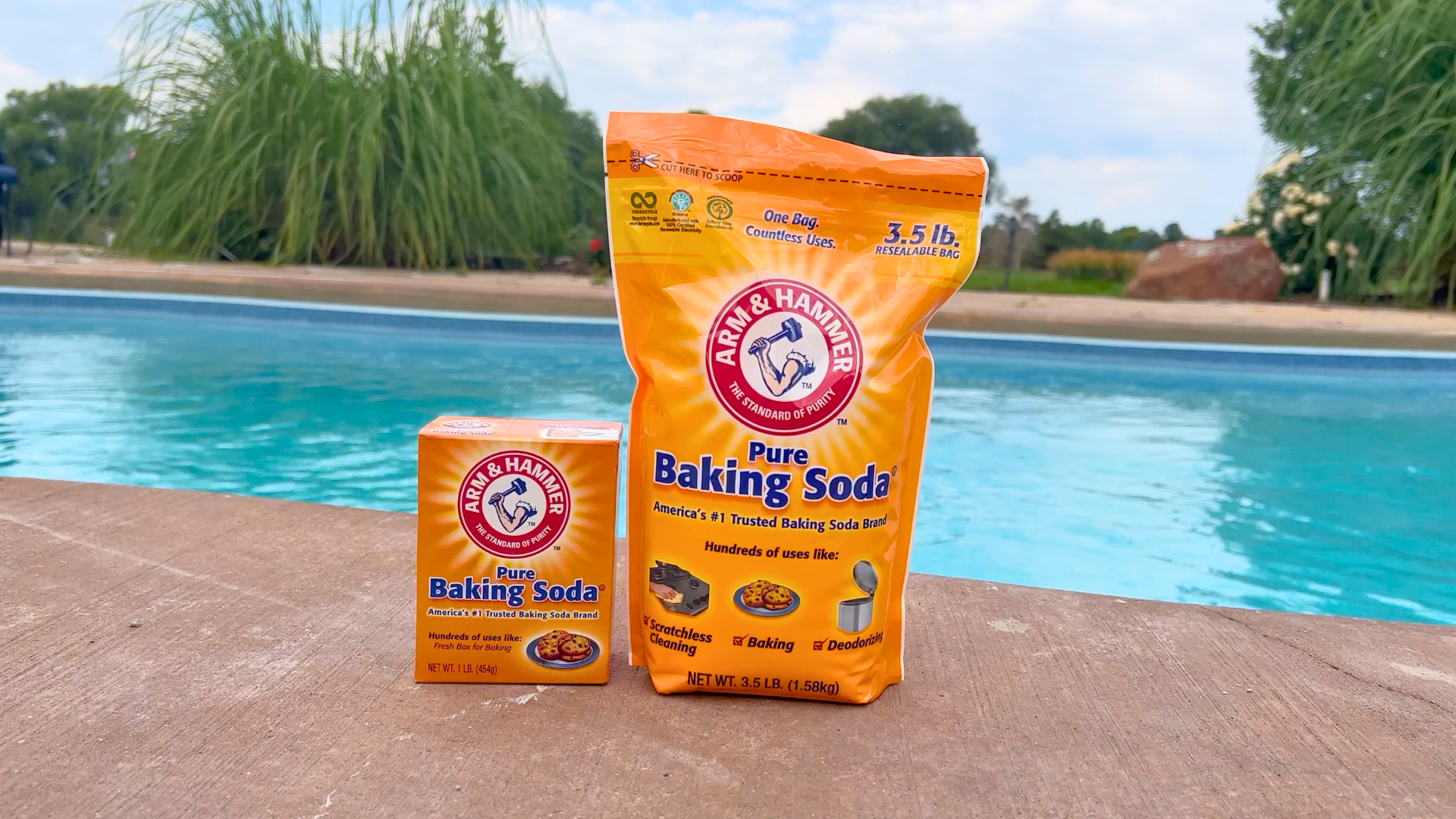
It’s also worth knowing the difference between soda ash and baking soda. Baking soda (sodium bicarbonate) is better for raising total alkalinity, but it only slightly raises pH. Soda ash, on the other hand, has a stronger impact on pH, but it will still slightly raise your alkalinity. Use soda ash when your pH is low, and baking soda when your alkalinity is low.

This is the main chemical used to increase your pool's pH. So instead of using a branded version of pH Increaser, you can just use soda ash.
What Does Adding Soda Ash Do to a Pool?
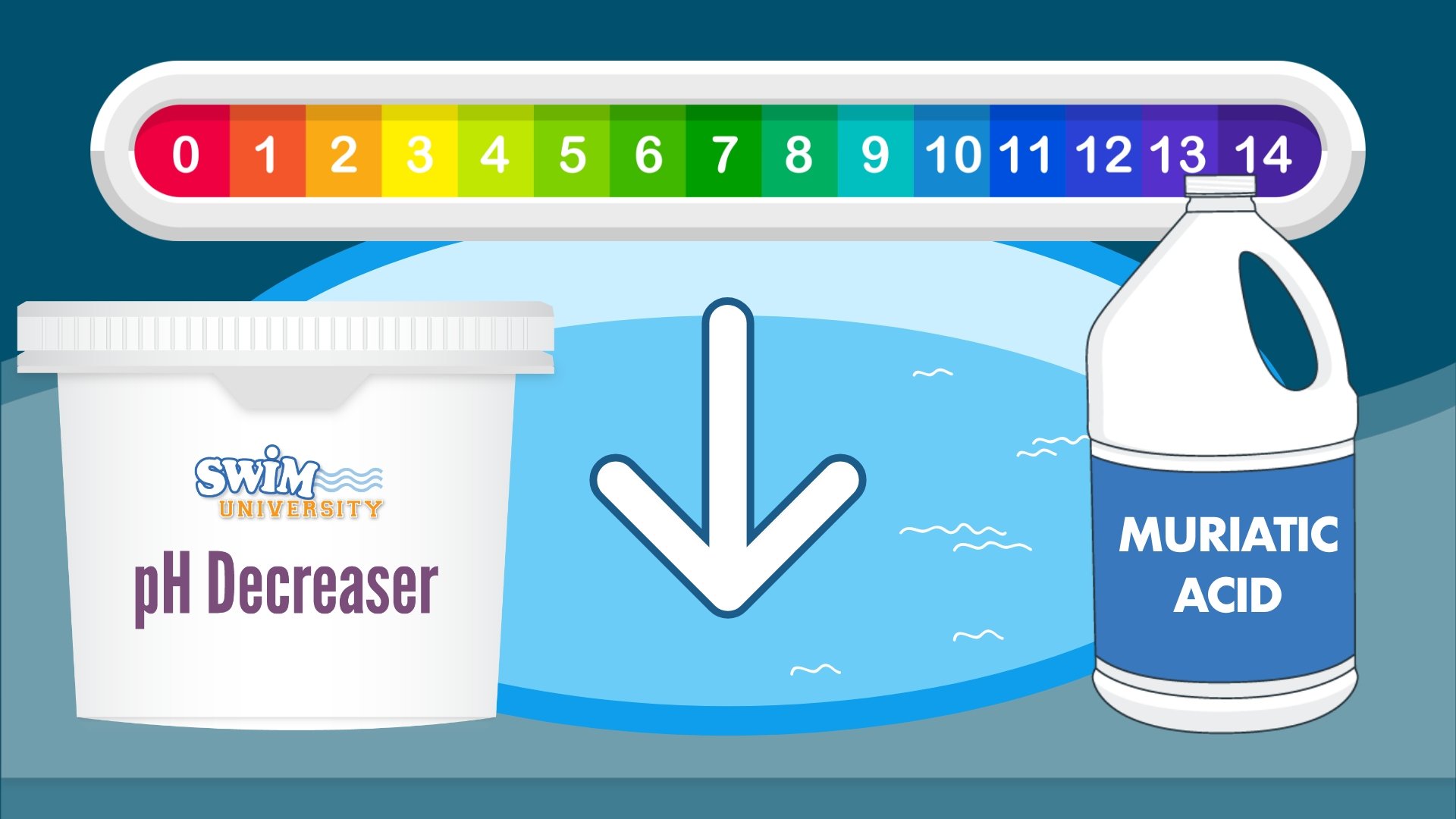
Adding soda ash to a pool raises your pH level. When your pH drops below 7.2, the water becomes acidic. Acidic water irritates swimmers’ eyes and skin, slowly corrodes metal parts, and reduces the effectiveness of your chlorine. With a very high pH of around 11.6, soda ash neutralizes the acidic water, bringing the pH back into the ideal range of 7.4 to 7.6. It also provides a small boost to your total alkalinity.
How Much Soda Ash for a 10,000-Gallon Pool?
Always test your water first, so you know exactly how far off your pH is before you dose. Here’s the general dosing guide based on your pool size and how much soda ash to use to raise your pH:
Standard Dose of Soda Ash
For a pool with a pH below 7.2, add 1 pound (0.45 kg) of soda ash per 10,000 gallons (37,854 liters) of water. This is the go-to starting dose for most situations.
Smaller Dose of Soda Ash
If your pH just needs a small nudge, use 6 ounces (170 grams) per 10,000 gallons (37,854 liters). This will raise your pH by roughly 0.2 units.
Maximum Dose of Soda Ash
Never add more than 4 pounds (1.8 kg) per 10,000 gallons (37,854 liters) in a single treatment. Adding too much at once is the number one cause of cloudy water after using soda ash.
How to Add Soda Ash to Your Pool
The method matters just as much as the amount. Follow these steps to get the best results.
Step 1: Test Your Water First
Before you add anything, test your pool water. You only need soda ash if your pH is below 7.4. Use test strips or, for a more accurate reading, a test kit.
Step 2: Pre-Dissolve the Soda Ash
Pouring dry soda ash directly into the pool can cause clouding. Pre-dissolving helps it distribute evenly and reduces the risk of cloudy water. First, fill a bucket with pool water. Then slowly add the measured amount of soda ash and stir it until it dissolves.
Step 3: Run the Pump and Add It Near a Return Jet
Make sure your pump is running. Then slowly pour the dissolved solution around the perimeter of the pool or near a return jet. The return jet helps push the solution through the water and mix it evenly.
Step 4: Let It Circulate for Several Hours
Give the water at least 4 to 6 hours to circulate before you retest or swim. The pH won’t stabilize right away, and retesting too early can give you a misleading reading.
Step 5: Retest and Repeat If Needed
After circulation, test your pH again. If it’s still below 7.4, you can repeat the process. Just remember the maximum dose rule: don’t add more than 4 pounds (1.8 kg) per 10,000 gallons (37,854 liters) in one go.
Enter your water test results. Get a custom treatment plan. Know exactly what chemicals to add to keep your pool clear. Saltwater and hot tub compatible.
Why Soda Ash Sometimes Makes Pool Water Cloudy
One of the most common complaints with soda ash is that it turns the water a milky white color. This is called a soda ash cloud, and it happens when the product is added too quickly or in too large a dose.
The sudden spike in pH causes calcium in your water to temporarily fall out of solution, creating tiny particles that make the water look hazy. It’s alarming, but it’s fixable.
How to Clear a Soda Ash Cloud
First, keep your filter running. Usually, the cloudiness will clear on its own as the water reabsorbs the calcium. If it doesn’t clear up after a day or two, you can add a small amount of diluted muriatic acid to the affected area to reverse the reaction. Don’t overdo it. Add a little, wait, and retest before adding more. Keep in mind that muriatic acid will lower your pH in the process.
The best way to avoid this problem entirely is to always pre-dissolve your soda ash and never exceed the maximum dose in a single treatment.
Key Takeaways
- Soda ash (sodium carbonate) raises the pH of pool water and is the primary active ingredient in pH increaser found at most pool stores.
- The standard dose of soda ash is 1 pound (0.45 kg) per 10,000 gallons (37,854 liters) when the pH is below 7.2. Never exceed 4 pounds (1.8 kg) per 10,000 gallons in one treatment.
- Always pre-dissolve soda ash in a bucket of pool water before adding it to prevent cloudy water.
- Pour it near a return jet with the pump running, and wait 4 to 6 hours before retesting.
- Cloudy water after adding soda ash is caused by too much being added too fast. Run your filter, and it will usually clear on its own.
- Soda ash is not the same as baking soda. Use soda ash to raise pH, and baking soda to raise total alkalinity.