


Pool Valves: Understanding How They Work

Your pool valves control how water flows through your entire system. If they’re in the wrong position or you shut off the wrong valve, you can starve your pump of water, lose power to your suction-side cleaner, or damage your filter. Get them right, and your pool runs like clockwork.
The Types of Pool Valves and When to Use Them
There are four main types of pool valves you’ll come across: shut-off valves, 3-way diverter valves, multiport valves, and check valves. Each one does a different job in your pool.
1. Shut-Off Valves (Ball Valves)
These are the simplest valves in your system. A shut-off valve does exactly one thing: it stops the flow of water. You’ll typically find these near your pump or filter, and they’re most useful when you need to isolate a section of plumbing for repairs.
Ball valves are the most common type of shut-off valve on modern pools. They’re easy to recognize: a quarter turn opens or closes them completely.
When to use them: Any time you need to stop water flow to work on equipment. Always turn off your pump before closing a shut-off valve.
2. 3-Way Diverter Valves (Jandy Valves)
These are the workhorses of your pool’s suction side, where the water is pulled from your pool towards the pump. A 3-way diverter valve controls the flow from multiple plumbing lines at once. You’ll find them on the suction side controlling flow from your skimmer, main drain, and cleaner line. They also appear on the pressure side, directing water to features such as a spa or waterfall.
You’ll also hear these called Jandy valves. The handle lets you open, close, or partially restrict multiple lines simultaneously.
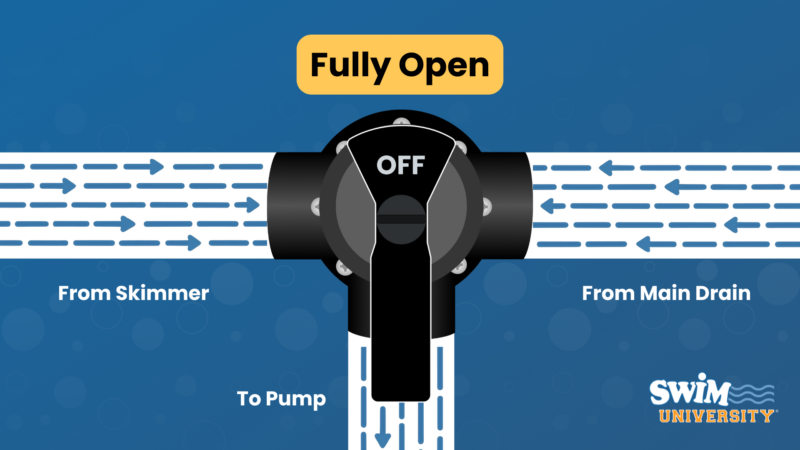
Here’s a breakdown of the common positions for 3-way valves:
Fully Open
All ports are open and flowing. This is your default position for everyday pool operation. Both your skimmer and main drain pull water at full flow.
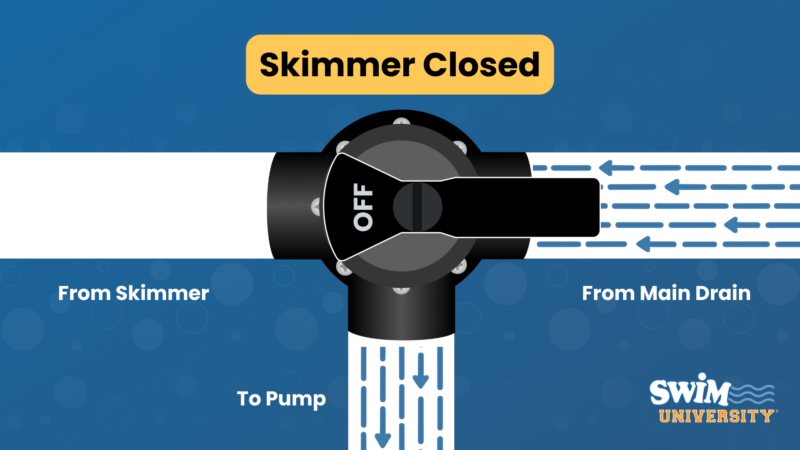
Skimmer Ports Closed
Only the main drain pulls water. This is useful when you want to pull debris from the pool floor or need to work on something below the skimmer line. You’ll rarely need this setting for regular swimming.
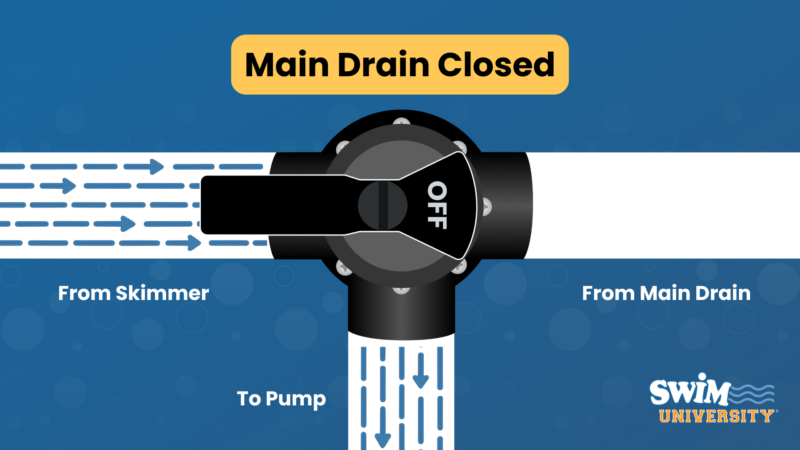
Main Drain Closed
All suction goes to the skimmer. Use this when there’s heavy surface debris or when your main drain isn’t working. If you only have one main drain (common in older inground pools), this setting also eliminates a potential suction hazard.
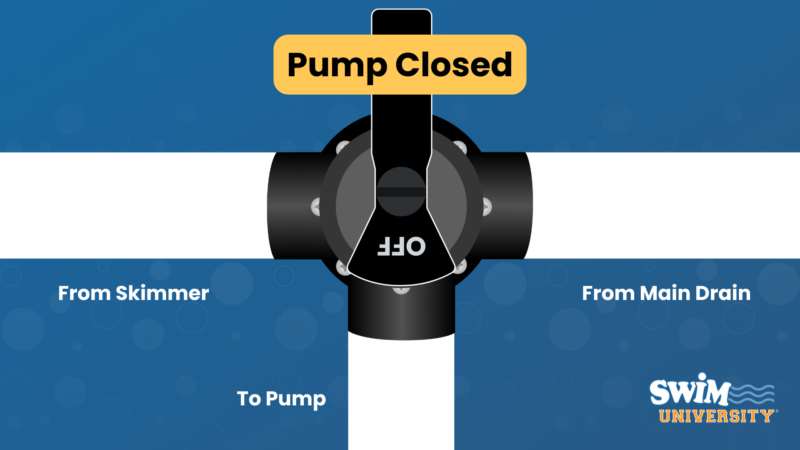
Pump Port Closed
This completely stops water from flowing into the pump. Only use this when the pump is off. It’s the right position to make repairs or winterize your pool.
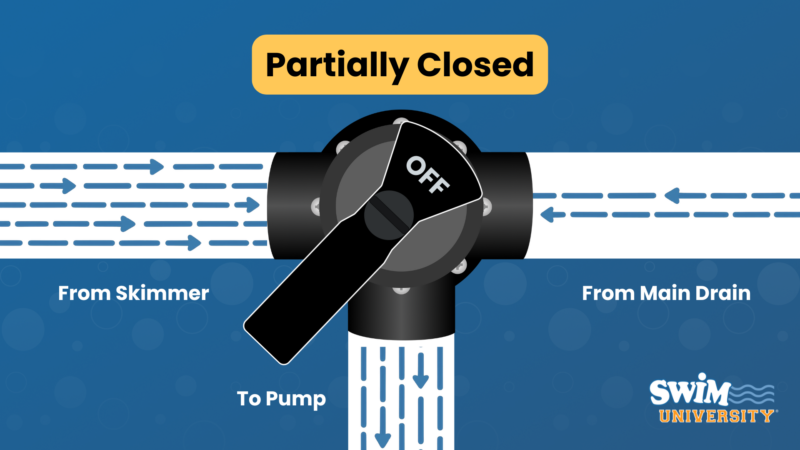
Partially Closed
This restricts flow without completely cutting it off. This is the most useful position for redirecting suction. For example, partially closing the main drain increases the suction power of your skimmer or suction-side cleaner.
3. Multiport Valves
The multiport valve sits on top of or on the side of your filter tank. It’s the most feature-rich valve in your system, with multiple settings that serve specific purposes.
Always turn your pump off before moving the multiport valve handle. Switching it while the pump is running can blow out the internal gasket, causing leaks. When turning the handle, move it in one consistent direction (usually clockwise) to keep the gasket in good shape.
Here’s what each setting does:
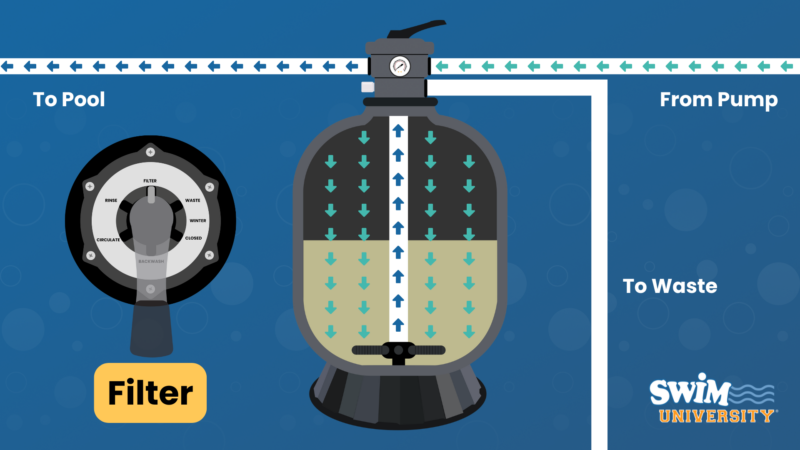
Filter
Your normal everyday setting. Water passes through the filter media and returns to the pool. This is where your valve should spend most of its time.
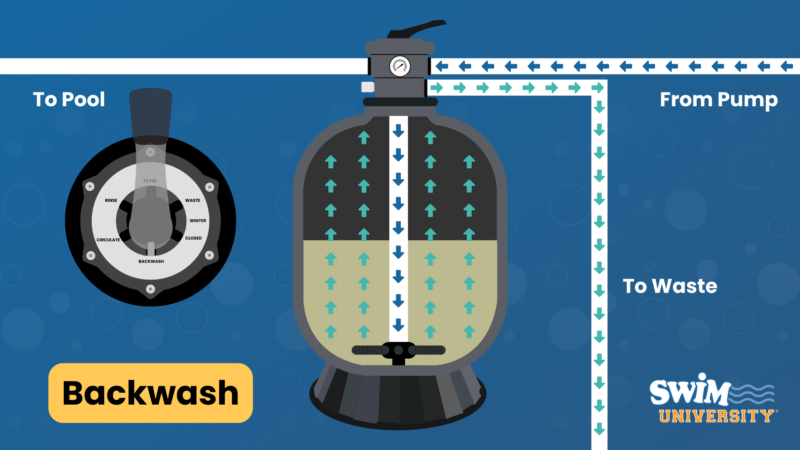
Backwash
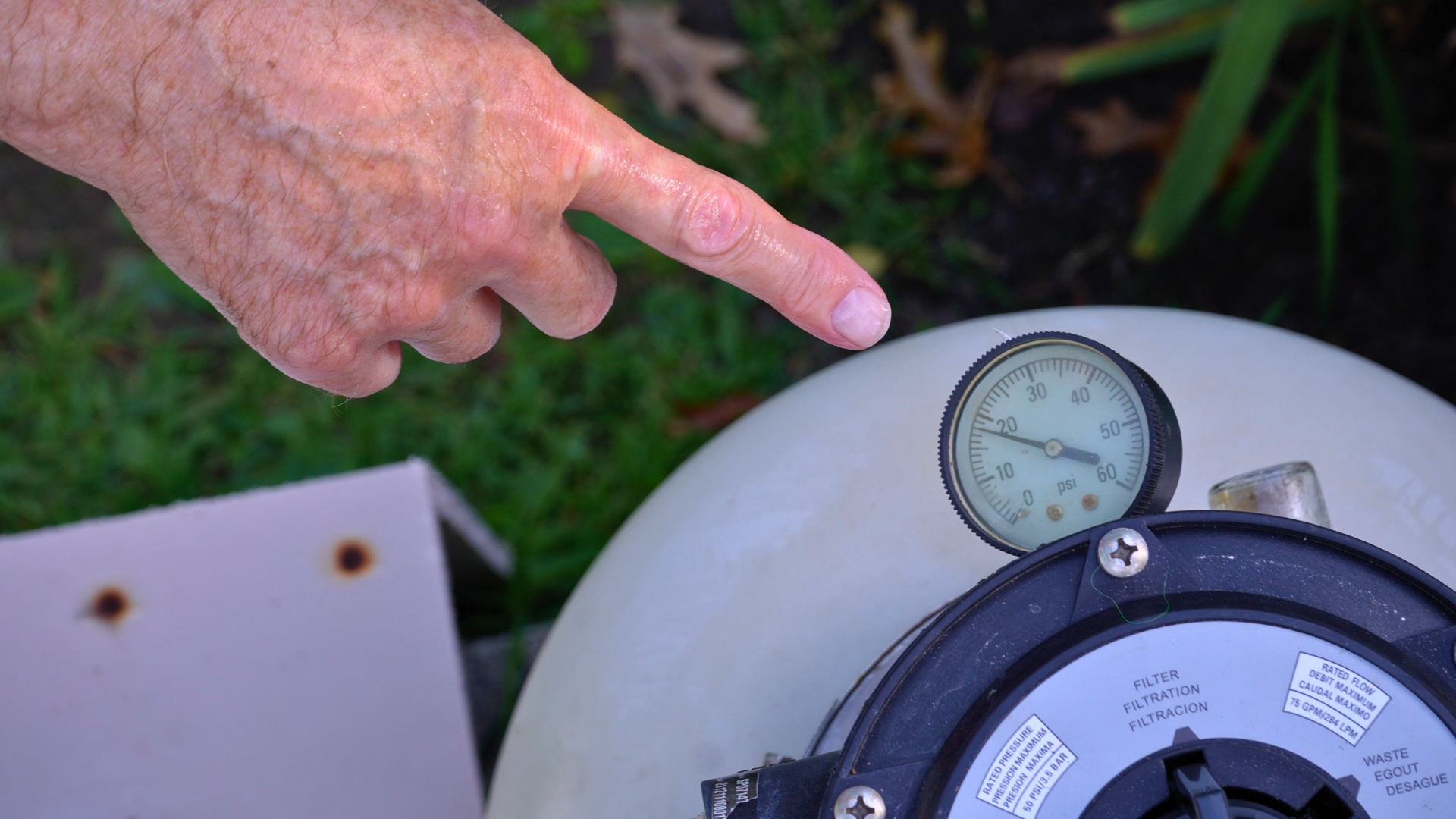
This reverses the flow through the filter to flush out trapped dirt and debris. Use this when your filter pressure rises about 10 PSI (69 kPa) above its normal running pressure.
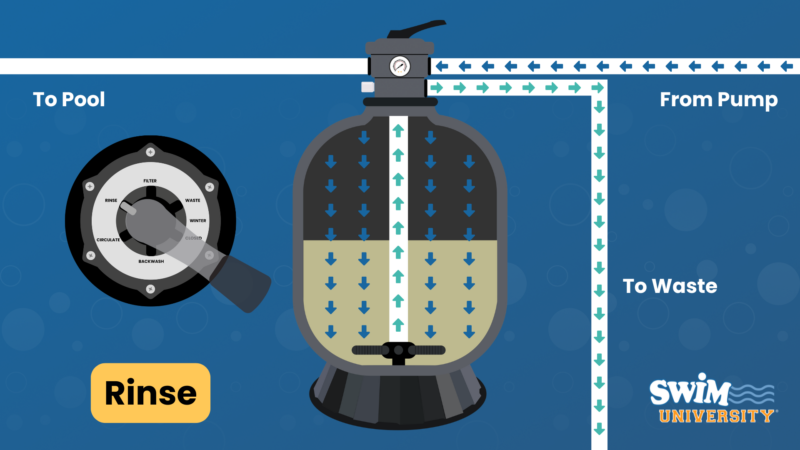
Rinse
Use this after backwashing. It re-settles the filter media before you return to Filter mode. Without this step, loose debris from backwashing can end up back in your pool.
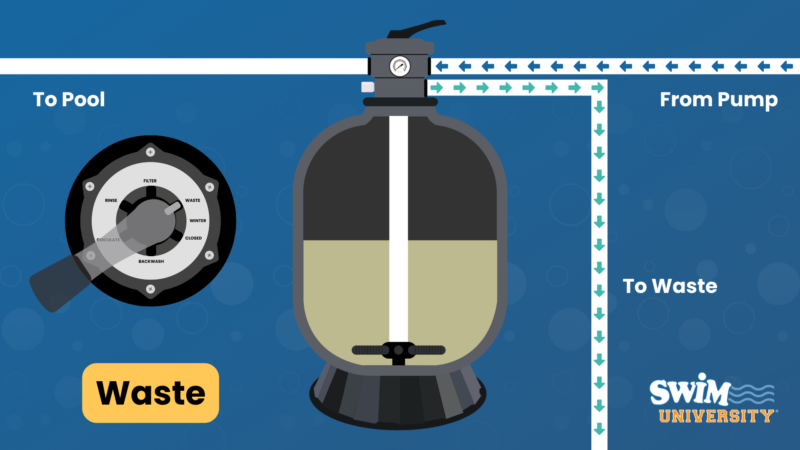
Waste
This bypasses the filter entirely and sends water straight out the waste line. Use it when vacuuming heavy algae or large amounts of debris that would overwhelm your filter.
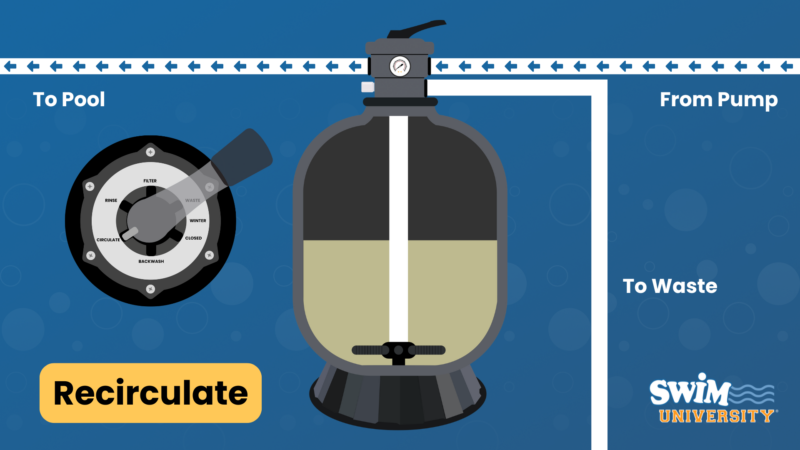
Recirculate
Water moves through the system but bypasses the filter media entirely. Use this when adding flocculant, which requires circulation without filtration. You’ll rarely use this setting.
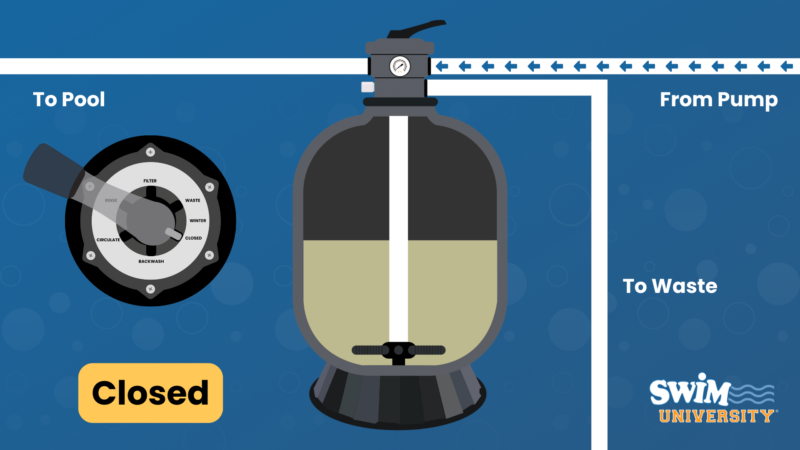
Closed
This shuts off all flow through the filter. Use it only when working on equipment — and never run your pump with the valve in this position.
Winter/Winterize
This opens all ports to prevent freeze damage when closing your pool for the season. If your valve doesn’t have a dedicated Winter setting, position the handle between two settings instead. This keeps the ports open so water can expand when it freezes.
4. Check Valves
A check valve only allows water to flow in one direction. When the pump shuts off, it prevents water from flowing backward through the system.
You’ll find check valves near automatic chlorinators, solar heaters, connected spas, and some pumps. They’re passive, meaning they don’t require any adjustment or interaction. But they can wear out over time, so it’s worth inspecting them if you notice water draining back into the system when the pump is off.
How to Identify and Label Your Valves
If you’re not sure which valve controls which line, you can figure it out by testing them one at a time while the pump is running. Here’s how to test them:
- Open the valves. Make sure all valves are open before you start.
- Test the suction side. Close one suction-side valve at a time and walk over to the pool. If a skimmer stops pulling water, that valve controls it. If a suction-side cleaner stops moving, you have found the cleaner line. If everything else is off and there’s still suction, that’s your main drain.
- Test the pressure side. Do the same process on the pressure side. Close one return valve at a time and watch which jets, water features, or spa elements stop flowing.
Once you’ve tested your lines, label everything. Use a permanent marker directly on the PVC pipe, or attach waterproof vinyl labels. Mark each line clearly: Skimmer, Main Drain, Cleaner, Return Jets, and so on. Label the pipes themselves, not just the handles, since handles can be removed or replaced.
The Right Pool Valve Position for a Suction-Side Cleaner
If your suction-side cleaner is barely moving, the pump is splitting suction across too many lines. The cleaner isn’t getting enough dedicated flow. Here’s how to fix it:
- Open the cleaner line. Make sure the cleaner line valve is fully open.
- Cut off some suction to other lines. Partially close the skimmer and main drain valves to about 45 degrees (roughly halfway). The goal is to redirect suction toward the cleaner without starving the pump. You can also try fully closing the main drain while leaving the skimmer partially open.
- Check the cleaner and listen. Your cleaner should start moving more aggressively. If the pump starts hissing or straining, you’ve gone too far. Open those valves back up slightly.
Key Takeaways
- There are four main types of pool valves: shut-off valves, 3-way diverter valves, multiport valves, and check valves. Each controls a different part of your system.
- Never run your pump with the flow completely blocked. Always keep at least one suction line open whenever the pump is running.
- Always turn your pump off before moving the multiport valve handle. Switching it while the pump runs can blow out the internal gasket.
- Partially closing valves redirects suction. This is the key to getting a suction-side cleaner working properly.
- The Winter setting on a multiport valve is different from the Closed setting. Closed traps water and can crack the valve during a freeze. Winter (or between settings) keeps all ports open.
- Label your valves and pipes directly (not just the handles) so you always know which valve controls which line.