

How to Clear a Green Pool After Opening

If you open your pool to green water, you can clear it up in 48-72 hours by brushing, vacuuming, balancing chemicals, shocking with double or triple chlorine, and running your filter for 8 hours.
Watch the video tutorial here or keep reading for a step-by-step process for how to clear up a green pool fast.
This is the ultimate guide to keeping your pool sparkling clean throughout the year that contains everything you need to know about taking care of your pool the right way. Including saltwater pools.
Step 1. Brush Your Pool Walls and Floor
Scrub your pool surfaces to break up algae clinging to the walls. This will make it easier for the chlorine to kill later. Scrub every surface of your pool, including the corners and crevices. The water will turn cloudy as you dislodge the algae spores. Tackle the toughest spots first before your visibility gets too bad.
What Type of Brush Should You Use?
For concrete or gunite pools, use a stainless-steel bristle brush. These tough bristles remove stubborn algae from textured surfaces. For vinyl or fiberglass pools, use a nylon bristle brush instead. Steel bristles can tear or scratch these softer surfaces.
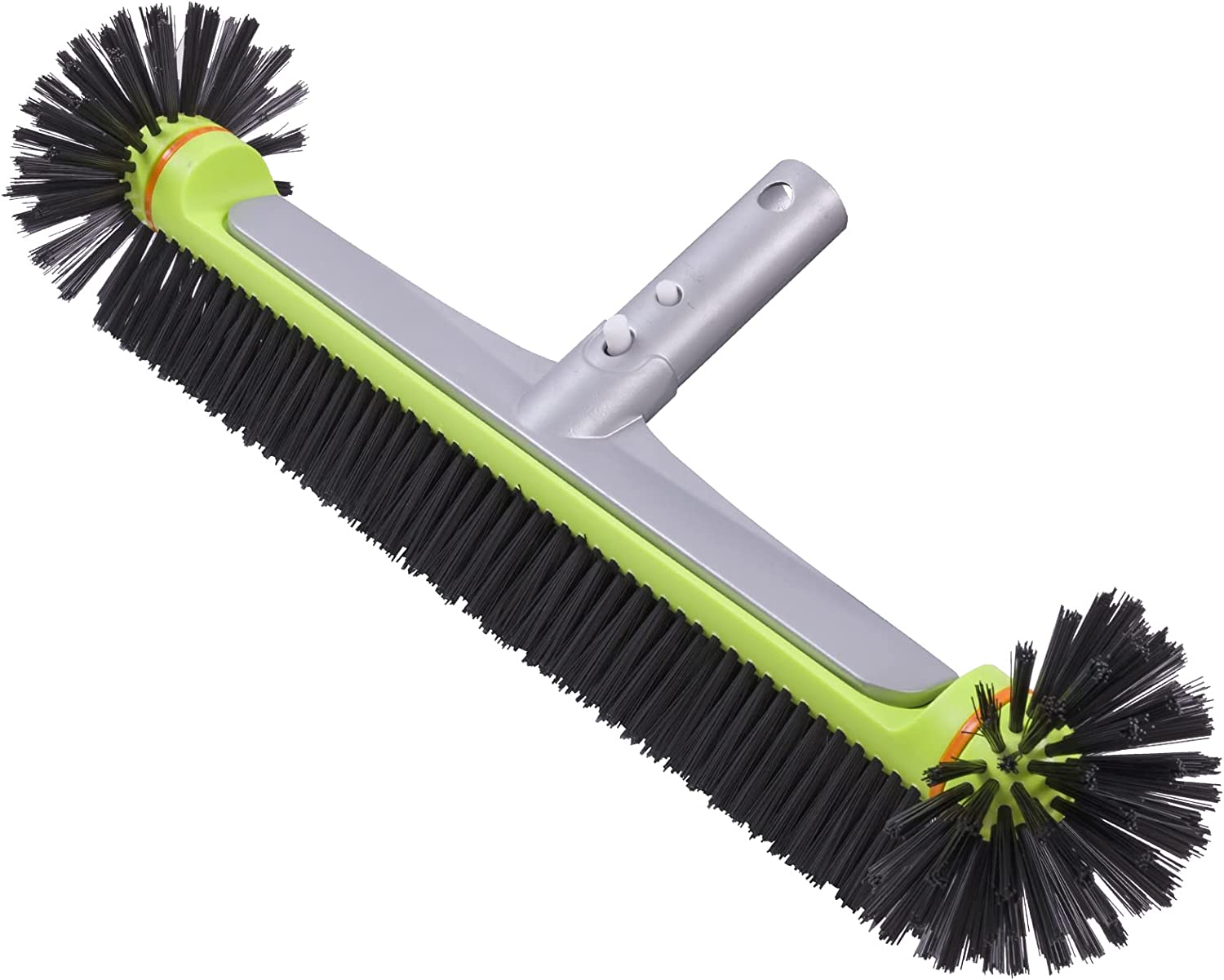
The wide pool brush with 360-degree reach helps clean hard-to-reach surfaces and tough crevices. Perfect for any type of pool, including vinyl liners, fiberglass, and painted concrete.
Step 2. Vacuum Your Pool on the Waste Setting
Manually vacuuming your pool lets you target pockets of algae and remove contaminated water. Skip the robotic cleaner for this step, since it can get overwhelmed by heavy algae.
Set your multiport valve to the waste setting. This bypasses your filter entirely, preventing contaminated water from circulating back into your pool. If you’re not sure how to vacuum your pool on the “Waste” setting, check out our guide on How to Vacuum Your Pool.
Focus on areas with visible algae buildup and watch your water level as you vacuum so the skimmer doesn’t suck in air.
3. Test and Adjust Your Alkalinity and pH
Adjusting your pH and alkalinity at this stage isn’t absolutely necessary, but it helps your shocks work as effectively as possible. Use test strips or a liquid test kit to test your pH and alkalinity levels. Your pH should be between 7.4 and 7.6. It’s okay if it’s a bit lower since you’ll be shocking the water later, which will raise the pH. Your alkalinity should be between 80 and 120 ppm (parts per million). Again, it’s okay if it’s a bit on the lower end.
If you’re not sure how to balance your pH and alkalinity, check out our tutorial here:
4. Shock Your Pool with a Double or Triple Dose of Shock
Adding shock quickly raises your chlorine levels to overwhelm and kill algae. Depending on how severe the algae looks, you’ll need a double or triple dose of shock. Light green algae needs a double dose of shock (multiply by two), and dark green needs a triple dose (multiply by three).
Calcium hypochlorite shock (cal-hypo) is the most powerful type of shock for killing algae. If you have a fiberglass or saltwater pool, avoid cal-hypo shock and use dichlor shock instead. Not sure what type of shock is right for you? Check out our guide on What’s the Best Shock for Your Swimming Pool.
How Many Bags of Shock Do You Need?
A bag of granular shock is usually 1 pound (454 grams). The standard dose of shock is 1 pound per 10,000 gallons (37,850 liters) of water. You’ll need to double or triple that dose when treating algae. For example, a 20,000-gallon (75,700-liter) pool with light green algae needs four pounds (1.8 kilograms) of shock.
When Should You Add Shock?
Add shock at dusk or night for best results. Sunlight destroys chlorine before it can kill algae. Keep your filter pump running while adding shock.
5. Run Your Filter Continuously and Clean as Needed
Run your filter for at least 8 hours after shocking, ideally for the next 24 hours. Your water will turn cloudy blue after shocking. This is actually dead algae turning from green to gray. Keep filtering until the water clears completely. You may need to clean or backwash your filter during this process if it’s picking up a lot of algae.
Check your filter’s pressure gauge as it runs. If it’s 10 PSI above normal, backwash your sand or D.E. filter or rinse off your cartridge filter.
6. Add Clarifier or Flocculant to Speed Up the Process
Pool clarifier binds microscopic dead algae particles into larger clumps. This helps your filter capture these bigger particles more easily. Most pools clear within 48 hours after proper treatment.
For extremely cloudy water, use pool flocculant instead. Flocculant coagulates particles into large clumps that sink to the pool floor. This method works faster than a clarifier, but requires more effort. You’ll need to manually vacuum out the particles on the waste setting.

A fast-acting formula that drops cloudy water particles to the bottom of the pool so you can vacuum it out. Safe for all pools.
7. Repeat the Process If It’s Still Green
Stubborn dark green or black algae may require multiple treatments. Repeat the brushing and shocking process one or two more times.
8. Test Your Water Again Before Swimming
Test your water once it looks clear, and make sure your chlorine levels have dropped back to normal before swimming. Your free chlorine should be between 1 and 3 PPM.
Adjust your alkalinity, pH, and chlorine levels as needed. You may also need to test and adjust your cyanuric acid and calcium hardness levels if you’ve lost a lot of water in the process or you haven’t balanced your water chemistry for the season yet.
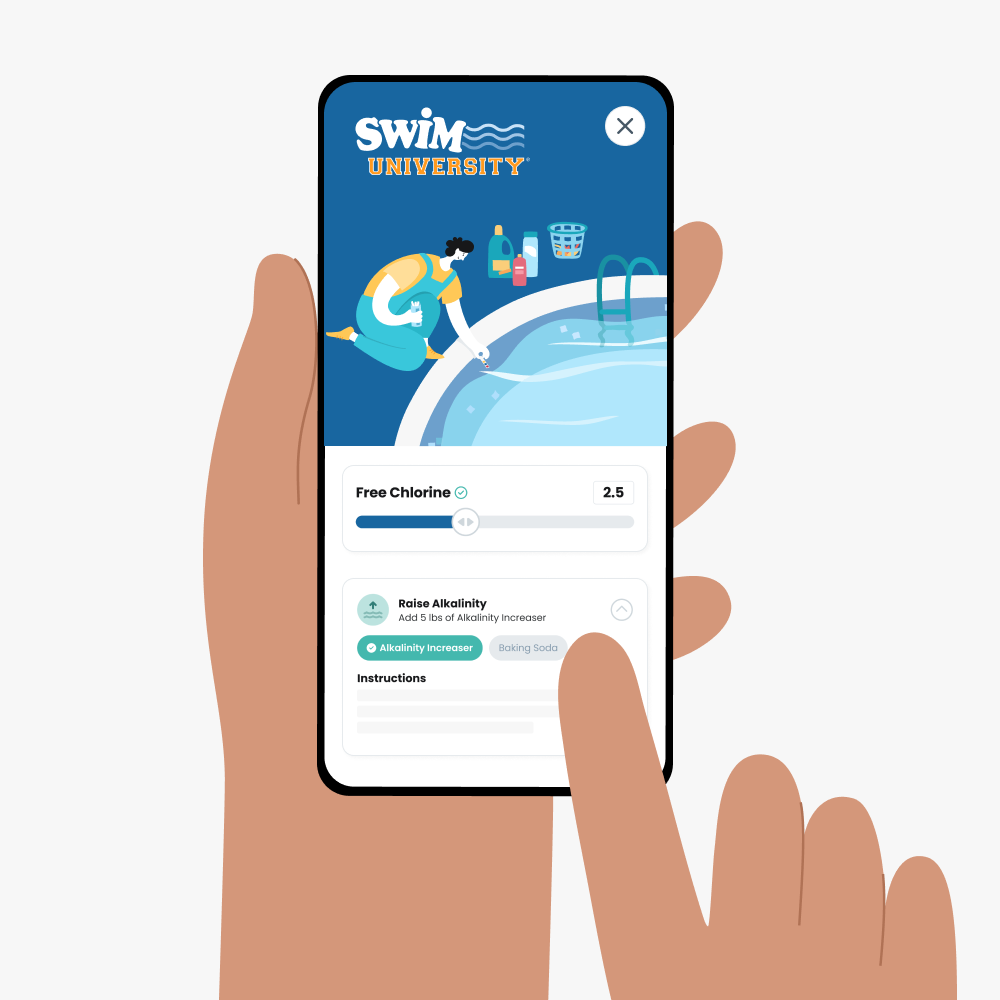
Enter your water test results. Get a custom treatment plan. Know exactly what chemicals to add to keep your pool clear. Saltwater and hot tub compatible.
Key Takeaways
- Brush your pool walls and floor first to break up algae and make it easier to remove.
- Vacuum on the waste setting to remove algae without circulating it through your filter.
- Balance alkalinity and pH before shocking to ensure your shock works at maximum strength.
- Use a double dose of chlorine shock for light green algae or a triple dose for dark green algae.
- Run your filter continuously for at least 8 hours or overnight after shocking to kill and remove dead algae.
- Clean or backwash your filter during this process to remove all dead algae.
- Add a clarifier or flocculant to speed up the clearing process.
- Test your water again before swimming.