

Best Pool Chemicals Ranked Best to Worst

Walk down the pool store aisle (or browse online), and you’ll find dozens of products promising clearer water. Some are worth every penny. Others are just a markup on something you can buy at the hardware store for less.
We ranked the most common pool chemicals from S tier to F tier, so you know exactly what to stock up on, what to skip, and what to swap for a cheaper option. If you maintain your own pool or hot tub and want reliable, cost-effective water care, this guide compares each chemical by use, effectiveness, safety, cost, and practical alternatives.
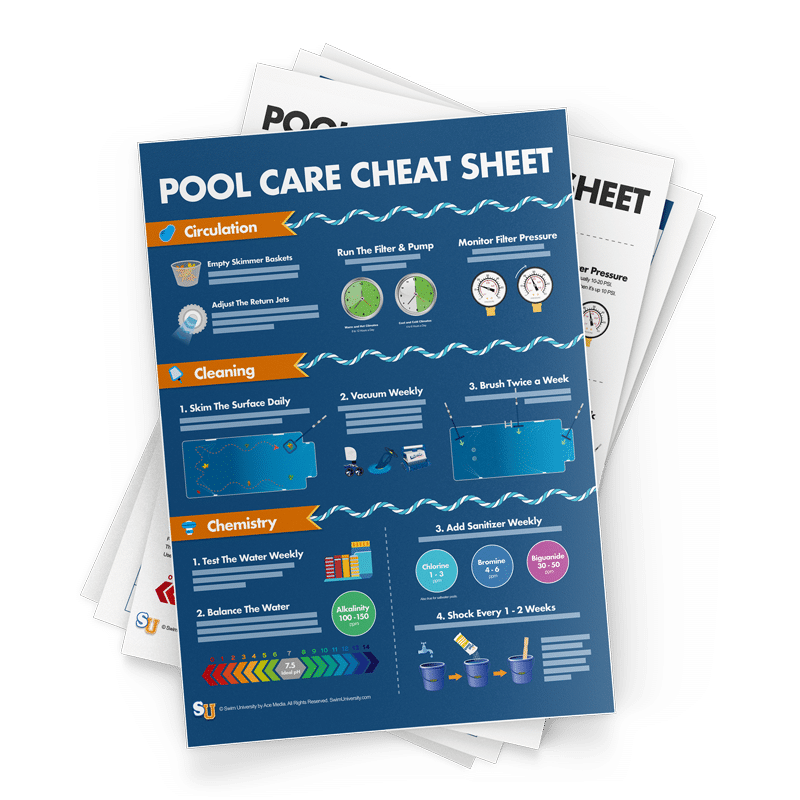
Every one of these chemicals is covered in more detail in The Pool Care Handbook, which is our go-to reference for exact dosing, water balance, sanitation, and troubleshooting.
Here’s how the tiers break down. S tier means it works great and it’s worth every penny. A tier means it’s highly effective with a minor trade-off. B tier means it’s good, but it depends on your setup. C tier means it’s fine, but you can usually do better or find it cheaper. D tier means we don’t recommend it. F tier means skip it entirely.
Want the short version first? Check out the table of contents.
Table of Contents
Alkalinity Increaser (Sodium Bicarbonate) (C Tier)
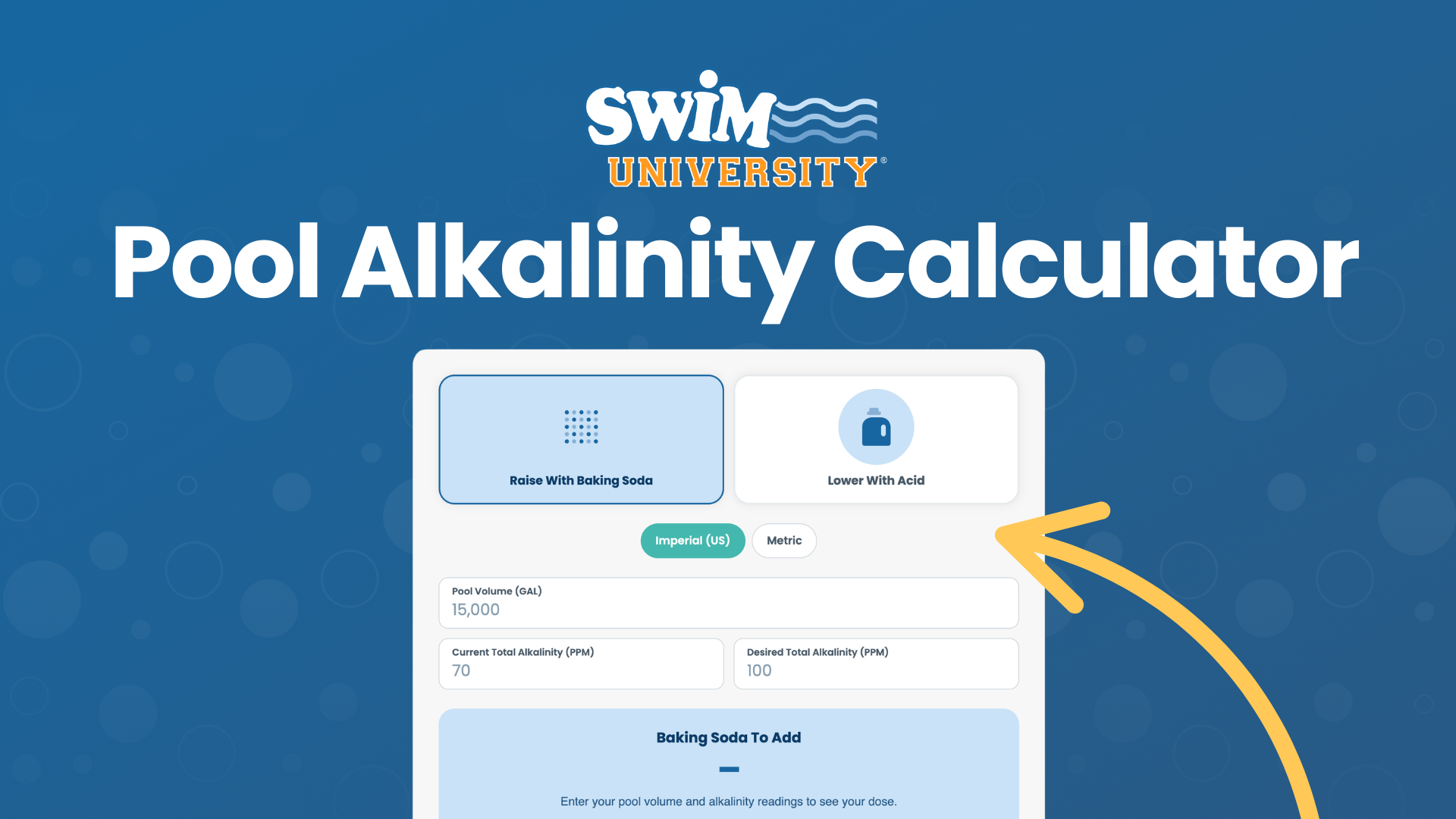
You do need something on hand to raise your total alkalinity, which should sit between 100 and 150 PPM. The active ingredient in most alkalinity increasers is sodium bicarbonate. That’s the exact same thing as baking soda.
Grab a large box or bag of baking soda instead. It does the same job for a fraction of the price. Just check the label first. If it lists sodium bicarbonate or sodium hydrogen carbonate, you’ve found a match.
If you already have a bottle of pool-branded alkalinity increaser, use it up. Then switch to baking soda going forward.
pH Increaser (C Tier)
pH increaser raises your pool’s pH, and it’s an important chemical to keep on hand. The active ingredient is sodium carbonate, also known as soda ash or washing soda.
You can find this at most hardware stores for less than the pool-branded version. Washing soda is slightly weaker than soda ash, but either one gets the job done. Check the label for sodium carbonate before you buy.
Pool-branded pH increaser isn’t a bad product. It’s just an overpriced version of something you can buy elsewhere.
pH Decreaser (S Tier)
pH decreaser, also called dry acid, is made from sodium bisulfate. It lowers your pH and slightly reduces your alkalinity at the same time. It’s also easy to store and easy to measure.
Compare that to muriatic acid, which does the same job but is far more dangerous to handle. For most pool owners, especially beginners,
Keep a container of this on hand year-round. You’ll use it often to keep your pH in the ideal range of 7.4 to 7.6.
Muriatic Acid (A Tier)
Muriatic acid lowers both pH and alkalinity, just like
The catch is that it’s a stronger acid, which makes it more dangerous to handle than dry acid. Always wear gloves and eye protection, and add it slowly to avoid splashing.
If you already have muriatic acid on hand, it works well. We just recommend
Chlorine Tablets (Trichlor) – A Tier
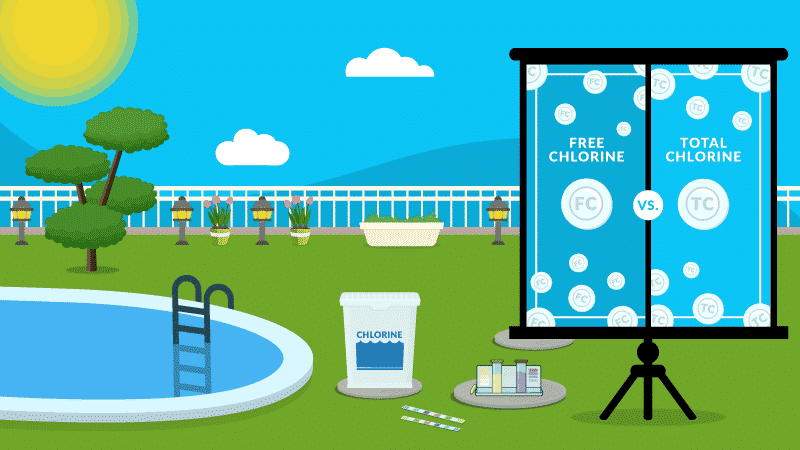
Chlorine tablets, also called trichlor pucks, are the most common way to sanitize a pool. Choosing and using the right chlorine tablets makes it easier to keep your sanitizer levels consistent and safe. Sanitizers such as chlorine or bromine are essential for water quality in any swimming pool.
Drop them into a floater or automatic chlorinator, and they dissolve slowly to keep your chlorine levels steady. Trichlor tablets contain up to 90 percent chlorine, which is more concentrated than granules or liquid. Common chlorine products also include Trichlor tablets, liquid chlorine, and calcium hypochlorite.
The trade-off is cyanuric acid. Trichlor tablets are stabilized chlorine, meaning every dose adds a small amount of CYA to your water. Over time, that cyanuric acid level can build up past the ideal range of 30 to 50 PPM.
Keep an eye on your CYA levels if tablets are your main sanitizer. Test monthly, and dilute your water with a partial drain and refill if levels climb too high. In general, keep chlorine between 1 and 4 ppm, depending on stabilizer use.
Liquid Chlorine – B Tier
Liquid chlorine is a concentrated, unstabilized form of sodium hypochlorite. Because it’s already dissolved, it works fast once it hits the water. It also won’t raise your CYA levels, which makes it a solid option if your stabilizer is already too high.
The downside is handling. Liquid chlorine only contains about 10 to 12 percent chlorine, so you need a lot of it to treat a large pool. For a smaller pool under 10,000 gallons (37,850 liters), it’s manageable. For anything bigger, it gets heavy and cumbersome fast.
You also can’t use liquid chlorine in an automatic feeder. It has to be added by hand every time.
Granular Chlorine (Dichlor) – B Tier
Dichlor chlorine comes in a granular form and dissolves quickly in water. It behaves a lot like a crushed-up chlorine tablet, and it contains cyanuric acid just like trichlor does. Granules made from dichlor run around 60 percent available chlorine, which is lower than tablets.
It works well for sensitive pool surfaces, including fiberglass and salt water systems. The catch is that it can’t go into an automatic feeder, since it dissolves too fast. You’ll need to add it by hand every time.
Because tablets can auto-dose and dichlor can’t, we rank this one at B tier alongside liquid chlorine.
Cal-Hypo Shock (Calcium Hypochlorite) – A Tier
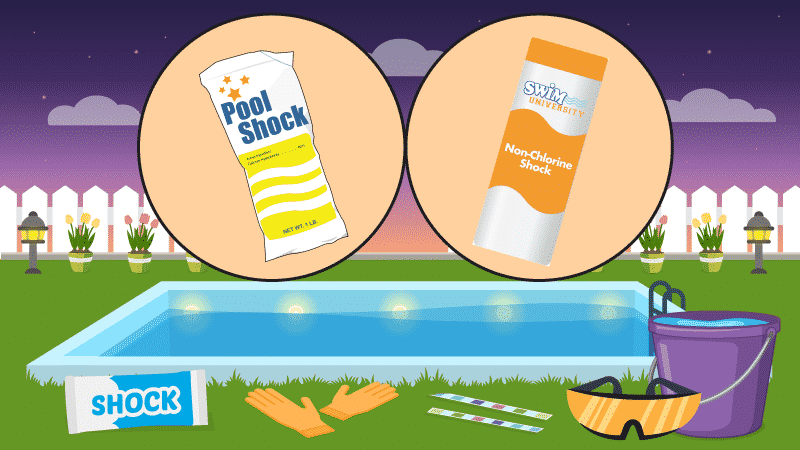
Calcium hypochlorite, or cal-hypo, is one of the most powerful shocks you can buy. Shock treatments oxidize contaminants and helps restore chlorine effectiveness. If you’re dealing with cloudy water or an active algae bloom, this is the chemical to reach for. Never combine pool chemicals, since mixing products can create dangerous reactions, including toxic gas. It contains no cyanuric acid, so it works best added at night when the sun can’t burn it off.
Cal-hypo does contain calcium, which is worth noting if you have a salt water pool. Adding it regularly can cause buildup inside your salt cell, so use dichlor granules or liquid chlorine for routine shocking in a salt system instead.
For most pools dealing with a real water problem, cal-hypo is the strongest tool available. That earns it A tier.
How Much Cal-Hypo Should You Use?
For general shocking, use about 1 pound of chlorine shock per 10,000 gallons of water. If you’re treating a stubborn algae bloom or stain, you may need to double or triple that dose. For more complex adjustments across all your chemicals, follow a step-by-step guide to how much of each chemical to add. Always shock your pool the right way and test your water between applications to avoid overshooting your chlorine levels.
Bromine – B Tier
Bromine is a chlorine alternative that’s most common in indoor pools and hot tubs. It doesn’t produce chloramines, so it skips that sharp chlorine smell. It’s also gentler on skin and eyes for many swimmers.
The trade-off is sunlight. Bromine breaks down quickly under UV rays, and cyanuric acid can’t stabilize it the way it stabilizes chlorine. That makes it a poor fit for outdoor pools that sit in direct sun all day.
If your pool is indoors or shaded most of the time, bromine is a solid sanitizer. For everything else, stick with chlorine and make sure you understand basic pool chemistry, from sanitizers to balance.
Salt Water Systems – B Tier
A salt water system uses a generator to convert dissolved salt into chlorine, so you’re not adding chlorine by hand every week. That means softer-feeling water and fewer trips to buy chemicals. Many pool owners also notice less eye and skin irritation.
The trade-off is maintenance. Salt systems naturally raise your pH, so you’ll need to test and adjust it weekly with
There’s also a corrosion risk to consider. Splash-out can damage metal ladders, rails, and even concrete coping over time, so hose down the surrounding deck regularly.
Biguanide (PHMB) – F Tier
Biguanide, also called PHMB, is a chlorine-free sanitizer that sounds appealing on paper. It doesn’t produce chloramines, it’s gentler on skin and eyes, and it doesn’t break down in sunlight.
The problems show up over time. Biguanide systems are prone to pink slime, a bacteria that becomes resistant to the sanitizer the longer you use it. Once that happens, the only fix is a full drain and refill, followed by a switch to chlorine.
You’re also locked into one brand’s product line for as long as you use it. Between the cost, the maintenance headaches, and the risk of pink slime, we recommend skipping biguanide entirely.
Calcium Hardness Increaser – C Tier
Calcium hardness protects your pool surfaces and equipment from corrosion. The ideal range depends on your pool type. Vinyl and fiberglass pools should sit between 175 and 225 PPM, while concrete and plaster pools do best between 200 and 275 PPM.
The active ingredient in most calcium hardness increasers is calcium chloride, which is the same compound used in ice melt. If you can find pure calcium chloride ice melt with no other additives, it works the same way for less money.
You’ll typically only need to add this once a year, and only if your water tests low. That makes the pool-branded version an easy one to skip in favor of the cheaper alternative.
Chlorine Stabilizer (Cyanuric Acid) – B Tier
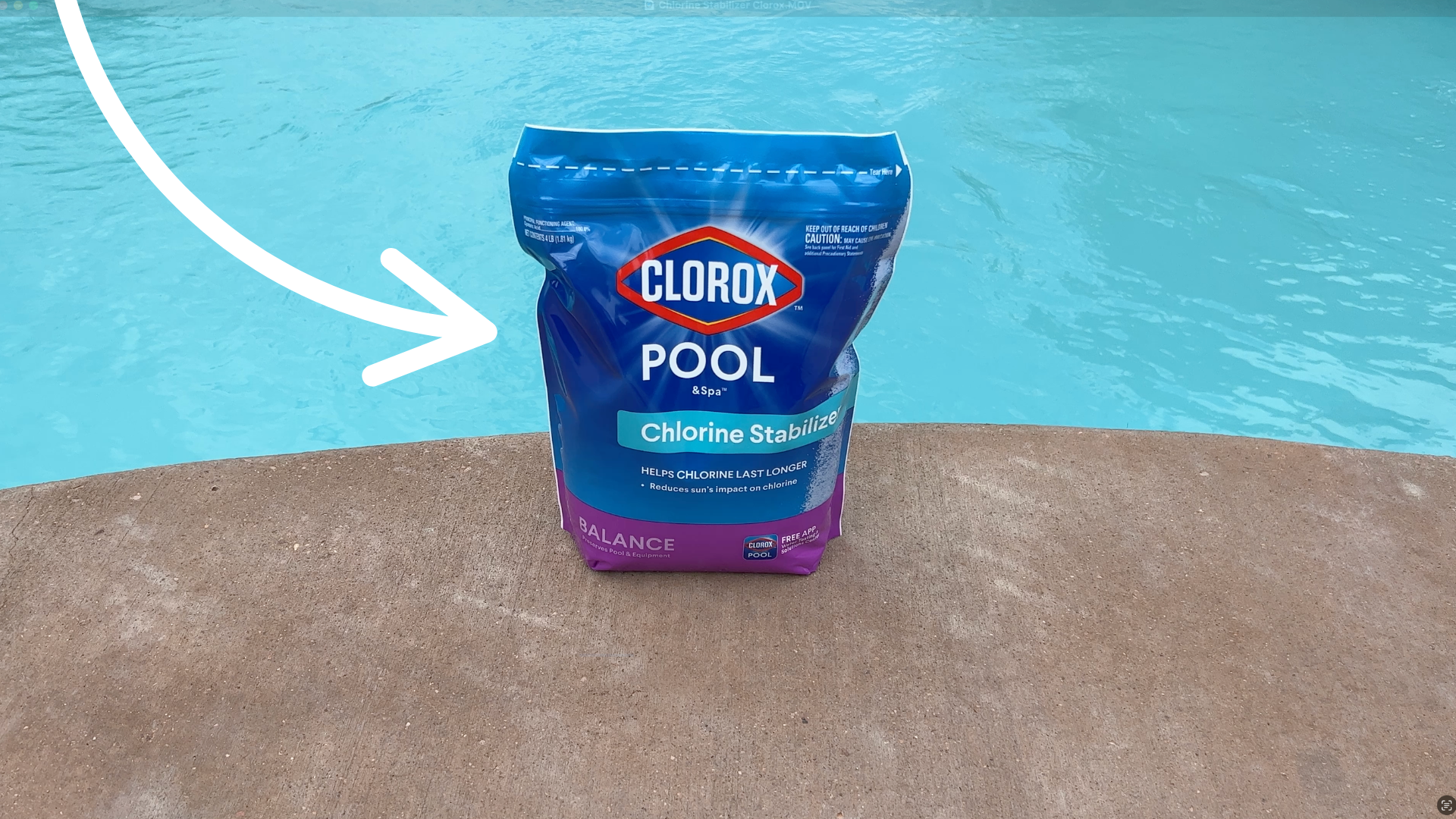
Cyanuric acid, also called CYA or chlorine stabilizer, protects chlorine from breaking down under the sun’s UV rays. Without it, direct sunlight can destroy half your chlorine in as little as 17 minutes. The ideal range is 30 to 50 PPM for most pools, and 60 to 80 PPM for salt water pools, since salt systems face extra UV exposure.
Whether you need to buy this separately depends on your sanitizer. If you’re already using trichlor tablets or dichlor granules, you’re adding CYA every time you sanitize. If you use liquid chlorine or run a salt system, you’ll need to add stabilizer on its own.
Watch your levels closely once they climb near 100 PPM. At that point, test strips can struggle to give an accurate reading, and your chlorine won’t sanitize as effectively.
Non-Chlorine Shock (MPS) – S Tier
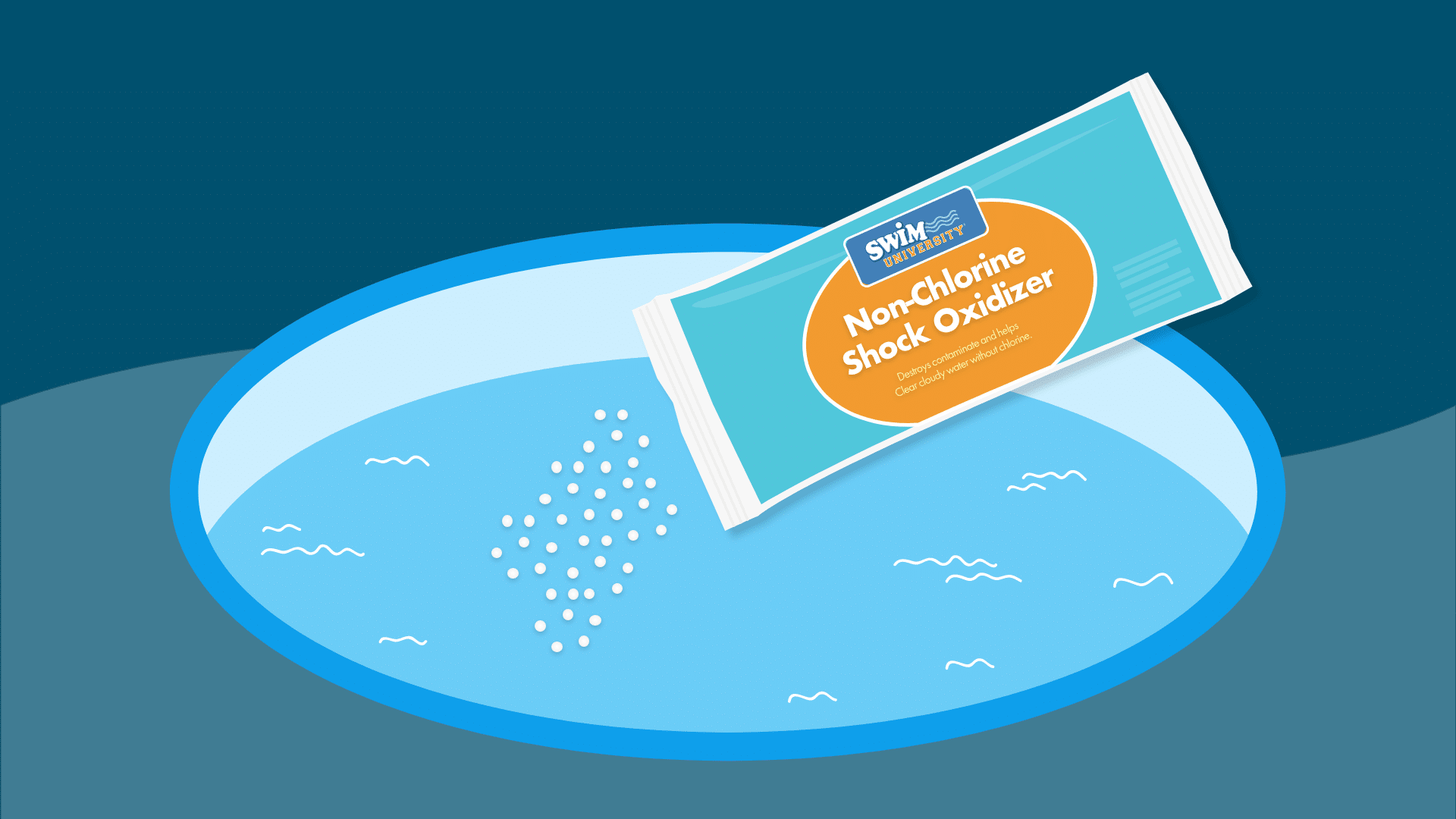
Non-chlorine shock, made from potassium monopersulfate, is one of the most useful chemicals you can keep on hand. It oxidizes chloramines, which is the used-up chlorine responsible for that harsh chemical smell. Breaking up chloramines frees your existing chlorine to get back to sanitizing.
One important note: non-chlorine shock won’t raise your free chlorine levels. If your chlorine is already low, reach for a chlorine-based shock like cal-hypo instead. Use non-chlorine shock as a weekly or biweekly boost, not as a fix for low chlorine.
It’s safe for every pool type, and you can swim again just 15 minutes after adding it. That combination of speed and safety earns it S tier.
Polyquat Algaecide – C Tier
Algaecides prevent algae from taking hold. Most of them won’t kill an active bloom, so don’t reach for one if you’re already dealing with green water.
If your chlorine and other levels stay balanced, you likely don’t need an algaecide day to day. Understanding the truth about using pool algaecide helps you treat it as prevention, not a cure for green water. It works better as backup insurance for situations like vacations, pool closings, or any stretch when you can’t monitor chlorine closely. Look for a polyquat formula, since it’s non-copper and won’t stain your pool surfaces.
Polyquat is genuinely useful for one specific job: closing your pool for the season. A 60 percent polyquat algaecide is one of the few chemicals we recommend adding every time you winterize.
Copper-Based Algaecide – D Tier
Copper-based algaecides do kill and prevent algae, but the copper itself creates a new problem. Add too much, and it can turn your water green or stain your pool surfaces permanently. Swimmers can also end up with a greenish tint to light-colored hair.
Polyquat algaecide handles the same job without those risks. Since a safer option exists at a similar price point, there’s little reason to reach for copper-based products.
If you already have some on hand, use it carefully and stick closely to the label’s dosing instructions.
Clarifier (Polymer Coagulant) – S Tier
Clarifier is one of the best values in the entire pool aisle. It takes the microscopic particles making your water look dull or hazy and clumps them together into pieces large enough for your filter to catch.
Most clarifiers use the same active ingredients, so brand doesn’t matter much here. Learning exactly how pool clarifier works makes it easier to dose correctly and know when it’s better than using flocculant. Add the recommended dose once a week, and your filter does the rest of the work.
It’s cheap, it’s easy, and it works fast as long as the rest of your water chemistry is in range. That combination of low cost and reliable results earns clarifier S tier.
Flocculant – A Tier
Flocculant works similarly to clarifier, but instead of clumping particles for your filter, it sinks them straight to the pool floor in a heavy cloud. From there, you vacuum them out manually.
Here’s the catch: you have to vacuum on the waste setting, bypassing your filter entirely. Pool flocculant works by sinking debris to the floor, and those particles are too fine for a standard filter to handle.
If you’re willing to do the extra vacuuming, flocculant clears cloudy water fast and effectively. That extra step is the only thing keeping it from S tier.
Stain and Scale Preventer – B Tier
Stain and scale preventer, also called a sequestering agent, keeps minerals and metals suspended in the water instead of settling on your pool surfaces. This matters most if your fill water has naturally high calcium or metal content, like well water.
One important distinction: a sequestering agent prevents stains, but it won’t remove a stain that’s already there. Once metal has bonded to a pool surface, you’ll need a dedicated stain remover instead.
If your water doesn’t have metal or high mineral issues, you can likely skip this chemical altogether.
Phosphate Remover – D Tier
Phosphate remover strips phosphates from your water, and phosphates are one of many things algae feed on. The idea is that removing them starves algae before it can grow.
In practice, phosphates enter outdoor pools constantly from dirt, leaves, fertilizer, and rainwater runoff. That makes them nearly impossible to eliminate for good, so any drop in phosphate levels tends to be temporary.
The truth about phosphates in pool water is that your time and money go further with proper chlorine levels, a regular shocking schedule, and an algaecide when needed. Algae struggles to grow in properly sanitized, balanced water regardless of your phosphate levels.
Key Takeaways
- Proper maintenance usually only requires a few essentials: a sanitizer, pH adjusters, and an alkalinity increaser, and several pool-branded chemicals still use the same active ingredients as cheaper hardware store products.
- pH decreaser, chlorine tablets, and cal-hypo shock are must-have chemicals worth the S or A tier price tag.
- Watch your cyanuric acid levels closely if you use trichlor tablets or dichlor granules, and remember to add CYA every time you sanitize.
- Skip biguanide and phosphate remover. Biguanide risks chronic pink slime, and phosphate remover only offers a temporary fix.
- Clarifier and non-chlorine shock are inexpensive, low-effort chemicals that deliver reliable results for almost every pool.
- If you run a salt water system, avoid cal-hypo shock and clean your salt cell every three months to prevent calcium buildup.