


Pool Alkalinity Calculator: Exact Doses for Perfect Total Alkalinity

You tested your water, the alkalinity reading looks wrong, and now you’re wondering how much chemical to add without making things worse. Here’s how to get the exact dose.
How to Use a Pool Alkalinity Calculator
Our calculator tells you exactly how much baking soda or acid you need to either raise or lower your total alkalinity (TA) level.
Here’s what you need to know before using it:
- Select “raise” or “lower.” The calculator asks if you need sodium bicarbonate (baking soda) to raise your alkalinity. If you need to lower it, choose “Lower with Acid,” and it’ll ask you to choose either muriatic acid (liquid) or
pH decreaser (dry – sodium bisulfate). - Enter pool volume in gallons or liters. Don’t know it? Measure your pool dimensions and use our pool volume calculator.
- Test your total alkalinity using a liquid test kit or strips to get your current total alkalinity in ppm (parts per million).
- Enter current and target TA. The ideal range for most pools is 80–120 ppm.
- Get your exact dose with step-by-step instructions.
Example: A 15,000-gallon chlorine pool with current alkalinity at 70 ppm and a target of 100 ppm needs roughly 6 pounds of baking soda. The calculator refines that number based on your exact pool volume.
Alkalinity Calculator
Pick what you’re adding and enter your test results. The dose updates as you type.
 Get exact doses in The Pool Care App
→
Get exact doses in The Pool Care App
→
Alkalinity Dosing Chart (Using Baking Soda)
| Increase By (ppm) | 5,000 Gallons (18,927 L) | 10,000 Gallons (37,854 L) | 15,000 Gallons (56,781 L) | 20,000 Gallons (75,708 L) |
|---|---|---|---|---|
| 10 ppm | 0.75 lbs (340 g) | 1.5 lbs (680 g) | 2.25 lbs (1.02 kg) | 3.0 lbs (1.36 kg) |
| 20 ppm | 1.5 lbs (680 g) | 3.0 lbs (1.36 kg) | 4.5 lbs (2.04 kg) | 6.0 lbs (2.72 kg) |
| 30 ppm | 2.25 lbs (1.02 kg) | 4.5 lbs (2.04 kg) | 6.75 lbs (3.06 kg) | 9.0 lbs (4.08 kg) |
| 40 ppm | 3.0 lbs (1.36 kg) | 6.0 lbs (2.72 kg) | 9.0 lbs (4.08 kg) | 12.0 lbs (5.44 kg) |
| 50 ppm | 3.75 lbs (1.70 kg) | 7.5 lbs (3.40 kg) | 11.25 lbs (5.10 kg) | 15.0 lbs (6.80 kg) |
| 60 ppm | 4.5 lbs (2.04 kg) | 9.0 lbs (4.08 kg) | 13.0 lbs (5.89 kg) | 18.0 lbs (8.16 kg) |
| 70 ppm | 5.25 lbs (2.38 kg) | 10.5 lbs (4.76 kg) | 15.75 lbs (7.14 kg) | 21.0 lbs (9.52 kg) |
| 80 ppm | 6.0 lbs (2.72 kg) | 12.0 lbs (5.44 kg) | 18.0 lbs (8.16 kg) | 24.0 lbs (10.88 kg) |
| 90 ppm | 6.75 lbs (3.06 kg) | 13.5 lbs (6.12 kg) | 20.25 lbs (9.18 kg) | 27.0 lbs (12.24 kg) |
| 100 ppm | 7.5 lbs (3.40 kg) | 15.0 lbs (6.80 kg) | 22.5 lbs (10.20 kg) | 30.0 lbs (13.60 kg) |
What Is Total Alkalinity and Why It Matters In Your Pool Water
Pool Nerd Alert: Total alkalinity (TA) is the concentration of bicarbonates, carbonates, and hydroxides dissolved in your pool water. It acts as a buffer, absorbing acids and bases before they can swing your ph wildly in either direction.
Think of it this way: pH is the current reading on a 0–14 scale. Total alkalinity is the bodyguard that protects your pH level from bouncing around every time it rains, someone swims, or you add chemicals.
- Ideal total alkalinity for pools is 80–120 ppm
- Below ~60 ppm, ph becomes unstable and minerals in your water turn aggressive
- Above ~140 ppm, you risk scale buildup, high alkalinity locking ph upward, and cloudy water
When alkalinity is balanced, chlorine efficiency improves, surfaces stay protected, and water balance becomes easier to maintain.
That’s why I recommend adjusting alkalinity first, then dialing in pH and sanitizer. Fix the buffer, and everything else falls into line.
How to Test Total Alkalinity Accurately
Before you use any calculator or add chemicals, you need an accurate reading. Here are the best testing methods ranked by accuracy:
- Digital Tester: Very accurate and great if you’re colorblind (but expensive).
- Liquid Test Kit: Accurate if you’re good at seeing colors.
- Test Strips: Less accurate, but perfect for quick high-level tests.
Testing alkalinity should be done at least once a week. Also, retest after heavy rain, big pool parties, or anytime you top off with source water. Your fill water may carry naturally high alkalinity that slowly drives pool TA upward with every top-off.
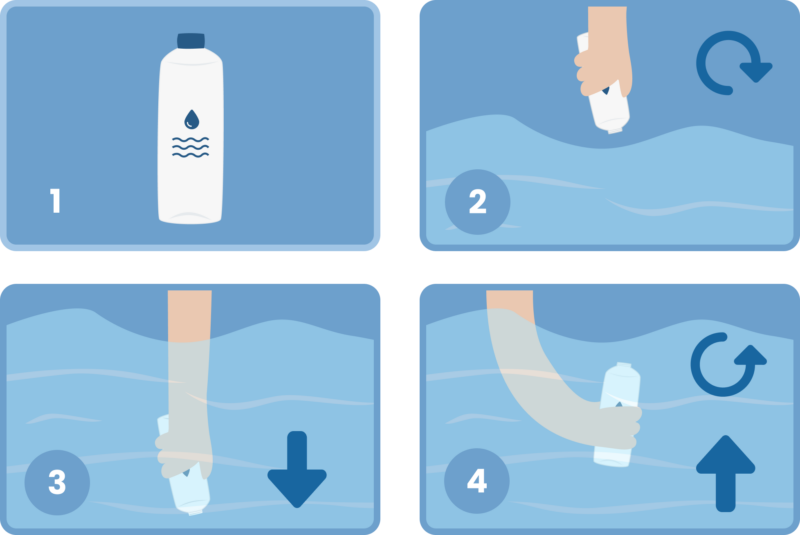
How to take a good sample: Collect water from elbow-deep, away from return jets. Add reagent drops per your kit instructions and count until the color changes. Multiply drops by the kit’s factor to find your ppm value.
Record the test results in a notebook or using our Pool Care App. Tracking trends over time helps you understand whether you have a chronic drift problem or just a one-time correction to make.
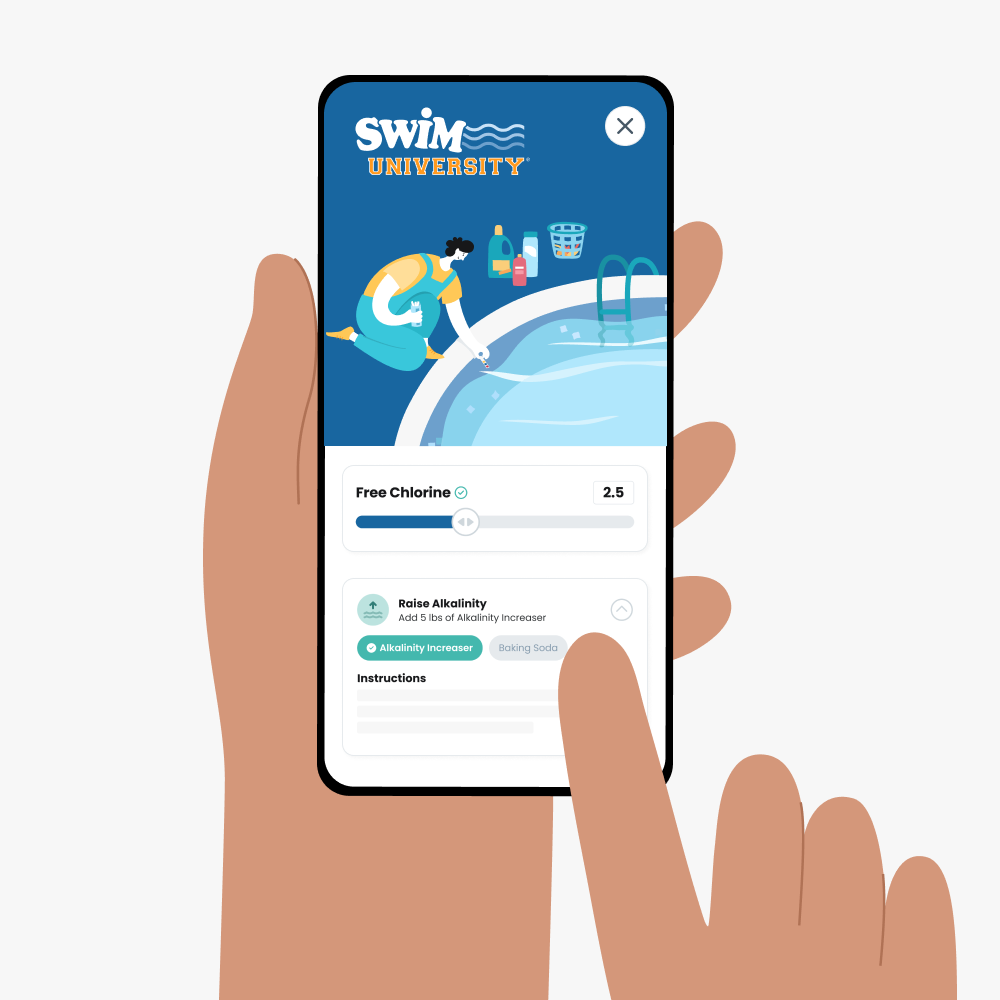
Enter your water test results. Get a custom treatment plan. Know exactly what chemicals to add to keep your pool clear. Saltwater and hot tub compatible.
How to Raise Low Total Alkalinity with Baking Soda or Alkalinity Increaser
Alkalinity Increaser or Alkalinity Up, which is marketed for pools, is the exact same thing as baking soda. The active ingredient in both is sodium bicarbonate. Don’t let the chemical companies fool you.
For instance, the Clorox version of Alkalinity Increaser says the active ingredient is “Sodium Hydrogen Carbonate.” I’m convinced this is meant to confuse pool owners. THIS IS THE EXACT SAME CHEMICAL AS SODIUM BICARBONATE (a.k.a baking soda).
In fact, in a recent trip to Wal-Mart, I discovered a 5-pound bag of Clorox Alkalinity Increaser was the same price as a 13.5-pound bag of baking soda on the same shelf.

An affordable alternative to traditional chemicals, baking soda will naturally raise the alkalinity and pH in your water. It's also useful for cleaning tiles and surfaces.
The dosing rule: About 1.5 lbs of baking soda per 10,000 gallons raises total alkalinity by roughly 10
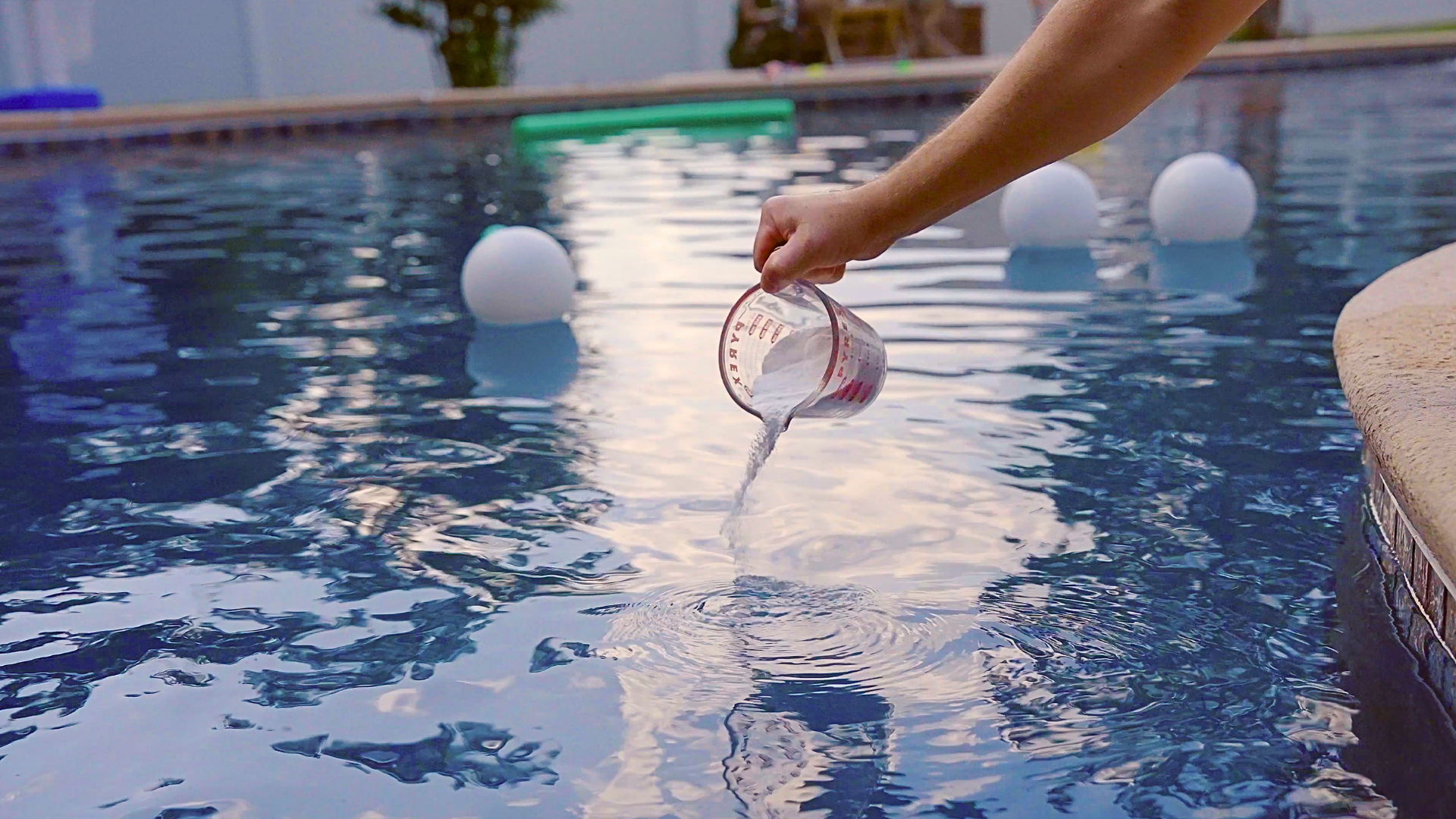
Sprinkle it across the surface of the pool with the pump running. In the pool industry, we call this “broadcasting.”
Wait 6–12 hours. Retest. Don’t try to raise more than 30–40 ppm in one dose because your pool could instantly go cloudy. Add in stages, retest, and adjust if needed. For a detailed walkthrough, check this guide on adding baking soda to increase alkalinity.
How to Lower High Alkalinity with Muriatic Acid or pH Decreaser
High alkalinity above 120 ppm can cause cloudy water and calcium scale on tile and heaters. It can also lock in a high pH level, which makes your chlorine or bromine less effective at killing contaminants.
Muriatic acid effectively lowers high alkalinity levels. It’s inexpensive and fast. But it can be hard to find in some states, and it can be dangerous to handle because it’s a corrosive liquid acid.
I prefer using a dry acid (sodium bisulfate, marketed as
The calculator uses your pool volume, current alkalinity, target alkalinity, and acid strength to output an exact volume of muriatic acid in fluid ounces. As a general guideline, about 25–30 fluid ounces of 30% muriatic acid per 10,000 gallons of pool water lowers your total alkalinity reading by about 10 ppm (parts per million).
Important Safety Notes About Lowering Alkalinity with Acid
- Don’t do it all at once. Lower by 30–40 ppm per session, retest after 24 hours, and repeat.
- Wear gloves and goggles.
- Add acid to water, never water to acid.
- Pour or add slowly with the pump running.
- Stay upwind of fumes, which are hazardous.
- Keep swimmers out until the pH stabilizes.
Note: Acid brings down both TA and pH. You can raise the pH back to the correct range using aeration, such as running waterfalls, point returns upward, or using a spa feature. Aeration raises the pH without raising alkalinity. More details in this alkalinity-lowering guide.
Frequently Asked Questions About Pool Alkalinity Calculator
How often should I test total alkalinity in my pool?
You should test total alkalinity (TA) at least once a week. Testing more frequently after heavy rain, pool parties, or topping off with fill water helps maintain stable water chemistry.
Can I use test strips instead of liquid kits to measure total alkalinity?
Yes, test strips provide quicker readings but are less precise than liquid drop test kits. For routine checks, strips are convenient, but for accurate dosing, liquid kits are recommended (like the Taylor K-2006C test kit).
How much baking soda do I need to raise my pool’s total alkalinity?
Approximately 1.5 pounds of baking soda per 10,000 gallons of water raises total alkalinity by about 10 ppm. Use the pool alkalinity calculator to get exact dosing for your pool volume.
What chemical is best for lowering high total alkalinity?
Muriatic acid is the most effective and commonly used chemical to lower high total alkalinity. It should be handled carefully with proper safety gear. I also recommend using pH decreaser because it’s a dry acid and easier to handle.
Can I add too much baking soda or acid at once?
Yes. I would avoid large single doses to prevent scaling or cloudy water. Add chemicals in stages (try 5 lbs at a time in pools larger than 10,000 gallons), retest alkalinity after 6–12 hours, and adjust as needed.
Why is maintaining proper total alkalinity important?
Proper total alkalinity stabilizes pH levels, improves chlorine efficiency, protects pool surfaces and equipment, and prevents water problems like cloudiness or corrosion.
Is baking soda the same as pool alkalinity increaser?
Yes, baking soda (sodium bicarbonate) is the main ingredient in pool alkalinity increasers and is a cheaper, effective alternative.
How does total alkalinity affect pH?
Total alkalinity acts as a buffer that resists sudden pH changes. Low alkalinity causes pH to fluctuate rapidly, while high alkalinity can lock pH at a high level.
What should I do if my alkalinity keeps rising or dropping unexpectedly
Test your fill water’s alkalinity, check your sanitizer type, and review your chemical dosing routine. Consistent monitoring and adjustment help maintain balance.
Key Takeaways
- Maintaining total alkalinity between 80–120 ppm is essential for stable pool pH and overall water balance.
- Testing total alkalinity at least once a week using liquid drop test kits provides the most accurate results; test strips offer quicker but less precise readings.
- Low alkalinity causes rapid pH fluctuations, corrosion, and swimmer discomfort, while high alkalinity leads to cloudy water and scale buildup.
- Baking soda (sodium bicarbonate) is a cost-effective way to raise alkalinity, with about 1.5 pounds per 10,000 gallons raising TA by 10 ppm.
- Muriatic acid is the preferred chemical to safely and effectively lower high alkalinity, requiring careful handling and safety precautions.
- Use a pool alkalinity calculator to determine exact chemical doses based on pool volume and target TA, adding chemicals gradually and retesting to avoid overshoot.
- Proper alkalinity levels improve chlorine efficiency, protect pool surfaces and equipment, and simplify maintaining balanced water chemistry.
- The alkalinity calculator is suitable for both pools and spas, helping owners maintain clean, balanced, and comfortable water with ease.