


How to Use Calcium Chloride in Your Pool

Calcium chloride is the go-to chemical for raising total calcium hardness in a pool. If you’ve ever shopped for a “calcium hardness increaser” at a pool store, that’s the same chemical just in a pricier package.
Getting your total calcium hardness right protects your pool surfaces, keeps your equipment running longer, and helps you avoid bigger headaches down the road. It’s one of those levels that doesn’t need weekly attention, but when it’s off, it can do a lot of damage.
Here’s how to use calcium chloride in your pool. Check out our video on balancing your calcium hardness from start to finish. Otherwise, keep reading for more information on calcium chloride itself.
This is the ultimate guide to keeping your pool sparkling clean throughout the year that contains everything you need to know about taking care of your pool the right way. Including saltwater pools.
What Does Calcium Chloride Do to a Pool?
Calcium chloride raises the total calcium hardness directly in your pool. That’s the measurement of how much dissolved calcium is in your water. If your calcium is low, calcium chloride is what fixes it.

Adding calcium hardness to your pool water will protect and extend the life of your pool walls including vinyl, fiberglass, and concrete.
When calcium levels are too low, your water gets “hungry.” It starts pulling calcium out of your pool’s surfaces (like plaster, concrete, and grout) to compensate. That leads to etching, pitting, and rough spots you can feel on the walls and floor. Low calcium can also cause foamy water and damage to metal components like heaters.
When calcium hardness is in the right range, your water is balanced. It leaves your surfaces and equipment alone and stays clear.
Calcium chloride is the active ingredient in calcium hardness increaser products made for pools. It’s also found in ice melt or road de-icer products. It works in concrete, plaster, vinyl, and fiberglass pools. Just note that ideal target levels vary depending on your pool surface, so check those before adding anything.
What Are the Right Calcium Hardness Levels?
Your target range depends on your pool type:
- Vinyl and fiberglass pools: 175–225 PPM
- Concrete and plaster pools: 200–275 PPM
Test your calcium hardness at least once a month. Most 7-way test strips include a total hardness reading, so it’s easy to check alongside your other levels.
How to Add Calcium Chloride to Your Pool
Calcium chloride gets seriously hot when it dissolves in water. You can’t just toss it in and walk away, so follow these steps carefully. Always wear gloves and goggles and keep your skin covered when handling it.
Step 1: Test Your Water First
Before adding anything, test your calcium hardness level. You need a baseline so you know how much to add. Also, check your pH and alkalinity and get those balanced first.
Don’t adjust your pH or alkalinity within a few hours before or after adding calcium. If you add pH or alkalinity adjusters, the calcium can fall out of solution and coat your surfaces and equipment with white deposits.
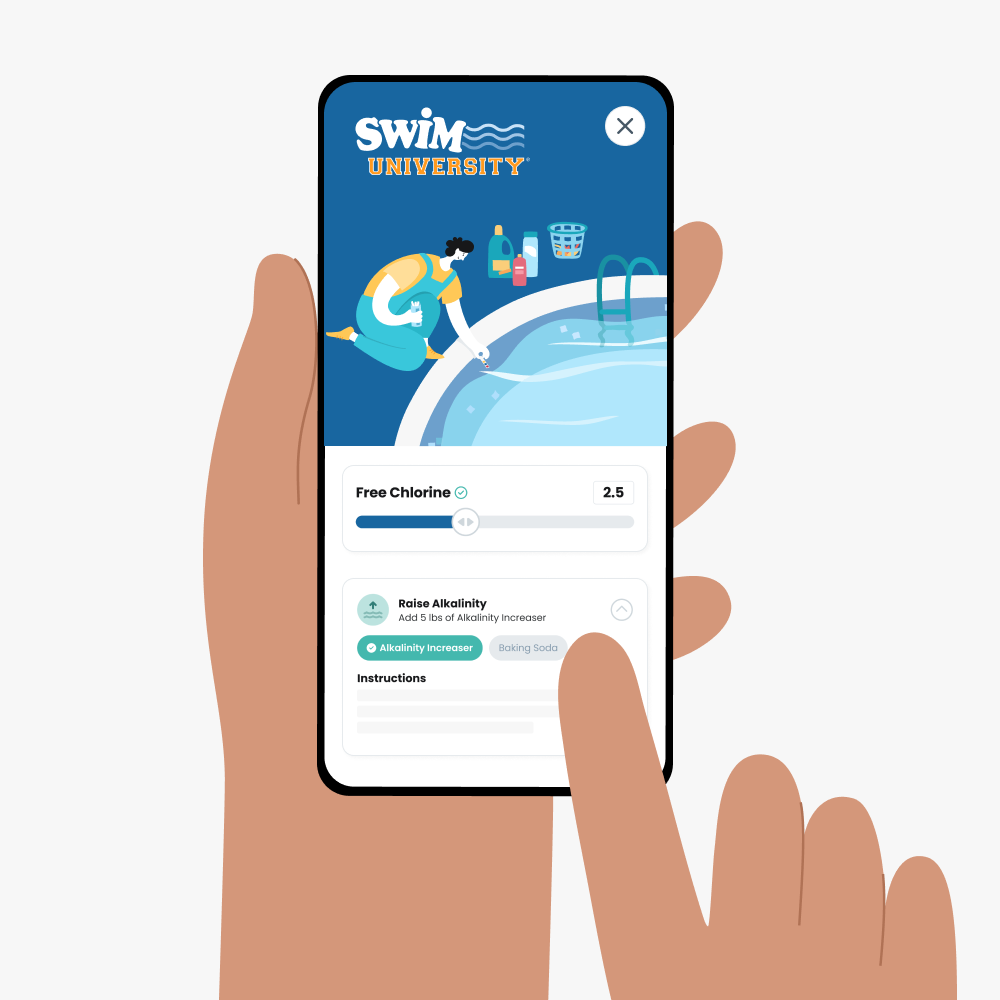
Enter your water test results. Get a custom treatment plan. Know exactly what chemicals to add to keep your pool clear. Saltwater and hot tub compatible.
Step 2: Figure Out Your Dosage
Use the table below to calculate how much calcium chloride to add. Work in batches of 5 pounds (2.3 kg) or less. Adding too much at once can melt plastic buckets.
| Increase By (ppm) | 1000 Gallons (3785 L) | 5000 Gallons (18927 L) | 10000 Gallons (37854 L) | 15000 Gallons (56781 L) | 20000 Gallons (75708 L) | 50000 Gallons (189271 L) |
|---|---|---|---|---|---|---|
| 10 ppm | 2 oz. (57 g) | 10 oz. (283 g) | 1 lb. 4 oz. (567 g) | 1 lb. 14 oz. (850 g) | 2 lbs. 8 oz. (1.1 kg) | 3 lbs. 2 oz. (1.4 kg) |
| 20 ppm | 4 oz. (113 g) | 1 lb. 4 oz. (567 g) | 2 lbs. 8 oz. (1.1 kg) | 3 lbs. 12 oz. (1.7 kg) | 5 lbs. (2.3 kg) | 6 lbs. 4 oz. (2.8 kg) |
| 30 ppm | 6 oz. (170 g) | 1 lb. 14 oz. (850 g) | 3 lbs. 12 oz. (1.7 kg) | 5 lbs. 10 oz. (2.6 kg) | 7 lbs. 8 oz. (3.4 kg) | 9 lbs. 6 oz. (4.3 kg) |
| 40 ppm | 8 oz. (227 g) | 2 lbs. 8 oz. (1.1 kg) | 6 lbs. (2.7 kg) | 7 lbs. 8 oz. (3.4 kg) | 10 lbs. (4.5 kg) | 12 lbs. 8 oz. (5.7 kg) |
| 50 ppm | 10 oz. (283 g) | 3 lbs. 2 oz. (1.4 kg) | 6 lbs. 4 oz. (2.8 kg) | 9 lbs. 6 oz. (4.3 kg) | 12 lbs. 8 oz. (5.7 kg) | 15 lbs. 10 oz. (7.1 kg) |
| 60 ppm | 12 oz. (340 g) | 3 lbs. 12 oz. (1.7 kg) | 7 lbs. 8 oz. (3.4 kg) | 11 lbs. 4 oz. (5.1 kg) | 15 lbs. (6.8 kg) | 18 lbs. 12 oz. (8.5 kg) |
| 70 ppm | 14 oz. (397 g) | 4 lbs. 6 oz. (2.0 kg) | 8 lbs. 12 oz. (4.0 kg) | 13 lbs. 2 oz. (6.0 kg) | 17 lbs. 8 oz. (7.9 kg) | 21 lbs. 14 oz. (9.9 kg) |
| 80 ppm | 1 lb. (454 g) | 5 lbs. (2.3 kg) | 10 lbs. (4.5 kg) | 15 lbs. (6.8 kg) | 20 lbs. (9.1 kg) | 22 lbs. 8 oz. (10.2 kg) |
| 90 ppm | 1 lb. 2 oz. (510 g) | 5 lbs. 10 oz. (2.6 kg) | 11 lbs. 4 oz. (5.1 kg) | 11 lbs. 4 oz. (5.1 kg) | 16 lbs. 4 oz. (7.4 kg) | 25 lbs. (11.3 kg) |
| 100 ppm | 1 lb. 4 oz. (567 g) | 6 lbs. 4 oz. (2.8 kg) | 12 lbs. 8 oz. (5.7 kg) | 18 lbs. 12 oz. (8.5 kg) | 25 lbs. (11.3 kg) | 31 lbs. 4 oz. (14.2 kg) |
Step 3: Pre-Dissolve in a Bucket
Fill a large bucket 2/3 full with pool water. Then, add your calcium chloride to the bucket. Never add water to dry calcium chloride. That’s how you get a dangerous splash of scalding liquid.
Stir with a wooden dowel or paint stick until dissolved. The mixture will get hot, which is normal.
Step 4: Pour It Around the Pool
With your pump running, pour the dissolved mixture around the perimeter of the pool. Spread it evenly and avoid dumping it all in one spot. Never pour it directly into the skimmer or filter system.
If you’re broadcasting dry calcium chloride directly into the pool, spread it across the deep end with the pump running, then brush it around immediately. Don’t let it sit on the surface, since it can damage the finish. Pre-dissolving can help mitigate this risk.
Step 5: Run Your Pump and Retest
Run your pump for at least 8 hours to fully dissolve and circulate the calcium. Retest the next day and add more if needed. Check out our full guide on raising calcium hardness in a pool.
What Can You Use Instead of Calcium Chloride?
There’s really no direct substitute for raising calcium hardness. Calcium chloride is the only chemical that effectively raises this level in pool water. However, it does come in different packaging. Calcium hardness increaser that’s sold at pool stores has the same active ingredient (calcium chloride) as ice melt or a road de-icer that’s sold at hardware and home improvement stores.
Some pool owners use Cal-Hypo (calcium hypochlorite) shock to gradually add calcium to their water. But it’s not reliable or precise enough to use as your primary method for raising calcium hardness.
What’s the Cheapest Way to Add Calcium to a Pool?
Skip the pool-store version of calcium hardness increaser. That’s just calcium chloride in a nice bag with a premium price tag. The same active ingredient is sold at hardware and home improvement stores as ice melt or a road de-icer for a fraction of the cost.
A 20-pound (9 kg) bag of ice melt can cost as little as $10, while the pool store equivalent might run 2 to 4 times that price. The key is to make sure you’re buying a product that’s 90% or higher in pure calcium chloride. Some “calcium chloride blends” use only a small percentage of actual calcium chloride mixed with other compounds like magnesium chloride. Avoid those.
Check the label. If the de-icer or ice melt is 90%+ calcium chloride, it works exactly the same as the pool store version.
Does Baking Soda Add Calcium to a Pool?
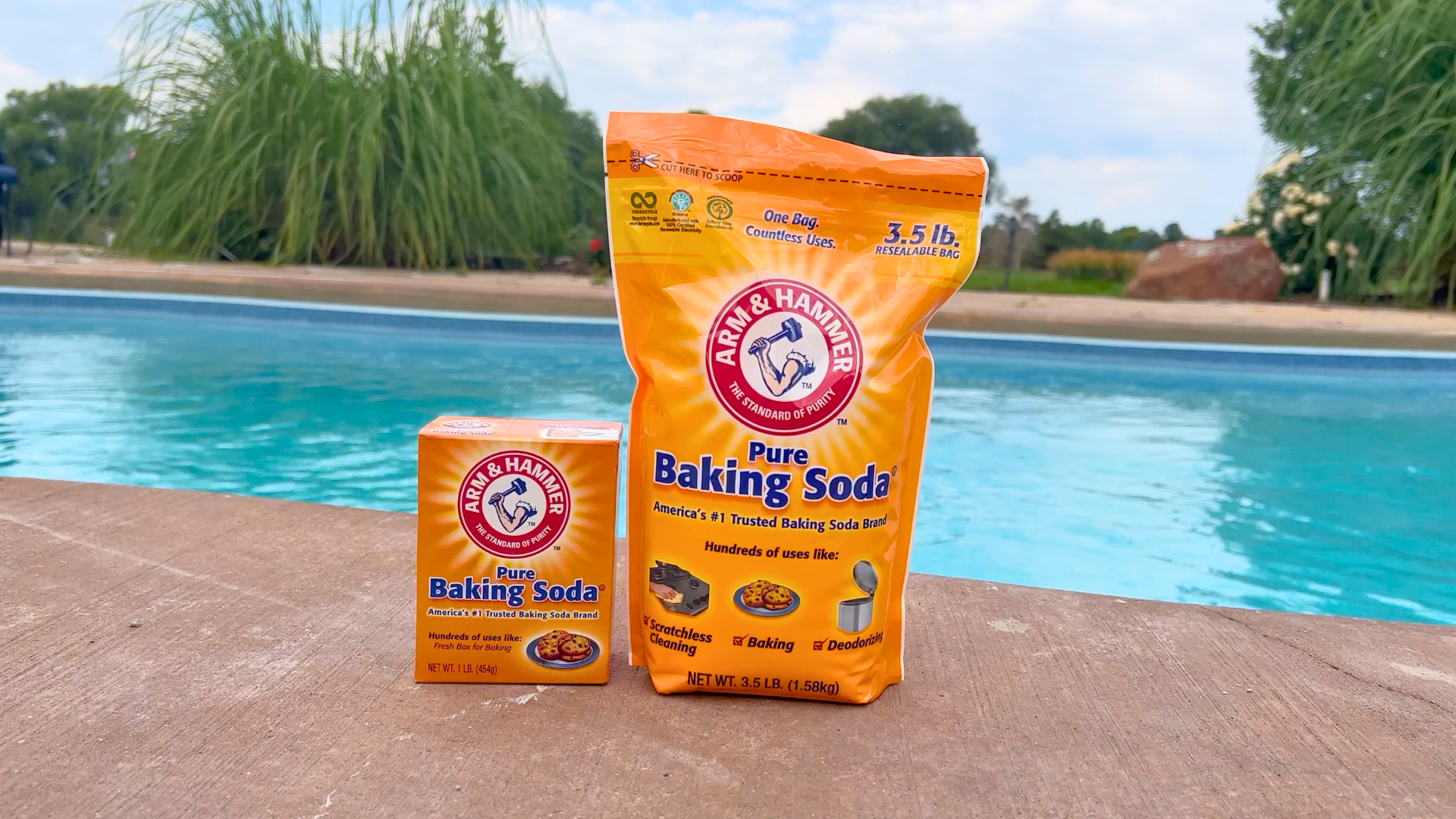
No. Baking soda raises your total alkalinity and can also nudge your pH up slightly. It has no effect on calcium hardness.
These are two separate measurements that do two different jobs. If someone tells you to use baking soda to fix your calcium hardness, they’ve got the wrong chemical. You need calcium chloride for that.
How to Lower Calcium Hardness
If your calcium hardness is too high, there’s really only one effective solution: partially drain your pool and refill it with fresh water that has lower calcium levels.
Whenever you refill, run your fill water through a hose filter. It removes some of the minerals, including calcium, before the water enters the pool. If you have very hard source water, you may need a more powerful solution like a water softener.
Another option is using a stain and scale preventer. It won’t lower your calcium reading, but it stops calcium from depositing on your surfaces and equipment. Check out our guide on How to Balance the Calcium Hardness Level in Your Pool for more help.
Key Takeaways
- Calcium chloride directly raises calcium hardness in a swimming pool.
- Calcium chloride is the active ingredient in calcium hardness increaser found at pool stores and de-icers or ice melts found at hardware stores.
- Ideal calcium hardness levels are 175–225 PPM for vinyl and fiberglass pools and 200–275 PPM for concrete and plaster pools.
- The cheap version works just as well. Ice melt that’s 90%+ calcium chloride is the same thing as pool store “calcium hardness increaser” at a fraction of the price.
- Always pre-dissolve calcium chloride in a bucket of water before adding it to your pool to avoid dangerous heat and surface damage.
- To lower calcium hardness, partially drain and refill your pool. A stain and scale preventer can help keep deposits at bay in the meantime.