

Simple Scoop Review: Is It Worth Using for Pool Maintenance?

If you’ve ever walked into a pool store and stared down a wall of chemicals, each one promises to solve a different problem. Products like Simple Scoop by Pool Day are betting you’d rather grab one bucket and be done with it. But is it worth it? And will Simple Scoop solve all of your pool problems?
Once you understand what goes into Simple Scoop, what it costs, and how it stacks up against a basic pool care routine, you’ll realize that it’s not a complete all-in-one solution. Here’s everything you need to know.
What Is Simple Scoop?
Simple Scoop by Pool Day is a granular, all-in-one pool treatment you sprinkle into your pool once a week while the pump runs. It’s designed to act as an algaecide, clarifier, oxidizer, and stain and scale inhibitor all in one.
But here’s what it’s not: Simple Scoop is not a sanitizer, and it will not correct imbalances in your water chemistry. This means you’ll still need to purchase multiple chemicals, like chlorine or pH increaser, in addition to using Simple Scoop.
Simple Scoop is designed to maintain already-balanced pool water. While it can help stabilize pH and alkalinity levels, it will not directly fix major imbalances. Pool Day sells pH increasers, alkalinity increasers, chlorine tablets, and calcium hardness increasers separately.
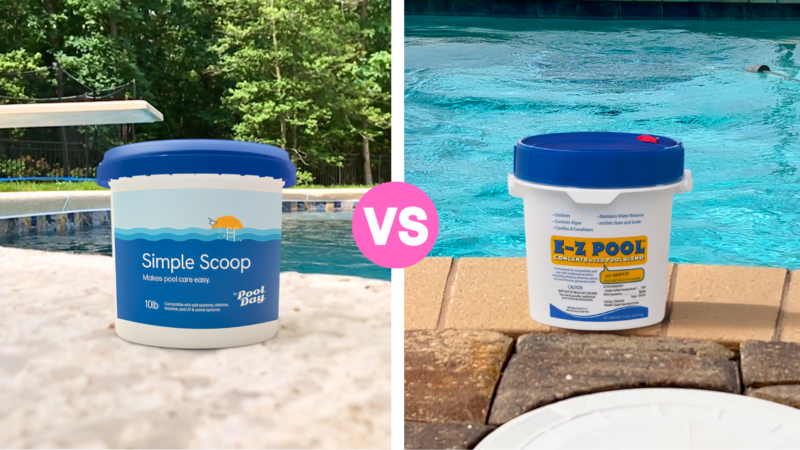
Is Simple Scoop the Same as E-Z Pool?
All-in-one pool chemical solutions aren’t new. Simple Scoop is similar to an existing product called E-Z Pool by APi Water Solutions. E-Z Pool appears to use the same core ingredients and comes in at a lower price point for the same weight. So if you’re set on trying an all-in-one product, E-Z Pool gives you essentially the same formula without the premium markup. The same copper risks still apply, though.

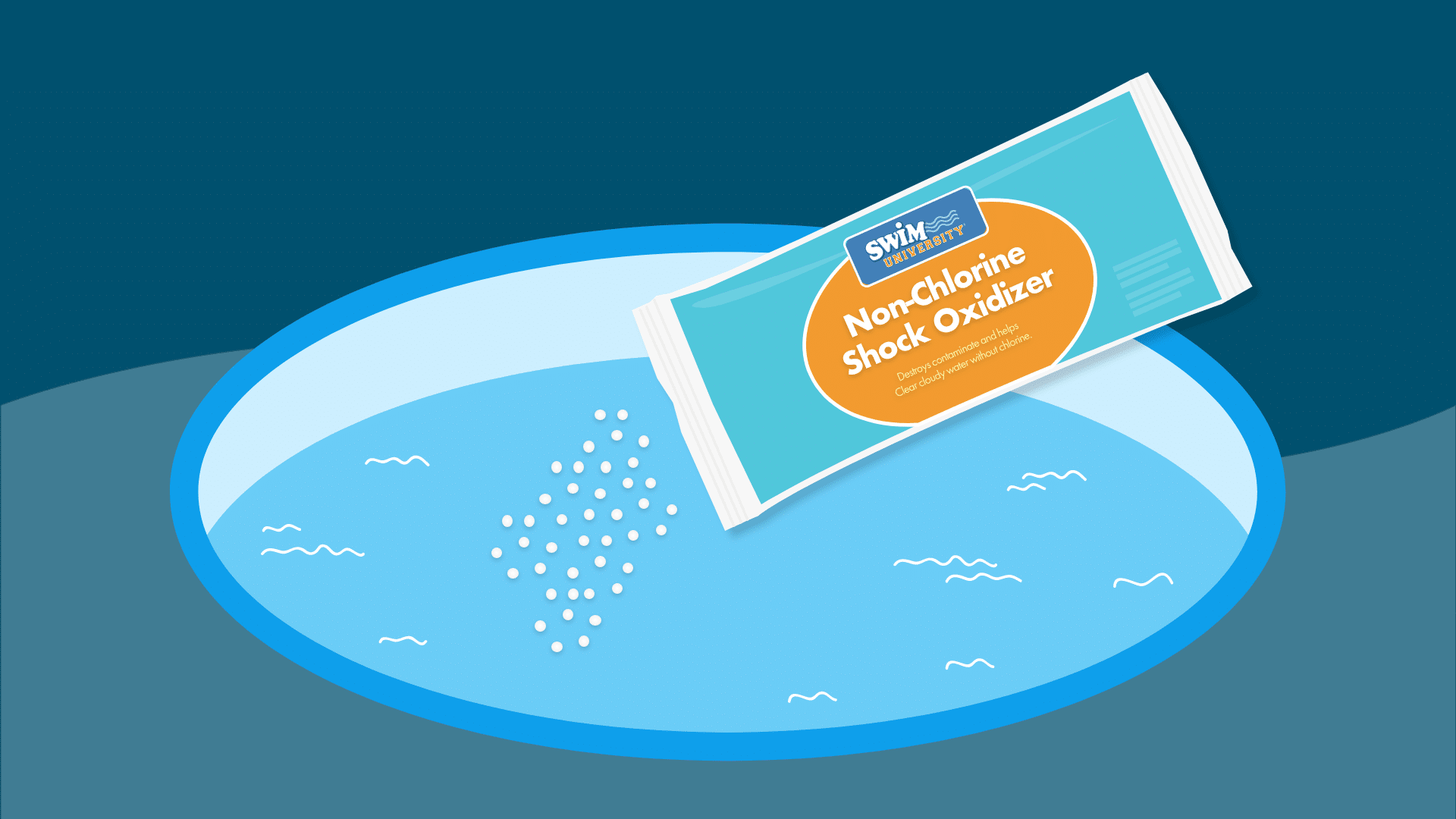
A non-chlorine oxidizing weekly shock treatment similar to Pool Day's Simple Scoop.
What Are the Ingredients in Simple Scoop?
Pool Day lists Simple Scoop ingredients on their website: potassium monopersulfate (a non-chlorine oxidizing shock), chelated copper sulfate for algae control, a concentrated clarifier, and stain and scale inhibitors.
The ingredient that deserves the most attention is copper sulfate. Copper is a natural algaecide that helps prevent algae growth.
The problem is what happens when you add copper to your pool every single week. Over time, copper levels build up. If your pH drifts out of range or your chemistry gets unbalanced, that copper can come out of solution and leave blue-green or black stains on your pool surfaces. This is why testing your water every week and keeping your pH in range is so important.
How Much Does Simple Scoop Cost?
Here’s what a one-time purchase runs at the time of publishing this article:
- 10 lbs (4.5 kg): $179.99
- 15 lbs (6.8 kg): $179.99
- 25 lbs (11.3 kg): $349.99
Pool Day suggests using 1 scoop (0.5 lb) of Simple Scoop for every 5,000 gallons (18,927 liters) of water each week. For a 20,000-gallon (75,708-liter) pool, a 10-pound bucket lasts about five weeks. That’s roughly $36 per week, or around $144 per month
Remember, you still have to purchase other chemicals, like chlorine tablets, pH increaser,
Regular Pool Care vs. Simple Scoop
A weekly pool water care routine is more straightforward than you might expect. Here’s how to test and balance your water each week:
- Test your water using test strips or a liquid test kit.
- Adjust total alkalinity to 80 to 120 PPM.
- Adjust pH to 7.4 to 7.6.
- Check free chlorine and bring it to 1 to 3 PPM.
- Add a non-chlorine shock to keep your sanitizer active, or a chlorine shock to treat water issues
On a monthly basis, also check:
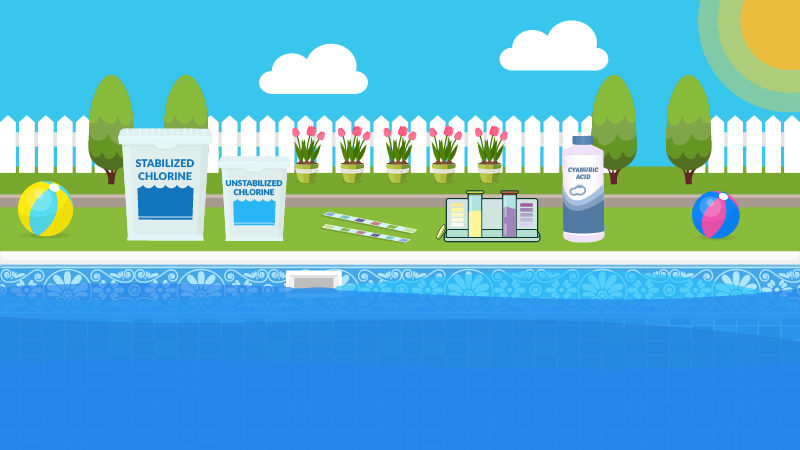
- Cyanuric acid (CYA): This protects your chlorine from burning off in the sun. Aim for 30 to 50 PPM. If you’re using chlorine tablets or granules, those contain CYA.
- Total calcium hardness: This protects your pool surfaces and equipment from corrosion or scaling. Target 175 to 225 PPM for vinyl and fiberglass pools, or 200 to 275 PPM for concrete and plaster.
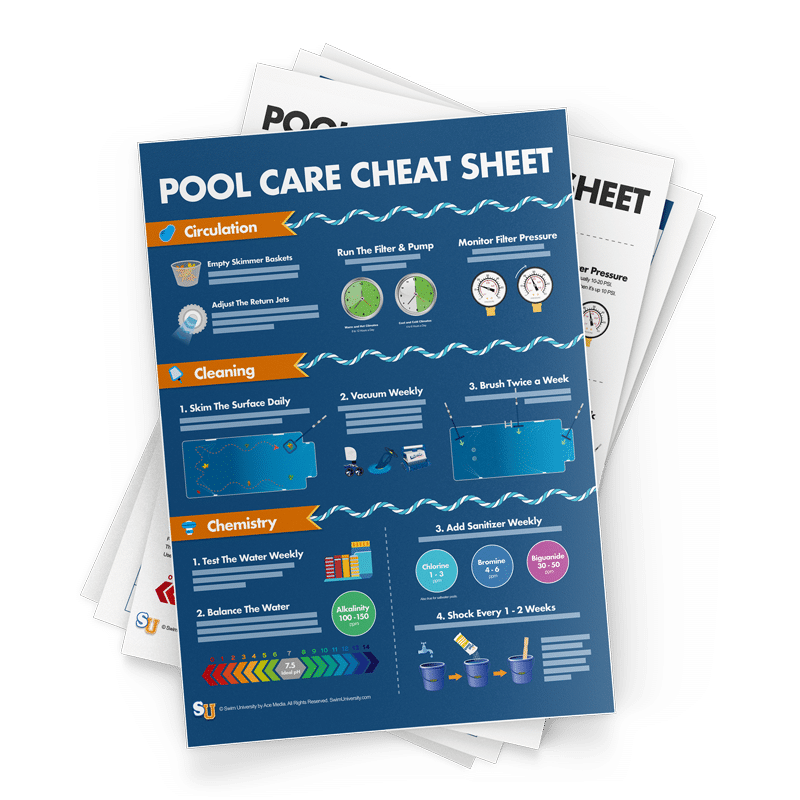
If you want this all in one, easy-to-use handheld reference, check out the Pool Care Handbook.
An illustrated, step-by-step guide to taking care of your pool yourself. Works for chlorine and saltwater pools.
What Pool Chemicals Do You Need?
Here are the individual chemicals you’ll need for regular pool care:
- Chlorine tablets, granules, or liquid chlorine (not required with a salt water pool)
- pH Increaser
- pH Decreaser or Muriatic Acid
- Alkalinity Increaser or Baking Soda
- Chlorine Shock
- Non-Chlorine Shock
- Chlorine Stabilizer (only if you don’t use chlorine tablets or granules)
- Calcium Hardness Increaser (only if your total calcium hardness is low)
For most pools, the total monthly cost for balancing chemicals (pH, alkalinity, stabilizer) lands around $30 to $45, but it depends on the size of your pool. Chlorine is the biggest line item, but a single bucket of chlorine tablets lasts most of a season.
Remember that you still need to purchase most of these chemicals in addition to using Simple Scoop. The only chemical that Simple Scoop replaces in this list is non-chlorine shock. You’ll also still need to skim, brush, and vacuum out debris.
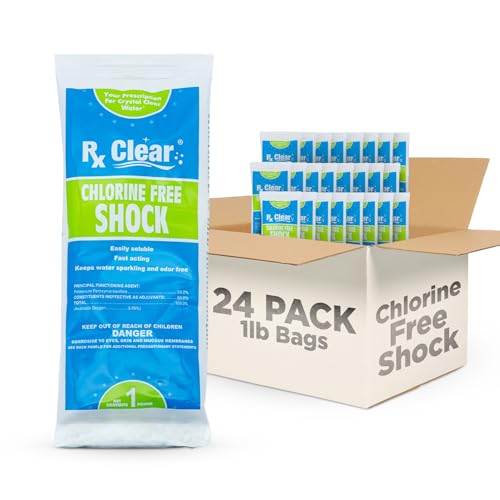
A powerful oxidizing agent that eliminates combined chlorine (chloramines) and provides higher free chlorine levels. Ideal for use with chlorine or bromine-sanitized applications, weekly maintenance, and will not affect other chemical levels
The reality is that no matter which routine you choose, you still need to test and balance your water regularly and add chlorine. You still need to rebalance after rain, heavy use, or any other water event. You may also want to test your water for metals if you’re using Simple Scoop, since you’re adding copper to your water every single week.
Do You Actually Need an Algaecide or Clarifier
If you test weekly, shock regularly, and keep your chlorine n range, algae usually isn’t a problem. If it does show up, treat it with chlorine shock. Algaecide is most useful when closing your pool for winter. Look for a 60% polyquat formula, which is copper-free.
Clarifiers work by coagulating tiny particles so your filter can catch them. They can help with cloudy water, but cloudy water is usually a symptom of something else: low chlorine, poor filtration, or unbalanced chemistry. Fix the root cause first, then use a clarifier if you still need help. Your filter should do the rest.
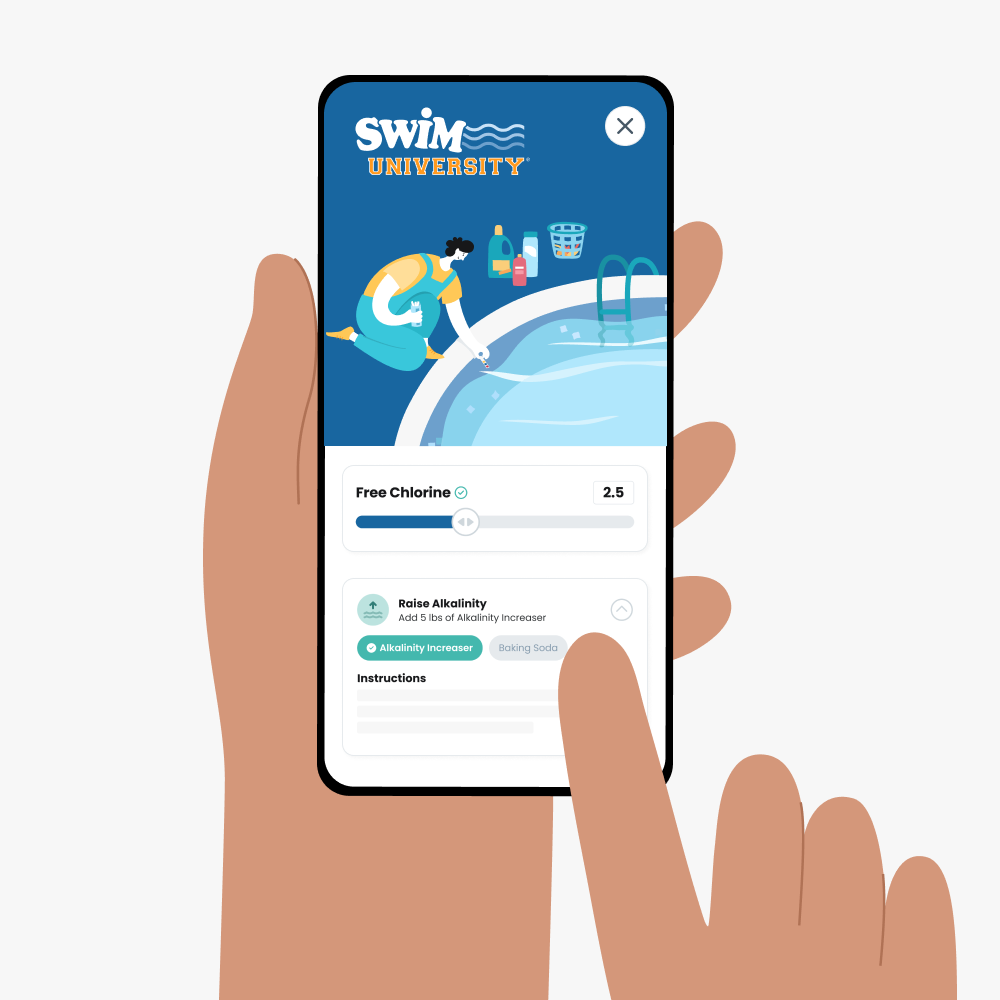
Enter your water test results. Get a custom treatment plan. Know exactly what chemicals to add to keep your pool clear. Saltwater and hot tub compatible.
Key Takeaways
- Simple Scoop is not a sanitizer and won’t fix water chemistry imbalances. You still need to test and balance your water regularly and buy chlorine, pH adjusters, and alkalinity increaser on top of it.
- The only step Simple Scoop truly replaces in a standard routine is shocking the pool. Everything else still needs to happen.
- Copper sulfate is an ingredient worth monitoring. Weekly additions can build up over time and cause blue-green or black staining if your pH or other levels drift out of range.
- A standard weekly pool care routine looks like this: test your water, adjust alkalinity to 80 to 120 PPM, adjust pH to 7.4 to 7.6, bring free chlorine to 1 to 3 PPM, then add non-chlorine shock. Check CYA and calcium hardness monthly and add chlorine shock for problematic water.