


Free LSI Calculator For Pool Owners

The Langelier Saturation Index (LSI) reading tells you whether your pool water will cause scale or corrosion. I built this calculator so you can enter your current readings and find out where your pool sits. But honestly, as a DIY pool owner, you don’t need to worry about this. More on that later.
Pool LSI Calculator
Enter your four test results. Temperature and TDS are set to defaults. Your index updates as you type.
On a normal residential pool, TDS moves your index by less than 0.1, so the default is close enough.
 Track your LSI over time in The Pool Care App
→
Track your LSI over time in The Pool Care App
→
There are actually two ways to measure if your pool water will cause scale or corrosion:
- LSI = Langelier Saturation Index
- CSI = Calcium Saturation Index or Calcite Saturation Index
They’re basically the same idea, just calculated a little differently. You might also see this as SI or Saturation Index. Or just “Water balance index.”
The LSI and CSI formulas measure the same thing and get similar results. It will tell you if your pool water is corrosive (which will eat away at plaster and heat exchangers) or will cause scaling (white, crusty buildup on surfaces and inside equipment).
What matters is knowing the right target, not which formula you use.
Do You Need to Worry About LSI?
Before I jump into these measurements, most pool owners don’t need to worry about LSI. It just ends up leading to more confusion, which I hate. That said, I get questions about it, so I wanted to address it.
The goal is to keep the water balanced. If you do your best to keep your numbers in range, you’ll be fine. Knowing this number is just an extra data point. Some advanced pool pros love basing their chemical addition off this number. It’s handy, but only if you have a calculator on your phone (and you understand how to use it).
Is it useful, sure. If you wanna nerd-out on pool chemistry like me, have at it. It’s why I built the calculator.
If you wanna keep things simple, ignore it. You’ll be fine.
What Does The LSI Number Mean?
Whether the result is CSI or LSI, it tells you one of three things:
- Zero: water is balanced
- Positive: water tends to form scale
- Negative: water tends to corrode
LSI or CSI measures calcium carbonate, which is a key ingredient in plaster. Neither number tells you how fast this will happen, just whether it might.
Where The Langelier Saturation Index Came From
Back in the 1940s, a guy named Robert Langelier created the formula to measure the possibility of scale buildup for water pipes in boilers. It used some rough estimates because the science of that time wasn’t very advanced.
In the 1970s, a scientist named John Wojtowicz took the same formula and rebuilt it using better, more modern chemistry. He adjusted it specifically for pool water and called his version the Calcium Saturation Index (CSI).
When I was testing for this back in the early 2000s, we just called it The Saturation Index. And truthfully, we never worried about it and still don’t. But I want to give you the information since you may come across it in the field and see it pitched by chemical companies.
What Changes My LSI Number?
A few things push your LSI up or down.
- First is pH. This is your biggest and fastest lever. Ideal pH is 7.4 to 7.6.
- Next is water temperature. Colder water lowers your LSI, and warmer water raises it.
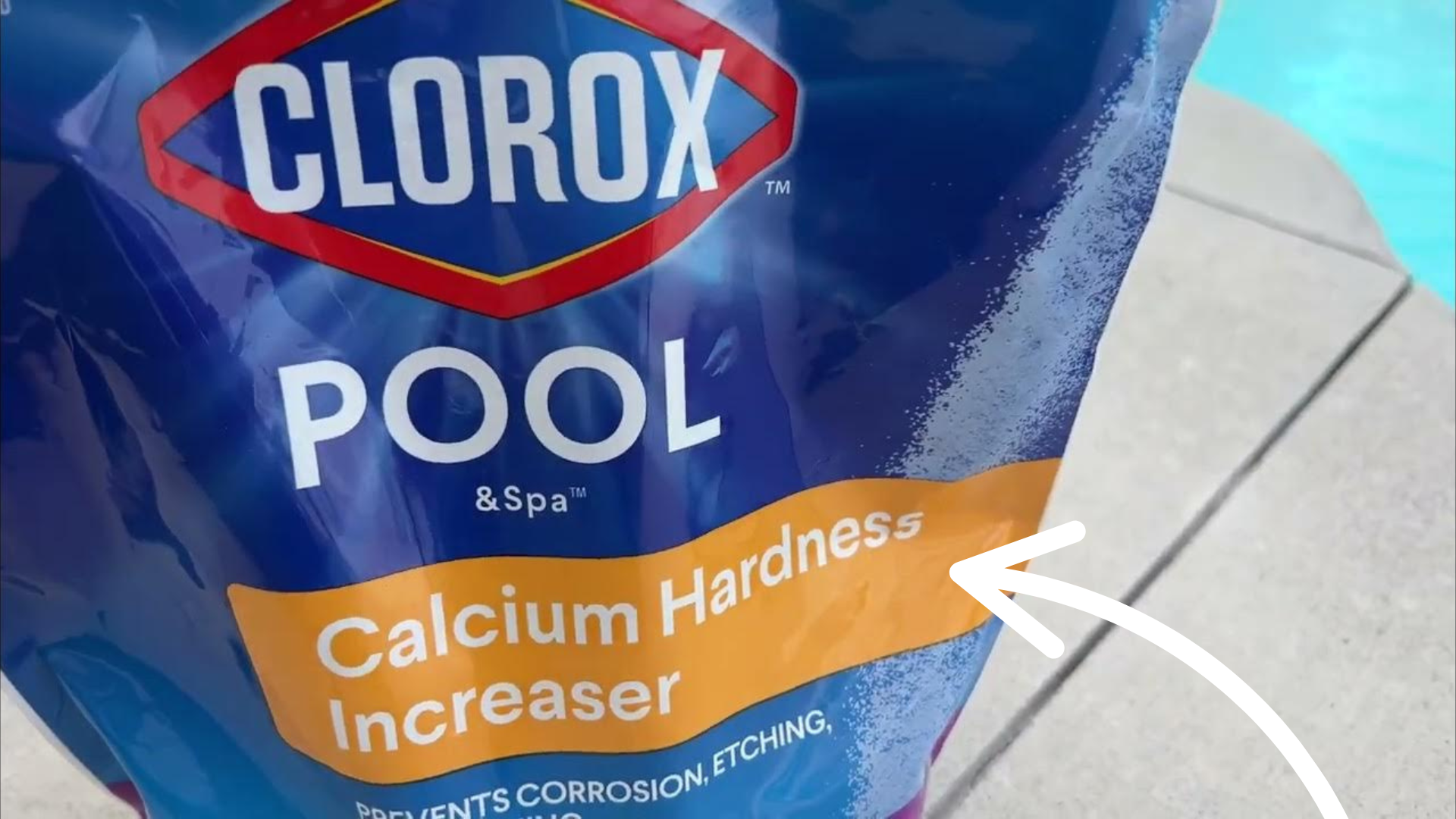
- Then comes calcium hardness. Your ideal levels are 175 to 225 PPM or lower for vinyl and fiberglass pools, and 200 to 275 PPM for concrete and plaster pools.
- After that is the total alkalinity. Ideal alkalinity for a pool is 80 to 120 ppm.
- Finally, there are two extra factors that affect your measurement. Cyanuric acid (a.k.a. CYA or your chlorine stabilizer) and Total dissolved solids, which includes salt.
This is why plaster gets damaged over winter. Make sure your levels are balanced or a bit raised before you close.
How Do I Fix Corrosive Water?
To fix corrosive water, you need to raise your LSI number. You do this by raising your calcium hardness, total alkalinity, and pH.
First, raise your calcium hardness. This is usually the easiest fix because calcium levels don’t bounce around week to week.
Then, if you need more adjustments, raise your total alkalinity. This helps stabilize your pH. After that, you can raise your pH if needed.
How Do I Fix Scaling Water?
To fix scaling water, you need to lower your LSI number. Start with the fastest and easiest fix.
First, lower your pH. Most scaling problems clear up once your pH comes down.
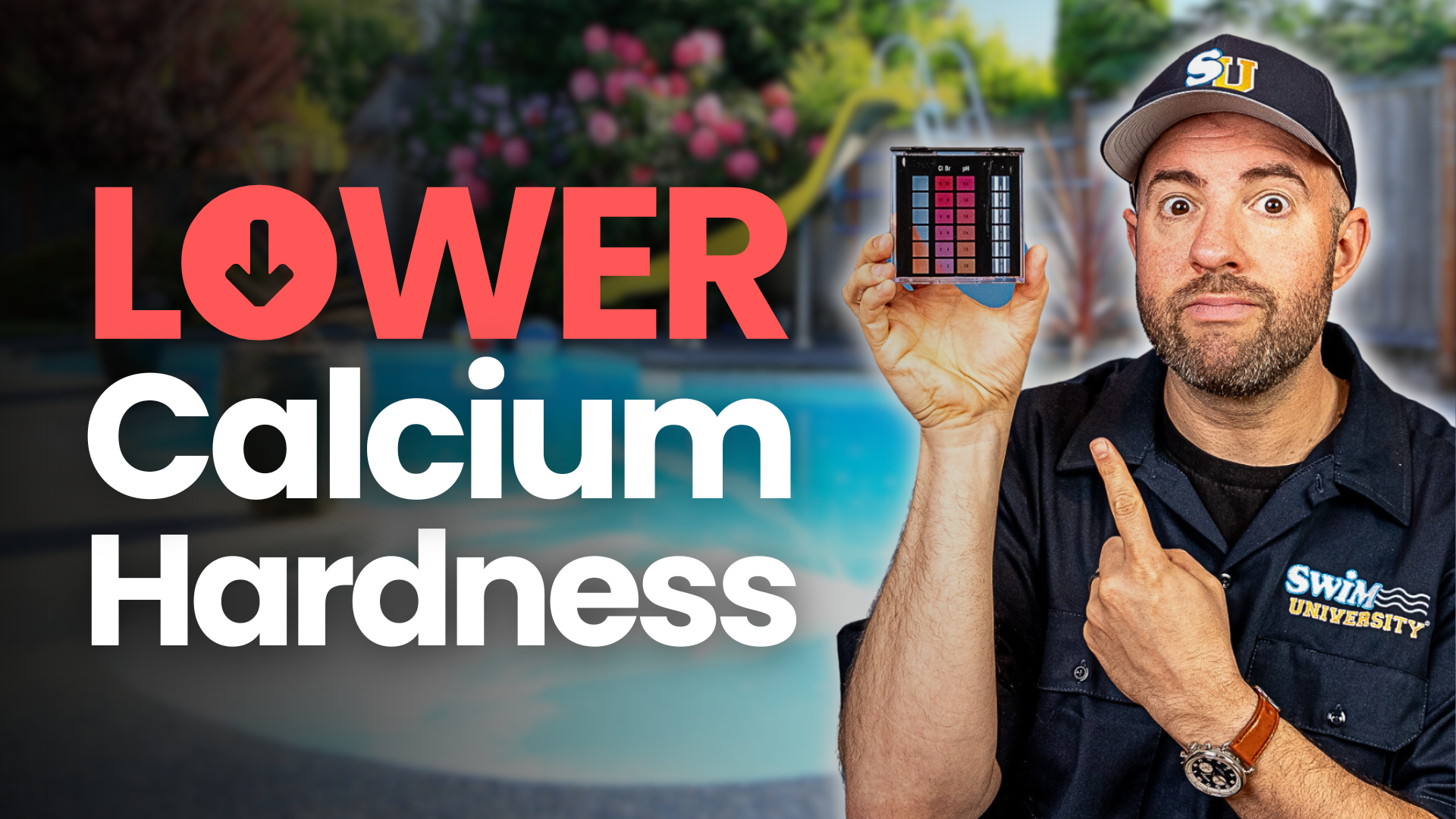
Lowering your calcium hardness is harder. The only real way to do it is to drain some water and refill it with fresh, filtered water. If your water source has high calcium, it can contribute to scaling. Using a stain and scale preventer can suspend the calcium in the water and prevent scaling.
How to Calculate The Langelier Saturation Index Using CSI by Hand
The formula factors in pH, calcium hardness, alkalinity, temperature, and a few other things. Here’s how to read the result:
- Below -0.6: corrosion is likely
- -0.6 to -0.3: leaning toward corrosion
- -0.3 to 0.3: balanced (this is the goal)
- 0.3 to 0.6: leaning toward scaling
- Above 0.6: scaling is likely
CSI = pH – 11.677 + log₁₀(CH) + log₁₀(CarbAlk) – (2.56√Ionic)/(1 + 1.65√Ionic) – 1412.5/(T + 273.15) + 4.7375
Carbonate Alkalinity (CarbAlk): CarbAlk = TA – (0.38772 × CYA)/(1 + 10^(6.83 – pH)) – (4.63 × Borate)/(1 + 10^(9.11 – pH))
Excess Salt (extra_NaCl): extra_NaCl = Salt – 1.1678 × CH (if this comes out negative, use 0 instead)
Ionic Strength: Ionic = (1.5 × CH + TA)/50,045 + extra_NaCl/58,440
Temperature (T): Must be in Celsius. If you have Fahrenheit, convert first: T = (T_F – 32) × 5/9
What the letters mean:
- pH = pH value
- TA = Total Alkalinity (ppm)
- CH = Calcium Hardness (ppm)
- CYA = Cyanuric Acid (ppm)
- Salt = Salt level (ppm)
- Borate = Borate level (ppm)
- T = Temperature (in Celsius)
New plaster pools
For the first two or three weeks after a pool gets new plaster, you actually want the CSI higher than normal, at least +0.5. This helps the plaster cure hard and smooth.
Closing a pool for winter
When a pool is closed, pH tends to rise and can cause scale. Cold water can push CSI very negative for a while, but this usually doesn’t last long enough to actually damage plaster.
The Science Debate
Some scientists in the past argued the original LSI didn’t really apply to pools at all since it was made for water pipes, not open swimming pools.
Wojtowicz argued that if you build the formula correctly for pool conditions, the underlying idea does still work. His research also showed test kit measurement errors can throw off the calculated number by around plus or minus 0.14, so it’s not perfectly precise anyway.
CSI and LSI are both just tools to check if your water chemistry is likely to scale, corrode plaster, or stay balanced. Aim to keep your CSI between -0.3 and 0.3 for normal pool care.
Key Takeaways
- LSI (Langelier Saturation Index) and CSI (Calcium Saturation Index) measure the same thing. They tell you if your water will scale, corrode, or stay balanced. Aim to keep your number between -0.3 and 0.3.
- A reading of zero means your water is balanced. A positive number means it leans toward scale, and a negative number means it leans toward corrosion.
- Most pool owners never need to track this. If your pH, alkalinity, and calcium hardness are in range, your water is already close to balanced.
- pH is your fastest lever. To fix corrosive water, raise your calcium hardness first, then your alkalinity, then your pH. To fix scaling water, lower your pH first.
- Cold water pulls your number down. So balance your levels, or raise them slightly, before you close your pool for winter to help protect your plaster.
- For brand-new plaster, aim a little higher than normal (at least +0.5) for the first two to three weeks. This helps the surface cure hard and smooth.