


How to Lower Calcium Hardness in a Pool

High calcium hardness isn’t a problem until you start noticing white, chalky buildup on your pool walls, cloudy water that won’t clear up, or a clogged filter that’s working harder than it should be. That’s calcium scale, and it means your calcium hardness levels are too high.
Total calcium hardness measures the amount of dissolved calcium in your pool water. Too much and the water starts depositing that excess calcium everywhere: your walls, your equipment, your filter, and, if you have a salt water pool, your salt cell.
Fixing high calcium hardness is a three-step process:
- Fix high pH levels that may be causing calcium to react in your water.
- Partially drain and refill with filtered water (normal calcium hardness levels).
- Stop the calcium in the water from settling on your surfaces with a stain and scale product.
Check out the video or keep reading for a walkthrough on how to lower the calcium hardness in your pool.
This is the ultimate guide to keeping your pool sparkling clean throughout the year that contains everything you need to know about taking care of your pool the right way. Including saltwater pools.
How to Lower Calcium Hardness in Your Pool
Your target range depends on your pool type. For vinyl and fiberglass pools, aim for 175 to 225 PPM (parts per million) of total calcium hardness. For concrete and plaster pools, aim for 200 to 275 PPM. If your levels are higher than that, follow these steps:
Step 1: Balance Your pH First
High pH is one of the most common causes of calcium scaling. When pH runs too high, it causes calcium to fall out of solution and deposit on your surfaces as white scale or flakes. Before you do anything else, test your pH and adjust it to the ideal range of 7.4 to 7.6.
Sometimes correcting your pH is enough to stop the scaling in its tracks. It won’t lower your calcium hardness reading, but it will stop calcium from depositing on your surfaces and equipment. Always start with this step.
Step 2: Partially Drain and Refill Your Pool
If you want to actually lower your calcium hardness level, the only true way is to partially drain and refill your pool with fresh water. There’s no chemical that pulls calcium out of the water. Dilution is the solution.
You don’t need to drain the whole thing. Start with one foot of water at a time, then refill and retest. Depending on your levels and the hardness of your tap water, you may need to repeat the process more than once. Never drain more than ⅓ of your pool at a time, since this can cause structural damage.
Step 3: Refill with Filtered Water
Always attach a hose filter to your garden hose before refilling. It removes most minerals, including calcium, from your fill water before it enters the pool. This step is especially important if you have naturally hard tap water.
If your source water is very hard, a hose filter alone may not cut it. A portable water softener attached to your hose does a more thorough job of removing minerals. Just be careful not to overcorrect. Water with very low calcium can corrode your pool equipment and heater.
Step 4: Rebalance Your Water Chemistry
Fresh water dilutes everything, not just calcium. After refilling, test all your levels and rebalance. That means checking and adjusting your total alkalinity, pH, chlorine, and cyanuric acid (CYA).
Start with total alkalinity first, then adjust pH, then chlorine. This is the correct order to add chemicals, and it keeps everything working together.
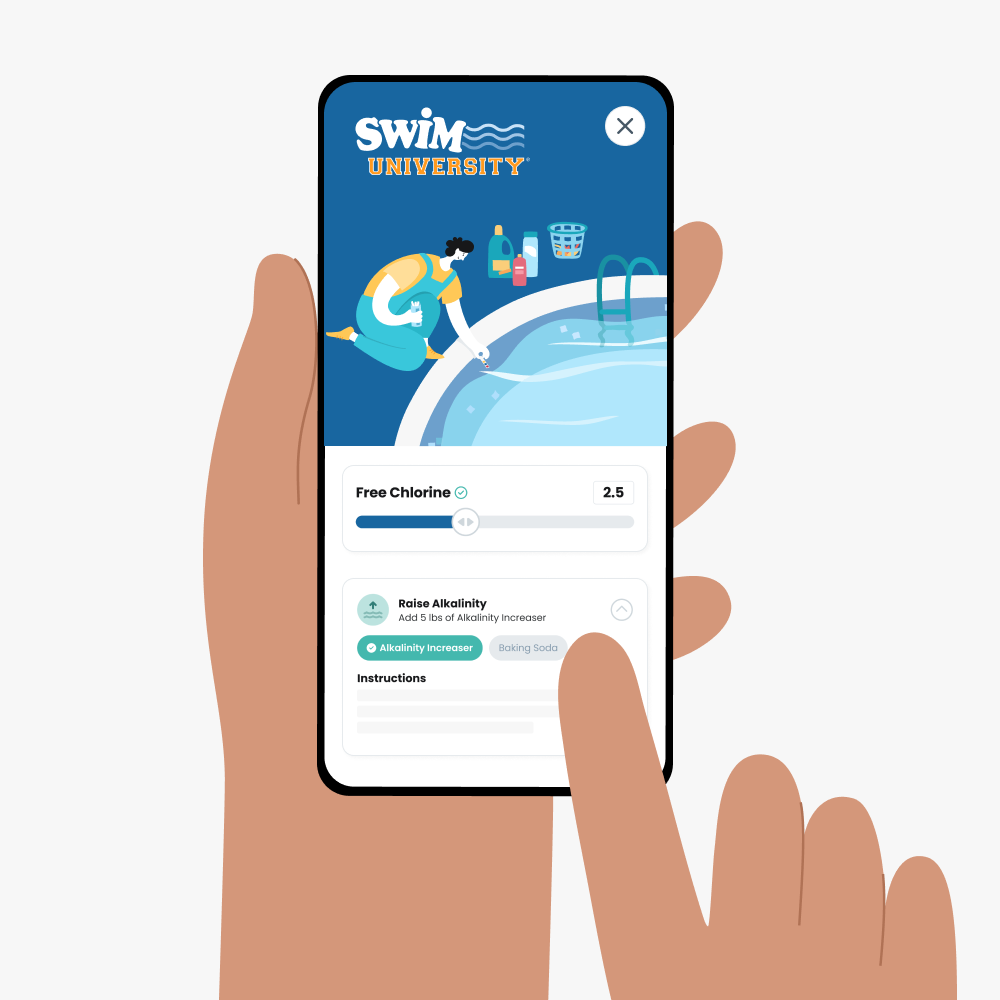
Enter your water test results. Get a custom treatment plan. Know exactly what chemicals to add to keep your pool clear. Saltwater and hot tub compatible.
Step 5: Use a Stain and Scale Preventer Regularly
If your source water still has high calcium hardness levels or you’ve got chronically high pH in your pool, use a stain and scale preventer. This binds to calcium in the water, preventing it from settling on your surfaces and equipment.
This is especially useful for salt water pools, where naturally high pH can cause scale to build up inside the salt cell fast. A stain and scale preventer is also important for protecting the gel coating on fiberglass pools.
Add a weekly or biweekly dose, according to the manufacturer’s directions. This will keep calcium in suspension, preventing it from depositing on your surfaces.

A pool cleaner that removes calcium, iron stains, and scale from surfaces, tile, and equipment without scrubbing, acids, or draining your pool.
Find the Cause of High Calcium Hardness
It helps to know what pushed your levels up in the first place so you can avoid the same problem down the road. Here’s what causes high calcium levels:
- Your fill water is hard. Well water and municipal water in many parts of the country are naturally high in calcium. Every time you top off your pool, you’re adding more calcium to the water. Always use a hose filter when refilling.
- Water evaporation concentrates minerals. When pool water evaporates, the water leaves, but the calcium stays behind. Over time, this concentrates minerals in your pool, and calcium hardness creeps up.
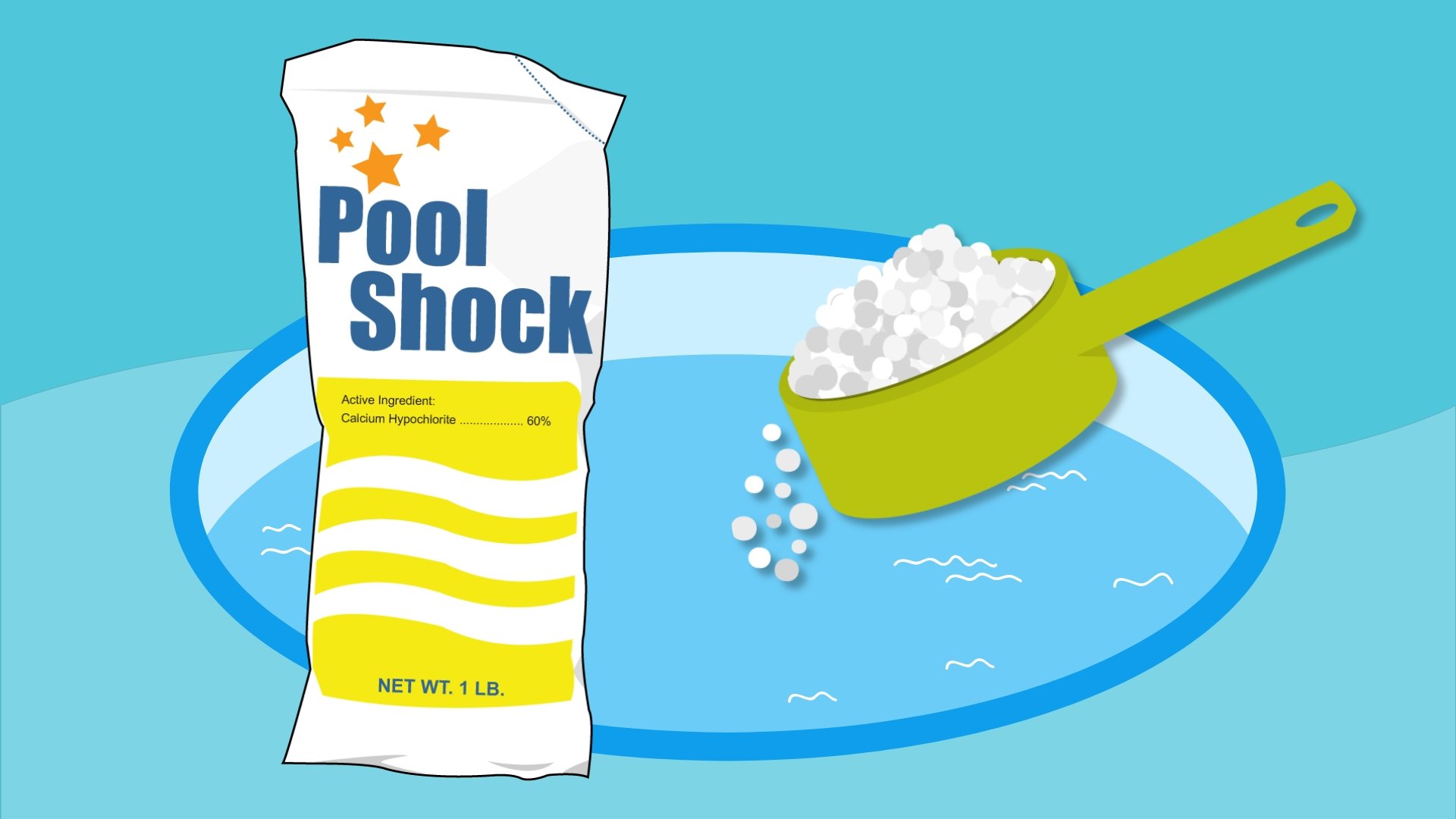
- You’re using cal-hypo shock. Calcium hypochlorite shock contains calcium. If you shock your pool regularly with cal-hypo, you’re adding calcium to the water with every treatment.
- Your pH has been running high. As mentioned above, high pH causes calcium to fall out of solution. This can also appear as a higher-than-expected calcium level on your test results.
High Calcium Hardness Levels Impact Pools Differently
Not every pool reacts to high calcium the same way. Here’s what to watch for depending on your pool surface.
Concrete and Plaster Pools
These are most affected by calcium imbalances in either direction. High calcium causes scaling and cloudy water. Low calcium causes etching and pitting as the water pulls calcium directly from the surface. Keeping your levels in the 200 to 275 PPM range is critical for the long-term health of these surfaces.
Fiberglass Pools
These pools can tolerate lower calcium levels, but high calcium is a real problem. When combined with high pH, elevated calcium can cause surface chalking, discoloration, and permanent damage to the gelcoat. Stay at the lower end of the recommended range (around 175 PPM) and watch your pH closely. You still need a little calcium hardness in the water to protect your pool equipment, but not too high to affect the pool surfaces. But if you’re running high calcium, use a stain and scale preventer and avoid cal-hypo shock.
Vinyl Liner Pools
These are the most forgiving surfaces when it comes to calcium imbalances. But high calcium will still cause scaling on your equipment, plumbing, and any concrete or plaster surfaces around the pool. Like fiberglass, stay at the lower end of the recommended range (around 175 PPM) to keep a little calcium hardness in the water to protect your pool equipment.
Salt Water Pools
The salt cell is especially prone to calcium buildup, and calcium scale on the cell plates can prevent it from generating chlorine properly. Check your salt cell every three months. If you’re running high calcium, use a stain and scale preventer and avoid cal-hypo shock.
Key Takeaways
- Check your pH before draining. High pH causes calcium scaling. Correcting your pH first (target 7.4 to 7.6) may solve the problem without draining any water.
- The only way to truly lower calcium hardness is to partially drain and refill your pool. There’s no chemical that removes calcium from the water.
- Always use a hose filter when refilling. It removes minerals from your fill water. If your source water is very hard, consider a water softener.
- After refilling, rebalance your chemistry in order: total alkalinity first, then pH, then chlorine, then CYA, then calcium hardness last.
- Stain and scale preventer helps to prevent scaling. It prevents calcium from depositing on surfaces and equipment. This is especially useful for salt water and fiberglass pools.
- Target ranges are 175 to 225 PPM for vinyl and fiberglass pools and 200 to 275 PPM for concrete and plaster pools. Test monthly and after any significant water addition.
- If you need to raise your calcium hardness level, check out full guide on how to raise calcium hardness in a pool.