Every pool is different. Get a free step-by-step plan for yours.
Get My Free PlanI built these pool chemical calculators to show you how much to add. I put these calculators in the correct order to add chemicals to your pool.
First, you need to know how much water your pool holds. If you’re unsure, measure your pool and get the exact size. This will help you now and in the future.
Pick your pool shape and enter its dimensions. The volume updates as you type.
Next up is water balancing. You need to get your pH in the correct range before you do anything else. Why? Because the correct pH balance makes your sanitizer (chlorine, bromine, salt, etc.) more effective at killing contaminants.
There are two readings that affect pH: Alkalinity and pH. And most of the time, you can adjust your alkalinity, and your pH should follow.
Alkalinity is a pH buffer. Meaning, it protects your pH reading from going up and down due to rain, swimmers, and adding chemicals. So adjust your alkalinity first between 80 and 120 ppm (parts per million).
Pick what you’re adding and enter your test results. The dose updates as you type.
 Get exact doses in The Pool Care App
→
After adding Alkalinity Increaser or baking soda (sodium bicarbonate), test the water again to see if your pH is in range. If it’s not, you can dial it in using either pH Increaser or washing soda (sodium carbonate).
If your pH is high, you can bring it down using either
Your pH should be between 7.4 and 7.6.
Pick what you’re adding and enter your test results. The dose updates as you type.
Get exact doses in The Pool Care App
→
Next is your sanitizer. This includes either chlorine or salt. The most common is just adding chlorine, and it comes in three forms: liquid, powder (granular), and tablets.
This calculator will help you get your free chlorine in range no matter which type you want to use. Keep your free chlorine between 1 and 3 ppm.
Pick the type of chlorine you’re adding and enter your numbers. The dose updates as you type.
Get exact doses in The Pool Care App
→
If you have a saltwater pool, that means your pool makes its own chlorine from the salt in the water. So you don’t have to add chlorine, but you do have to maintain a certain salt level so that your saltwater chlorine generator (SWG) will produce the right amount of chlorine.
The good news is, you don’t have to do this very often, normally just at the beginning of your pool season. But if your salt cell is telling you to add more salt, use this calculator. Your salt reading should be between 2,700 and 3,600 ppm (this will vary based on your SWG instructions).
Enter your pool volume and current salt reading. You’ll see exactly how much salt to add, and how many bags that works out to.
Get exact doses in The Pool Care App
→
Most salt systems run between 2,700 and 3,600 ppm. Too low and the cell stops producing chlorine; too high and it can throw a fault or corrode metal fittings.
You might notice there are three different chlorine readings: free, total, and combined. The main one you need to worry about is free chlorine. This is the active chlorine that’s fighting contaminants.
Combined chlorine is what I call dead chlorine. Meaning, it did its job, and it needs to be removed. Total chlorine is just the sum of those two readings: Free and combined.
To remove combined chlorine, you need to shock the pool water using lots of chlorine or a non-chlorine shock.
Use this shock calculator if your total chlorine reading is higher than your free chlorine reading (and your water is green or cloudy).
Pick the color of your water and enter your pool volume. You’ll get the exact shock dose to kill the algae, plus a step-by-step plan to get back to clear.
Track this treatment in The Pool Care App
→

 Wait 30 minutes
Run the pump 8+ hours
Wait 24 hours
Never mix shock products together, and always add shock to water, never water to shock. Keep everyone out of the pool until free chlorine falls back under 5 ppm.
Chlorine is hard to keep in the water. The sun is your enemy. It burns off chlorine fast. Thankfully, there’s a sunscreen for your chlorine called cyanuric acid (CYA). If you use chlorine tablets (trichlor) or chlorine granulars (dichlor), those already contain a little bit of CYA to protect it.
But if you use liquid chlorine or have a saltwater pool, those forms of chlorine are unstabilized. Which means you may need to add cyanuric acid yourself to help protect the chlorine.
Use this calculator to figure out how much CYA you need. Ideally, the reading should be between 30 and 50 ppm (and a bit higher if you have a saltwater pool).
Pick the stabilizer you’re using and enter your numbers. The dose updates as you type.
Get exact doses in The Pool Care App
→
Stabilizer (Cyanuric Acid/CYA) protects your chlorine from the sun. Most pools run best at 30–50 ppm CYA (60–80 ppm if you have a salt system).
CYA sticks around in the water. This can be a good thing because you don’t have to add it as often as the other chemicals. However, too much CYA can render your chlorine ineffective. This forces you to add even more chlorine to combat it. I call this CYA creep.
Over time, as you add chlorine tablets and granulars, your CYA can keep climbing if you don’t keep an eye on it. I recommend testing for this at least once a month, especially if you have trouble keeping a good chlorine reading.
The last chemical you need in the water is calcium hardness. This is what I call an insurance chemical. It helps protect your pool walls and equipment. Without it, your water can become corrosive, which will wreck your walls, plumbing, and equipment.
However, too much of it can cause scaling. So it’s important to dial this in. And it’s easy because you should only have to do it once per season.
But just like CYA, you have to watch out for calcium creep. Chemicals like chlorine shock (calcium hypochlorite) contain calcium.
In order to use this calculator, you need to know what your pool walls are made of. The best way to tell is to just reach in and feel. If it’s a smooth rubber material, that’s vinyl. Hard plastic is fiberglass, and rough is usually plaster or concrete.
Pick whether you’re raising or lowering and enter your test results. The answer updates as you type.
Get exact doses in The Pool Care App
→
Lastly, we have a calculator that the pros use. This determines how corrosive or scaling your pool water could be. It factors in multiple readings like pH, alkalinity, calcium, CYA, and water temperature.
At Swim University, we like to keep it simple and give you standard target ranges to aim for. But the Langlier Saturation Index (LSI) takes a different approach. It measures your water as a whole and changes targets dynamically based on multiple factors.
As a homeowner and DIY pool owner, I think this just makes the whole process more confusing. So I would skip it.
However, I know some of you like this chemistry stuff. So I included it in this list for those backyard chemists and professionals.
Enter your four test results. Temperature and TDS are set to defaults. Your index updates as you type.
On a normal residential pool, TDS moves your index by less than 0.1, so the default is close enough.
Track your LSI over time in The Pool Care App
→
Hopefully these calculators were helpful. If you want to keep track of your pool water chemistry, you can download our app. There’s a free 7-day trial, and then it’s $49.99 a year after that. All of these calculators (and more) are combined in the app.
Plus, you get exclusive video content and live chat support with real experts on our team. You can also track your pool cleaning tasks.
Answer a few questions and we'll tell you what to test, what to add, and when.
Get My Free Plan
Matt is the founder of Swim University. He's been in the pool and spa industry since 1996. His mission is to make pool and hot tub care easy. Each year, he continues to help people with water chemistry, cleaning, troubleshooting, and more.
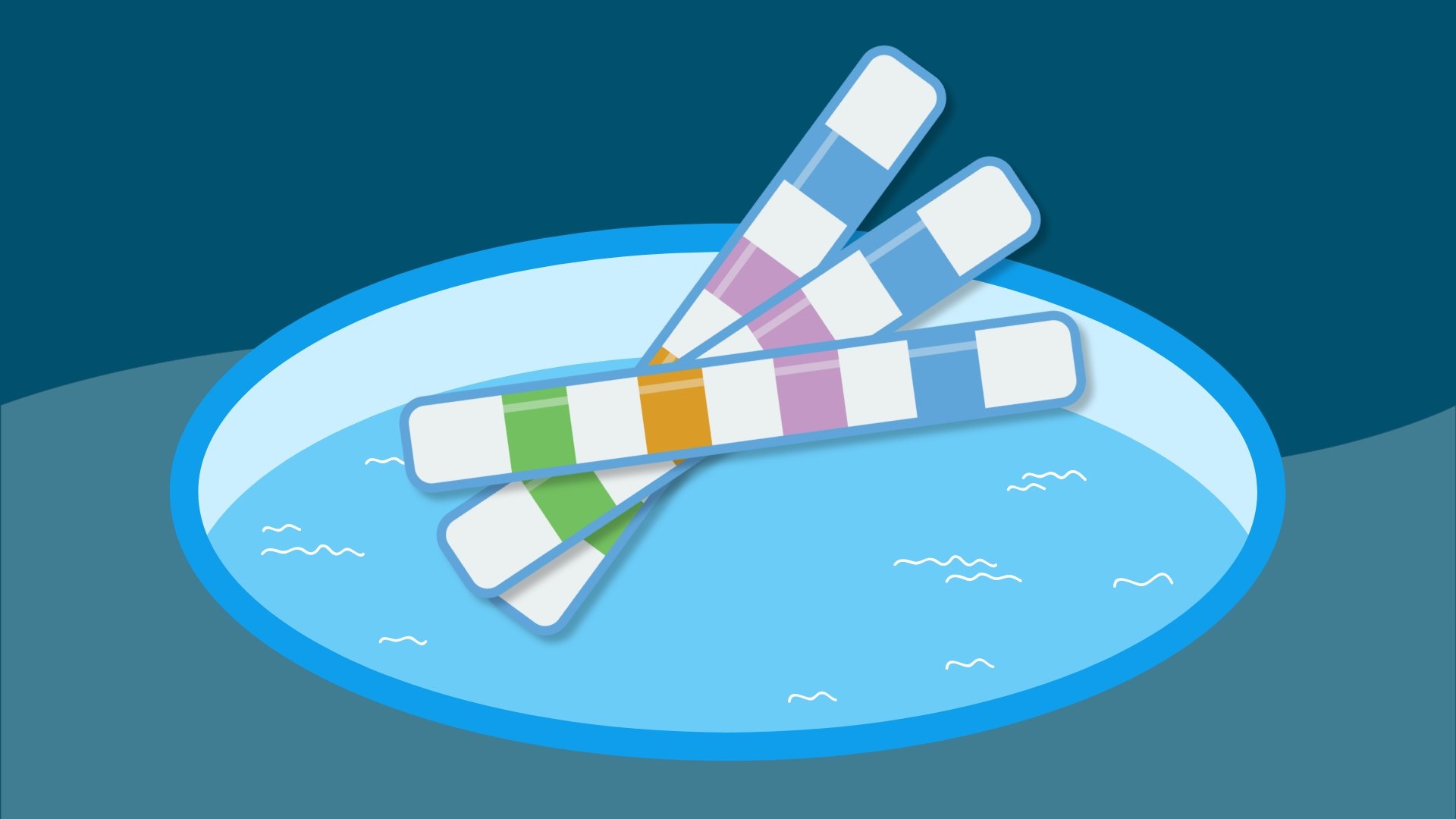
Need to test your pool water? Here's the right way to use pool test strips to get the most accurate reading.
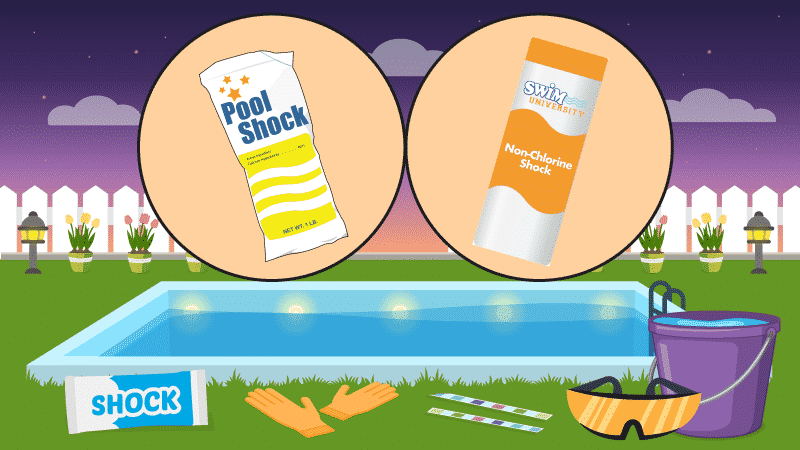
Finding the best pool shock depends on the type of pool you have and what water issues you're dealing with. Here's what to look for.
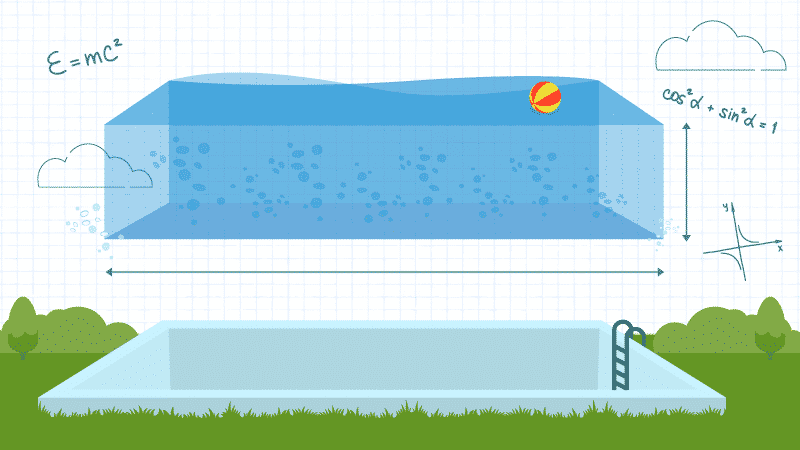
Use our free pool volume calculator to find out exactly how many gallons of water your pool holds. Works for all pool shapes and sizes. Try it now!
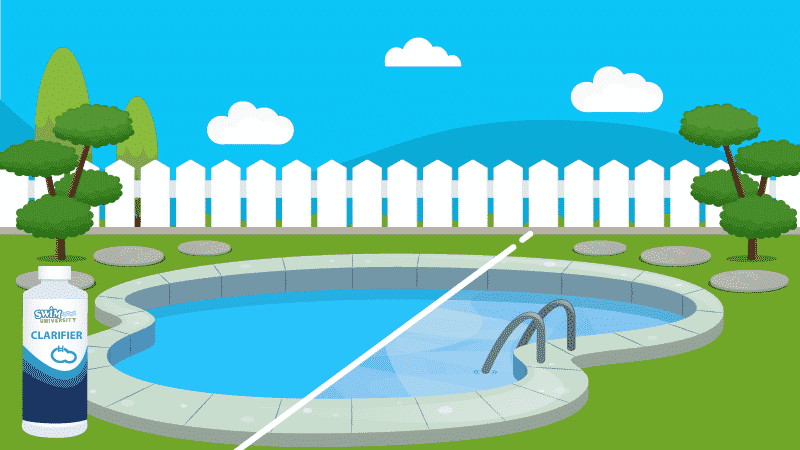
Pool clarifier is an easy way to clear up cloudy pool water. But how should you use it? Here's when to use a water clarifier for your pool.
High calcium hardness causes scaling, cloudy water, and equipment damage. Learn how to lower calcium hardness in your pool by treating your source water.
We rank every major pool chemical from best to worst so pool owners can buy the right products, skip overpriced ones, and keep the water clear.


