


Pool Stain Removal That Actually Works

Do you know what’s staining your pool? You can remove most stains with the right treatment, but only if you know what caused them in the first stains. Pool stains usually fall into one of two categories: organic or metal. They have two completely different treatment strategies. Once you figure out which one you’re dealing with, the fix is pretty straightforward.
You can watch our video on pool stain removal to get a full walkthrough, or keep reading for a step-by-step breakdown of everything you need to know.

An illustrated, step-by-step guide to taking care of your pool yourself. Works for chlorine and saltwater pools.
What Caused the Pool Stain?
Figuring out where your stain came from is the first step for stain removal. Different stain types have different treatment processes. There are two common types of pool stain:
- Organic stains come from natural debris, such as leaves, berries, algae, or other plant matter, that sit on your pool surfaces for too long. As they break down, they discolor the pool. The good news is that the right chlorine treatment will usually take care of these.
- Metal stains happen when metals like iron, copper, or manganese enter your pool water. This can come from your water source (especially well water), corroded pipes, metal pool equipment, or even certain chemicals. These are trickier to deal with because chlorine won’t work.
Here’s how to identify whether your pool stain is organic or metal:
Step 1: Identify Your Pool Stain by Color
First, take a close look at the stain’s color. This is the biggest clue as to where it came from.
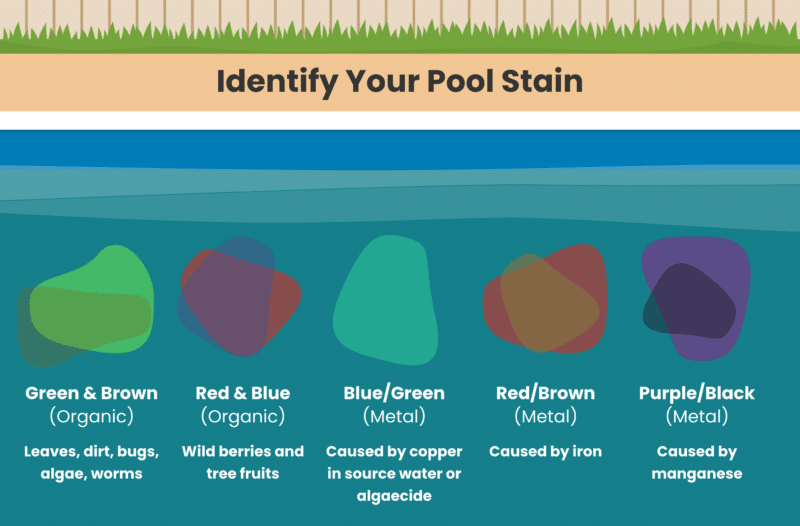
- Green-Brown: This is most likely an organic stain. Leaves, dirt, algae, or other plant matter sitting on the pool surface are the usual culprits.
- Red-Blue: Also organic. If you’ve got berry-producing trees or bushes nearby, they’re probably the source.
- Blue-Green: If there’s no vegetation near your pool, this is likely a metal stain, specifically copper. It can come from your source water, corroded pipes, or pool equipment.
- Red-Brown or Orange-Brown: This typically points to iron. If you fill your pool with well water, iron is very likely present. Rust from a nearby metal fence can also seep in after a rainstorm. Fertilizer runoff is another sneaky source of iron stains.
- Purple-Black: This dark color combination is caused by manganese, a naturally occurring metal found in both well water and some municipal water supplies.
- White or Gray: If the buildup is rough and chalky, you’re probably looking at calcium scale. Check out our calcium scale removal guide if you suspect it’s scale. If it’s smooth, it could be chemical staining from low pH or improperly cured plaster.
What Are Black Stains in a Pool?
Black raised bumps are a different story. If they fade when you apply chlorine but keep coming back, you might be dealing with black algae and not a stain. Check our guide on black algae for help with that. If the black stain doesn’t respond to chlorine at all, it could be copper that’s darkened over time.
Step 2: Test the Stain to Confirm
If you’re still not 100% sure what type of stain you have, run a quick test right in the pool.
For organic stains: Put on gloves and hold a chlorine tablet directly against the stain for about 30 seconds. If the stain fades or disappears, it’s organic.
For metal stains: If chlorine has no effect, grab some ascorbic acid (vitamin C powder) and rub or sprinkle a small amount onto the stain. If it lightens or disappears, you’ve got metal. If a brown stain turns black during this test, that means it’s copper.
These two tests are quick and inexpensive. They’ll save you from buying the wrong products. Then you can move on to the actual stain removal process.
How to Remove Organic Pool Stains
Chlorine is your solution for organic stains. You just need a lot more of it than your regular sanitizing dose. Here’s what you’ll need:
- Test strips or a liquid test kit
- Calcium hypochlorite (cal-hypo) shock. Use a gentler option like dichlor if you have a fiberglass or saltwater pool
- A stiff pool brush
Step 1. Test and Balance Your Water
Your alkalinity should be between 80 and 120 parts per million (ppm), and your pH should fall between 7.4 and 7.6. Balanced water helps the shock work more effectively.
Step 2. Shock Your Pool
For a single small stain, a standard dose of shock should do the job. For multiple or large stains, use a triple dose. That’s 3 pounds (1.4 kg) of cal-hypo shock per 10,000 gallons (37,854 liters) of water. Add shock in the evening so sunlight doesn’t break it down too quickly.
Step 3. Brush the Stains
You don’t need to scrub them completely away at this point. Just break them up and get the shock working into the surface.
Step 4. Run the Pump
Run the system on “filter” for at least eight hours to circulate the shock throughout the pool.
Step 5. Brush Again and Check
In many cases, the stains will be significantly lighter or completely gone. If they’re still visible, repeat the process. Stubborn organic stains may need two rounds of treatment.
What if the Stain Isn’t Gone After Shocking?
For particularly tough leftover spots, you can place a chlorine puck directly on the stain for 15 to 30 minutes. Just be aware that this can cause some chlorine discoloration, and it’s too harsh for vinyl or fiberglass surfaces.
How to Remove Metal Pool Stains
Metal stains take a slightly different approach. Chlorine won’t fix them, and shocking the pool can actually make things worse by oxidizing the metals in the water. Here’s what you’ll need:
- Metal test kit or strips (or take a water sample to your pool store)
- Ascorbic acid (vitamin C powder) for iron stains or smaller affected areas
- Metal stain remover for severe or widespread staining
- Metal sequestrant or preventer (this might be part of your stain remover)
Step 1. Test for Metals
You need to know which metal is causing the problem, because the right stain remover depends on it. If you have well water, test for metals at the start of every season, any time you add a large amount of fresh water, or when you notice discoloration.
Step 2. Adjust Your pH
Check out the directions on your stain remover. Some products require a lower pH to work properly.
Step 3. Treat the Stain Based on the Type of Metal
For iron stains, treat with ascorbic acid. Sprinkle it directly onto the stain and let it sit. The stain should lighten or disappear quickly. For widespread staining on the floor or walls, you can broadcast ascorbic acid throughout the entire pool while the pump is running. Note: if copper is the problem, skip the ascorbic acid. It can actually make copper stains darker.
For stubborn or widespread stains, use a dedicated metal stain remover. Look for one formulated specifically for the metal identified in your water test: iron, copper, or manganese.
Step 4. Add a Metal Sequestrant
Once you’ve treated the stain, those metals are floating in your water. A sequestrant binds to metal particles, keeping them suspended so they can’t settle back down and stain again. This isn’t a one-and-done product. Add a maintenance dose every one to two weeks throughout the season.
You can read our full guide on removing metals from your pool water to prevent future problems.
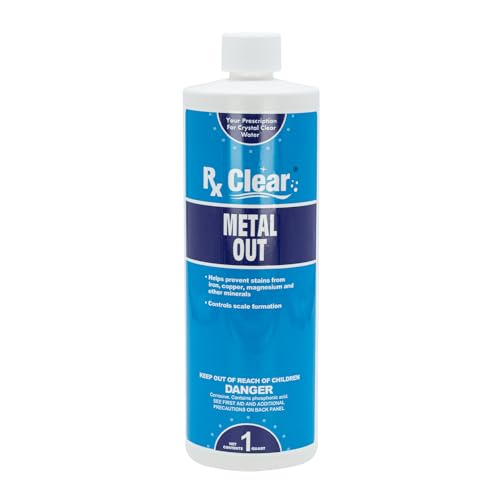
Helps prevent staining by removing iron, calcium, manganese, copper and other metals from your pool water. Also helps protect plumbing and pool walls from rust, stain, and scale. Used for all pool openings and closings.
How to Prevent Pool Stains from Coming Back
A few simple habits go a long way toward keeping your pool surfaces stain-free.
- Skim and remove debris before they settle. Don’t let leaves, berries, or other organic matter sit on the pool floor or walls. The longer they sit, the more likely they are to leave a stain behind. Make skimming part of your regular routine.
- Use a hose filter when filling your pool. A hose filter removes a good portion of the metals and minerals from your water before they ever enter the pool. This is especially useful if you have well water or know your source water has high iron or copper content.
- Add a metal sequestrant regularly. If you have well water or a history of metal staining, make this a standard part of your pool care routine. Add a maintenance dose every one to two weeks throughout the season, since the sequestrant breaks down over time.
- Use a copper-free algaecide. Some algaecides contain copper, which can stain your pool walls and floor. If metal staining is a concern, look for a copper-free formula instead.
- Keep your water chemistry balanced. Imbalanced water (especially low pH or low chlorine) makes it much easier for both organic debris and metals to leave stains. Test your water weekly and adjust as needed. Balanced water is your first line of defense.
- Avoid well water if you have options. If you can use a dual-tank water softener or have water delivered, it can significantly reduce your metal staining problems from the start.
Key Takeaways
- Pool stains are either organic (from debris like leaves and berries) or metal (from iron, copper, or manganese in the water).
- Use color to identify the stain type. Green-brown stains usually mean organic matter, while blue-green or red-brown typically indicates metal.
- Confirm the stain type with a quick test: use a chlorine tablet for organic stains, and ascorbic acid for metal stains.
- Organic stains respond to shock. Use a triple dose (3 lbs / 1.4 kg per 10,000 gallons / 37,854 liters) for large or widespread staining.
- Metal stains need ascorbic acid or a metal stain remover. Avoid using shock on metal stains, as it can oxidize them and make them worse.
- Follow up with a metal sequestrant and add maintenance doses every 1 to 2 weeks to prevent metal stains from returning.