


How to Remove Metals From Pool Water

If you fill your pool with well water, or you’ve noticed a rusty or greenish tinge after shocking, you’re probably dealing with metals. Unfortunately, metals in pool water are especially frustrating because they react strongly with chlorine. Once you know that, treating them (or getting rid of them for good) is pretty straightforward.
Your best course of action is to add a metal sequestrant (also called a sequestering agent, chelating agent, or metal remover). A metal sequestrant binds to metal ions in water, keeping them suspended in solution rather than settling on surfaces and staining your pool. But before you treat metals in your pool water, you need to know where the metals are coming from and whether it’s iron or copper.
Watch the video below or keep reading for the full guide on removing metal from your pool water.
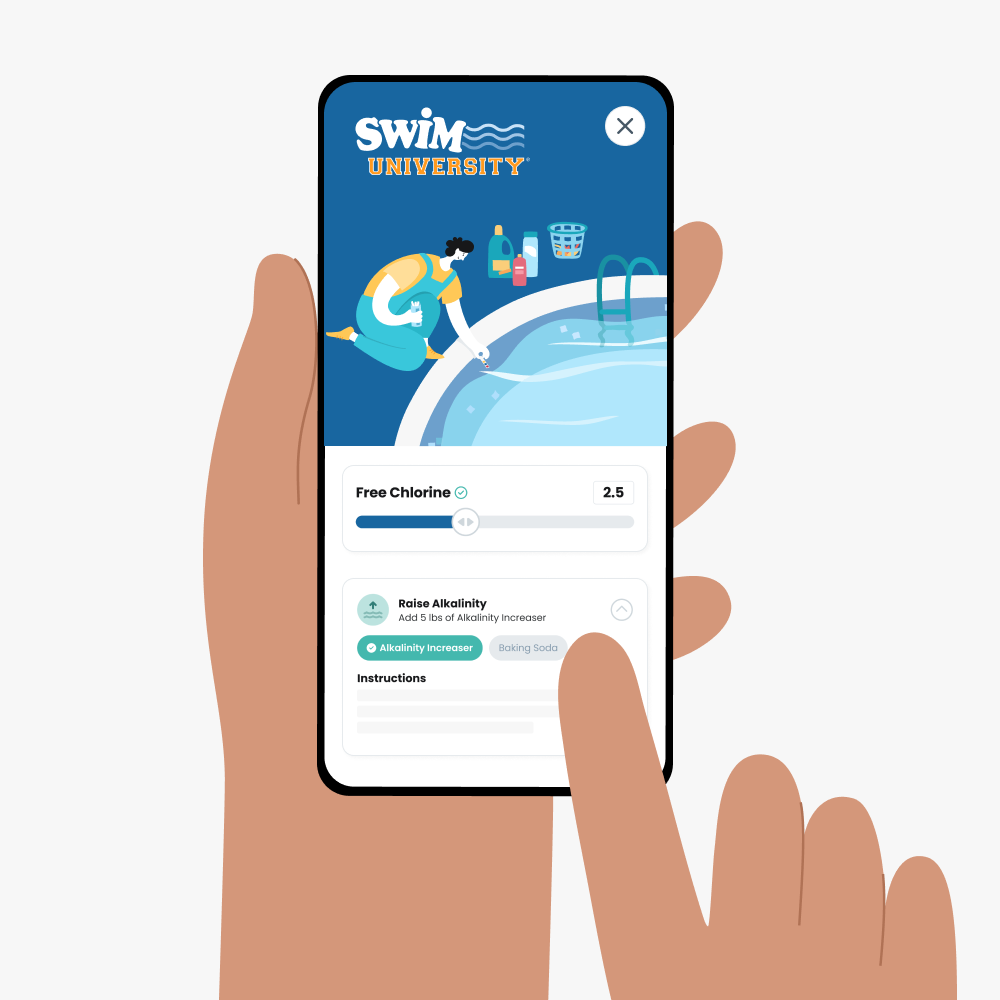
Enter your water test results. Get a custom treatment plan. Know exactly what chemicals to add to keep your pool clear. Saltwater and hot tub compatible.
Why There’s Metal in Your Pool Water
You can tell you have metal in your pool water by its color: brown or tea-colored water usually means iron, and green or blue-green water usually means copper. But dissolved metals can be invisible before oxidation or discoloration makes them noticeable, so it helps to know where the metal is coming from before you treat anything. There are four usual suspects.
- Well water. This is the most common source of metal in pool water. Well water typically contains higher levels of iron, manganese, and other minerals.
- Copper piping. If your home has copper plumbing, copper can leach into the water between your indoor pipes and your outdoor faucet.
- Corroding equipment. Metal fixtures near the pool, such as fencing or ladders, can rust after a rainstorm and end up in the water. A pool heater with a copper heat exchanger can also add metals when water chemistry is out of balance.
- Copper-based pool chemicals. Some copper products, especially algaecide and “multipurpose” chlorine products, can introduce copper if used improperly. If a product name includes the word “blue,” it usually has copper. Mineral systems and ionizers add copper to your water, too.
Not every discolored pool is a metal problem. Some stains and cloudy water come from algae or organic debris instead. If you’re not sure what you’re looking at, check out our pool stain guide before you start treating for metals, since they can also cause metal stains on surfaces and discolor hair.
How to Test for Metals in Pool Water
To test for metals in your pool, you’ll need test strips that specifically measure metal. You can also take a water sample to your local pool store.

This water testing kit offers a convenient way to monitor water quality without the need for reagents. It tests for iron and copper with a range of 0 to 5 ppm and 0 to 3 ppm.
Test the actual water source you use to fill your pool directly at the spigot before it enters the pool, not just an indoor tap.
Ideally, you want 0 ppm of both iron and copper, but it’s considered high once copper levels cross above 0.2 ppm or iron crosses above 0.3 ppm; manganese may also be present and can stain pool surfaces. If you fill with well water, test at the start of every season, whenever you add a large amount of fresh water, and any time you notice discoloration.
Once you know what metals are in your water, you can move on to treating them with a metal sequestrant.
How to Remove Iron and Copper with a Metal Sequestrant
A metal sequestrant doesn’t remove metal from your water. It binds to metal ions and keeps them suspended so they can’t oxidize or settle on your surfaces, preventing metal stains. If your system allows it, bypassing the pool heater before treatment can help prevent metal deposits.
Look for a sequestrant with phosphonic acid or a phosphonic acid derivative as the active ingredient. These hold up longer than cheaper formulas.
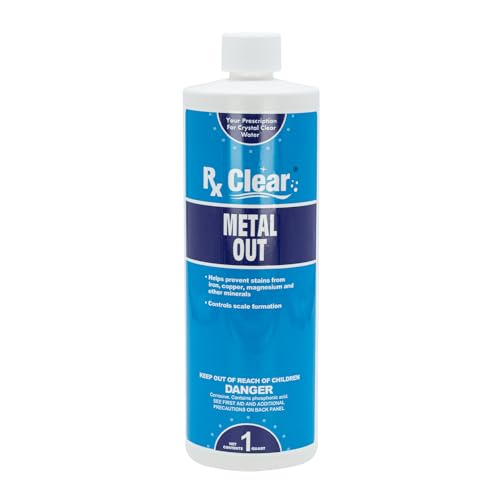
Helps prevent staining by removing iron, calcium, manganese, copper and other metals from your pool water. Also helps protect plumbing and pool walls from rust, stain, and scale. Used for all pool openings and closings.
To use a metal sequstrant:
- Lower your Chlorine and pH. Bring your chlorine down to 1 ppm or below and your pH to 7.2 to 7.6.
- Add the right dose around the pool. Pour the sequestrant slowly around the deep end perimeter with the pump running. Don’t skimp on the dose. Underdosing is the number one reason sequestrants don’t work.
- Run pump and filter 1-2 days. Run your pump for 24 to 48 hours afterward, and clean filters during that time so water flow stays strong. If your filter has a Recirculate setting, use it for the first two to four hours to help the sequestrant disperse evenly.
- Avoid chlorine shock. Wait three to four days before shocking. Chlorine and a fresh sequestrant dose don’t mix well right away.
- Add a maintenance dose. Sequestrants break down over time, so they need a maintenance dose every one to two weeks.
If needed, a flocculant can help gather dissolved metal particles for removal.
If you want metals removed from the water, polymer-based metal-elimination pouches are the other option. They sit in your skimmer or pump basket, physically trap metal ions, and get discarded after 30 to 90 days. CuLator Ultra 4.0 is rated to remove 4 ppm total dissolved pool metals.

Removes Copper Iron Rust Manganese Stain Preventer, Water Clarity Support, Skimmer Treatment for 20,000 Gallons.
These work best paired with a sequestrant, and they’re a slower process, so plan on at least thirty days of consistent circulation before you see results. Some larger filters can treating up to 20,000 gallons of water. If you’ve got persistently high metal levels from well water, this extra step is usually worth it. If your levels are moderate and respond fine to a sequestrant alone, you can skip it.
When metals are present in swimming pools at high levels, a partial drain and refill is often the better option.
How to Fill Your Pool With Well Water and Avoid Metals
If well water is your fill source, preventing metals beats treatment every time.
- Use a hose pre-filter. Attach a hose filter to your garden hose before you fill. Specialized fill filters such as FillFast can remove up to 90% of stain-causing metals before they ever reach your pool.
- Add a metal sequestrant when filling. Add a maintenance dose of sequestrant when you’re filling with a significant amount of water, and use the same pre-fill filter approach for spa water if you’re filling from the same source.
- Consider having your water delivered. If you’re topping off with well water regularly and you can swing delivery, reverse-osmosis water cuts down on how much metal-fighting you need to do all season.
Beyond the fill itself, keep an eye on calcium hardness. Your water can only hold so many dissolved minerals before they start falling out of solution, and high calcium hardness makes metal staining more likely, even with a sequestrant in place.
Frequently Asked Questions
Does pool shock remove metals?
No, the opposite. Shock is a strong oxidizer, and oxidizing dissolved metal is what causes it to fall out of solution and stain your pool in the first place. Treat metals with a sequestrant first, then wait three to four days before shocking.
Will baking soda remove copper from pool water?
No. Baking soda raises pH and total alkalinity, but it does nothing to bind or remove metal ions. If anything, raising pH too high can make copper more likely to fall out of solution and stain your pool. Use a metal sequestrant instead.
How do I remove rust from pool water?
Rust is iron, so the same iron-removal steps apply: lower your chlorine, balance your pH between 7.2 and 7.6, add a metal sequestrant, and run your pump for 24 to 48 hours. If the rust has already stained a surface, use ascorbic acid to lift iron-based stains from pool surfaces, since a sequestrant won’t remove existing staining.
Can you swim with metals in the water?
Generally yes, low to moderate metal levels aren’t a health concern for swimming. The real issue is staining and discoloration, and most people only notice metals after visible discoloration or staining appears. That said, always keep your sanitizer and pH within normal ranges regardless of your metal levels.
Get a Complete Pool Water Chemistry Plan
Metals are just one piece of keeping your water balanced. Between pH, chlorine, alkalinity, and sequestrant maintenance doses, it’s a lot to track by memory. The Pool Care App takes your test results and gives you an exact plan of what to add and when, including reminders for maintenance doses so metals don’t sneak back up on you. Try The Pool Care App FREE for seven days.