

How to Get Rid of Mustard Algae in a Pool

You spot something yellow clinging to your pool walls. You brush it away, and it comes back in a day or two. Sound familiar? That’s mustard algae, and it’s one of the most stubborn pool problems you’ll deal with.
Because it resists normal chlorine levels, a standard shock treatment usually isn’t enough to kill it, and it usually takes multiple days. You’ll need to clean your filter, decontaminate everything that’s been in the pool, and use the right combination of yellow algae treatment and shock. Skip any of those steps, and it’ll come right back.
An illustrated, step-by-step guide to taking care of your pool yourself. Works for chlorine and saltwater pools.
How to Tell if It’s Mustard Algae in Your Pool
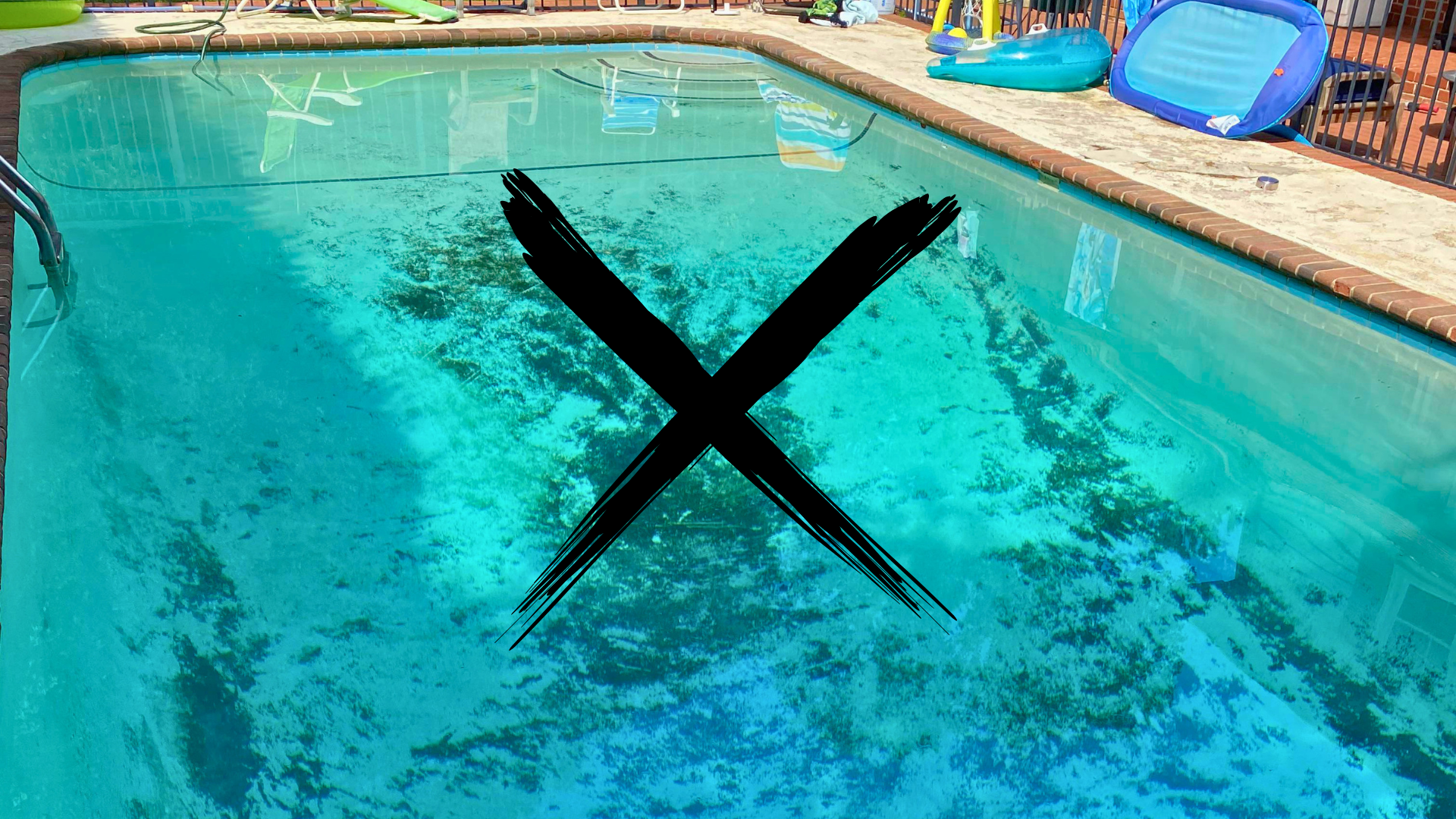
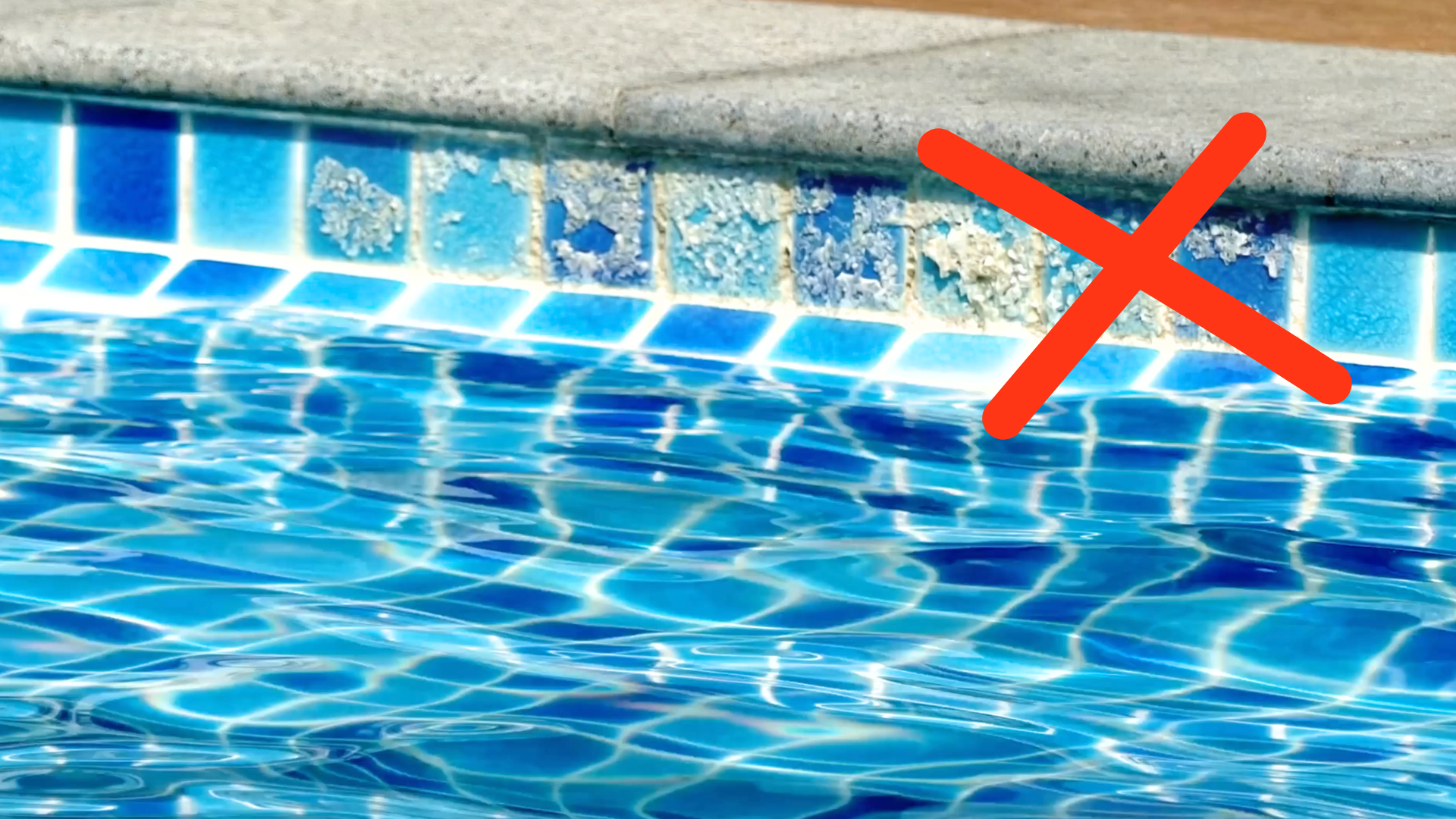
Mustard algae is a chlorine-resistant form of algae that looks like pollen, sand, or fine yellow dust on pool walls and floors. It loves shady spots and low-circulation areas, and it clings hard to surfaces instead of floating freely in the water.
Before spending time and money treating it, make sure that it’s actually mustard algae. Mustard algae looks a lot like sand, pollen, or dirt on the pool floor and walls, so it’s easy to get them confused.
Here’s a quick test: brush the yellow spots. If it forms a cloud in the water, it’s algae. If it just swirls around and resettles, it’s likely pollen or sand. Mustard algae also tends to come back quickly after brushing, which is another telltale sign.
Once you’ve confirmed it, don’t wait to treat it. Mustard algae spreads fast.
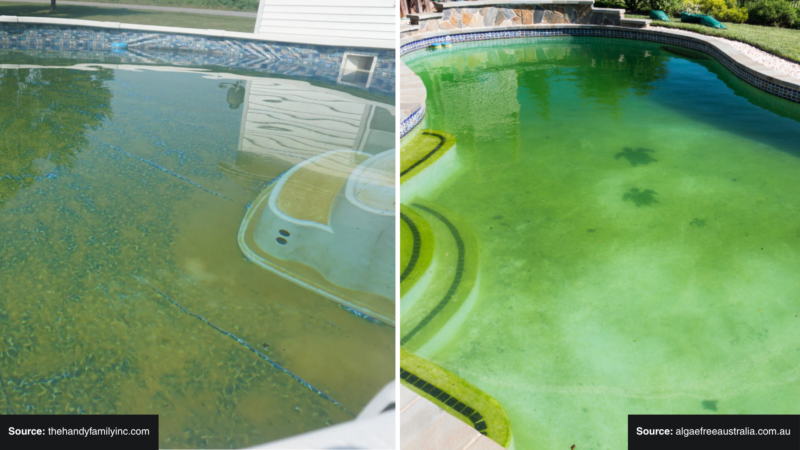
How to Get Rid of Mustard Algae
If this is your first time dealing with mustard algae, we recommend reading through everything before you start. It helps to understand why each step matters before you dive in.
Step 1: Decontaminate Everything
Mustard algae can live outside of water for months. If you skip this step, your clean pool will get reinfected almost immediately.
Pull out every swimsuit, towel, pool float, brush, vacuum hose, and net that’s been near the pool. Wash suits and towels in the washing machine with a bit of bleach on a warm cycle. Soak pool tools and toys in a bucket with water and a cup of liquid chlorine. Then, toss your brushes and vacuum head into the shallow end during the shocking process so they get sanitized.
Step 2: Clean Your Pool Filter
Algae spores can survive inside your filter. If you don’t clean it, those spores will keep reinfecting your water even after you’ve treated the pool. Backwash your sand or D.E. filter thoroughly. For a cartridge filter, remove the cartridge and soak it in a filter cleaner. Here’s a guide on How to Clean Your Pool Filter for more help.
If you’ve been fighting recurring mustard algae for more than one season and it comes back after this treatment, consider replacing your filter sand or cartridges entirely.
Step 3: Brush Everything
Mustard algae have an outer coating that protects them from chemicals. Brushing breaks that coating and loosens the algae from surfaces so the shock can actually reach and kill it.
Use a stiff nylon brush for vinyl, fiberglass, or pebble surfaces. Use a stainless steel wire brush for plaster, gunite, or concrete. Scrub every inch, including walls, floor, steps, corners, under ladders, and behind light fixtures. Don’t rush this part. The more thorough you are here, the faster the rest of the process works.
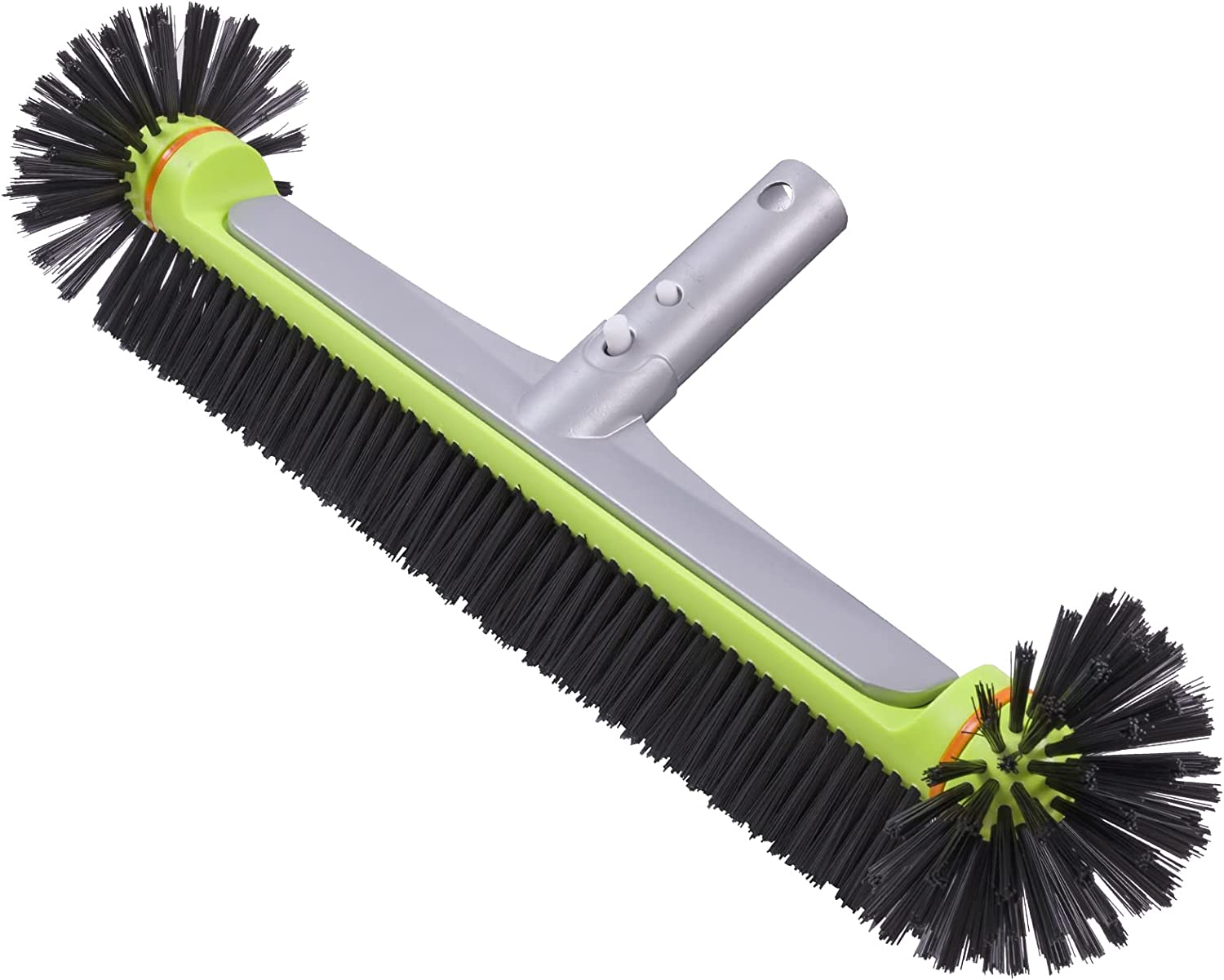
The wide pool brush with 360-degree reach helps clean hard-to-reach surfaces and tough crevices. Perfect for any type of pool, including vinyl liners, fiberglass, and painted concrete.
Brush toward the main drains so you push the loosened algae into circulation.
Step 4: Test and Balance Your Water Chemistry
Balanced water makes your shock more effective. Adjust your levels to the following ranges:
- pH: Around 7.8 (yellow algae treatments work better in slightly higher pH conditions, but check your product’s instructions first)
- Total Alkalinity: 80–120 ppm
- Cyanuric Acid (CYA): 30–50 ppm
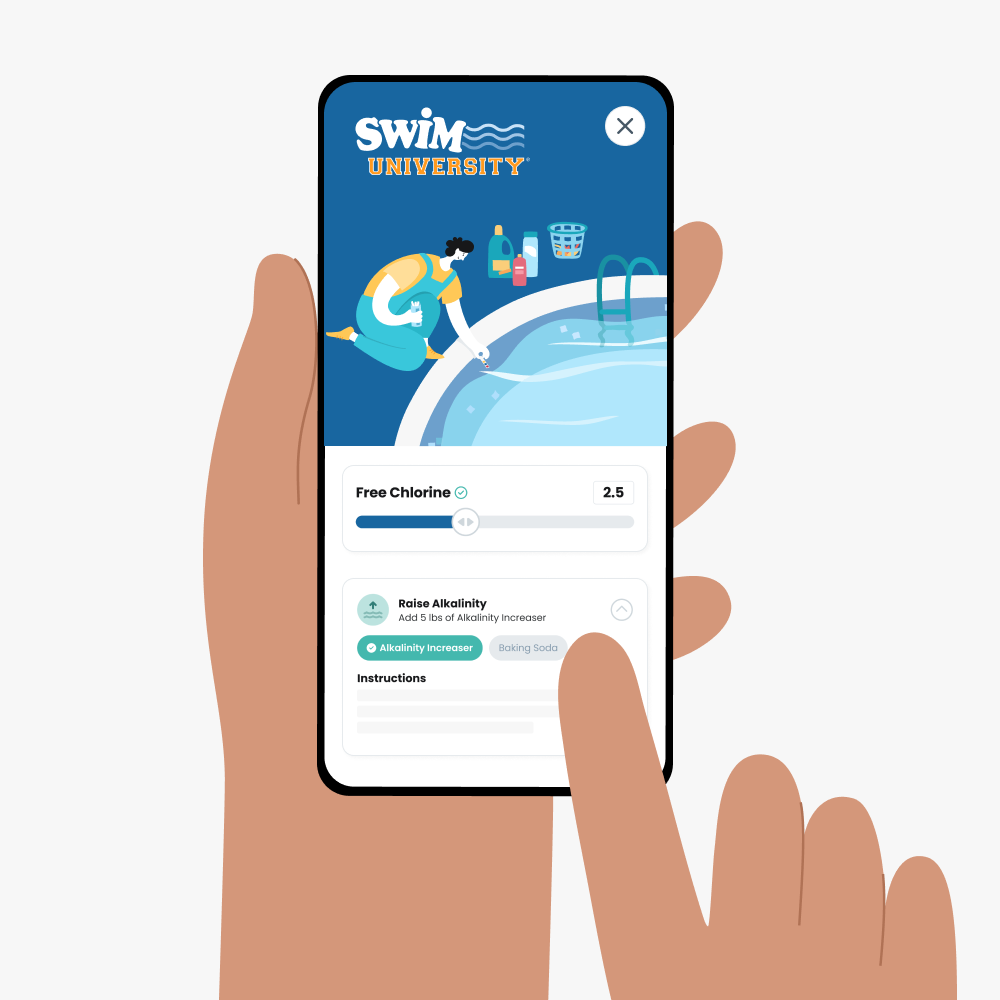
Enter your water test results. Get a custom treatment plan. Know exactly what chemicals to add to keep your pool clear. Saltwater and hot tub compatible.
Step 5: Add a Yellow Algae Treatment
If you’ve already tried shocking your water and the yellow algae keeps returning, it’s time to get some extra help. If you haven’t tried shocking your pool yet, do this before adding a yellow algae treatment product. Adding a triple dose of chlorine shock can be enough to kill a small yellow algae outbreak.
However, if you do need reinforcements, you need a product specifically formulated for mustard algae, such as Yellow Out.
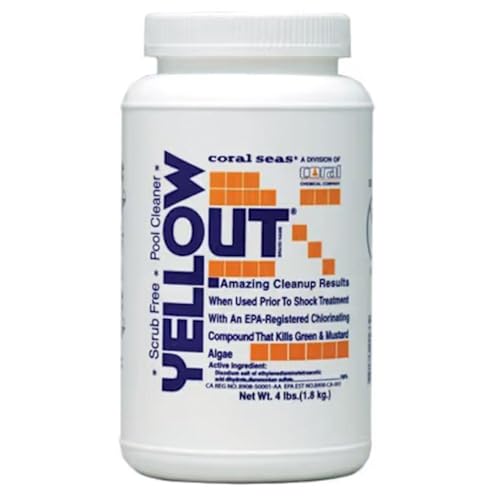
Kills all types of algae in your pool fast, including green, mustard, and pink, without harsh chemicals that can stain or damage your pool's surface.
Most yellow algae treatments work as a chlorine accelerator, converting chlorine into a more aggressive, highly oxidative form. It’ll create a massive and immediate demand for chlorine, so you’ll need to shock your water more than once after adding this treatment.
Always check the manufacturer’s instructions on your specific product, since dosing can vary by brand. The usual dosing recommends adding 2 pounds of yellow algae treatment (0.9 kg) per 15,000 gallons (56,781 liters) of water.
Pour about half around the perimeter of the pool, starting where the algae is thickest. Pour the rest directly over any problem areas. Then wait 5 minutes before moving on to the next step.
Step 6: Add a Double Dose of Shock
After adding the yellow algae treatment, your water’s chlorine will become more aggressive and get used up more quickly. Add a double dose of chlorine shock to the water 5 minutes after adding the yellow algae treatment. That’s 2 pounds of chlorine shock (0.9 kg) per 10,000 gallons (37,854 liters) of water. If the product you’re using recommends a different dosing schedule, follow the label.
Calcium hypochlorite (cal-hypo) shock is the most powerful, but use a double dose of dichlor shock or liquid chlorine if you have a fiberglass or salt water pool.

This fast-acting, quick-dissolving swimming pool shock kills bacteria, controls algae, and destroys organic contaminants in pools.
Add this first dose at dusk with the pump running. The, run the pump continuously for the next 24 hours.
Step 7: Shock Two More Times
During that 24-hour period of the filter running, you’ll want to shock the pool two more times. Your chlorine is working that aggressively, and you need to keep your chlorine levels elevated.
Re-shock the water (with the same dosage) 12 hours after the initial treatment. Then shock one final time 24 hours after the initial treatment.
Algae Removal Calculator
Pick the color of your water and enter your pool volume. You’ll get the exact shock dose to kill the algae, plus a step-by-step plan to get back to clear.
 Track this treatment in The Pool Care App
→
Track this treatment in The Pool Care App
→

 Wait 30 minutes
Run the pump 8+ hours
Wait 24 hours
Wait 30 minutes
Run the pump 8+ hours
Wait 24 hours
Never mix shock products together, and always add shock to water, never water to shock. Keep everyone out of the pool until free chlorine falls back under 5 ppm.
Step 8: Run Your Filter and Brush Daily
Keep your pump running continuously for the entire 24-hour treatment period. This keeps the shock circulating and prevents any dead algae from resettling.
Continue brushing daily for at least 72 hours after your final shock dose. This keeps any surviving algae spores from taking hold again. After you’re brushing, prop the brush head in the shallow end of the pool so it can decomtaminate in the shocked water.
Step 9: Clean Your Filter Again
After the shock has done its job, clean your filter one more time. It likely captured dead algae and spores throughout the process. Backwash your sand or D.E. filter, or rinse and re-soak your cartridge filter.
Step 10: Vacuum Out Dead Algae
If you notice clumps of algae on the pool floor, that’s likely dead algae from the treatment. Vacuum it off the floor using a manual vacuum with your filter set to “waste.” This sends the debris directly out of the pool without passing through the filter. If your water looks hazy, adding flocculant or clarifier at this stage can help clump together any lingering particles.
If you’re not sure how to use these, check out our guides on How to Use Flocculant and How to Use Clarifier.
Step 11: Rebalance Your Water
Once the pool looks clear, do a full water chemistry test and bring everything back into the normal range:
- pH: 7.4–7.6
- Total Alkalinity: 80–120 ppm
- Free Available Chlorine: 3 ppm
- Cyanuric Acid (CYA): 30–50 ppm
How to Prevent Mustard Algae from Coming Back
The best time to deal with mustard algae is before it shows up. A few simple habits go a long way to prevent it from coming back:
- Test your water weekly. Keep pH, alkalinity, free chlorine, and CYA within the recommended ranges at all times. Chlorine that stays in range gives algae far less of a chance to take hold.
- Brush your pool regularly. Brush at least once a week, paying extra attention to shady, low-circulation areas where mustard algae tends to settle first.
- Run your pump daily. Aim for at least 8 hours of circulation per day. Poor circulation is one of the biggest reasons mustard algae comes back.
- Rinse equipment and suits before getting in. Mustard algae can travel into your pool on swimsuits, floats, and toys that have been in other bodies of water.
- Shock routinely. Shock before and after heavy pool use to knock out contaminants before they build up.
Key Takeaways
- Prevention is the best long-term fix: weekly brushing, proper chlorine levels, and good circulation will keep mustard algae from coming back.
- Mustard algae is chlorine-resistant and will come back fast if you don’t treat your filter, equipment, and swimsuits alongside the pool water.
- Add a yellow algae-specific treatment before you shock. The two work together as a system, not separately.
- Add three rounds or shock 12 hours apart. Always follow the instructions on your specific product.
- Keep your pump running 24/7 during treatment and continue brushing daily for at least 72 hours after your final shock dose.