


Are Solar-Powered Pool Skimmers Worth It?

A solar-powered pool skimmer is one of the easiest upgrades you can make to your pool maintenance routine. It automatically picks up floating debris, helping you stay on top of bugs, pollen, pine needles, and other floating contaminants. Once you start using a solar-powered skimmer, you’ll wonder how you ever managed without it.
But solar-powered skimmers aren’t cheap, and they can get stuck around water features and skimmers if you don’t get the right model. They also don’t work in all sunlight conditions.
Before buying one, it’s important to understand how they work and what to look for when you’re ready to make a purchase.

If you deal with a lot of surface debris on your pool, consider investing in this automatic pool skimmer.
How Does a Solar Pool Skimmer Work?
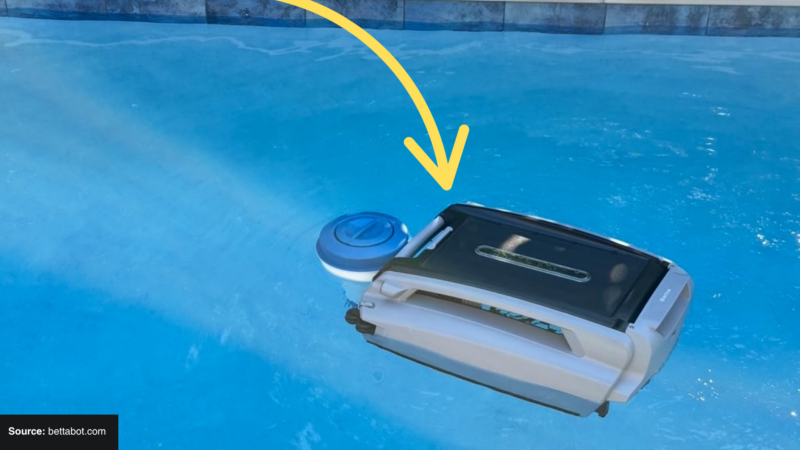
A solar-powered pool skimmer is a floating robotic device that moves across your pool’s surface using built-in solar panels. The solar panel on top captures sunlight and converts it into electricity. That power runs motors that drive propellers, pushing the skimmer around the pool.
As it moves, it pulls in floating debris through a wide intake opening and collects it in a removable filter basket. When the basket is full, you just pull it out, dump it, and pop it back in.
Because it runs on solar energy, your pump doesn’t need to be running for a solar skimmer to operate. Some models also include a chargeable battery that keeps them going on cloudy days.
Most models include sensors and bumpers that help them navigate around the pool without getting stuck on walls or steps. These quality-built skimmers follow a more deliberate path to cover the entire surface over time.
Solar Skimmers vs. Mounted Pool Skimmers
Both types of automatic skimmers reduce how much manual skimming you have to do, but they work differently.
Mounted automatic skimmers connect to your pool’s return line with a hose. Powered by the water returning to your pool, mounted skimmers draw in debris using venturi suction. This automatically skims away smaller debris and bugs, but it does require your pump to be running. They’re typically less expensive than solar skimmers and better suited to smaller debris, like pollen and insects.
Solar skimmers are powered entirely by the sun. They float freely across your pool’s surface and don’t need any hose connections or pump operation to function. They can handle larger debris, such as leaves, but cost more upfront.
If your pool gets heavy leaf loads or sits in full sun, a solar skimmer is usually the better long-term investment. If you want a budget-friendly option for lighter debris or you don’t get direct sunlight, a mounted automatic skimmer gets the job done.
The Best Solar Powered Pool Skimmer
Year over year, I recommend the Betta SE Solar Pool Skimmer. For under $400, the Betta SE outperforms skimmers costing two to three times as much. There are no apps and no startup sequences. You simply take it out of the box, peel off the protective stickers, drop it in the pool, and it starts moving on its own. The top-loading basket makes emptying debris fast, and the solar charging keeps it running from dawn to dusk (even on overcast days). Performance-wise, it’s almost as powerful as units costing twice as much, which is more than enough for most pool owners.
What to Look for in a Solar-Powered Pool Skimmer
Whether or not you decide to go with the Betta SE Solar Skimmer or a different brand, keep in mind that not all skimmers are created equal. Before you buy, here are the features worth paying attention to:
- Propeller Size and Motor Strength: Bigger propellers generally mean better suction and more consistent debris pickup. A skimmer with 3-inch (7.6 cm) propellers will out-clean one with 2.5-inch (6.4 cm) propellers in most conditions, especially on windy days when leaves are moving fast across the surface.
- Basket Design and Capacity: Top-loading baskets are easier to empty than bottom-loading or side-loading designs. You can dump the basket without pulling the entire unit out of the pool or kneeling on the deck. If you have a lot of trees nearby, you’ll be emptying that basket often, so ease of access matters.
- Solar Panel Coverage: A larger solar panel charges more efficiently and keeps the skimmer running longer, including on partially cloudy days. Some models include a USB-C charging port as a backup for days when there’s not enough sunlight.
- Navigation System: Cheaper skimmers wander aimlessly and can get stuck in corners or near your built-in skimmer opening. Better models use sensors to navigate around obstacles and cover the pool surface more deliberately.
5 Tips for Getting the Most Out of Your Solar Skimmer
Your solar-powered skimmer’s efficiency depends on how you use it. Here’s how to get the most out of your device.
1. Place It in the Sunniest Part of Your Pool First
When you first drop your solar skimmer in the water, let it sit in a spot with direct sunlight for 30 to 60 minutes. This gives the panel time to build up a charge before the skimmer starts moving. After that initial charge, most models will run continuously throughout the day.
2. Empty the Basket Every Two to Three Days
Don’t wait until the basket is completely packed before emptying it. A full basket reduces suction and makes the skimmer less effective. During heavy leaf season, you may need to empty it every day. It only takes about 30 seconds.
3. Keep Your Return Jets Angled Properly
Your pool’s return jets affect how water circulates across the surface. Point them down at a 45-degree angle and avoid pointing them directly towards your pool’s built-in skimmer opening. This helps push floating debris toward your solar skimmer rather than away from it.
4. Watch for Common Trouble Spots
Solar skimmers can occasionally get stuck near your pool’s built-in skimmer opening. If your skimmer keeps getting stuck in the same spot over and over, try blocking the skimmer opening with a small piece of pool noodle placed vertically in the center. This reduces suction pull without blocking water flow.
5. Pair It with a Robotic Pool Cleaner
A solar skimmer handles surface debris, and a robotic pool cleaner handles the floor. Together, they automatically cover the entire pool. If you only have the budget to buy one robot, go with the robotic pool cleaner first. Here’s our favorite robotic pool cleaners. But if you can add a solar skimmer on top of that, pool maintenance becomes much easier.

An illustrated, step-by-step guide to taking care of your pool yourself. Works for chlorine and saltwater pools.
Will a Solar Pool Skimmer Actually Work For Your Pool?
Solar skimmers work best in pools that get consistent direct sunlight throughout the day. If your pool sits mostly in shade, look for a model with a USB-C backup charging port so you’re not relying entirely on the sun.
They also work better in pools with a regular shape. If your pool has lots of curves, tight corners, or irregular edges, the skimmer may get stuck more often. Most models have bumpers that help, but no skimmer navigates a complex layout perfectly.
For the vast majority of pool owners with a standard inground or above ground pool, a solar skimmer is absolutely worth it. It reduces how often you manually skim, keeps surface debris from sinking and staining, and runs without any effort on your part.
Key Takeaways
- Solar-powered pool skimmers float across your pool’s surface using built-in solar panels and collect debris in a removable basket.
- Empty the basket every two to three days, or daily during heavy leaf season, to maintain suction and cleaning performance.
- Look for a skimmer with larger propellers (3 inches / 7.6 cm), a top-loading basket, and a reliable navigation system.
- Solar skimmers work best in pools that receive full sun. For shaded pools, choose a model with a backup USB-C charging option.
- Pair your solar skimmer with a robotic pool cleaner for a nearly hands-off cleaning setup that covers both the surface and the floor.