

The Truth About Phosphates in Pool Water

You’re here because you’ve witnessed (and maybe even participated in) the debate every pool owner encounters: Are phosphates in pool water a problem, and do you have to remove them?
I know a lot of people are going to disagree with me. But before you buy a phosphate remover, please read this (or watch the video).
Do phosphate removers work? Yes. Do you need them? Most of the time, no. Let’s talk about why.
An illustrated, step-by-step guide to taking care of your pool yourself. Works for chlorine and saltwater pools.
What Are Phosphates?
Phosphates are nutrients for algae. In other words, they’re algae food. Unfortunately, phosphates are everywhere. They get into your pool from all sorts of things:
- grass clippings
- fertilizer
- lawn runoff
- leaves
- pollen
- Your water source
They’re basically impossible to keep out permanently. Your lawn, your garden, and even the wind are all adding phosphates to your pool water.
A phosphate remover is a chemical that binds to phosphates so your filter can capture them, or you can vacuum them out. When you remove the phosphates, you remove the algae’s food source. The algae starves.
Simple right? But phosphates alone don’t affect algae. Your chlorine matters the most.
You can have super high phosphate levels and a perfectly clear pool, as long as your chlorine is doing its job. And you can have basically zero phosphates and still get algae if your chlorine drops.
Phosphates aren’t the direct cause of algae. And a phosphate remover is really just an insurance plan if your chlorine isn’t working right. If your free chlorine levels are too low, you’ve got the right conditions for algae to grow.
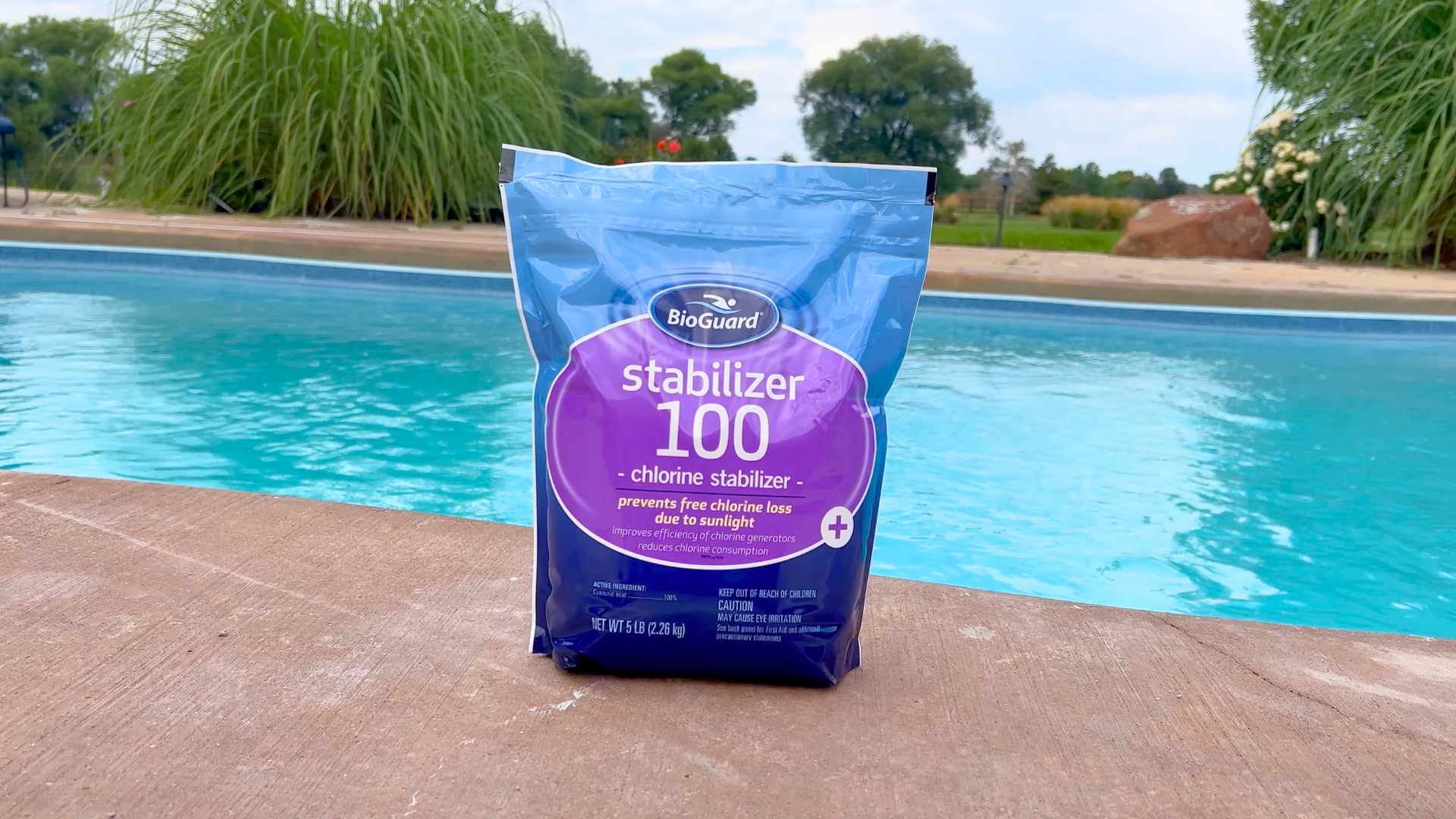
If your CYA is too high or too low, then your chlorine isn’t working right, and algae can grow. I’ve got a video on CYA you can check out if you’re not sure what this does. So if those two levels are in range, your phosphate levels shouldn’t be a concern.
Phosphate Removers: Are They Worth It or Just a Scam?
As someone who’s been doing this for over 30 years and worked in a pool store selling chemicals, here’s a little inside information for you…
In the U.S., algaecides are EPA-regulated, which means they cost more to manufacture and ship. Phosphate removers aren’t regulated the same way, which means bigger profit margins for the companies that make them. That’s a big reason why you see them recommended more by the pool store. You’re not getting those savings as the consumer.
The maintenance dose of a polyquat algaecide and a phosphate remover is about the same. But you usually have to add a larger initial dose of phosphate remover to correct your water. And that can run you anywhere from $30 to over $100, depending on how bad the problem is.
That said, pool stores aren’t the enemy here. I used to work in one. I think supporting your neighborhood pool store matters. But go in with your eyes open.
Staff turnover is high every summer. That means not everyone behind the counter is an expert. This is common. In fact, I worked with a new group of college kids every summer. And it was my job to help train them. But because it gets so busy in the summer, there wasn’t enough time to train them properly.
The worst part is that we offered free water tests to get people into the store. Again, this is common, and it’s a great service. But most of the water testing software out there is built by the chemical companies or the massive pool conglomerates. So it’s designed to sell you their pool chemicals.
Honestly, this is why I built this website. I urge you to ask questions, take the advice with a grain of salt, and use our site, videos, and app to build your shopping list before you go.
The Problem With Testing For Phosphates In Your Pool
The other issue I have with phosphate remover is testing for phosphates. Regular test strips and test kits don’t test for this. If you know your phosphates are high, you were probably told that by the pool store. So if you want to track your levels, you’re going to have to spend more money on special tests or take more trips to the pool store.
Enter your water test results. Get a custom treatment plan. Know exactly what chemicals to add to keep your pool clear. Saltwater and hot tub compatible.
The Damage Phosphates Removers Can Cause To Your Filter
Phosphate removers bind to phosphates, suspending them in the water and turning them into a fine, solid dust. That’s why your pool clouds up for a day or two after adding it.
Some of those particles get trapped in your filter, which can cause your filter pressure to spike quickly. Or it sinks to the bottom, so you’ll be vacuuming it out on your waste setting.
It’s worse for cartridge filters. They trap the micro-fine residue, which is really difficult to remove. You’ll need a full cartridge deep-clean. Or if it’s so bad, you’ll need an entirely new cartridge.
Do Phosphate Removers Work?
Yes. Lowering your phosphates slows algae growth. This can help if your chlorine drops or your CYA gets out of balance. But using a phosphate remover doesn’t replace keeping your chlorine where it needs to be.
If you’ve got the right free chlorine and the right CYA, there’s no environment for algae to grow. And you can’t use Phosphate Remover if you already have a green pool! It doesn’t directly kill algae.
You’ll need to clean your pool surfaces, balance your pH, add shock, and run your filter until the water clears. Check out our article and video on clearing a green pool if you need the step-by-step there.
Once your water’s clear, you can decide whether a phosphate remover makes sense as ongoing insurance. But not when your water is already green.
When is a Phosphate Remover Actually Worth It?
As I said, phosphate removers work. And there are a few specific situations where it makes sense. The first is your environment.
If you live near a farm, golf course, or park, or if you get fertilizer runoff into your pool water, or grass clippings… You really are getting blasted by phosphates. And a little bit of phosphate remover each week can help with what your chlorine might not handle.
The second is if you have trouble keeping your chlorine levels up. This can happen if you live in a really hot area. If you need insurance, a phosphate remover can help. An algaecide or a mineral dispenser can also help.
The third is chronic mustard algae. This type of algae is pretty persistent and harder to get rid of. Check out my mustard algae video and guide if you already have an outbreak.
A phosphate remover starves the mustard algae of its food source, so it won’t grow. But a mineral dispenser or an algaecide can also prevent mustard algae. So I’m going to keep saying this: phosphate remover technically works. I just like other options better.
Finally, if you’re opening or closing your pool, that’s the time some people add a phosphate remover. I personally prefer a polyquat algaecide since it’ll both kill and prevent algae. Again, the phosphate remover works. I just like an algaecide better for this.

A copper-free algaecide to help prevent your pool from turning green.
Phosphates in Pool Water Aren’t Going Anywhere
Phosphates as a food source for algae have been a problem in our natural bodies of water and in our drinking water.
But chances are you’re not going to be draining your pool very often, which means you won’t have thousands of gallons of phosphate-laden water pouring into your municipal water system on a regular basis, and eventually making its way to your local lakes and streams.
If you’re using chlorine or another sanitizer in your pool, you’re already making it harder for algae to grow in the first place. And if you’re using a polyquat algaecide on top of that, you’re decreasing the likelihood of developing pool algae to almost nil.
So why on earth would you spend more money on yet another chemical to stop feeding the thing you’re already killing and preventing? It just doesn’t make any sense.
Phosphate Removers Can Cancel Out the Effects of Metal Sequestrants
Let’s say you have a high level of copper or iron in your pool water. Maybe you get your water from a well. Left unchecked, high copper levels will eventually turn your pool green, while iron will give it a lovely rusty-brown color. Yuck.
So you add a metal sequestrant to bind with copper or iron and keep it from oxidizing or rusting, which will prevent your pool water from turning those ugly colors.
Here’s the thing. The most effective metal sequestrants are phosphate-based. If you have metal in your pool and use a phosphate-based sequestrant, then use a phosphate remover, you’re negating the sequestrant’s effects.
You’ll lower the phosphate level, but have little to no success counteracting the effects of the metal, which means you’ll be wasting money on two fronts.
What About Phosphates In a Salt Water Pool?
In addition to the general debate about phosphates, you may have seen some websites mention that phosphates can cause saltwater chlorinators to malfunction. Interestingly, at least one article that says this is a problem is published on a site that features advertising from one of the main companies that produce and sell phosphate removers.
Aside from any potential biases, though, the fact is no scientific studies have been done, which means no verifiable, objective data exists to support this theory.
Some pool owners may claim that phosphates are to blame for their chlorinators being unable to produce appropriate amounts of chlorine. But what if it’s the other way around? What if the pool has more phosphates because the chlorinator isn’t producing enough chlorine to kill the contaminants and organisms that produce them?
We don’t know for sure because, again, no scientific studies of this possible phenomenon exist, and we don’t have access to enough pools to test it ourselves.
So until we see hard evidence, we’re going to stick with our advice that a phosphate remover is unnecessary, even in a saltwater pool.
What to do About Phosphates in a Salt Water Pool
If you have a salt water pool, your phosphate levels are high, and your chlorinator isn’t producing enough chlorine, the first thing to check is that your chlorinator is built to handle the size of your pool.
Even if it is, you may still need to supplement with regular chlorine once in a while, depending on where you live, and what the environmental conditions are like there.
And finally, are you shocking your pool often enough to kill phosphate-producing organisms? Maybe you need another shock or two per month, and perhaps even more when it rains.
Examine all the possible factors that may be contributing to low chlorine levels before jumping to the conclusion that you need to douse your pool with potentially toxic phosphate remover.
The Verdict: You Do Not Need a Phosphate Remover
If your chlorine and CYA are dialed in, phosphates are basically a non-issue. Save your money, put it toward a good algaecide or a mineral dispenser if you’ve got a chronic algae problem, and check out our other video on dealing with that. If you feel like using it as insurance, that’s totally fine.
I just want people to question what they’re sold. First, ask yourself if your chlorine and CYA are where they need to be. Then consider the extra chemicals.