

Pool Filter Pressure Gauge Readings Explained

Your pool filter pressure gauge warns you when the water flow through your filter is off. It’s like a check engine light for your filtration system. But what’s normal pressure? And what do you do if the pressure is too high or too low? Here’s exactly what your pressure gauge is telling you, and what to do about it.
Check out the video below or keep reading for the complete guide.
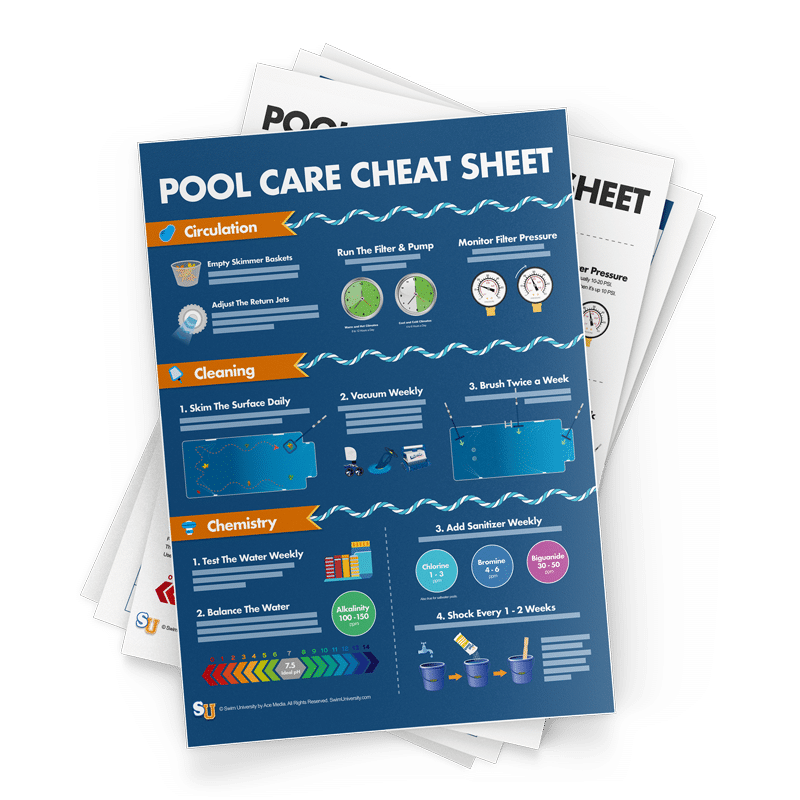
This is the ultimate guide to keeping your pool sparkling clean throughout the year that contains everything you need to know about taking care of your pool the right way. Including saltwater pools.
How a Pool Filter Pressure Gauge Works
The pressure gauge is a small dial attached to the top of your filter. It has numbers around the edge and an indicator needle that moves up or down as water flows through the system. It measures the pressure inside the filter tank in PSI (pounds per square inch).
When water flows normally, pressure stays in a normal range. When something disrupts that flow, the pressure goes up or down. That’s your signal to investigate.
If you turn off the pump and the needle doesn’t drop down, that’s a sign the gauge itself may be faulty and needs replacing.
What PSI Should My Pool Filter Be At?
Normal filter pressure generally falls between 10 PSI and 25 PSI. For some variable speed pumps, pressure can be as low as 2 to 5 PSI when it’s running on low speed. What’s right for your setup depends on your filter size, pump size, and how clean the filter is at any given moment.
The best way to find your normal is to check the gauge right after you clean or backwash your filter. That reading is your baseline. Write it down, mark it on the gauge with a marker, and treat it as your personal reference point.
From there, check your gauge once a week as part of your regular maintenance routine. Keeping a log makes it easy to spot trends before they become problems.
Is 10 PSI Good for a Pool Filter?
A reading of 10 PSI can be perfectly normal for some pools, especially right after a clean when water is flowing freely. For others, 10 PSI might be on the low end and worth investigating.
What matters more than the specific number is how that reading compares to your baseline. If 10 PSI is where your filter sits after a fresh cleaning, then yes, 10 PSI is great for your pool.
What is a High Filter Pressure Reading and How to Fix It
When your gauge reads 10 PSI or more above your normal baseline, that’s considered high, and it means it’s time to clean your filter.
A slight rise above baseline is actually normal and even a little helpful. As debris builds up in the filter media, it actually helps trap more contaminants. So don’t panic over a small bump. But once you’re consistently 10 PSI over baseline, it’s time to act.
Clean or Backwash Your Filter
This is almost always the fix for a high filter pressure reading. For a cartridge filter, remove the cartridge and spray it down with a garden hose. If it’s been a while since your last cleaning, spray it with a filter-cleaning solution, let it sit for 15 minutes, then rinse it off.
For a sand or D.E. filter, backwash it. That reverses water flow through the filter and flushes out the built-up debris. Check out our guide on how to backwash if you’re not sure about this step.
After cleaning, check the gauge again. If pressure drops back to your baseline, you’re done. If the pressure doesn’t drop, or it shoots back up within a day or two, your filter media may be worn out. That means it’s time to replace your cartridges or sand.
Use the Air Relief Valve
Trapped air in your circulation system can also cause high pressure. This happens when the water level drops too low, and the skimmer starts pulling in air. It can also happen after you’ve shut down and restarted the system.
Find the air relief valve. It’s usually a small handle or knob near the pressure gauge or on top of the filter tank. Open it manually to release the trapped air. Once water starts spraying steadily instead of air, close it back up and recheck your gauge.
What is a Low Filter Pressure Reading and How to Fix It
A reading of 5 PSI or more below your normal baseline means water isn’t reaching the filter fast enough. The most common cause is a blockage somewhere on the suction side (that’s the plumbing between the pool and the pump). Work through these checks in order.
Check Your Skimmers
Your pool’s water level should sit at the midpoint of the skimmer opening. Too low, and the skimmer pulls in air instead of water, which chokes circulation.
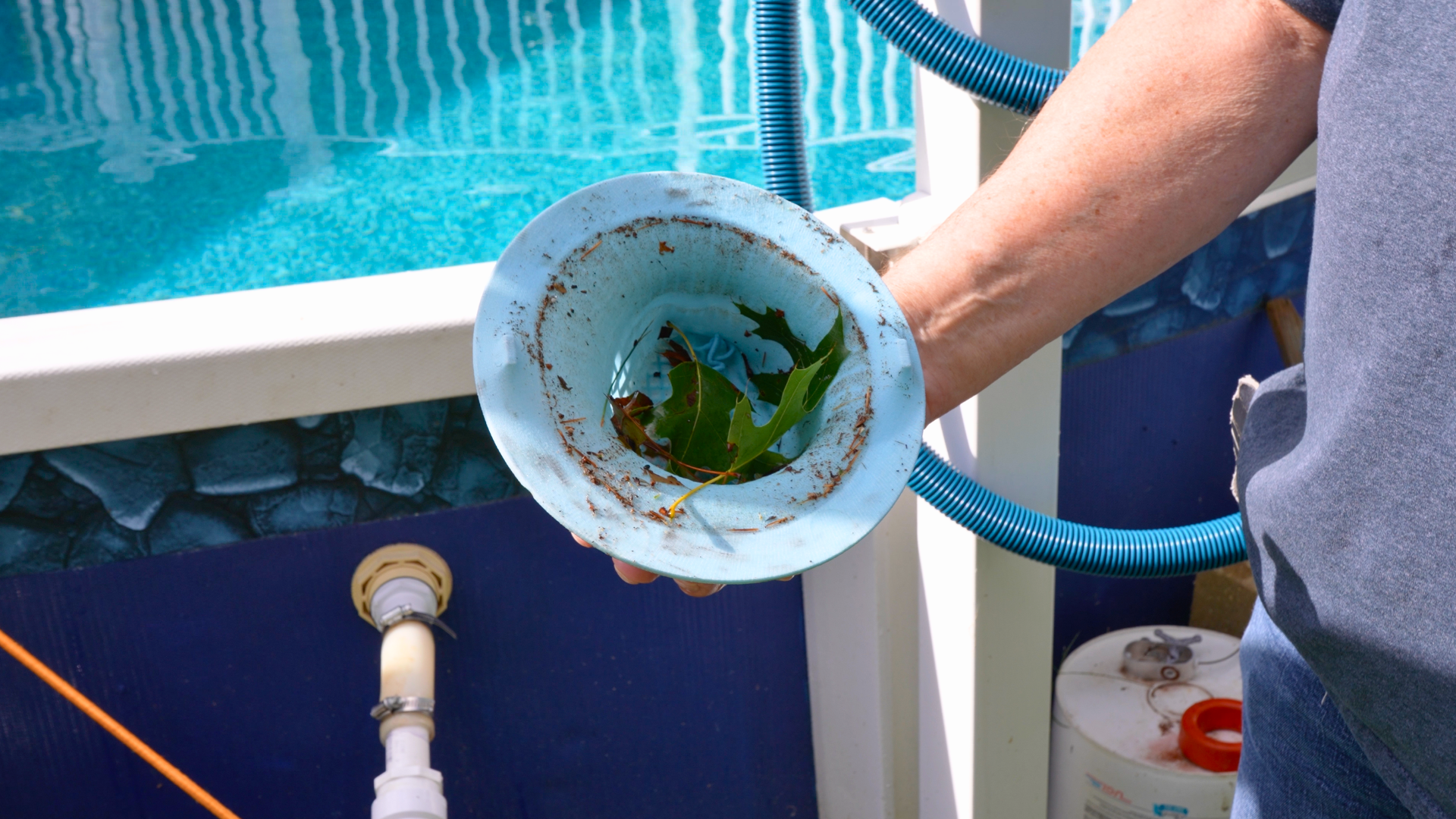
Then, make sure the skimmer basket is empty and seated correctly.
Next, check the weir (the small flat flap at the front of the skimmer). Push it gently to confirm it moves freely. A stuck weir restricts flow and can drop your pressure.
Check the Pump Lid and Pump Basket
Turn the pump off and remove the lid. Look at the O-ring inside. That’s the rubber seal that keeps the lid airtight. Bend it between your fingers and check for cracks or dry rot. If it’s damaged, replace it. If it looks fine, coat it in a Teflon-based lubricant.
Then, check the pump basket and empty it if it’s full of debris. A packed basket restricts the amount of water reaching the pump. Make sure it’s seated properly before replacing the lid.
Check the Pump Impeller
The impeller, located just behind the pump basket, is the only moving part that propels water through your system. If it gets clogged, pressure drops. You’ll likely hear a grinding sound when the pump is running if the impeller is clogged.
With the pump off, look inside the impeller housing and use a screwdriver or a wire hanger to clear any debris. Then gently spin the impeller to confirm it moves freely.
Check for a Leak
If you’ve checked everything above and pressure is still low, you may have a leak on the suction side. Inspect the area around the pump carefully: check the unions, drain plugs, and connections for any dripping water. A suction-side leak lets air into the system, which tanks your pressure reading.
Check Your Pump’s Age
A well-maintained pump typically lasts 8 to 10 years. If yours is older and showing signs of trouble, replacement may be the right call.
Replacing Your Pool Filter Pressure Gauge
There are a few clear signs it’s time to replace your pool filter pressure gauge:
- If the needle doesn’t drop back to zero when you shut the pump off, the gauge is stuck and no longer accurate.
- If the reading seems completely out of sync with your return jet flow. For example, if you have strong flow from the return jets but very low or high PSI readings, trust the jets and replace the gauge.
- If the gauge is cracked, fogged up, or the needle won’t move at all, it’s done.
A pressure gauge won’t last forever. But it only costs between $20 and $65 to replace it.

Release trapped air from your pool filter and check pressure with this easy-to-install valve kit, built with sturdy parts that resist leaks and corrosion for long-lasting use.
How to Replace a Pool Filter Pressure Gauge
The whole job takes about five minutes. Here’s what to do.
- Turn Off the Pump. Shut off the pump’s power at the control panel. You don’t want water flowing while you’re working on the filter.
- Relieve the Pressure. Open the air relief valve and let the pressure bleed out completely. Wait until the gauge reads 0 PSI before touching anything else.
- Remove the Old Gauge. Unscrew the old gauge counterclockwise. You can usually do this by hand, but an open-ended wrench works if it’s stuck.
- Apply Thread Tape. Wrap the threads of the new gauge with 2 to 3 layers of plumber’s Teflon tape. Wrap clockwise so the tape doesn’t unravel when you screw the gauge in.
- Install the New Gauge. Screw the new gauge in clockwise by hand first. Then give it an extra quarter turn with a wrench to snug it up. Make sure the dial is facing forward so you can actually read it.
- Test the System. Turn the pump back on and leave the air relief valve open. Once a steady stream of water sprays out instead of air, close the valve. Check the gauge reading and confirm it’s working correctly.
Key Takeaways
- Normal pressure ranges from 10 to 25 PSI, but your specific baseline is what matters most. To get your baseline, check your pressure right after a fresh cleaning.
- Check the gauge once a week and record the reading to spot changes early.
- High pressure (10 PSI above baseline) almost always means it’s time to clean or backwash your filter. Air in the system can also cause it; use the air relief valve.
- Low pressure (5 PSI below baseline) points restricted water flow on the suction side. Check the skimmer, pump basket, and impeller in that order.
If the gauge needle won’t drop when the pump shuts off, the gauge itself may be faulty, and it’s time to replace it.