

6 Opening Pool Chemicals (Add These in This Order)

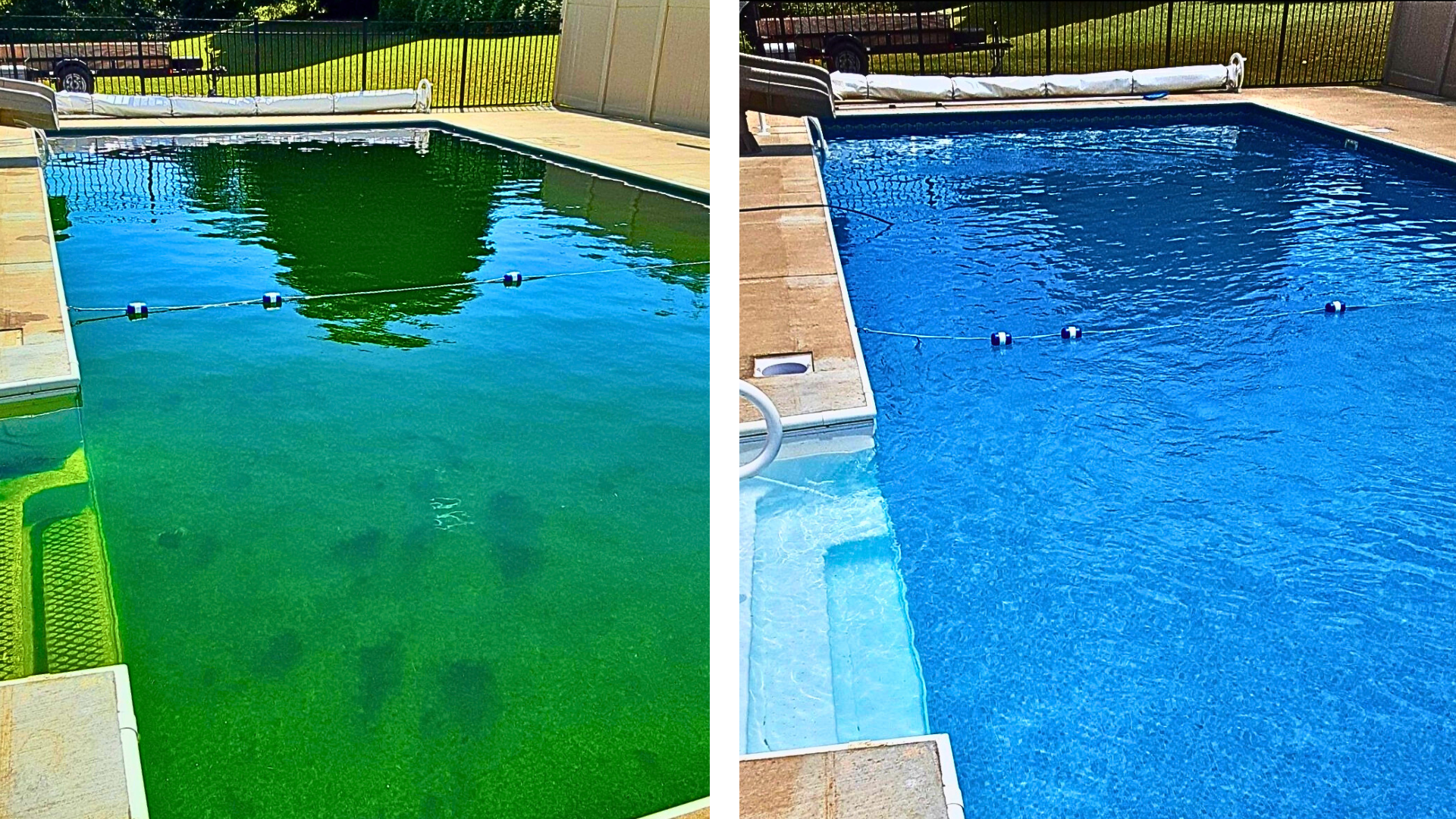
Getting your pool water-ready for swimming can feel a little overwhelming. Luckily, you don’t have to buy special chemicals to clear it up. You can use what you already have on hand.
You just need to add them in the right way and in the right order. But before you add anything to the water, you’ll need to clean your pool surfaces. We have articles to help you open your pool here if you need more information.
What should you add to the water right after opening your pool? Whether you’ve got cloudy water or algae, or the water looks pretty clear, you’ll want to add these chemicals in the following order:
- Shock
- Alkalinity increaser
- pH increaser or decreaser
- Chlorine (or salt if you have a salt water pool)
- Chlorine stabilizer
- Calcium hardness increaser
These are the normal chemicals that you should have on hand anyway. That means you don’t need to go out and buy a pre-packaged pool opening kit to start up your pool. Watch the video tutorial here or keep reading for a step-by-step process.
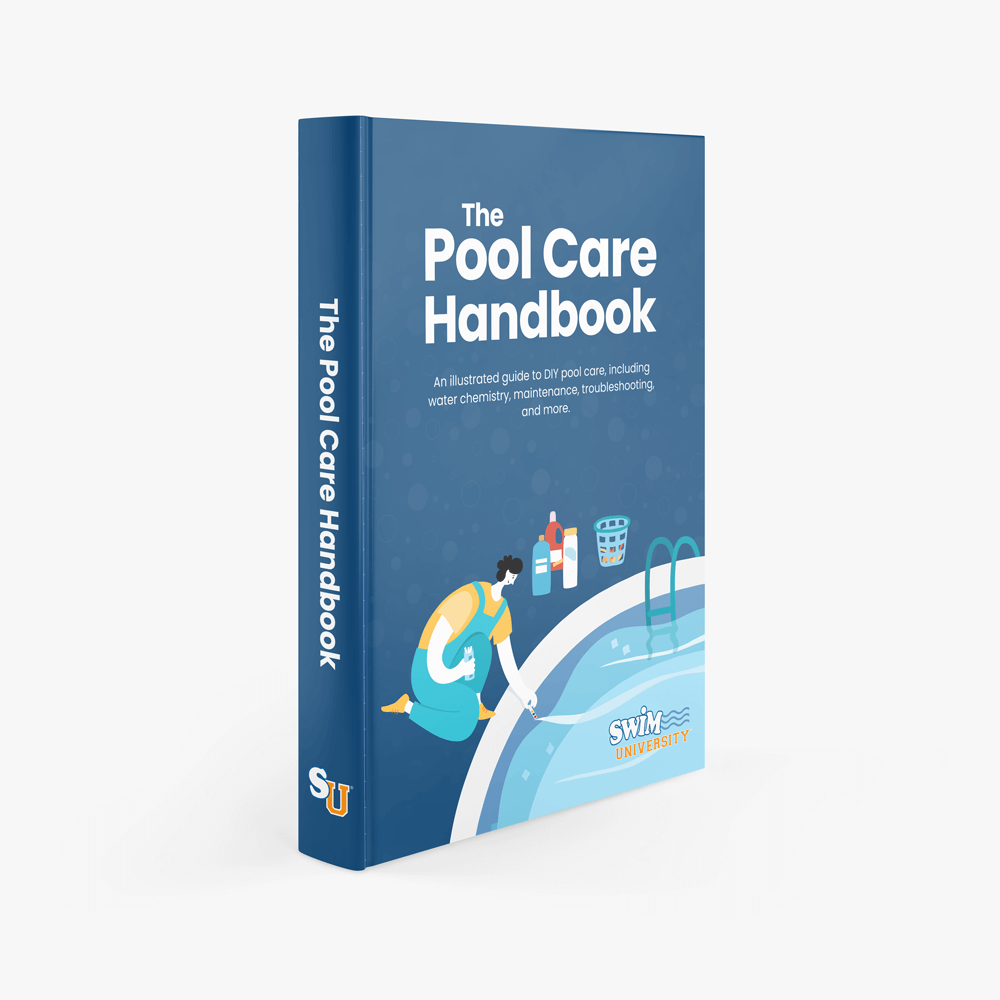
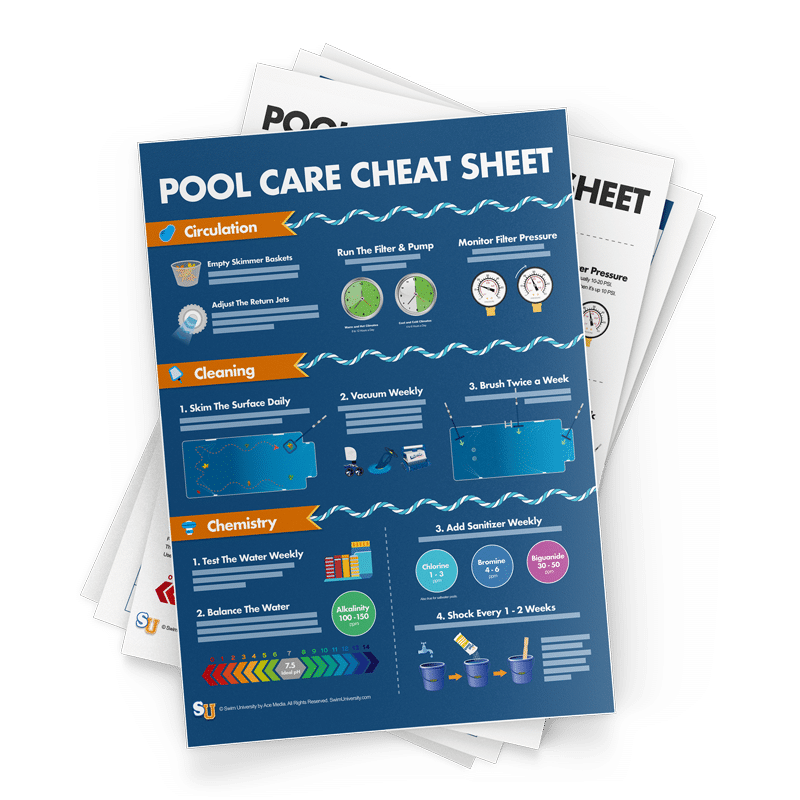
If you’re not confident with testing the water or adjusting your levels based on the test results, we have an entire chemistry section in The Pool Care Handbook. It covers everything that you need to know about water chemistry, like how to read test strips and how to troubleshoot tricky levels.
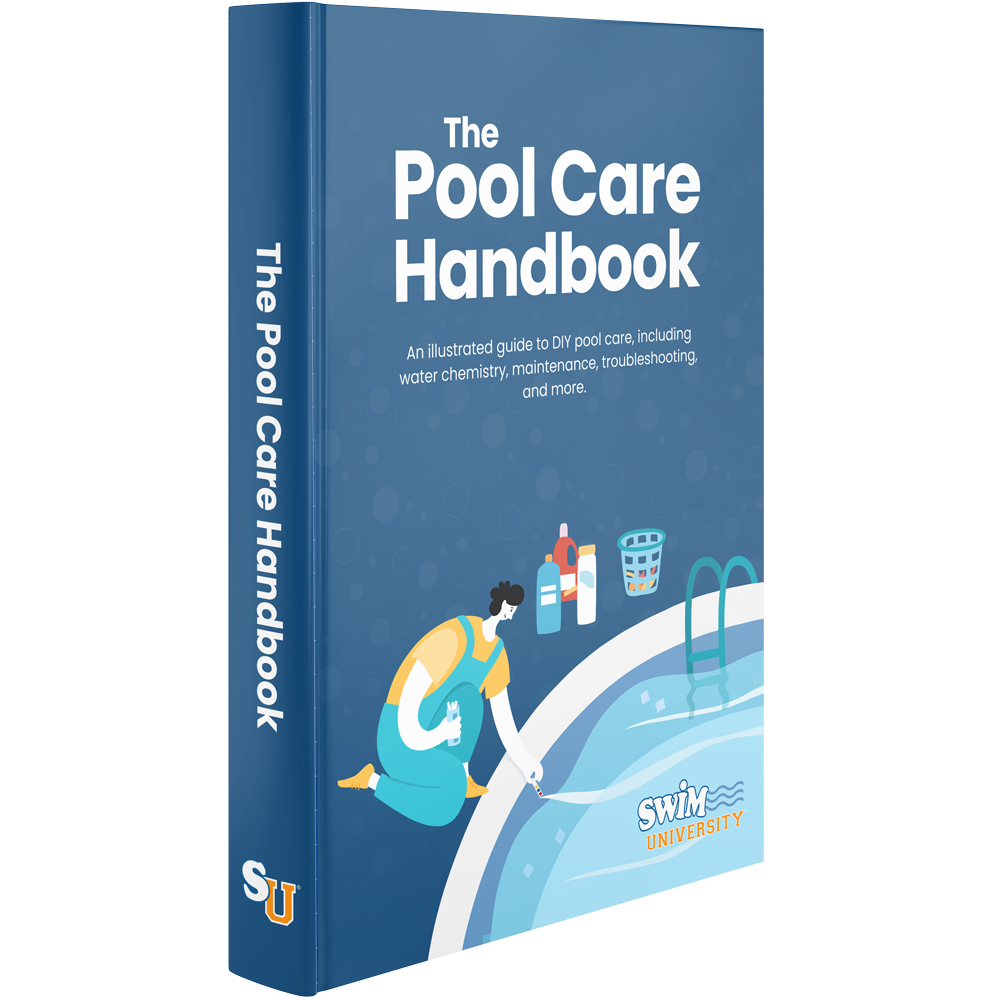
This is the ultimate guide to keeping your pool sparkling clean throughout the year that contains everything you need to know about taking care of your pool the right way. Including saltwater pools.
Step 1. Test Your Pool Water
Test strips are the easiest way to get a high-level snapshot. Liquid test kits are more accurate, but they can be harder to use.
If, after testing your water, you notice that your pH is totally out of range, adjust it before adding shock. You can technically dump in shock into the water without bothering to adjust anything. But getting your pH in range helps your chlorine work more effectively, so you won’t waste any shock.
Your pH can be on the lower side, like 7.2 to 7.4, since chlorine shock is gonna bump up your pH a little bit. Depending on your test results, add a
If you don’t know HOW MUCH you need to add of each chemical, you can try using our Pool Care App (free trial for 7 days). Just enter your test results, and the app will tell you exactly how much of each chemical you need to add and how long to wait between each dose.
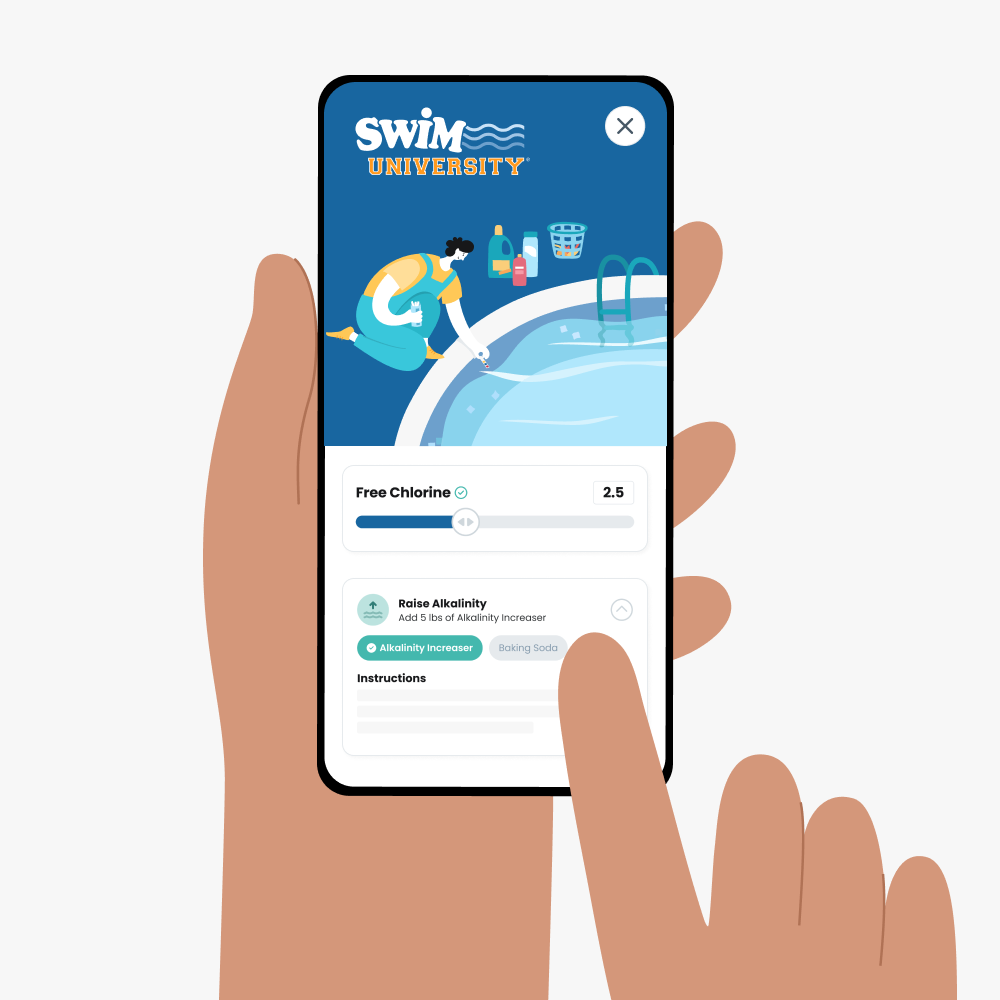
Enter your water test results. Get a custom treatment plan. Know exactly what chemicals to add to keep your pool clear. Saltwater and hot tub compatible.
Here’s What Pool Chemicals You Need for Opening
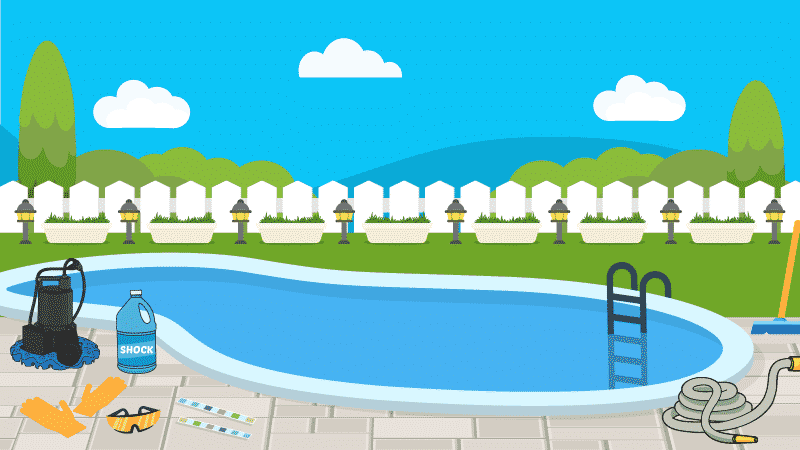
Make sure that you have the right chemicals on hand. Here’s what you need: alkalinity increaser (or baking soda), pH increaser (or soda ash),
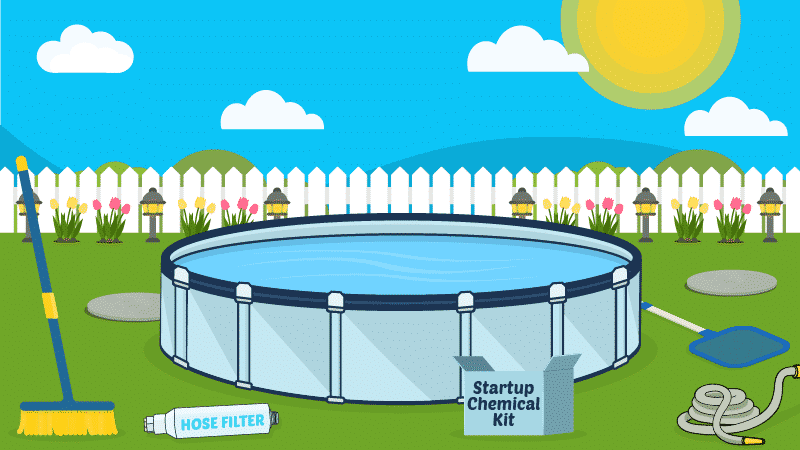
You may also need a chlorine stabilizer (also known as cyanuric acid, or CYA), calcium hardness increaser, and pool-grade salt if you have a saltwater pool. These are all the chemicals that you need on hand for maintaining your pool anyway. You really don’t need to go buy a prepackaged pool startup kit.
They’re convenient, but they usually come with chemicals that aren’t really necessary, like clarifiers and algaecides. Shocking your pool and balancing the water right after opening is usually enough.
Step 2. Add Shock
Shocking your pool quickly raises its chlorine levels, which helps kill contaminants, algae, and bacteria that have built up in the off-season. If you’ve just filled your pool with completely fresh water, you can skip shocking. Otherwise, if you’re opening a pool with water in it, you’re definitely gonna need to shock.
A standard dose of shock is one pound of cal-hypo shock, or one gallon of 12% concentrated liquid chlorine for every 10,000 gallons of water. The amount of shock you need depends on the color of your water. For a cloudy blue or light green water, use a double dose of shock. For dark green water, use a triple dose. For really dark or black-green water, add a quadruple dose.
Your headline here…
How to Add Shock
Add it around the edge of your pool with the pump and filter running on the filter setting. You may need to pre-dissolve the shock in water first, depending on what kind of shock you’re using. If not, you can brush the shock around so it doesn’t settle on the pool floor.
Then run your pump and filter for 12 to 24 hours to help it circulate. The sun can quickly destroy shock’s chlorine, so add it at dusk and let it work overnight in the water. Check your water after a day.
If it’s cloudy, that’s okay. That’s just dead suspended contaminants that the shock treated. Your filter’s gonna remove those later.
Before adding the next round of chemicals, do a quick clean of your filter by backwashing or rinsing the cartridges. Brush any spots on the pool floor that you may have missed.
Step 3. Add Alkalinity Increaser, pH Increaser, or pH Decreaser
Now you’re ready to balance the water. Retest the water, then adjust your total alkalinity and your pH in that order. Adjusting your total alkalinity first will help stabilize your pH.
Your total alkalinity should be between 80 and 120 parts per million, and your pH between 7.4 and 7.6. Start by adjusting your total alkalinity by adding an alkalinity increaser or a
Since these two levels go hand in hand, your pH may have changed after adjusting your alkalinity. Finally, add a pH increaser or a
Step 4. Add Chlorine
The chlorine levels should be between 1 and 3 parts per million, with 3 parts per million being ideal. If they’re already in range or they’re too high after shocking your water, don’t add more chlorine right now.
You’ll want to test these levels again the next day and then set up any automatic chlorine dispenser in the meantime. Plan to add chlorine granules to the water or add chlorine pucks to a floater or your automatic chemical feeder at least once a week.
If you have a salt water pool, you may want to add a little chlorine at this stage to help support your salt water generator.
Step 5. Add Chlorine Stabilizer (If You Need It)
Chlorine stabilizer is also known as cyanuric acid, or CYA, and this helps your chlorine from breaking down in the sun. If you’re using dichlor chlorine granules or trichlor chlorine tablets to sanitize your water, they already contain CYA.
If you have a saltwater pool or you use unstabilized chlorine, you need to add a chlorine stabilizer. Your CYA should be between 30 and 50 parts per million.
Here’s more information on using chlorine stabilizer in your pool.
Step 6. Add Calcium Hardness Increaser (If You Need It)
Your total calcium hardness levels protect your pool equipment and your surfaces in the long run. If it’s low, you’ll need to add a calcium hardness increaser.
For vinyl liner or fiberglass pools, your levels should be between 175 and 225 parts per million. For concrete and plaster pools, your levels should be between 200 and 275 parts per million.
Here’s more information on using (and balancing) calcium hardness.
Step 7. Add Salt If You Have a Salt Water Pool
Finally, the last step for saltwater pool owners is to add salt and start up your saltwater generator. Check out our saltwater pool startup video if you need more help.
If you want more help with ongoing maintenance and easy weekly care, check out The Pool Care App. You can enter your water test results and get a custom chemistry plan for your pool without being sold a bunch of chemicals you don’t need. Know exactly what chemicals to add to keep your pool clear the rest of the year.
Enter your water test results. Get a custom treatment plan. Know exactly what chemicals to add to keep your pool clear. Saltwater and hot tub compatible.
Key Takeaways
- Remove as much debris from the water as possible, loosen any algae clinging to your pool walls and floor, brush your pool surfaces, and make sure your skimmer basket and pump basket are clear before adding any chemicals.
- You don’t need to go buy a prepackaged pool startup kit. The chemicals you need are ones you should already have on hand for regular pool maintenance.
- A standard dose of shock is one pound of cal-hypo shock or one gallon of 12% concentrated liquid chlorine for every 10,000 gallons of water. Double, triple, or quadruple that, depending on how green your water is.
- Add shock at dusk so the sun doesn’t destroy the chlorine. Let it work overnight and run your pump and filter for 12 to 24 hours.
- Adjust your total alkalinity first, then your pH. Your total alkalinity should be between 80 and 120 parts per million, and your pH between 7.4 and 7.6.
- Add a chlorine stabilizer if you have a saltwater pool or use unstabilized chlorine. Your CYA should be between 30 and 50 parts per million.