Every pool is different. Get a free step-by-step plan for yours.
Get My Free PlanSo it’s time to start your salt water pool. But before you add anything to the water, you’ll need to adjust and add the right chemicals in the right order. If you don’t, your salt water generator won’t work properly. So here’s a quick guide on starting up a salt water pool. Let’s dive in.
An illustrated, step-by-step guide to taking care of your pool yourself. Works for chlorine and saltwater pools.
If you’ve just installed a salt water generator in an existing chlorine pool, the good news is the water doesn’t need to be drained. That’s because a salt water generator will be creating chlorine, so any chlorine in the water is fine.
However, you will want to test and balance the water before turning on the salt water generator. If you have a larger issue, like algae, you’ll want to take care of that first before starting up your system for the first time.
But whether you’re starting a brand new salt system or an existing saltwater pool, the process is the same. Be sure your surfaces are clean and add your chemicals in the right order to ensure they’re working properly.
You’ll need to know how many gallons of water your pool holds. And you’ll want to have the following chemicals on hand:
Wait at least 20 minutes between adding chemicals to your pool, and retest your water between dosing. You’ll also want your pump and filter running to help the chemicals circulate.
Regardless of whether it’s a new or existing salt system, you’ll want to test and adjust your levels first. That’s because once your salt water generator starts running, you want it to be maintaining an already balanced pool.
Using test strips or a liquid test kit, you’ll want to check the following levels:
Some test strips and test kits measure salt, but most don’t. You can buy salt testing strips or a salinity meter to check these levels.
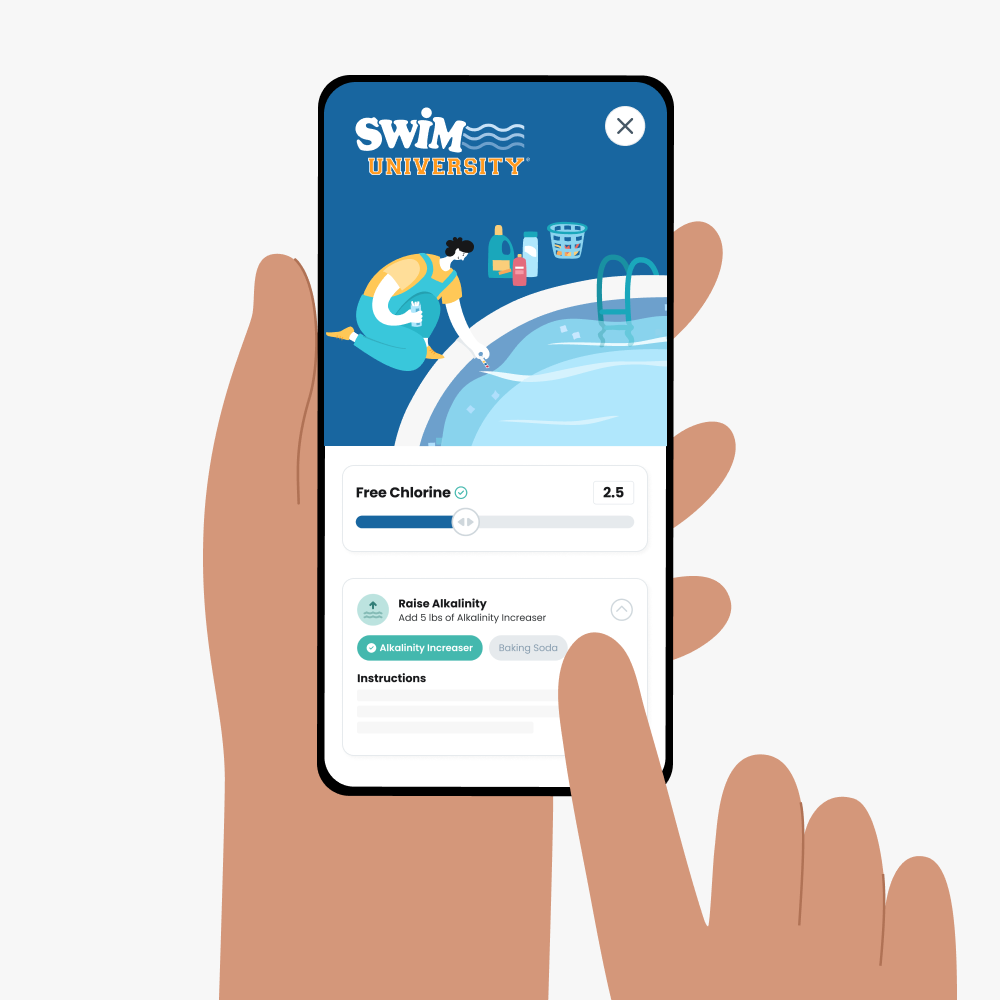
Enter your water test results. Get a custom treatment plan. Know exactly what chemicals to add to keep your pool clear. Saltwater and hot tub compatible.
If you know you have metals in your water, it’ll be important to test and remove those as well. You’ll need a special test kit to test for things like copper and iron. Or you can bring in a water sample to a local pool store. You’ll need to use a metal sequestrant before adding any other chemicals.
This helps keep your pH from fluctuating, so it’s important to adjust it first. Your alkalinity should be between 80 and 120 PPM. It can be helpful to keep it in the lower range to help your pH stay low as well. Use Alkalinity Increaser (or Baking Soda) to raise it or
Stable pH levels help keep your water neutral so that other chemicals, like chlorine, can work properly. Your pH should be between 7.4 and 7.6. But salt water pools tend to have chronically high pH. That’s because when the salt water generator runs, the pH naturally rises.
To bring your pH down, add
Your salt water generator will produce chlorine later. But in the meantime, your chlorine levels should be in range to kill any contaminants in the water. Your free chlorine should be between 1 and 3 PPM, with 3 PPM being ideal. You can raise your chlorine by adding liquid chlorine to the water or dichlor shock. Just avoid cal-hypo shock, since that can cause calcium to build up in your salt cell.
Here’s our recommendation on the best shock to use for salt water pools.
Chlorine stabilizer, a.k.a. Cyanuric Acid or CYA, helps protect your chlorine from breaking down in direct sunlight. Your CYA should be between 30 and 50 PPM, but some salt water pool owners find it helpful to keep the levels a bit higher, around 60 to 80 PPM.
That’s because higher CYA helps prevent your salt water generator from working so hard. Your generator ends up working more to maintain your chlorine levels during periods of high sunlight exposure. It can also help extend the life of your salt cell, since it doesn’t need to make up for that loss of chlorine.
Just be sure to add stabilizer slowly to the water. If the CYA gets too high, the only way to lower it is by draining some water from the pool and refilling with fresh water. And if you’ve added Dichlor shock earlier, that already contains CYA.
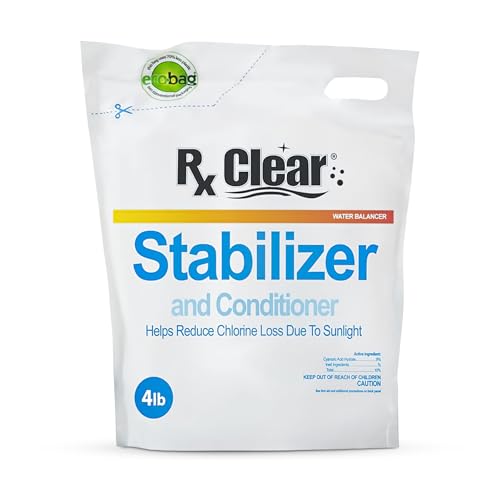
Keep your chlorine from being burned off too quickly by the sun's UV rays. CYA will help you keep a better chlorine reading in your pool.
The right calcium levels help protect your pool equipment and surfaces over the long run. Your calcium levels should be between 175 and 225 PPM for a vinyl liner or fiberglass pool, and between 200 and 275 PPM for concrete or plaster pools.
Add a calcium hardness increaser to bring these levels up into range. But if you have high calcium levels, you’ll need to partially refill your pool with fresh, filtered water. That’s because high calcium can cause build up inside your salt cell.
Once your other levels are balanced, you can start adding salt directly to your pool water. Check your salt water chlorinator for their suggested salinity levels. But it’s usually 2700 to 3500 PPM.
Be sure to only add pool-grade salt to the water. These usually come in 40 pound bags. If you’re starting with no salt in the water and you have a 10,000-gallon pool, you’ll need to add about six to seven 40-pound bags of salt. Be sure to check out our other video about calculating the right amount of salt to add if you need help.

Professional Pool Salt crystallizes early to match the fastest dissolve rates on the market - no more waiting for hours for chlorine tablets to dissolve and produce beautiful clean water.
The good news is that salt tends to stay in the water, and it gets recycled by the salt water generator, so you shouldn’t have to add it to your pool that often.
You may want to brush the salt around the pool if it’s collected anywhere on the bottom. You’ll want to run your pump and filter for several hours or overnight to help the salt completely circulate and dissolve.

| Current Salt Level | 8,000 gal (30,283 L) | 10,000 gal (37,854 L) | 12,000 gal (45,425 L) |
|---|---|---|---|
| 0 ppm | 213 lbs (97 kg) | 267 lbs (121 kg) | 320 lbs (145 kg) |
| 1,000 ppm | 147 lbs (67 kg) | 183 lbs (83 kg) | 220 lbs (100 kg) |
| 2,000 ppm | 80 lbs (36 kg) | 100 lbs (45 kg) | 120 lbs (54 kg) |
| 3,000 ppm | 13 lbs (6 kg) | 16 lbs (7 kg) | 20 lbs (9 kg) |
Enter your pool volume and current salt reading. You’ll see exactly how much salt to add, and how many bags that works out to.
 Get exact doses in The Pool Care App
→
Most salt systems run between 2,700 and 3,600 ppm. Too low and the cell stops producing chlorine; too high and it can throw a fault or corrode metal fittings.
Once the levels are balanced and the right amount of salt is added, you can turn on your saltwater generator. If there’s enough salt in the water, it will start producing chlorine normally.

For a complete walkthrough on routine saltwater pool care, like cleaning your saltwater cell, be sure to check out our other full-length tutorial.
Answer a few questions and we'll tell you what to test, what to add, and when.
Get My Free Plan
Matt is the founder of Swim University. He's been in the pool and spa industry since 1996. His mission is to make pool and hot tub care easy. Each year, he continues to help people with water chemistry, cleaning, troubleshooting, and more.
Remove the algae in your salt water pool with aggressive treatment and consistent prevention. Attack that algae today and enjoy your clear pool tomorrow.
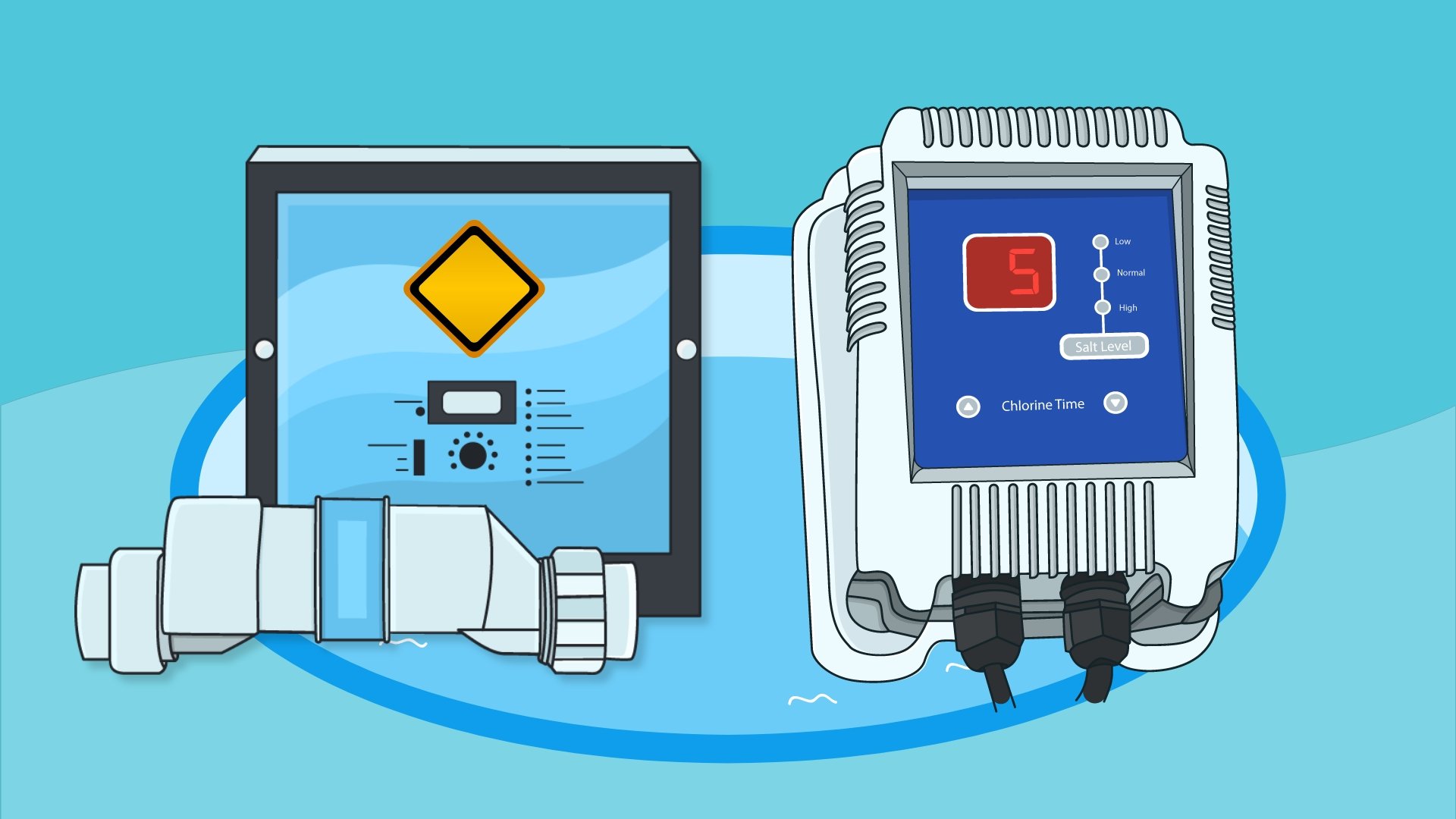
Wondering if a salt water pool system is right for you? Here's a quick guide on how salt water generators work and how to choose the best one.
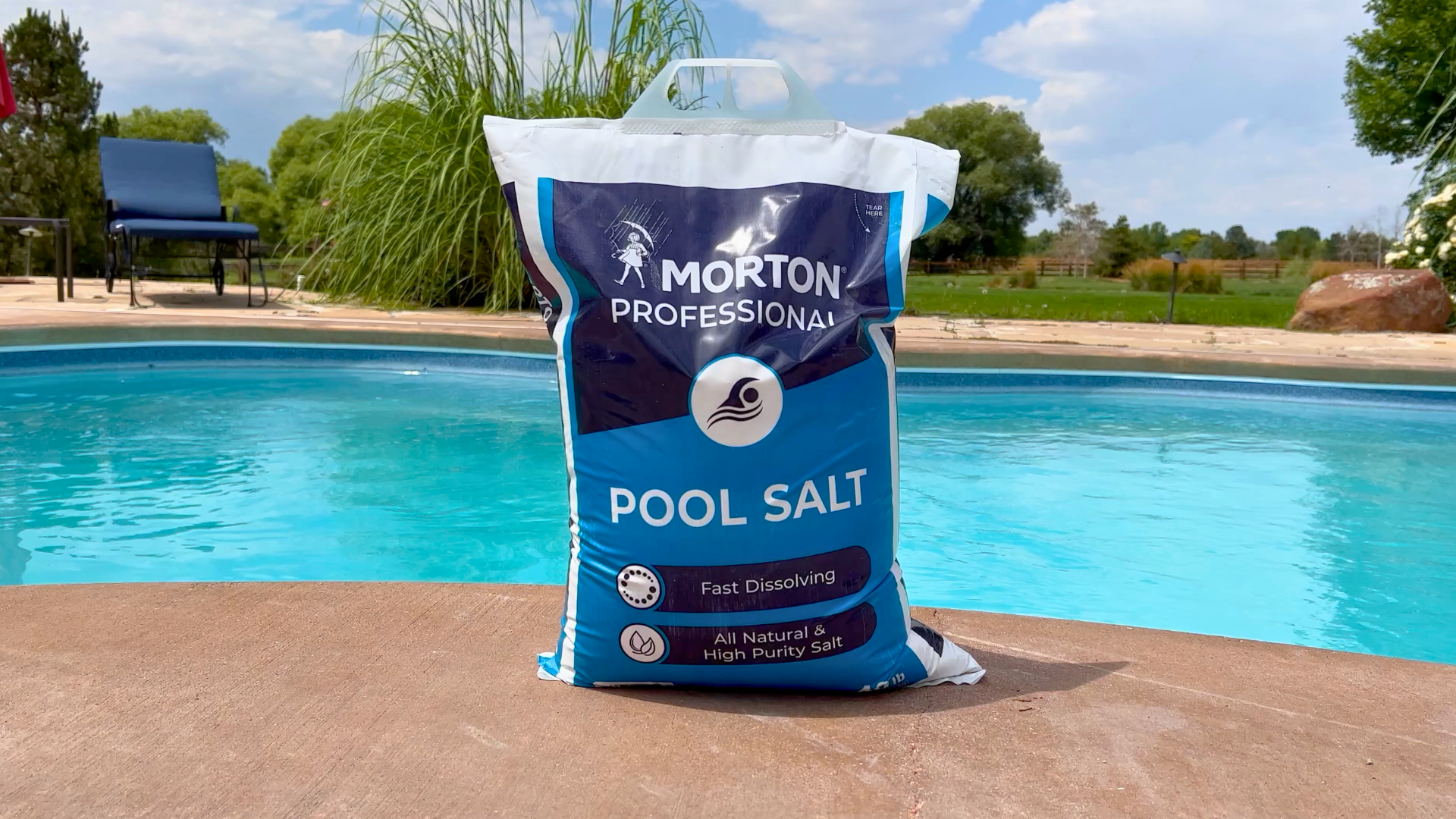
The best pool salt is coarser and comes in large 40-pound bags. Here's the brand I recommend (it might look familiar).
A salt water pool needs everything a normal pool needs, but with a few major differences. Here's an easy guide to salt water pool maintenance.
Salt water pools are different than traditional pools. So here are the common salt water pool maintenance mistakes and how to avoid them.
Cleaning a pool salt cell regularly prevents calcium buildup and keeps your system running. Follow these steps to do it safely and correctly.


