

Salt Water Pool vs Chlorine Pool: Which is Better?
 Matt Giovanisci
  July 26, 2026
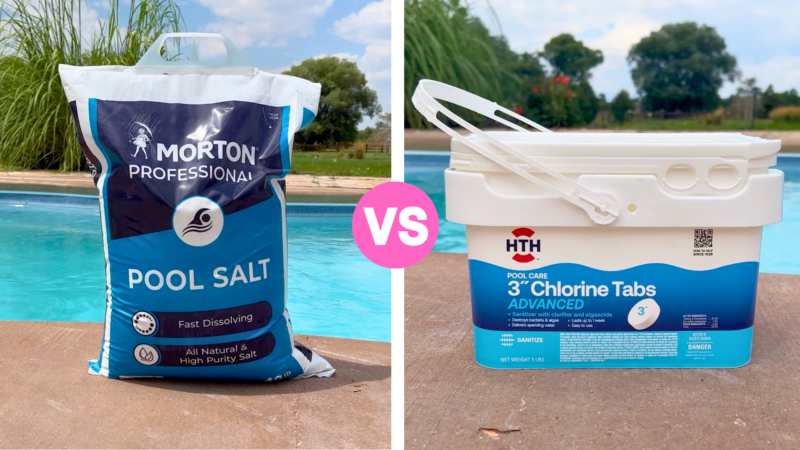
 If you’ve been thinking about switching to a salt water pool, the salt water pool vs. chlorine pool debate is important to explore. They have a lot in common, since both types of pools use chlorine to sanitize the water and both need similar general care like weekly testing and cleaning. The difference is how the chlorine gets made and a few other maintenance needs, like cleaning a salt cell and keeping high pH and calcium hardness levels in check.
Whether you’re choosing between salt and chlorine for the first time or considering a conversion, this guide breaks down the real differences between the two. You’ll learn about cost, maintenance, water feel, common problems, and which pool type might be the best fit for your situation.
This is the ultimate guide to keeping your pool sparkling clean throughout the year that contains everything you need to know about taking care of your pool the right way. Including saltwater pools.
Both Salt Water Pools and Traditional Pools Use Chlorine
This is the most misunderstood part of the salt water pool vs. chlorine pool debate. A salt water pool is still a chlorine pool. The salt chlorine generator uses electricity to break salt (sodium chloride) down into sodium and chlorine. That chlorine then sanitizes your water just like it would in a traditional pool.
The biggest difference is simply how the chlorine gets into the water.
Salt Water Pools Use Salt to Continuously Produce Chlorine
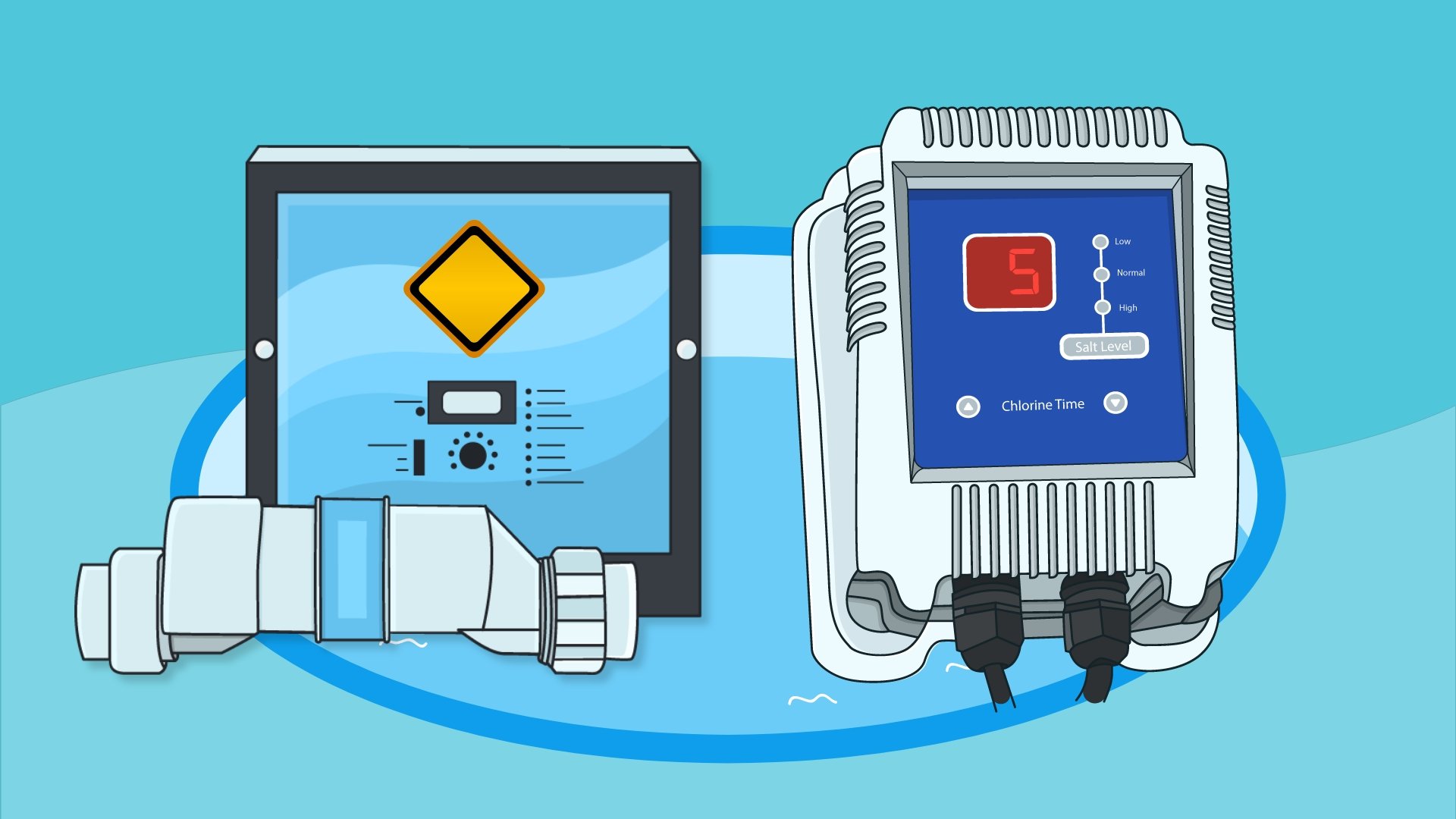
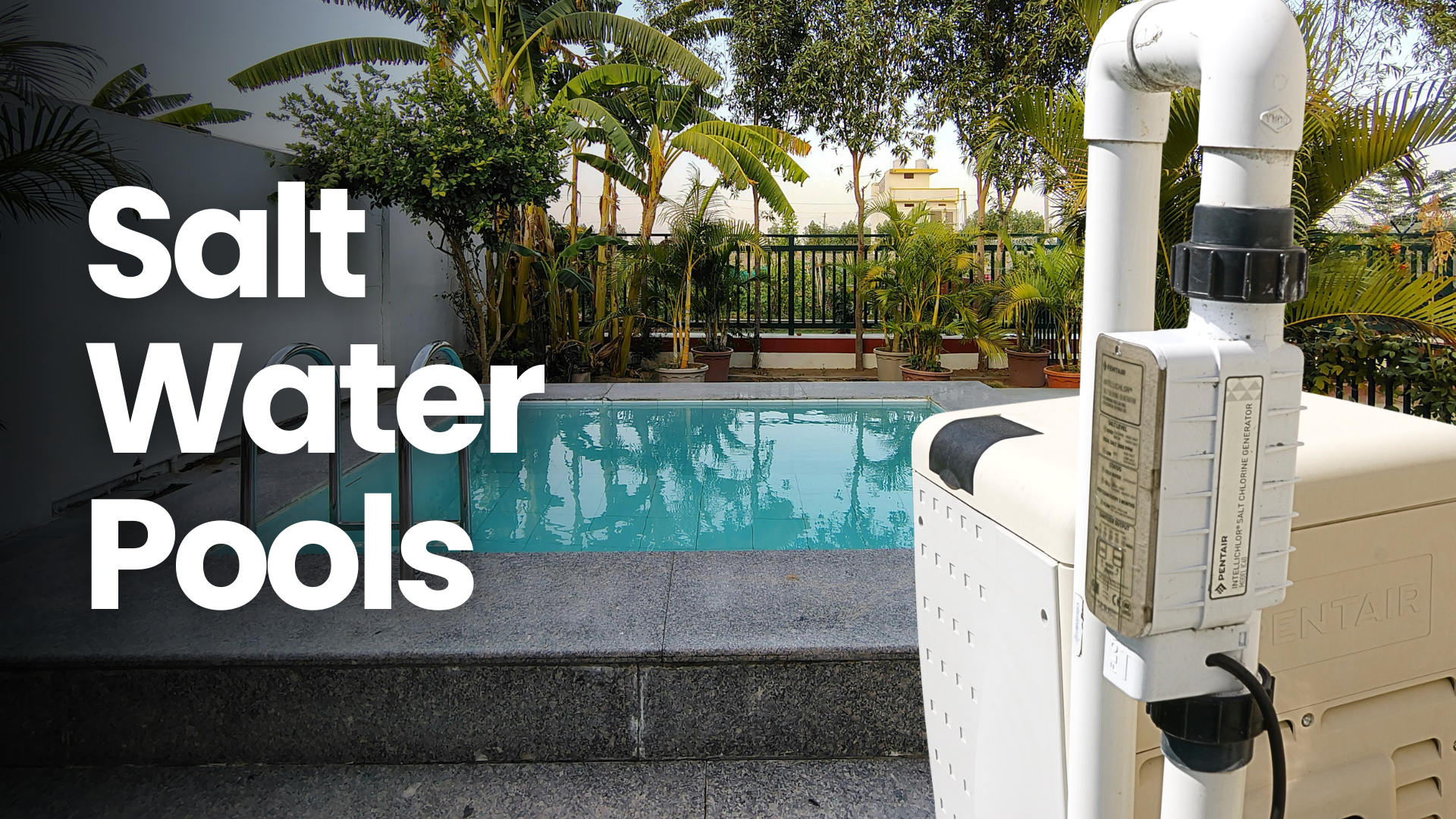
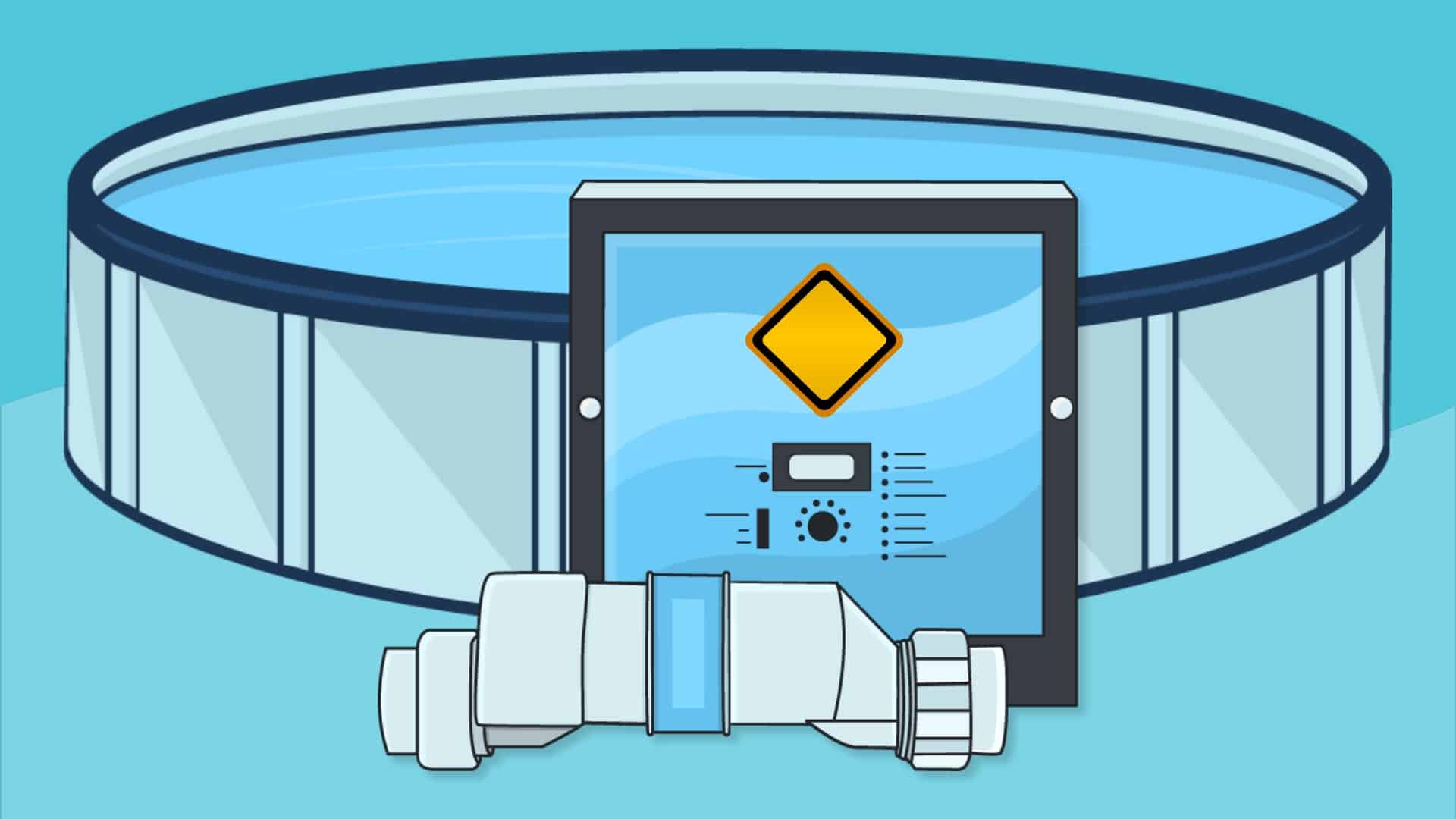
In a traditional chlorine pool, you add chlorine using tablets, granules, or liquid. A saltwater pool skips that step. Instead, you add pool-grade salt to the water, and a device called a salt chlorine generator (or salt water generator) does the rest.
As saltwater passes through the generator’s salt cell, a safe amount of electricity triggers a process called electrolysis, breaking the salt (sodium chloride) into sodium and chlorine. That chlorine then sanitizes your pool water just like it would in a traditional setup. The sodium left behind eventually recombines with chloride ions to form sodium chloride, and the cycle starts over. That’s why you only need to add salt once or twice a year, unless you’ve topped off the pool with fresh water.
So the salt water generator automatically produces a steady stream of chlorine. In a traditional chlorine pool, you’re adding chlorine yourself, which means levels can spike right after a dose and then drop between treatments.
Because the chlorine is generated continuously, salt water pools tend to have fewer chloramines in the water. Chloramines are byproducts of chlorine reacting with sweat, oils, and other contaminants. They’re what cause that harsh “chlorine smell” and most of the eye and skin irritation swimmers complain about.
Salt Water Pool Pros
Before you pick a side in the salt water pool vs chlorine showdown, it helps to know all the advantages and disadvantages of salt water systems. If you want a complete overview of what it takes to care for a salt water pool, check out our guide on Salt Water Pool Maintenance.
1. No More Adding Chlorine
The salt water generator handles chlorine production, so you’re not constantly refilling tablet feeders or handling concentrated chemicals.
2. Less Chemical Fluctuations
Because the salt system produces consistent chlorine, you won’t have spikes or dips in chlorine levels that can lead to swimmer sensitivity or algae growth.
3. Gentler Water
Most owners report that the water feels softer and silkier. There’s less eye and skin irritation compared to a traditional chlorine pool because there are fewer chloramines. It also won’t dry out your hair or bother your pets as much.
4. No Chlorine Smell
You also won’t deal with that strong chlorine smell. The generator’s consistent chlorine output helps break up combined chlorine before it becomes a problem.
Salt Water Pool Cons
1. Higher Upfront Cost
The upfront cost is significantly higher. A salt chlorine generator costs between $600 and $2,000, depending on your pool size. Add in pool-grade salt and professional installation ($300 to $500), and the total conversion runs between $1,000 and $2,500.
2. Risk of Metal Corrosion and Plaster Etching
Salt corrodes metal. If your pool has metal walls, railings, ladders, diving board hardware, or automatic cover tracks, salt can accelerate corrosion over time. Installing a zinc sacrificial anode can help protect metal components. Salt also wears down plaster surfaces faster than traditional chlorine. If you have a plaster pool, you may need to resurface more frequently.
3. Salt Water Voids Some Warranties
Some pool and equipment warranties aren’t compatible with salt water systems, so read the fine print on your equipment, like heaters, pumps, and filters.
4. Salt Cell Requires Cleaning and Replacement
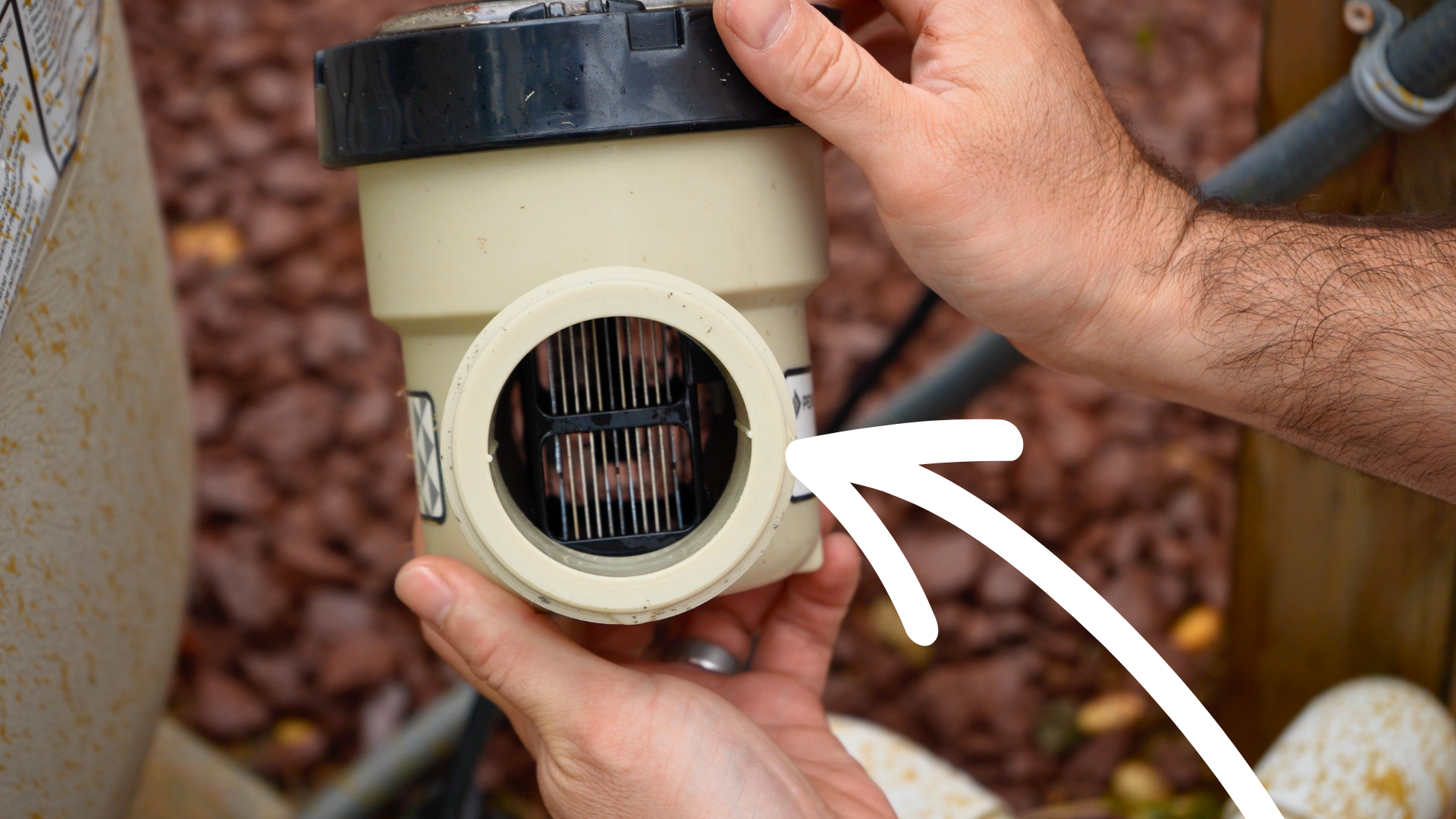
You’ll need to clean your salt cell inside your generator every 3 months to prevent calcium buildup. Check out our guide on How to Clean a Salt Cell here for an idea of what that entails. Salt cells also typically need to be replaced every 3 to 5 years, depending on maintenance and usage.
5. Chronically High pH
As the salt water generator runs, it naturally produces high pH. This means you might need to rebalance your pH more frequently than a traditional pool and add
6. Risks with High Calcium Hardness Levels
Because the salt cell is sensitive to calcium buildup, high calcium hardness levels can cause more issues in a salt water pool than a traditional chlorine pool. If you have hard water, you’ll need to use a stain and scale preventer or fill your pool with softened water. You’ll also want to avoid using cal-hypo shock in a salt water pool, since this contains calcium and can cause your levels to rise. Use dichlor shock instead. Here’s a guide on The Best Shock to Use for a Salt Water Pool.
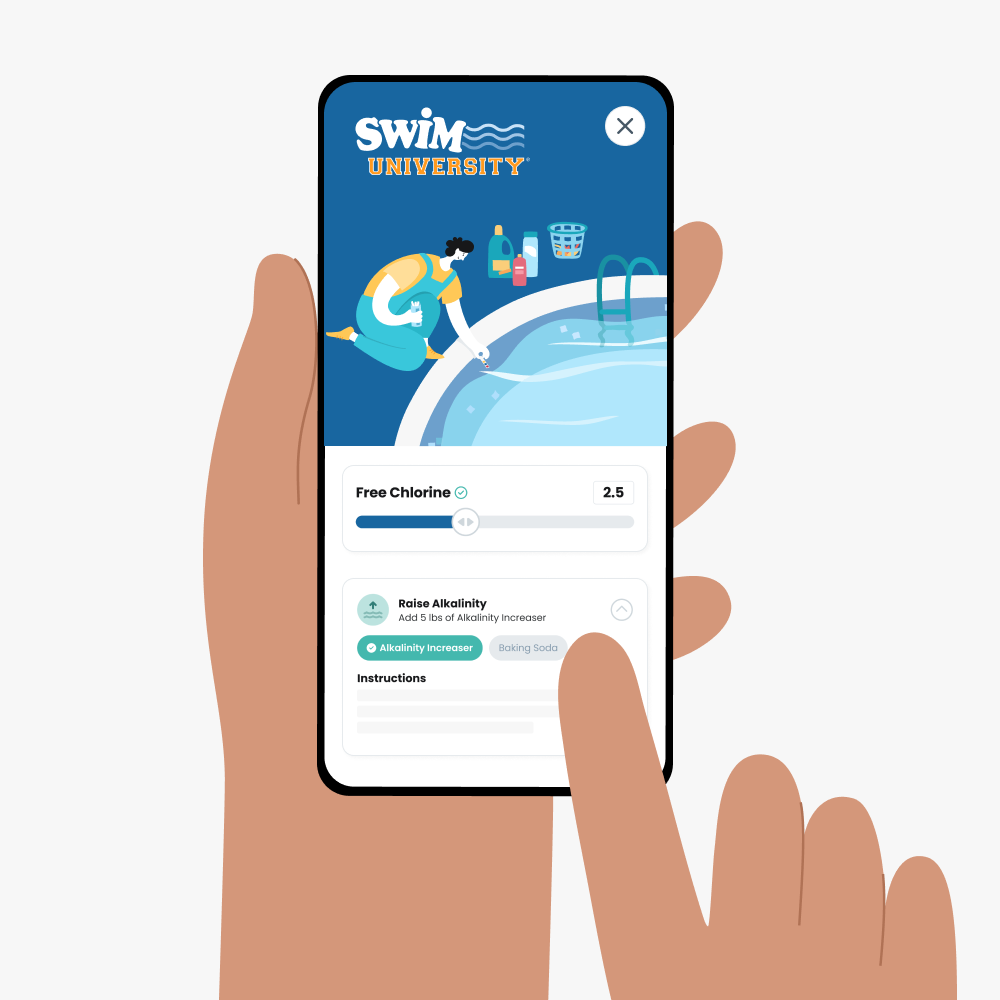
Enter your water test results. Get a custom treatment plan. Know exactly what chemicals to add to keep your pool clear. Saltwater and hot tub compatible.
Is It Better to Have a Salt Water or Chlorine Pool?
The best choice depends on your budget, your pool’s construction, and how much maintenance you’re willing to do.
Choose a salt water pool if you want less chlorine fluctuations, softer water, less chemical handling, and fewer chloramines. Just be prepared for higher upfront costs, high pH and calcium hardness issues, and the need to replace the salt cell every 3 to 5 years.
Choose a traditional chlorine pool if you want lower startup costs, broader equipment compatibility, and no concerns about salt corroding metal or wearing down plaster. You’ll just need to stay on top of regular chlorine additions and chemical balancing.
Over the long haul, both pool types cost about the same to maintain. Salt water pools save on annual chemical expenses (some owners save up to 50%), but those savings can disappear once you factor in generator installation and salt cell replacement.
What Can Ruin a Salt Water Pool?
Several things can damage a salt water pool or shorten the life of your equipment if you’re not careful.
High pH is the most common issue. Salt water generators naturally produce high pH levels as they run. If pH climbs above 7.8, it can cause scaling on your equipment, eye and skin irritation, and calcium buildup on your salt cell. Test and balance your pH weekly.
Poor water circulation can also cause problems. If water isn’t moving properly, salt concentration can get too high in some areas. Make sure your return jets are angled correctly and run your pump at least 8 hours a day.
Finally, neglecting your salt cell leads to calcium buildup on the metal plates. This reduces the cell’s ability to generate chlorine and shortens its lifespan. Inspect and clean your salt cell every 3 months to keep it running efficiently, and use a stain and scale preventer to keep calcium from settling on surfaces.
What Not to Put in a Salt Water Pool
The most important thing to avoid is calcium hypochlorite (cal-hypo) shock. Cal-hypo causes calcium buildup inside your salt cell, which can damage or destroy it over time. Stick to dichlor granular shock or liquid chlorine instead.
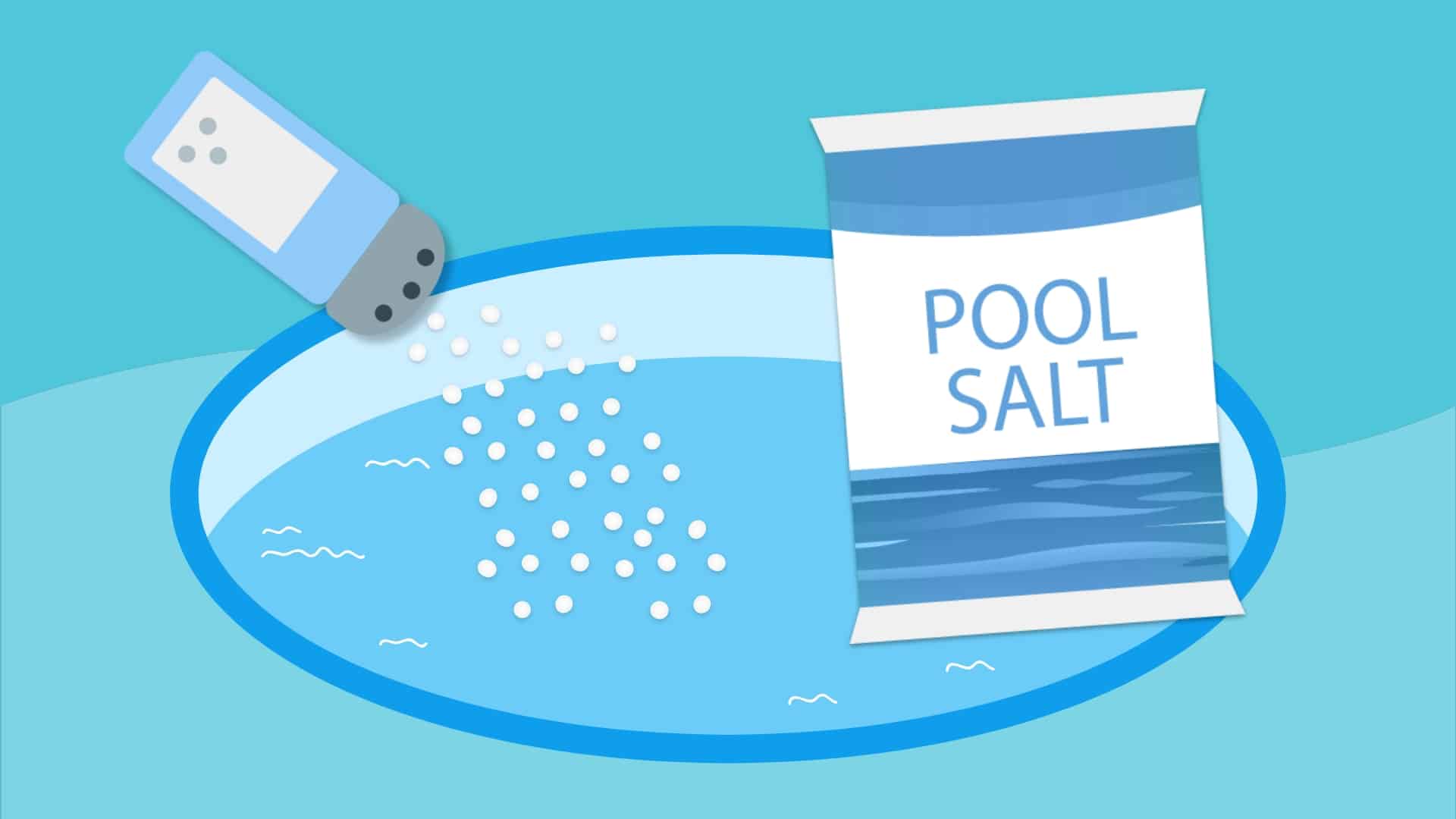
Never use table salt, rock salt, or any other type of salt. Only use pool-grade salt. Other types of salt contain impurities, such as minerals and heavy metals, that can cause water balance problems and calcium carbonate buildup. The purity level is usually printed on the bag as a percentage.
Do Salt Water Pools Smell?
No, not really. One of the biggest perks of a salt water pool is that you won’t deal with that harsh chlorine smell. That smell actually comes from chloramines, the byproduct of chlorine reacting with contaminants like sweat and body oils.
Because a salt water generator produces chlorine at a steady, consistent rate, chloramine levels stay much lower. Lower combined chlorine levels mean less of that chemical odor.
Your pool won’t taste salty either. Most salt water systems run between 2,500 and 3,500 ppm. You can’t even taste salt until around 5,000 ppm. For comparison, ocean water sits at about 35,000 ppm.
How Often Do You Need to Put Salt in a Salt Water Pool?
Once you add the initial dose of salt, you likely won’t need to add more to the water that season. That’s because the salt chlorine generator continuously recycles the salt through electrolysis. Unlike chlorine, salt doesn’t evaporate.
However, salt does get diluted when it rains or when you add fresh water to the pool. Test your salinity after any significant water addition. The ideal salt level is around 3,200 ppm, though some systems call for as low as 2,500 ppm or as high as 5,000 ppm. Always check your specific generator’s recommendations.
Pool Salt Calculator
Enter your pool volume and current salt reading. You’ll see exactly how much salt to add, and how many bags that works out to.
 Get exact doses in The Pool Care App
→
Get exact doses in The Pool Care App
→
Most salt systems run between 2,700 and 3,600 ppm. Too low and the cell stops producing chlorine; too high and it can throw a fault or corrode metal fittings.
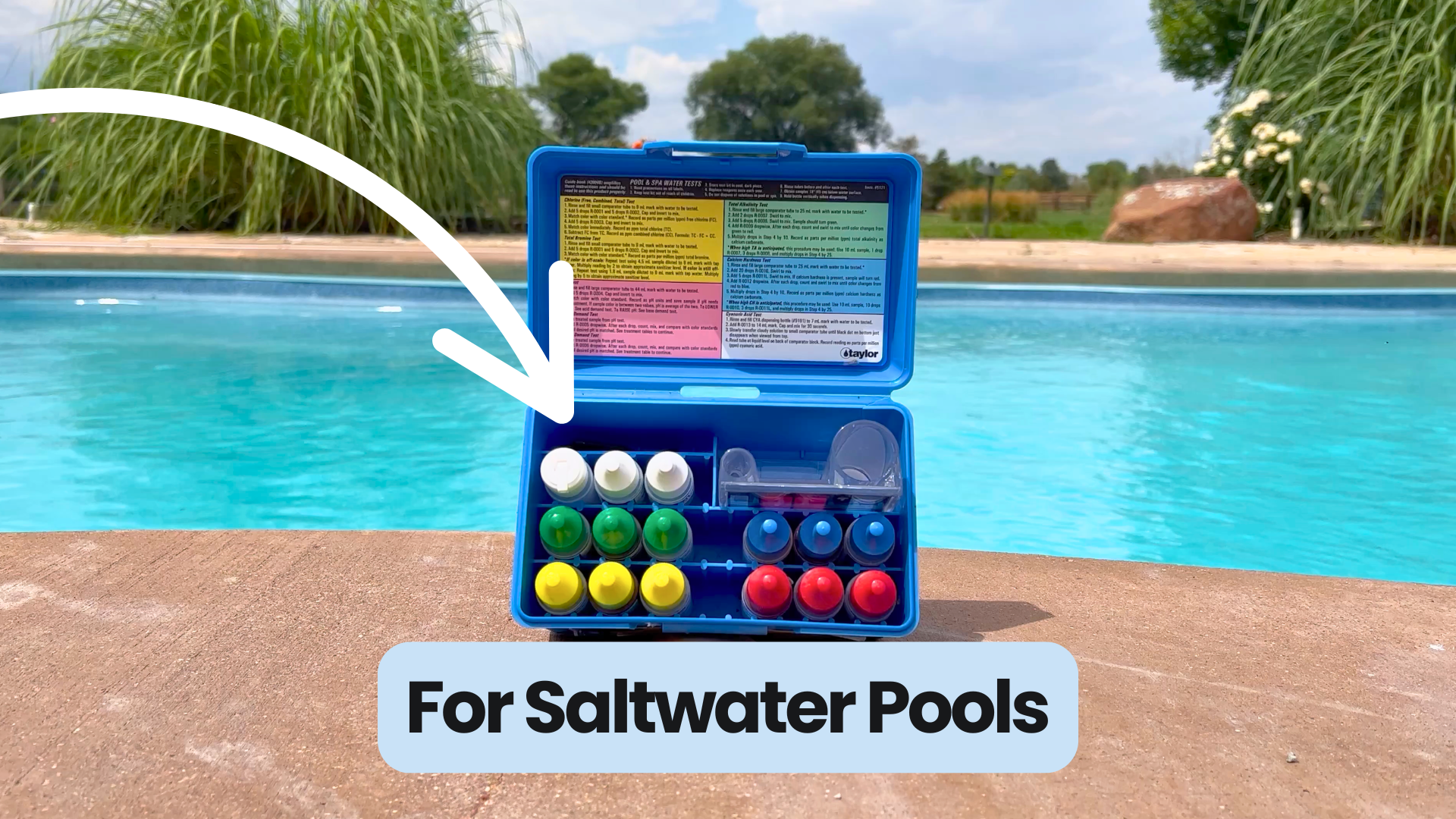
Test your salinity manually once a month with a digital salinity reader or salt water test strips. Don’t rely solely on your generator’s readout, since it can sometimes display inaccurate numbers. Here’s more about the salt water test kits we recommend.
What to Do With a Salt Water Pool in Winter
If you close your pool for the winter, remove the salt cell and store it indoors. Clean the cell before storing it to prevent calcium damage and extend its lifespan.
Then, install a salt cell dummy cell (or bypass cell) to replace it. This hollow pipe replaces the salt cell during winterization to keep the plumbing circuit closed and protected.
If you keep your pool open year-round, keep in mind that salt chlorine generators don’t produce chlorine when water temperatures drop below 60°F (16°C). You’ll need to switch to an alternative sanitizer, like a chlorine floater, during the cooler months.
Can You Heat a Salt Water Pool?
Yes, but you need to check whether your heater is compatible with saltwater. Salt can corrode metal components, including heater elements, over time. Adding a zinc sacrificial anode to your plumbing helps protect your heater and other metal parts from galvanic corrosion. Check with your heater manufacturer to confirm that a salt system won’t void your warranty.
Key Takeaways
- A salt water pool is still a chlorine pool. The salt chlorine generator converts salt into chlorine through electrolysis, so both pool types use the same sanitizer.
- Salt water pools are easier to maintain and produce fewer chloramines, which means less chemical smell and less eye and skin irritation for swimmers.
- Traditional chlorine pools have lower upfront costs and are compatible with all pool types, surfaces, and equipment without risk of salt corrosion.
- Avoid using cal-hypo shock in a salt water pool. It causes calcium buildup inside the salt cell. Use dichlor shock or liquid chlorine instead.
- Salt chlorine generators stop producing chlorine when water temperatures drop below 60°F (16°C), so you’ll need a backup sanitizer in cooler months.
- Budget between $1,000 and $2,500 to convert a chlorine pool to salt water, and plan to replace the salt cell every 3 to 5 years.