Every pool is different. Get a free step-by-step plan for yours.
Get My Free PlanIf you fill your pool with well water, or you’ve noticed a rusty or greenish tinge after shocking, you’re probably dealing with metals. Unfortunately, metals in pool water are especially frustrating because they react strongly with chlorine. Once you know that, treating them (or getting rid of them for good) is pretty straightforward.
Your best course of action is to add a metal sequestrant (also called a sequestering agent, chelating agent, or metal remover). A metal sequestrant binds to metal ions in water, keeping them suspended in solution rather than settling on surfaces and staining your pool. But before you treat metals in your pool water, you need to know where the metals are coming from and whether it’s iron or copper.
Watch the video below or keep reading for the full guide on removing metal from your pool water.
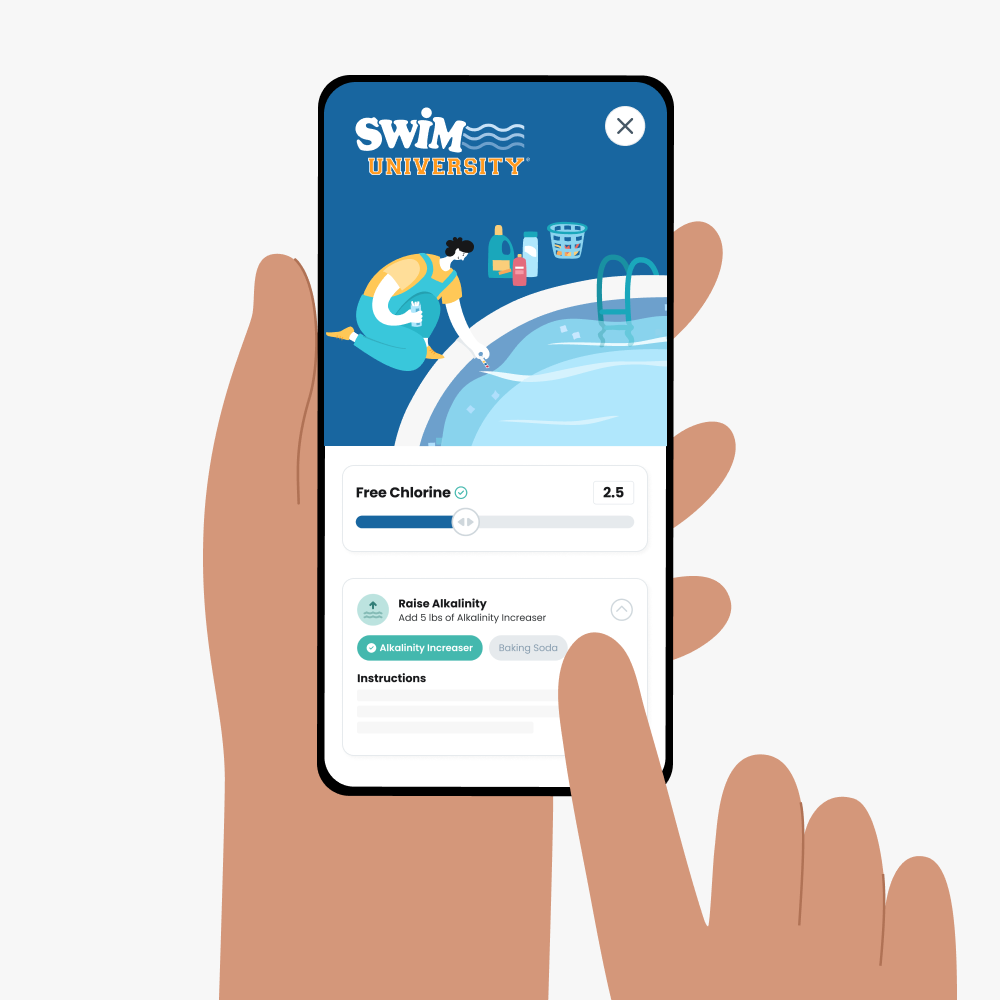
Enter your water test results. Get a custom treatment plan. Know exactly what chemicals to add to keep your pool clear. Saltwater and hot tub compatible.
You can tell you have metal in your pool water by its color: brown or tea-colored water usually means iron, and green or blue-green water usually means copper. But dissolved metals can be invisible before oxidation or discoloration makes them noticeable, so it helps to know where the metal is coming from before you treat anything. There are four usual suspects.
Not every discolored pool is a metal problem. Some stains and cloudy water come from algae or organic debris instead. If you’re not sure what you’re looking at, check out our pool stain guide before you start treating for metals, since they can also cause metal stains on surfaces and discolor hair.
To test for metals in your pool, you’ll need test strips that specifically measure metal. You can also take a water sample to your local pool store.

This water testing kit offers a convenient way to monitor water quality without the need for reagents. It tests for iron and copper with a range of 0 to 5 ppm and 0 to 3 ppm.
Test the actual water source you use to fill your pool directly at the spigot before it enters the pool, not just an indoor tap.
Ideally, you want 0 ppm of both iron and copper, but it’s considered high once copper levels cross above 0.2 ppm or iron crosses above 0.3 ppm; manganese may also be present and can stain pool surfaces. If you fill with well water, test at the start of every season, whenever you add a large amount of fresh water, and any time you notice discoloration.
Once you know what metals are in your water, you can move on to treating them with a metal sequestrant.
A metal sequestrant doesn’t remove metal from your water. It binds to metal ions and keeps them suspended so they can’t oxidize or settle on your surfaces, preventing metal stains. If your system allows it, bypassing the pool heater before treatment can help prevent metal deposits.
Look for a sequestrant with phosphonic acid or a phosphonic acid derivative as the active ingredient. These hold up longer than cheaper formulas.
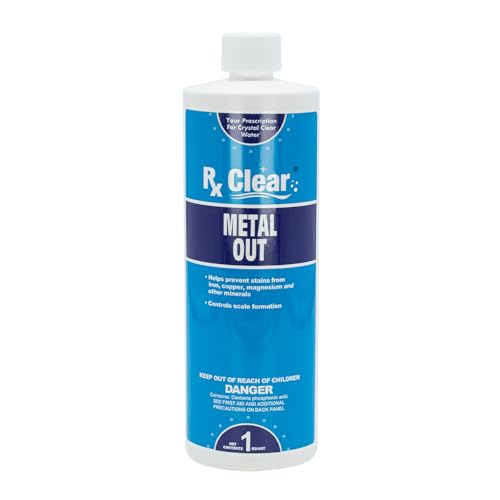
Helps prevent staining by removing iron, calcium, manganese, copper and other metals from your pool water. Also helps protect plumbing and pool walls from rust, stain, and scale. Used for all pool openings and closings.
To use a metal sequstrant:
If needed, a flocculant can help gather dissolved metal particles for removal.
If you want metals removed from the water, polymer-based metal-elimination pouches are the other option. They sit in your skimmer or pump basket, physically trap metal ions, and get discarded after 30 to 90 days. CuLator Ultra 4.0 is rated to remove 4 ppm total dissolved pool metals.

Removes Copper Iron Rust Manganese Stain Preventer, Water Clarity Support, Skimmer Treatment for 20,000 Gallons.
These work best paired with a sequestrant, and they’re a slower process, so plan on at least thirty days of consistent circulation before you see results. Some larger filters can treating up to 20,000 gallons of water. If you’ve got persistently high metal levels from well water, this extra step is usually worth it. If your levels are moderate and respond fine to a sequestrant alone, you can skip it.
When metals are present in swimming pools at high levels, a partial drain and refill is often the better option.
If well water is your fill source, preventing metals beats treatment every time.
Beyond the fill itself, keep an eye on calcium hardness. Your water can only hold so many dissolved minerals before they start falling out of solution, and high calcium hardness makes metal staining more likely, even with a sequestrant in place.
No, the opposite. Shock is a strong oxidizer, and oxidizing dissolved metal is what causes it to fall out of solution and stain your pool in the first place. Treat metals with a sequestrant first, then wait three to four days before shocking.
No. Baking soda raises pH and total alkalinity, but it does nothing to bind or remove metal ions. If anything, raising pH too high can make copper more likely to fall out of solution and stain your pool. Use a metal sequestrant instead.
Rust is iron, so the same iron-removal steps apply: lower your chlorine, balance your pH between 7.2 and 7.6, add a metal sequestrant, and run your pump for 24 to 48 hours. If the rust has already stained a surface, use ascorbic acid to lift iron-based stains from pool surfaces, since a sequestrant won’t remove existing staining.
Generally yes, low to moderate metal levels aren’t a health concern for swimming. The real issue is staining and discoloration, and most people only notice metals after visible discoloration or staining appears. That said, always keep your sanitizer and pH within normal ranges regardless of your metal levels.
Metals are just one piece of keeping your water balanced. Between pH, chlorine, alkalinity, and sequestrant maintenance doses, it’s a lot to track by memory. The Pool Care App takes your test results and gives you an exact plan of what to add and when, including reminders for maintenance doses so metals don’t sneak back up on you. Try The Pool Care App FREE for seven days.
Answer a few questions and we'll tell you what to test, what to add, and when.
Get My Free Plan
Matt is the founder of Swim University. He's been in the pool and spa industry since 1996. His mission is to make pool and hot tub care easy. Each year, he continues to help people with water chemistry, cleaning, troubleshooting, and more.
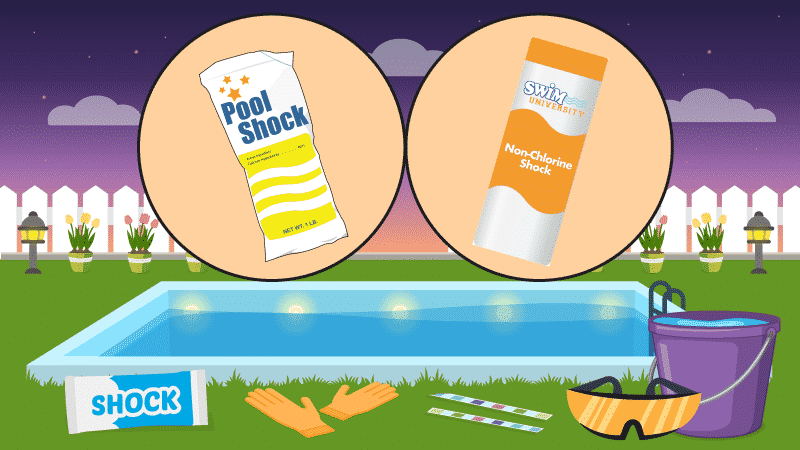
Finding the best pool shock depends on the type of pool you have and what water issues you're dealing with. Here's what to look for.
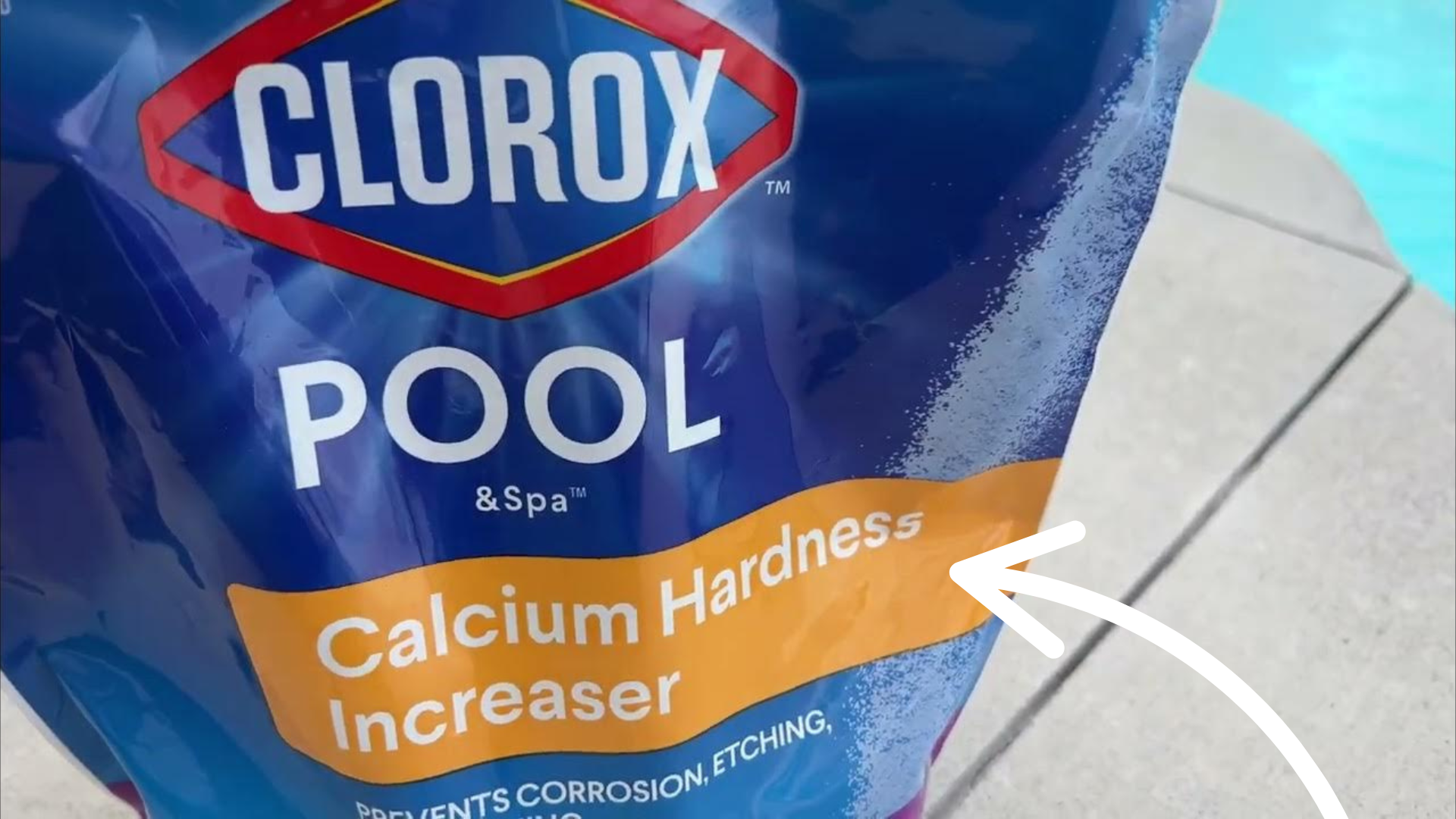
Learn how to manage and control the calcium hardness in your pool to protect your pool walls, equipment, and prevent scaling.
Phosphate Removers: Are They Worth It or Just a Scam? We did some research and the truth is, it's not. Learn why you should save your money.
Muriatic acid is a cheap way to balance your pool chemistry, but it can be dangerous. Here's how to use muriatic acid for pools.
Learn how to shock a pool, which type of shock to use, and how much to add. Get the step-by-step guide to safe, effective pool shocking.
Tired of dry skin after every swim? Give Baquacil a try. It'll require added expense and extra work, but that may be worth the benefits of biguanide.


