

How Long Does It Take to Open a Pool?
 Matt Giovanisci
  February 11, 2026
 Opening your pool and getting it swim-ready takes anywhere from 8 hours to 72 hours, depending on your water condition at opening. Clean or mildly cloudy water needs 8 to 24 hours of prep time. Green, algae-filled water requires 48 to 72 hours of treatment before anyone can swim safely.
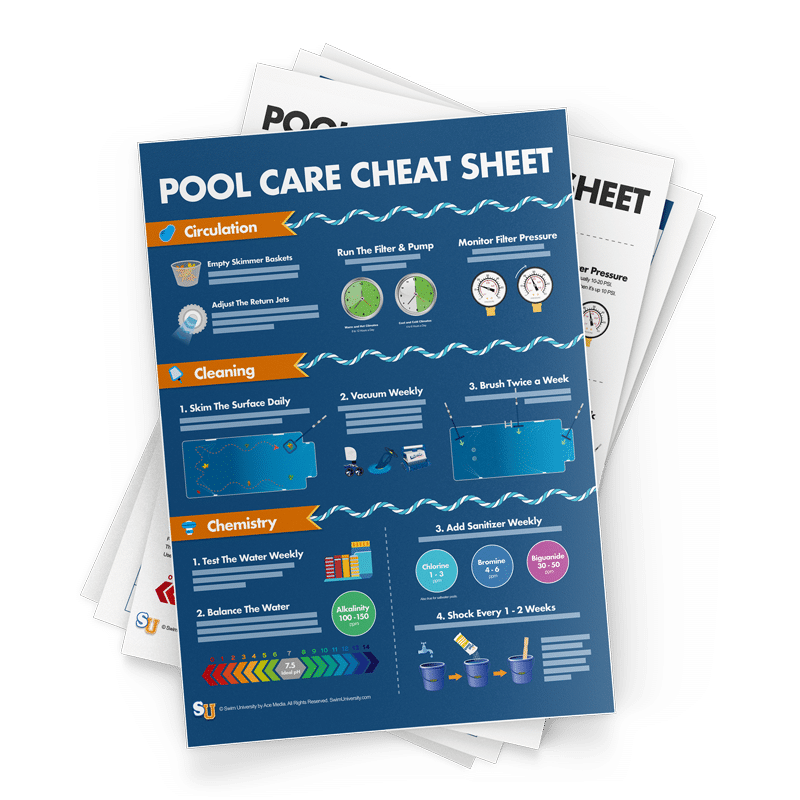
This is the ultimate guide to keeping your pool sparkling clean throughout the year that contains everything you need to know about taking care of your pool the right way. Including saltwater pools.
Opening Timeline for a Clean or Cloudy Pool (8 to 24 Hours)
If your pool was winterized properly and the water looks relatively clear, your pool opening is straightforward, and you’ll be swimming within a day or two. Even with mostly clear water, plan to add chlorine shock and let this circulate for at least 24 hours before swimming.
Step 1: Remove Your Winter Cover
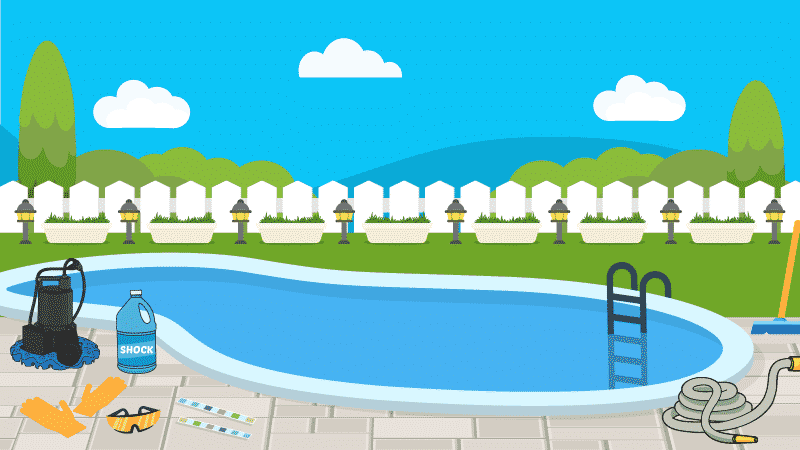
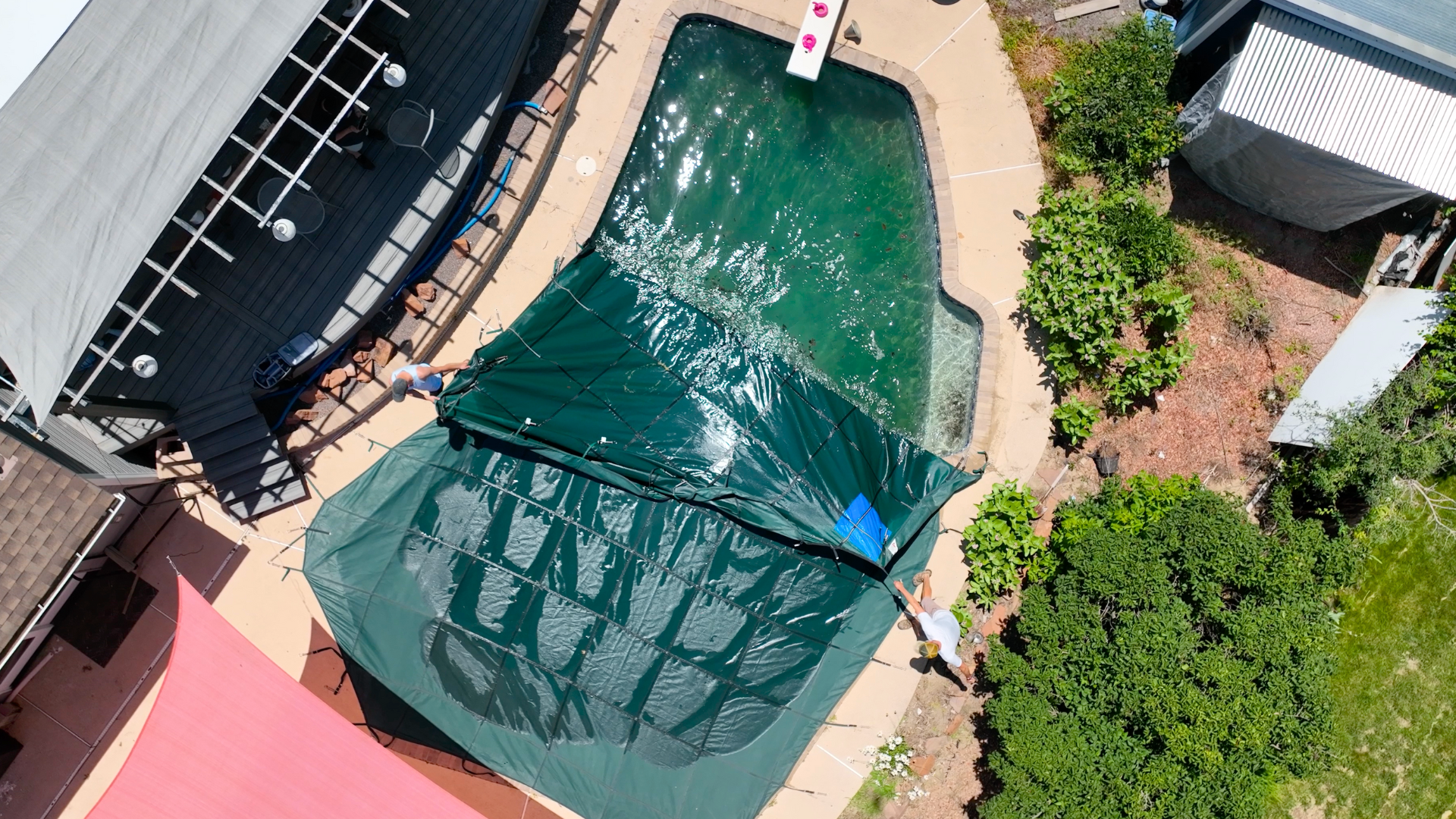
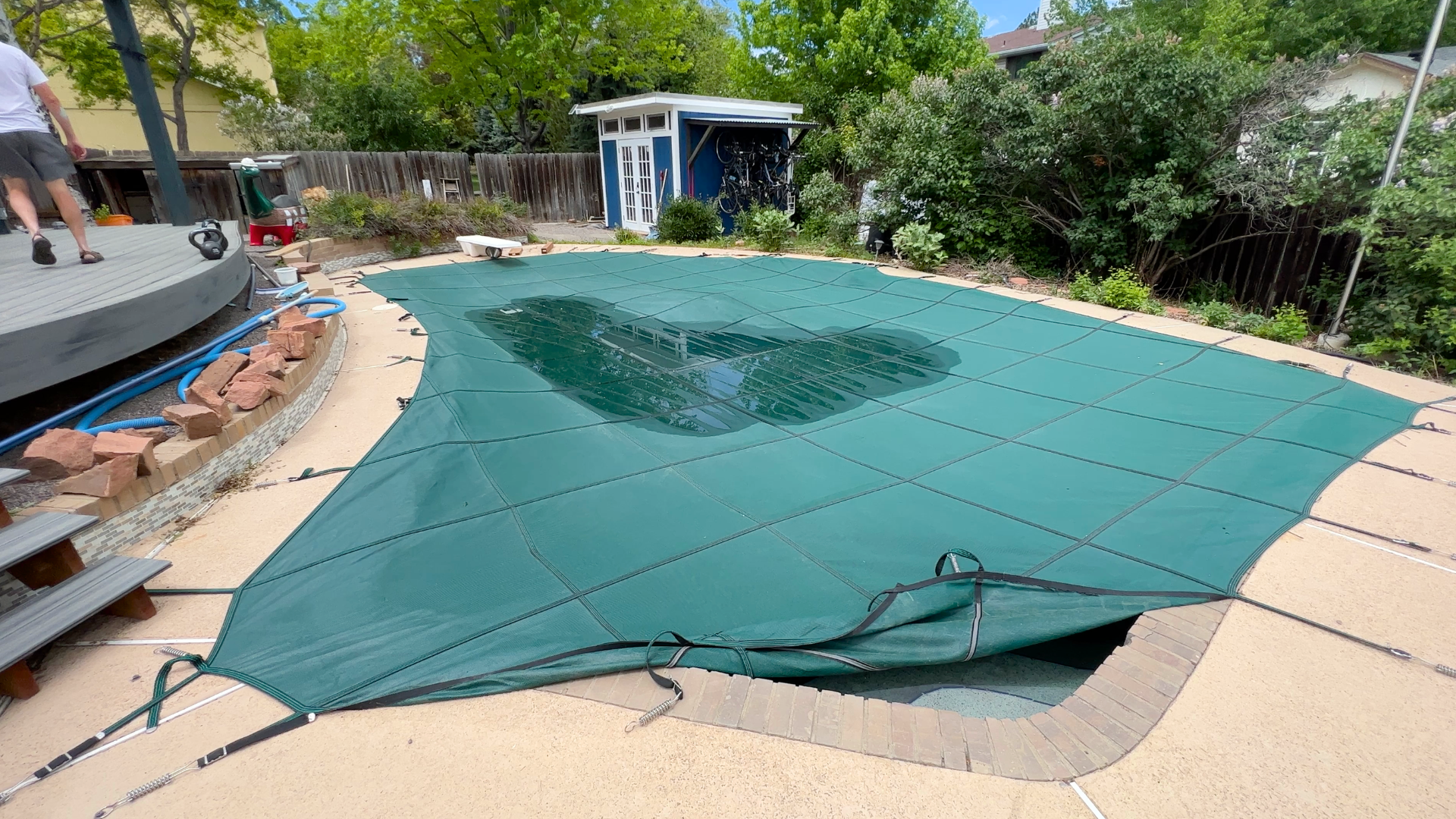
Clean debris off your winter cover with a soft broom. Use a pool cover pump to remove standing water. With a helper, carefully remove the cover and spread it flat on your lawn to clean and dry it before storage.
Step 2: Remove Winter Plugs and Reinstall Equipment
Remove all winterizing plugs from your return jets and skimmer. Reinstall your skimmer baskets and return jets.
Step 3: Inspect and Reconnect Your Equipment
Inspect all pool equipment for winter damage. Reconnect your pump and filter system if you have an above ground pool. Add lubricant to O-rings and check for leaks. If you used a skimmer plate during winter, remove it now. You should now be able to run your system. If you have trouble with air in your lines, check our How to Prime Your Pump guide.
Step 4: Clean Your Pool
Skim the pool surface to remove debris. Brush the walls and vacuum the pool floor.
Step 5: Shock Your Pool (Evening)
Shock your pool with two pounds (0.9 kg) of chlorine shock per 10,000 gallons (37,854 liters). This double dose kills bacteria and algae spores in the water. Add shock at night to prevent sunlight from burning it off too quickly.
Step 6: Run Your Filter (8 to 24 Hours)
Run your filter system for at least 8 hours, ideally 24 hours, to circulate the shock throughout your pool. Watch your filter pressure during this time. If it reaches 10 PSI above normal, turn the system off and clean or backwash your filter.
Step 7: Test, Adjust, and Swim
Test your chlorine levels to confirm they’re between 1 and 3 parts per million (PPM) before swimming. By the next day, your water should be crystal clear. Balance the rest of your pool chemistry, including alkalinity, pH, CYA, and calcium hardness, before swimming. If you’re not sure what chemical to add and when, check out our guide on How Much of Each Chemical to Add. Once your levels are all in range, you’re ready to swim.
You can use The Pool Care App to enter your test results and find out exactly what your pool needs.
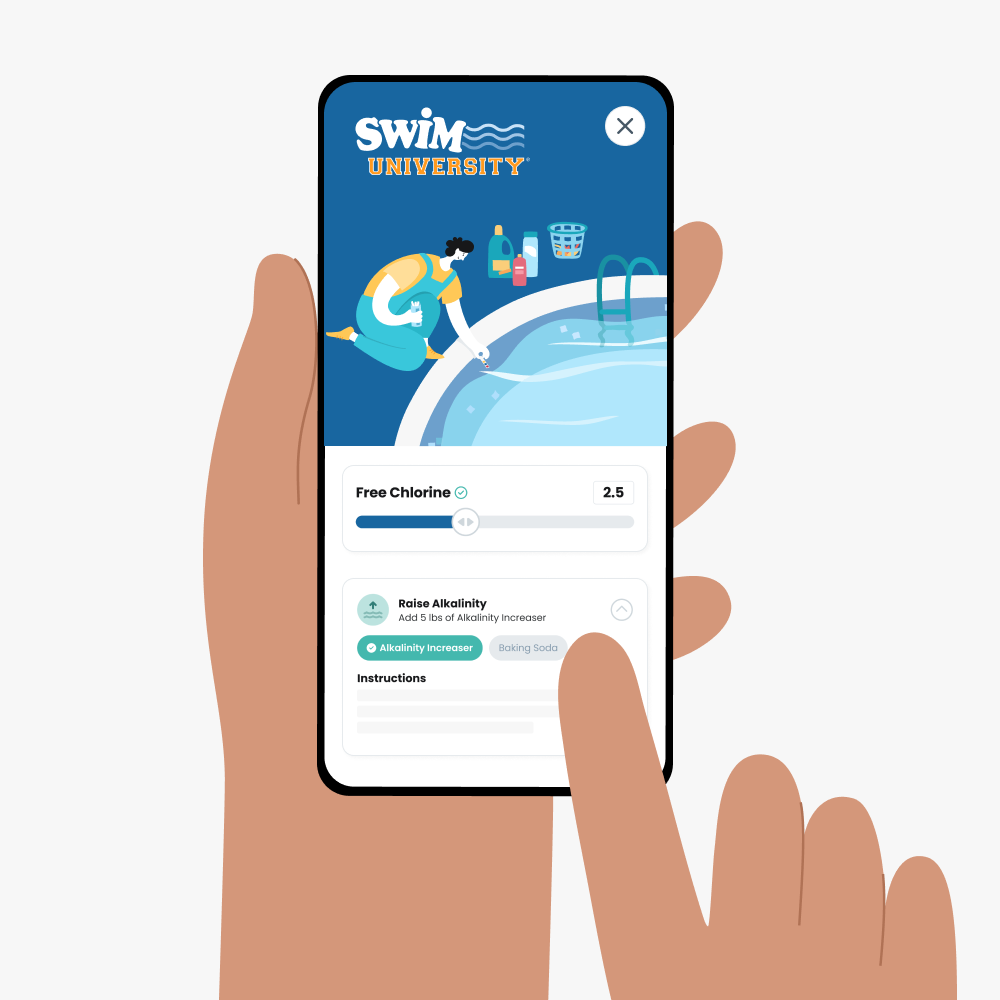
Enter your water test results. Get a custom treatment plan. Know exactly what chemicals to add to keep your pool clear.
Opening Timeline for an Algae-Filled Pool (48 to 72 Hours)
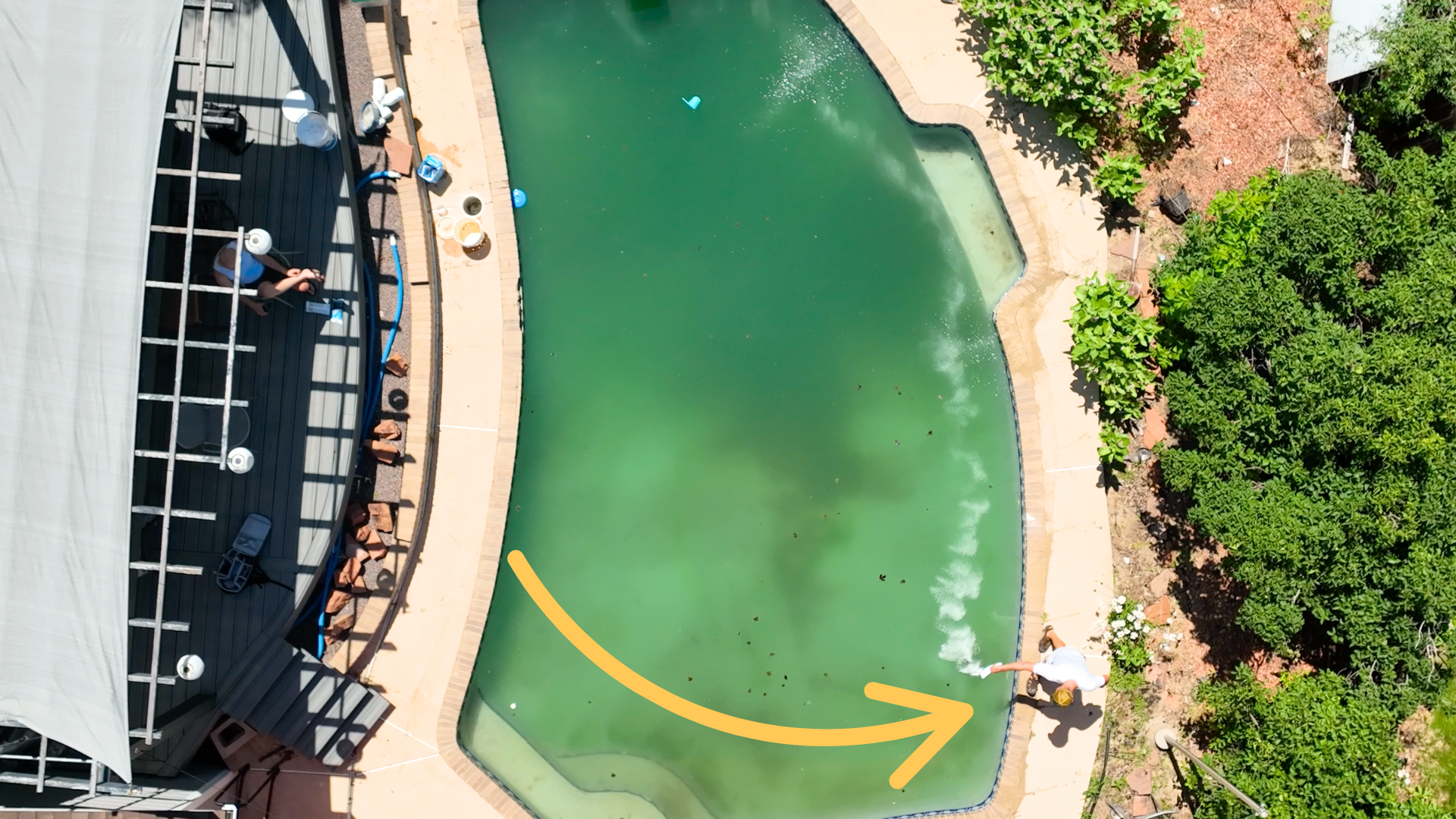
If you removed your cover and found green water, you’ll need extra time to treat it properly. Remove your cover and winter plugs and inspect and set up your equipment. Then follow these steps to clear a green pool after opening.
Step 1: Remove Debris and Brush (Afternoon)
Remove as much debris as possible with a skimmer net. Brush the pool walls, floor, steps, and any other surface the algae may be clinging to.
If you have a concrete pool, use an algae brush with stainless-steel bristles for this task. Algae is tough and stubbornly clings to pool surfaces, so a heavy-duty brush is better than soft nylon bristles for removing it.
Step 2: Vacuum on Waste (Optional)
If there’s dirt or sludge at the bottom of your pool, manually vacuum this out on the waste setting. You’ll kill most of the algae with a high chlorine dose later. Vacuuming out concentrated areas now can help speed up the process. Here’s a guide to vacuuming if you need help.
Step 3: Shock Your Pool (Evening)
Shocking your pool with chlorine shock will kill algae. For the best results, use a shock that contains at least 70% available chlorine (calcium hypochlorite), but use dichlor instead if you have a salt water or fiberglass pool. Adding shock at night prevents it from burning up in the sun.
One pound (0.45 kg) of shock treats 10,000 gallons (37,854 L) of pool water. That’s a normal shock treatment if your pool wasn’t green. Since it is green, you need to double, triple, or quadruple the dosage depending on how much algae is in the water.
For example, if you have a 20,000-gallon (75,708 L) pool and your water is dark green, you’d need 6 bags of shock (a triple dose).
Step 4: Run Your Filter Overnight
After shocking your pool, run your filter system for at least 8 hours overnight, ideally 24 hours. Make sure you clean or backwash your filtration system periodically. The filter will pick up a lot of algae, so it can clog quickly.
Step 5: Check Your Water Color (Morning)
Check your pool in the morning. If the pool is still green or teal, hit it again with the same amount of shock the following night. If your pool is cloudy blue, you successfully killed all the algae in the water.
Step 6: Add Clarifier or Flocculant (Optional)
To clear up your pool more quickly after shocking, use a clarifier or flocculant. This will help clump particles together, making it easier to filter or vacuum them out. Flocculant is more powerful than clarifier, but you’ll need to be able to vacuum on the waste setting. Check out our guide on flocculant for more information.

A fast-acting formula that drops cloudy water particles to the bottom of the pool so you can vacuum it out. Safe for all pools.
Step 7: Balance and Add Sanitizer
Once the water is relatively clear, test and adjust your pH and alkalinity. Test and balance your other chemicals, like stabilizer and calcium hardness, and set up your automatic chlorinator, if you have one, or add salt if you have a salt water pool. The pool should be swim-ready once chlorine levels drop back to the normal range of 1 to 3 PPM.
How Long Before You Can Swim After Opening
Wait at least 24 hours after shocking before swimming. Your chlorine levels need to drop back to the safe swimming range of 1 to 3 PPM. Test your water with test strips before anyone enters the pool.
If you used calcium hypochlorite (cal-hypo) shock, wait at least 8 hours minimum. Some pool owners wait longer if chlorine levels are still elevated. Never swim when chlorine levels exceed 5 PPM.
For algae-treated pools, wait until the water is completely clear and the chlorine reads between 1 and 3 PPM. This usually takes 24 to 48 hours after your final shock treatment.
What Chemicals Do You Need When Opening?
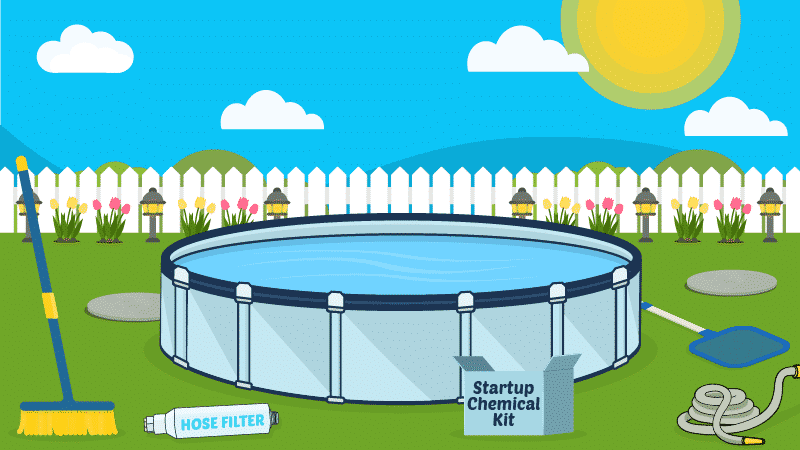
Your start-up chemical kit should include pH increaser,
Once you’ve shocked your pool, you can adjust your other levels. Add chemicals in this specific order: alkalinity first, then pH, then sanitizer, and finally stabilizer and calcium hardness. Wait at least 20 minutes between adding each chemical to allow proper circulation.
Always wear safety goggles and chemical-resistant gloves when handling pool chemicals. Never mix chemicals together. Store them in their original packaging in a cool, dry place away from children and pets.
How Many Shock Bags for Pool Opening?
Use two pounds (0.9 kg) of shock per 10,000 gallons (37,854 liters) for a standard double shock at opening. Most shock bags hold 1 pound (0.45 kg), so you’ll need 2 bags for a 10,000-gallon pool.
For a 15,000-gallon (56,781 liter) pool, use three pounds (1.4 kg) of shock. For a 20,000-gallon (75,708 liter) pool, use four pounds (1.8 kg). This double-shock treatment kills algae spores and bacteria more effectively than a single dose.
If you have visible algae when you open, triple the shock amount. That means three pounds (1.4 kg) per 10,000 gallons (37,854 liters). For severe algae issues, some pool owners successfully use only liquid chlorine instead of bagged shock.
Should You Shock Your Pool When Opening?
Yes, always shock your pool during the opening process. Even if your water looks clear, algae spores and bacteria can be present. A double shock treatment at opening kills these contaminants before they become visible problems.
Run your pump for at least 8 hours after shocking to fully circulate the shock. Then retest your water and adjust chlorine levels back to the normal range of 1 to 3 PPM before swimming.
What’s the Average Cost to Open a Pool?
Pool opening costs vary significantly depending on whether you do it yourself or hire professionals. Professional pool opening services typically cost between $200 and $500, depending on your location and pool size.
The DIY cost ranges from $50 to $150 for chemicals and supplies. This includes start-up chemicals, shock, test strips, and any replacement equipment like O-rings or gaskets. If you already have most of the supplies from previous seasons, you may spend only $30 to $60 on shock and start-up chemicals.
Key Takeaways
- Clean or mildly cloudy pools take 8 to 24 hours to open and be swim-ready, while green algae-filled pools require 48 to 72 hours of treatment.
- Always shock your pool during opening with a double dose of chlorine shock, even if the water looks clear.
- Run your filter for at least 24 hours after shocking to circulate chemicals and remove dead algae or contaminants from the water.
- Wait until chlorine levels drop to 1-3 PPM before swimming, typically 24 hours after shocking or 8 hours minimum for cal-hypo shock.
- Add chemicals in the correct order: alkalinity first, then pH, then sanitizer, then stabilizer and calcium hardness, waiting at least 20 minutes between each addition.
- DIY pool opening costs $50-$150 for supplies, while professional services run $200-$500.
3 Ways We Can Help With Your Pool
- The Pool Care Handbook: An illustrated guide to DIY pool care, including water chemistry, maintenance, troubleshooting, and more.
- The Pool Care Video Course: You’ll get 30+ step-by-step videos and a downloadable guide with everything you need to know about pool maintenance.
- The Pool Care App: Enter your water test results. Get a custom treatment plan. Know exactly what chemicals to add to keep your pool clear.