Every pool is different. Get a free step-by-step plan for yours.
Get My Free PlanIf you’ve got cloudy pool water and you want to clear it up fast,
Here’s a quick guide on the difference between flocculant and clarifier, and how to use flocculant to clear cloudy water. You can watch the quick video below. Or keep reading for the complete
An illustrated, step-by-step guide to taking care of your pool yourself. Works for chlorine and saltwater pools.
Pool flocculant, also known as pool floc, clumps together the tiny particles in your pool that cause cloudy water. Once those particles have coagulated, the larger clumps sink to the bottom of your swimming pool, where they’re vacuumed out.
Here’s the

A fast-acting formula that drops cloudy water particles to the bottom of the pool so you can vacuum it out. Safe for all pools.
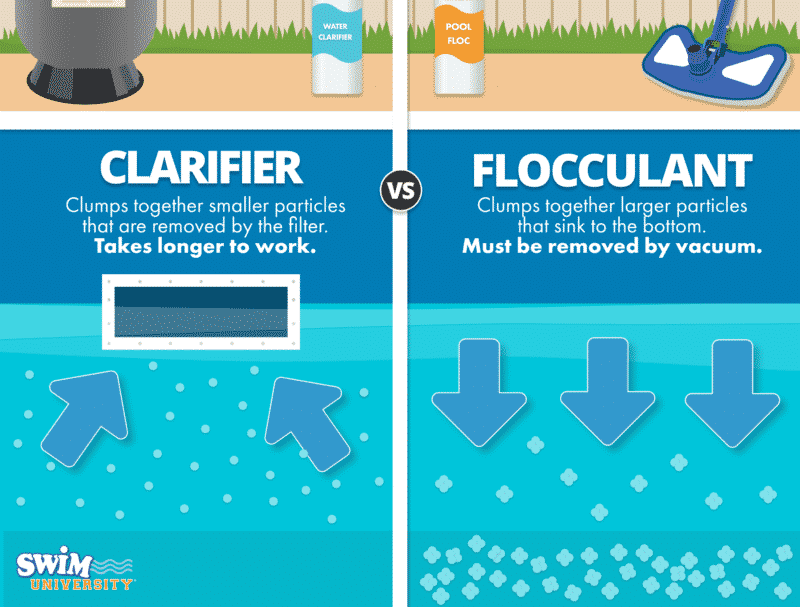
In many cloudy water situations,
Before you opt for a
Pool flocculant can clear up your cloudy pool water in 1 or 2 days. Though it works faster than pool clarifiers, it will need 8 to 16 hours to clump together the particles before you can vacuum. Add flocculant to your pool with your filter on “recirculate.” Then let the flocculant sit overnight with your pool pump off. Once it has settled to the bottom of your pool, use a manual vacuum to remove all of the coagulated particles.
Before you use
Turn your sand filter or DE filter multiport valve to “recirculate.” Do not allow
Your pH should be between 7.4 and 7.6 before adding
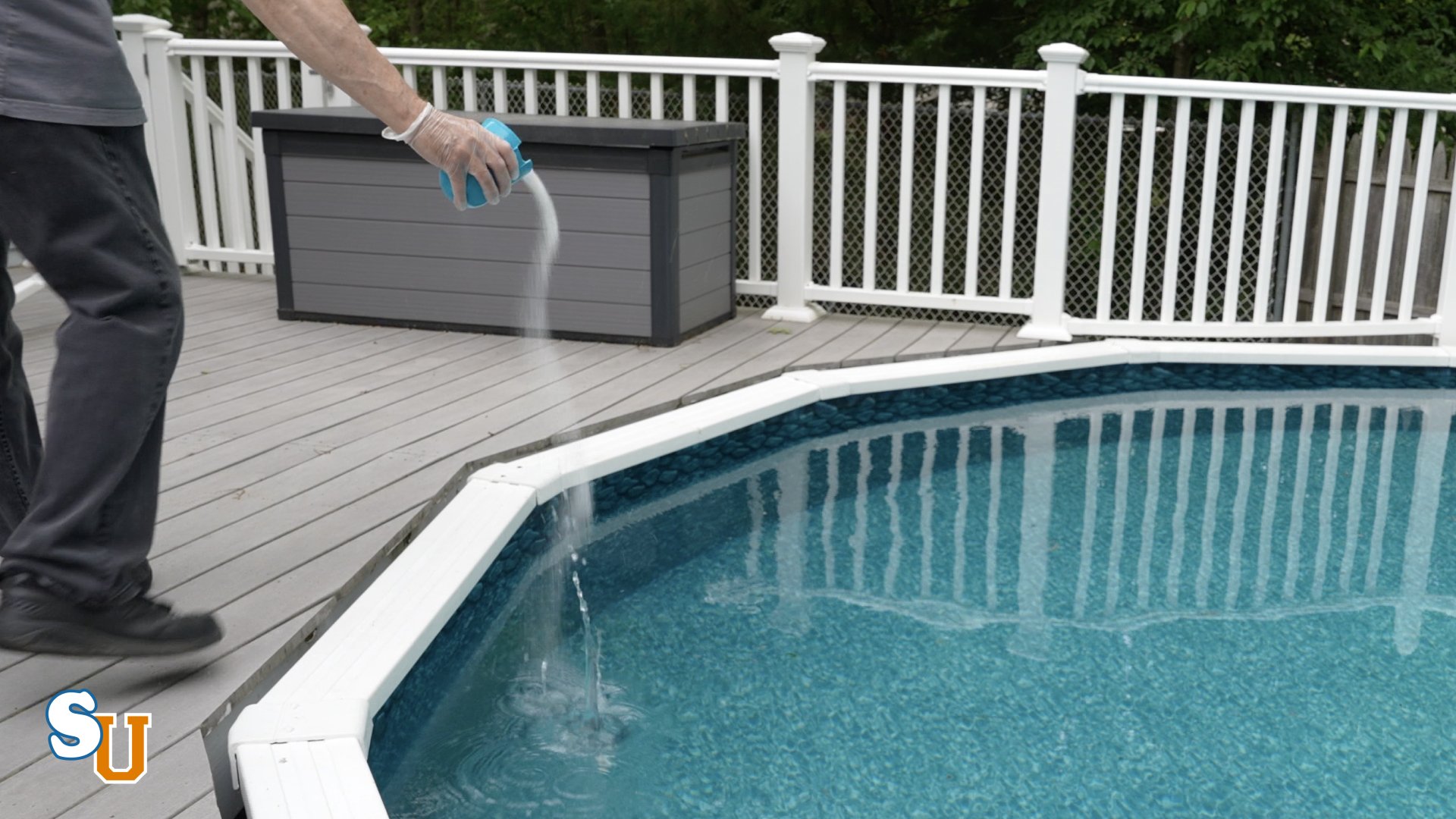
Add the correct amount of flocculant based on your size pool. If you need help figuring out your pool’s volume, you can use a pool calculator to help you. Be sure to read the manufacturer’s instructions before adding any chemical to your water.
Pick your pool shape and enter its dimensions. The volume updates as you type.
Run the pool pump for two hours to circulate the floc throughout the water. Remember to keep your filter set to “recirculate,” not “filter.”
Turn off your pump and allow the pool to sit for at least eight hours. This is easiest to do overnight. If you have an automatic timer set on your system, remember to turn it off.
Set your pool filter to ”Waste” and connect your manual vacuum. If you don’t have a multiport valve, open your filter’s drain port and let the water drain out as you vacuum. And if you need help vacuuming your pool, be sure to check out our guide on How To Use A Manual Pool Vacuum.
As you vacuum the particle clumps from the bottom of your pool, the movement may stir up the particles and cloud your pool again. If this happens, take a break, allow the particles to settle, then begin vacuuming again. Try to move slowly. And you may need to vacuum two or three times to remove all the clumps.
If your water level has gone down (it likely will), use a garden hose with a filter to add fresh, clear water and bring the level back up where it needs to be. You can also keep the hose in the pool while you’re vacuuming, though this may also stir up the particles.
Because you’ve removed and replaced water in your pool, you’ll need to rebalance your water chemistry. Test your pool water and adjust your Alkalinity and pH. Once those levels are balanced, add chlorine. Be sure to run your filter system normally when rebalancing your water.
If you want to quickly clear up your cloudy water (like for a pool party) or if you’ve got a really cloudy pool, use
If your pool is just a little cloudy, opt for the pool clarifier. You can use this in any situation with any filter setup. It’s just not as powerful as floc.

Clears cloudy pool water by combining particles, making it easier for your filter to remove. Great for all pools. Also compatible with salt water pools.
Looking for more help using
No, you shouldn’t swim in cloudy pool water. A cloudy pool is full of contaminants that can cause eye irritation. There’s also an increased risk of drowning since visibility is limited. Avoid swimming in your pool until the water is cleared up.
If you have cloudy water but your water chemistry is balanced (pH, alkalinity, and chlorine levels) and your filters are clean, add
Like any chemical, you should never add algaecide and
Yes, you can use Aluminum Sulfate, also known as Alum Floc, as a
Yes! Using too much
If you end up constantly needing to use
Answer a few questions and we'll tell you what to test, what to add, and when.
Get My Free Plan
Matt is the founder of Swim University. He's been in the pool and spa industry since 1996. His mission is to make pool and hot tub care easy. Each year, he continues to help people with water chemistry, cleaning, troubleshooting, and more.
You know you have to add chemicals to your pool, but how much? Here’s a quick guide on how much of each pool chemical you need to add.
A pool chlorinator is an easy way of automatically dispensing chlorine into your pool. Here's what to know about using one in your pool.
Does the type of pool shock you use make a difference? If you're not using calcium hypochlorite to shock your pool, you may want to reconsider your choice.
A chlorine free pool? How is that even possible? With one of the many alternatives available to sanitize your pool.
Learn how to shock a pool, which type of shock to use, and how much to add. Get the step-by-step guide to safe, effective pool shocking.
Need to lower the cyanuric acid in your pool? Here's the guaranteed way to bring down your CYA levels in your pool water.


 Save this in The Pool Care App


