


Do Pool Leaf Vacuums Work and Are They Worth It?

If your pool is surrounded by trees or you’re constantly battling leaves in the water, a pool leaf vacuum is the most effective tool for cleanup. A standard vacuum head can handle dirt and fine debris just fine, but throw a pile of soggy leaves at it and it’ll clog in minutes.
A pool leaf vacuum is affordable and easy to use. But it’s not perfect, and there are better ways to prevent leaves from settling on the pool floor.
Whether you’re dealing with a fall leaf dump or cleaning up after a storm, knowing how these vacuums work and how to use them will help you decide whether they’re worth it and whether they’ll work for you.

This is the ultimate guide to keeping your pool sparkling clean throughout the year that contains everything you need to know about taking care of your pool the right way. Including saltwater pools.
How a Pool Leaf Vacuum Works
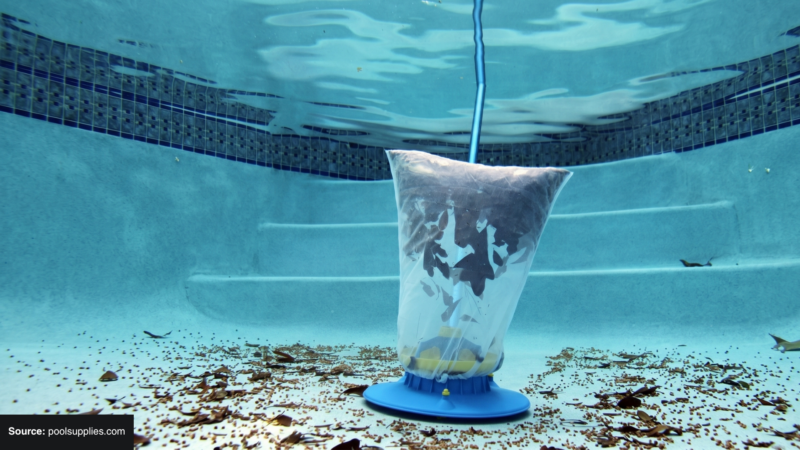
Most pool leaf vacuums (also called a “leaf bagger” or “leaf eater”) use water pressure from a standard garden hose to create suction and vacuum up leaves from the pool floor. You attach it to a garden hose and a telescopic pole, and when you turn on the water, small jets shoot water upward inside the vacuum head. That water movement creates a low-pressure zone that pulls leaves and debris up into a mesh bag attached to the top (this is called a Venturi effect).
The bottom of the vacuum is a wide, flat plastic chassis with jet nozzles that create suction, swivel wheels, and brushes. A large “mouth” allows leaves and debris into the mesh bag.
The whole thing runs on water pressure from your hose. No pump connection, no electricity, and no batteries required for the basic models. That also means it adds a small amount of fresh water to your pool while you clean, which is usually not a problem.
The mesh bag is the key difference from a regular vacuum. It’s designed to catch large, bulky debris like leaves, twigs, and acorns without clogging the way a standard vacuum head would.
What’s the Best Type of Pool Leaf Vacuum
There are two types of leaf vacuums: garden hose-powered leaf vacuums and battery-powered leaf vacuums. I recommend the garden hose variety since they’re the most affordable.
Garden Hose Leaf Vacuums (Venturi Leaf Bagger)
These are the most common and most affordable options. You attach the vacuum head to a telescopic pole, connect a garden hose, and turn on the water. The Venturi effect does the rest, pushing leaves up into the mesh bag.

This water-powered leaf vacuum connects to your garden hose to create powerful suction that quickly pulls leaves and debris from your pool floor into a large-capacity mesh bag.
Garden hose leaf vacuums are typically priced between $30 and $50. They work for both above-ground and inground pools. The main downside is that they’re built for bulk debris (like leaves, twigs, and acorns) and won’t capture fine silt or sand, which will pass right through the mesh.
Most of these vacuums work the same, so you don’t need to be concerned about the brand or any special features. They’re also usually all around the same price. Like most pool leaf vacuums, you’ll need to buy the telescopic pole separately.
Battery-Powered Leaf Vacuums
Battery-powered models are self-contained handheld units. They use an internal impeller instead of water pressure to pull leaves into a built-in bag. These are easier to maneuver than garden hose leaf vacuums. Some models can be flipped to skim floating leaves off the surface, too.

The trade-off is that you need to keep them charged or stocked with batteries, depending on the model. And they’re usually 3-4 times the price, so I only recommend these to pool cleaning professionals or if you need to target specific spots like stairs and corners.
How to Use a Pool Leaf Vacuum Step by Step
Leaf vacuums work best after you’ve done a round of light cleanup on your pool surface. Here’s how to use a garden hose-powered pool leaf vacuum for the best results.
Step 1: Skim the Surface First
I always recommend skimming with a skimmer net before using any type of vacuum. Grab a leaf net on a telescopic pole and clear any floating leaves off the surface. Move the net in one continuous direction. Start at one end and work your way across in smooth, overlapping passes.
Step 2: Set Up the Leaf Vacuum
Attach the mesh bag over the white rim of the vacuum head and tighten it. Then connect the vacuum head to your telescopic pole. Finally, connect your garden hose. If you have a fiberglass or gunite pool, remove the bottom brushes from the vacuum head so it moves more easily. Leave the brushes on for vinyl-lined pools to protect the liner.
Step 3: Shut Off the Pool Pump
Shut off the main pump so the water is still. Still water makes it easier to see what you’re vacuuming and prevents the current from pushing leaves around.
Step 4: Lower into the Pool and Turn on the Water
Lower the vacuum slowly into the water before turning on the hose. This prevents the mesh bag from flapping around and stirring up debris. Once it’s resting on the bottom of the pool, go turn on the garden hose.
Step 5: Vacuum Slowly in One Direction
Start at the end of the pool closest to your garden hose spigot. Work your way toward the opposite end in slow, steady passes. Moving too fast kicks up a debris cloud and makes it harder to pick everything up. Patience here makes a real difference in how clean the pool ends up.
Step 6: Empty the Bag Carefully
Before you pull the vacuum out of the water, keep the garden hose running. This prevents leaves from falling back out of the mesh bag as you lift it. Raise the vacuum to the surface, shut off the water, then carry it to a trash can or compost bin. Push the bag through the rim from the inside to empty it.
How to Keep Leaves Out of Your Pool
A pool leaf vacuum is great for cleanup, but the best move is stopping leaves from piling up in the first place.
- Use a mesh leaf net cover. A mesh leaf net stretched across your pool when it’s not in use catches falling leaves before they ever touch the water. You can shake it off as needed instead of vacuuming every few days.
- Skim your pool daily. If leaves are actively falling, skim your pool every day to prevent leaves from sinking to the bottom of your pool.
- Run your pump and check the skimmer basket. Run your pump longer and check your skimmer basket more often during leaf season. Your built-in skimmer will catch some debris on its own, but it can quickly get overwhelmed. Empty the basket at least once a week or more often if it’s filling up fast.

Enter your water test results. Get a custom treatment plan. Know exactly what chemicals to add to keep your pool clear. Saltwater and hot tub compatible.
Key Takeaways
- Pool leaf vacuums use the Venturi effect from a garden hose to pull leaves into a mesh bag without clogging like a regular vacuum head.
- There are two main types: garden hose (Venturi) models, which cost around $30–$50, and battery-powered models, which are more expensive but easier to maneuver.
- Always skim floating leaves first with a leaf net and turn off the pool pump before vacuuming.
- Move the vacuum slowly across the pool floor and keep the hose running when you lift it out, so debris doesn’t fall back into the water.
- A mesh leaf cover over your pool is the single best way to prevent leaves from becoming a bigger problem in the first place. Skimming daily, running your pump more often, and checking your skimmer basket regularly helps, too.