


Stabilized vs. Unstabilized Chlorine: What’s the Difference?

If you’re a new pool owner, all the different chemicals you have to use may be pretty confusing. One of the first things you’ll be looking for is chlorine to clean your pool, only to find that there are two types—stabilized and unstabilized chlorine.
They sound pretty much the same, so how different could they be? And does it really matter whether you use one or the other? In short, yes. It matters a lot. But the first step in choosing which one to use is understanding the differences between them.
This is the ultimate guide to keeping your pool sparkling clean throughout the year that contains everything you need to know about taking care of your pool the right way. Including saltwater pools.
What is Unstabilized Chlorine?
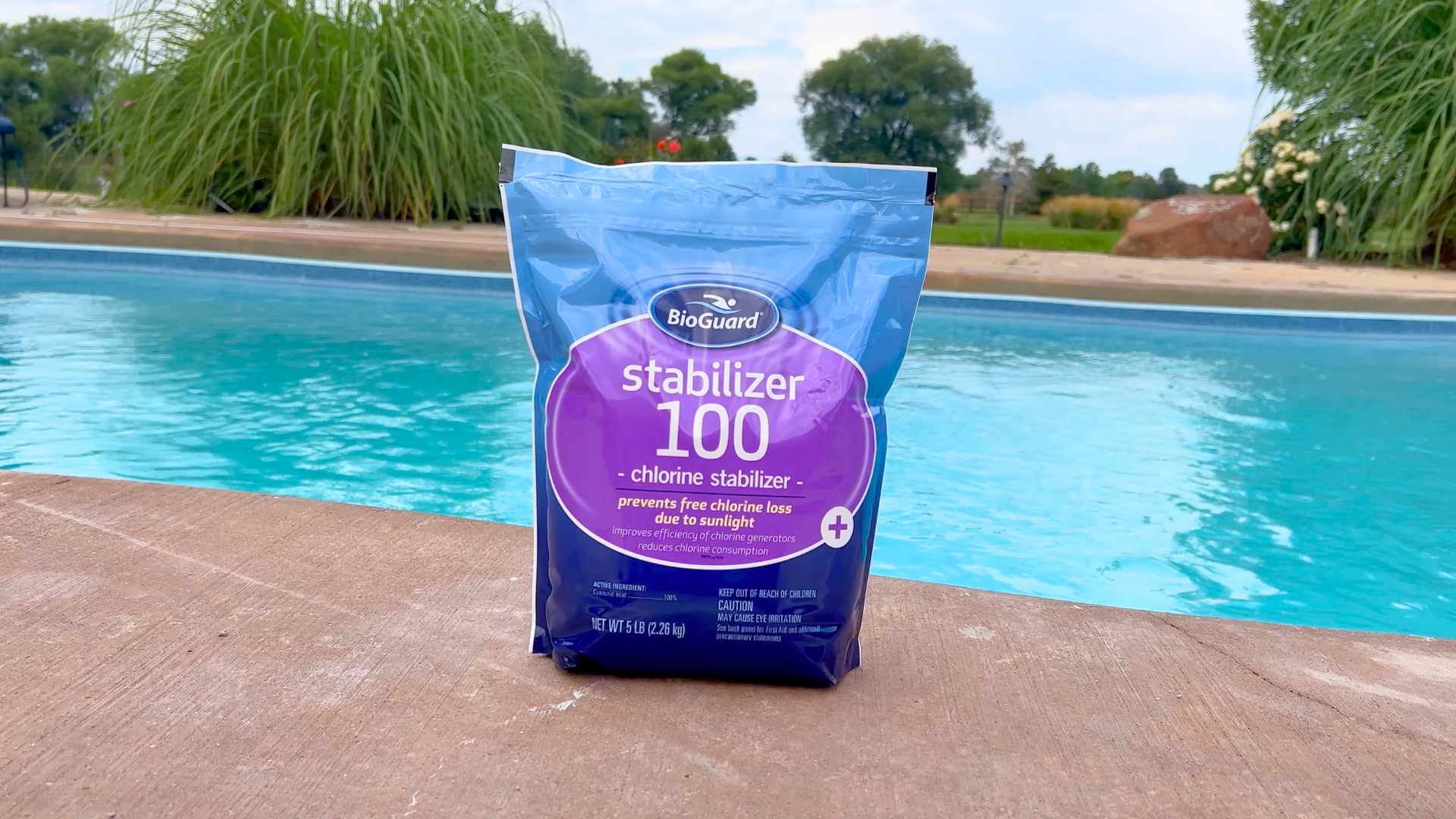
Cyanuric acid stabilizes chlorine, making it last longer in the pool. Without it, chlorine is quickly burned off by the sun’s ultraviolet (UV) rays.
Unstabilized chlorine is simply chlorine that has not had cyanuric acid added to it. This means it dissipates more quickly, you won’t get as much sanitizing power, and you’ll have to add more chlorine more often.
So if it’s vulnerable to the sun, why would you use unstabilized chlorine?
- It works best with indoor pools where you don’t need to worry about the sun.
- It can be used as pool shock.
- It’s ideal for quick doses if your pool is getting heavier than normal use.
Just remember that, because there’s no stabilizer, it won’t remain in your pool for very long. Keep an eye on the chlorine to make sure it stays at 3 parts per million (ppm), and add chlorine as necessary to maintain that level.

What is Stabilized Chlorine?
If unstabilized chlorine doesn’t have cyanuric acid in it, that means … you guessed it! Stabilized chlorine does.
The cyanuric acid helps the chlorine remain in the pool longer, which makes it more effective. You also won’t have to add as much chlorine as often as you would with unstabilized chlorine.
Why use stabilized chlorine?
- It can reduce the amount of chlorine you use in your pool.
- It can help you save money on chlorine.
- It makes caring for your water easier and less time-consuming.
But stabilized chlorine has its downside, too. If cyanuric acid levels get too high, chlorine’s effectiveness will be diminished. You’ll have to dilute your pool water to remedy the situation.

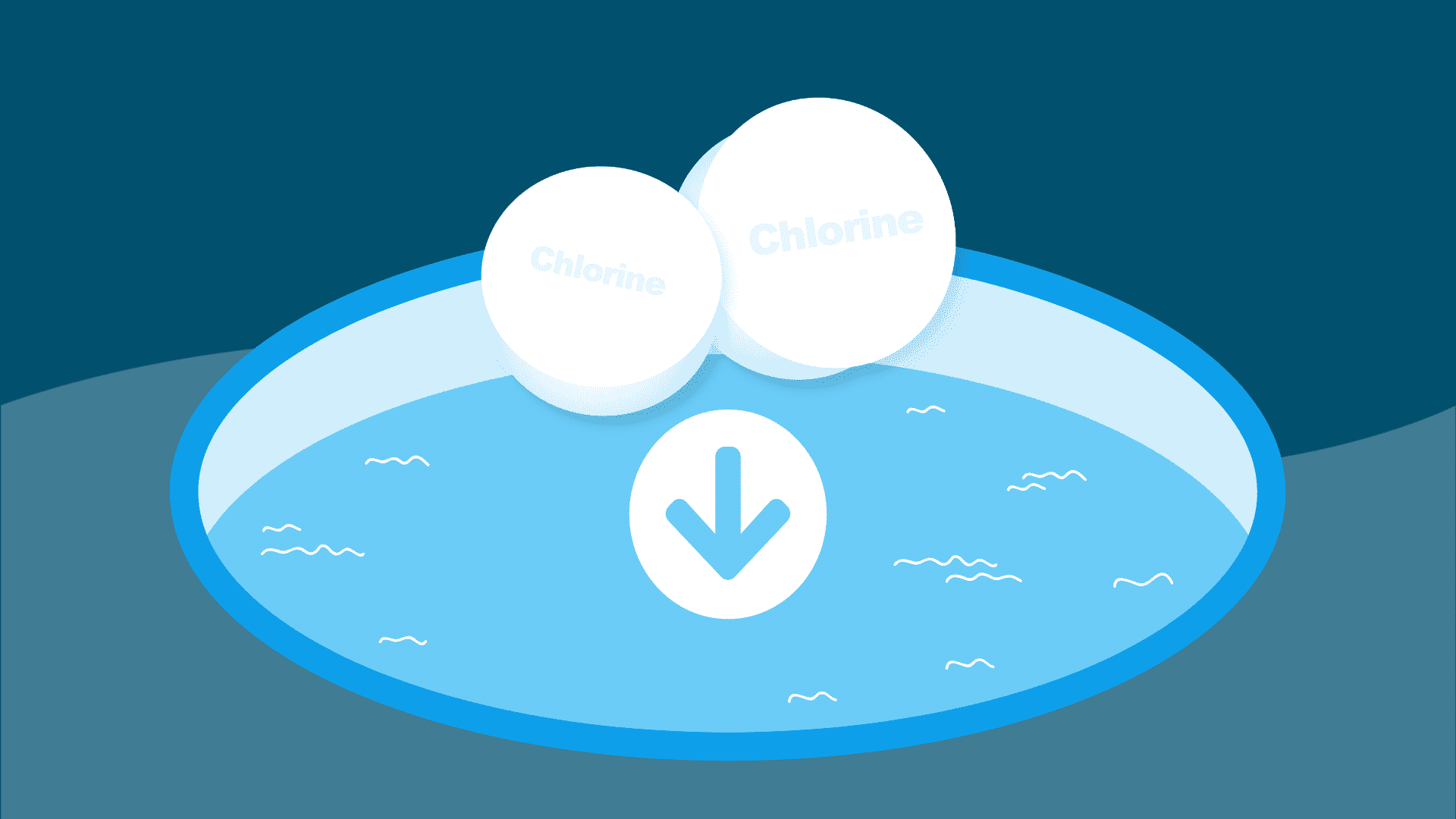
Stock up and save money on chlorine tablets for the season by getting the standard 3-inch stabilized chlorine pucks.
Should You Use Stabilized or Unstabilized Chlorine?
There’s no right or wrong answer here. It all depends on you and your pool. If you have an indoor pool, or find yourself needing to shock your pool pretty often, go with unstabilized chlorine.
But if you have an outdoor pool, and you want to make water maintenance easier on yourself while spending less money, stabilized chlorine tablets are the way to go.
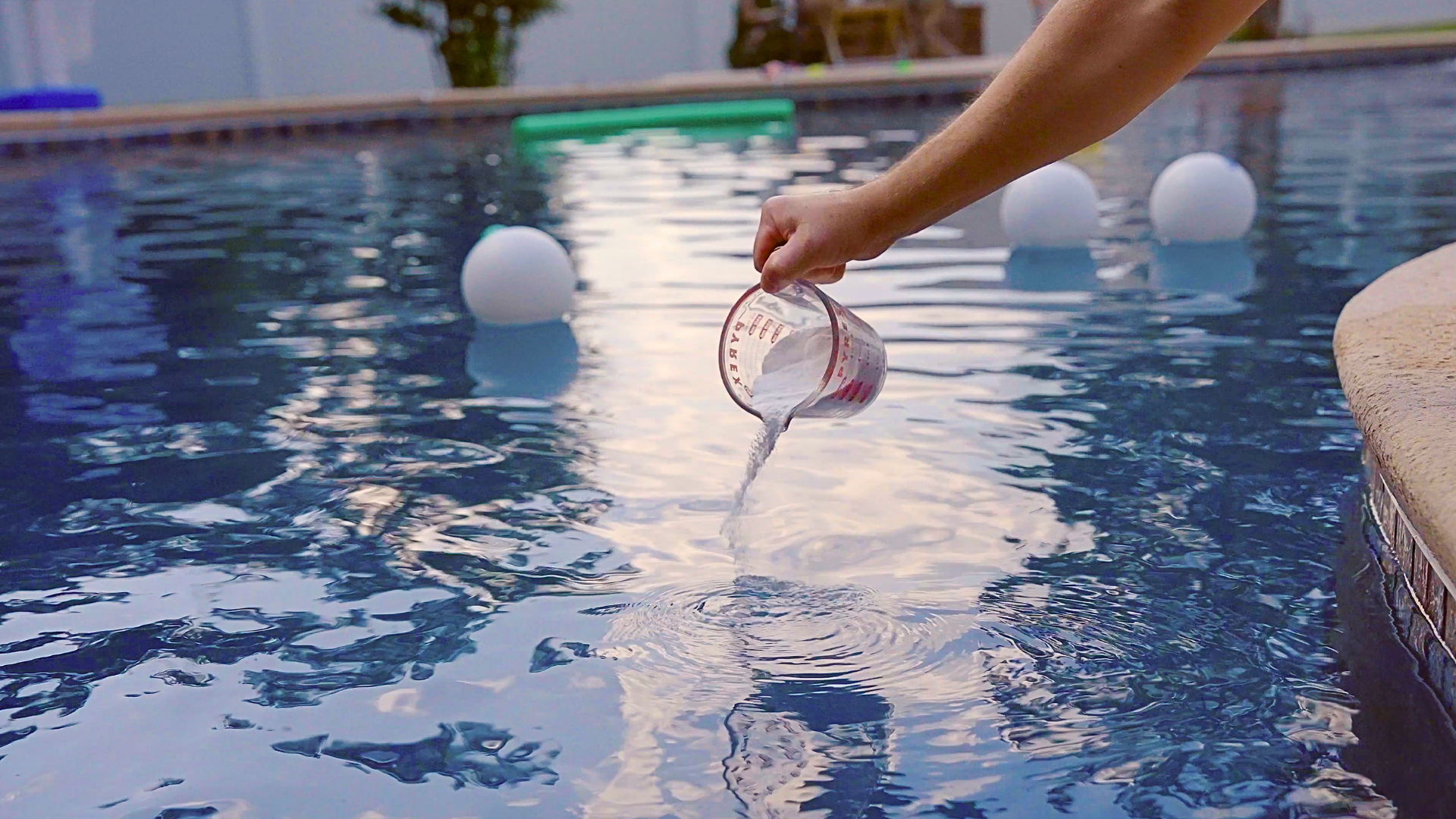
Note: If you use unstabilized chlorine, you can always add cyanuric acid yourself. Just be sure to keep the level between 30 and 50 PPM (60 to 80 PPM for saltwater pools).
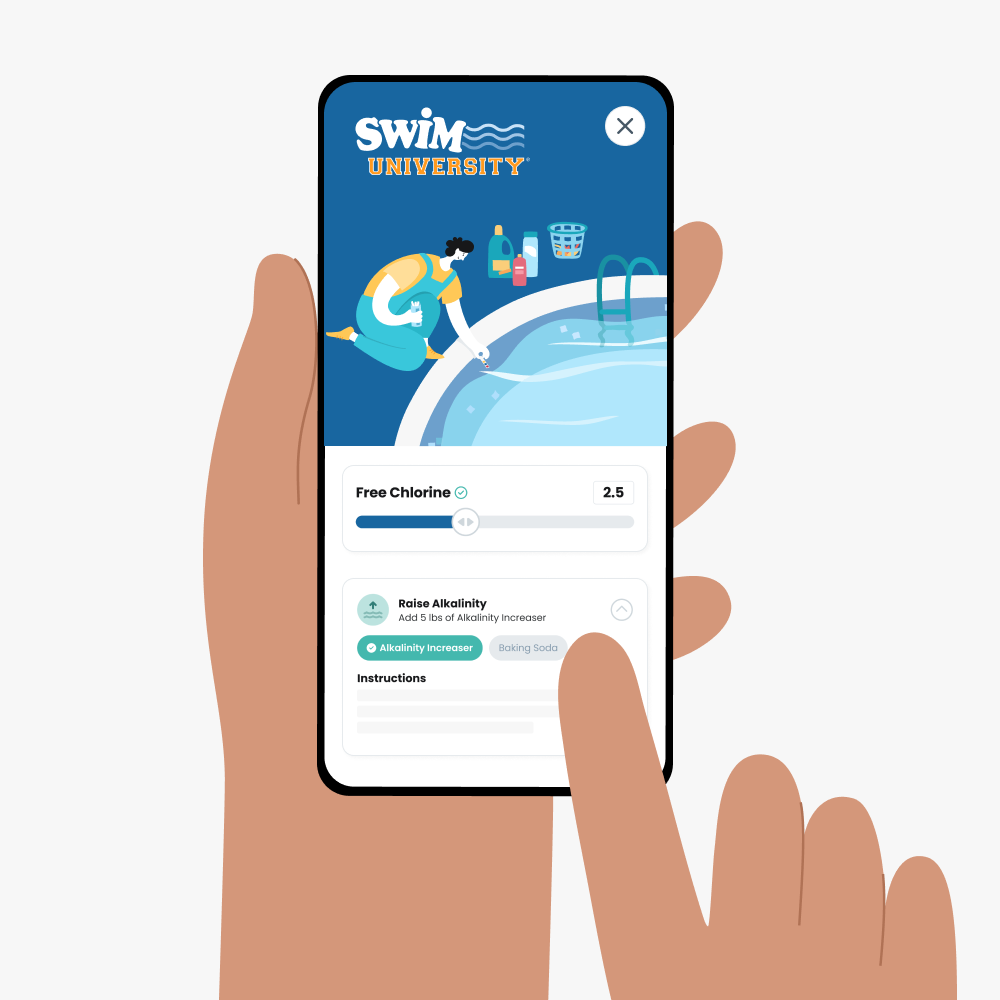
Enter your water test results. Get a custom treatment plan. Know exactly what chemicals to add to keep your pool clear. Saltwater and hot tub compatible.
You could use either stabilized or unstabilized chlorine, and your pool would still be clean, sanitized, and swimmable. All you have to do is choose the one that best suits your pool’s needs.
And now that you know the difference between the two, that choice just got a lot easier.
Key Takeaways
- Stabilized chlorine contains cyanuric acid (CYA), which protects the chlorine from breaking down in the sun’s UV rays. It lasts longer in the water and saves you money over time.
- Unstabilized chlorine does not contain CYA, so it breaks down quickly in sunlight. It’s best for indoor pools, pool shock treatments, and quick sanitation after heavy use.
- Keep your free chlorine at 3 PPM and your cyanuric acid between 30 and 50 PPM (60 to 80 PPM for saltwater pools). Your free chlorine should be about 7.5 percent of your CYA level.
- Too much CYA reduces chlorine’s effectiveness, leading to algae growth and cloudy water. If your levels climb too high, partially drain and refill your pool with fresh water.
- You can add cyanuric acid separately if you use unstabilized chlorine in an outdoor pool. Just test your levels monthly and add stabilizer once or twice per season.