

How Much of Each Chemical to Add to Your Pool

You know you should be adding chemicals to your pool. But exactly how much do you need to add? For example, it only takes about half a pound of
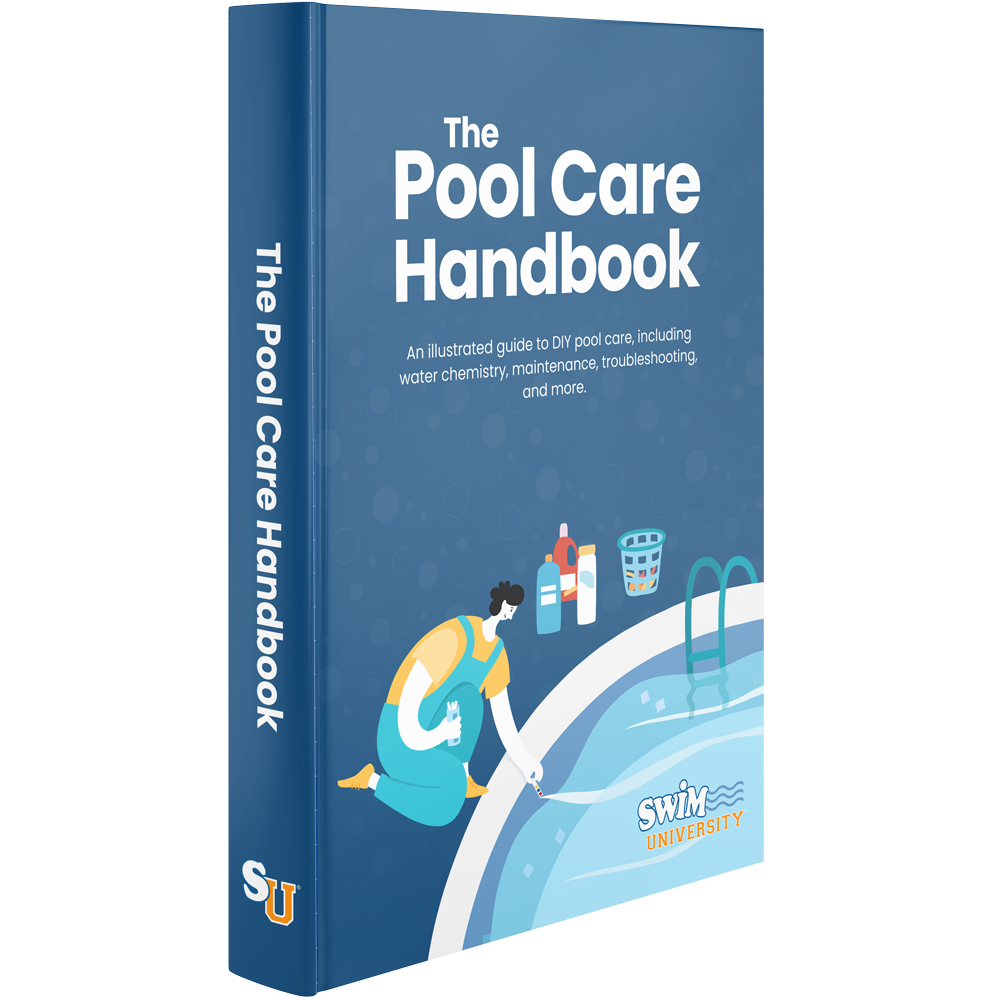
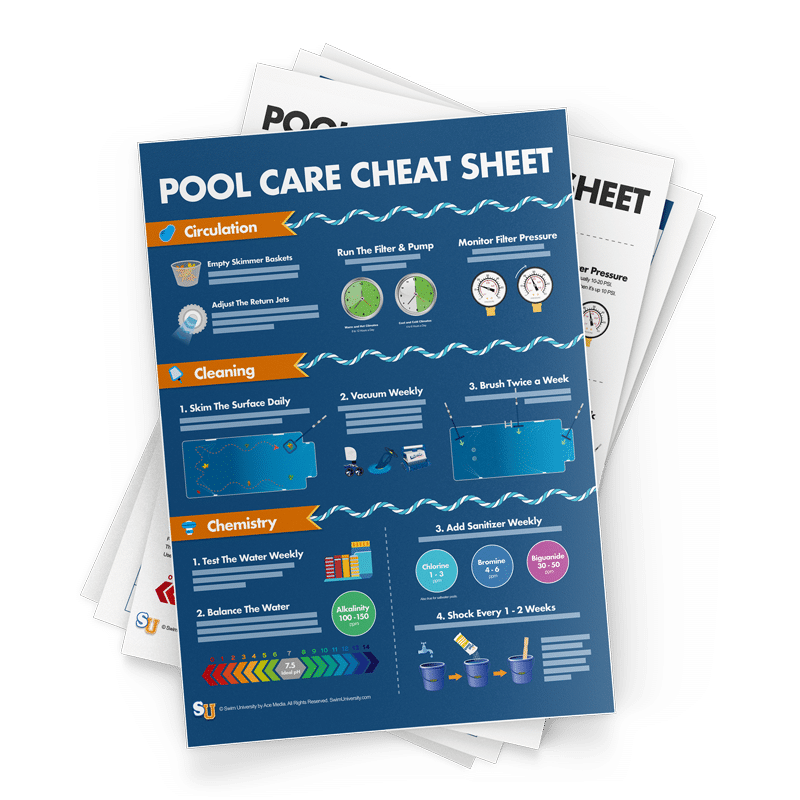
This is the ultimate guide to keeping your pool sparkling clean throughout the year that contains everything you need to know about taking care of your pool the right way. Including saltwater pools.
Here’s The Right Way to Add Chemicals To Your Pool Water
- Test your water first. You won’t know how much you need to add unless you know where your levels are at.
- Add your chemicals in the right order. Make sure you adjust your alkalinity first, then your pH, and finally your chlorine in that order. Each one has a domino effect on the next one, so balancing them in the right order helps each chemical work properly.
- When adding chemicals, keep the filter on and running. This will help them circulate and disperse everything in the water.
- Wait at least 20 minutes between adding chemicals and retest your water between doses. Keep in mind that it will take longer to get a reading on slow-dissolving chemicals, like chlorine pucks.
- Never mix chemicals outside of the pool. It can cause toxic gas or, worse, an explosion.
- Always wear the right safety gear, like gloves, goggles, long clothing, and close-toed shoes.
How Much of Each Chemical You Need to Add to Your Pool
You’ll need to know how many gallons of water your pool holds before adding anything. These dosages apply to regular pool chemicals, like alkalinity or pH Increasers, and their substitutes, like baking soda and soda ash. If you’re curious, here’s how to substitute your pool chemicals with household products.
1. Alkalinity Increaser or Baking Soda
This raises your alkalinity, which should be between 80 and 120 PPM. We usually recommend at least 100 PPM, but 80 is fine.
For every 10,000 gallons of water, you’ll need about 1.5 pounds of Alkalinity Increaser or Baking Soda to raise your alkalinity by 10 PPM. So if you have a 20,000-gallon pool, that’s 3 pounds. And it’s only ¾ of a pound (or 12 ounces) for a 5,000-gallon pool.
For example, let’s say you need to raise your alkalinity by 40 PPM. You’ll need about 6 pounds of alkalinity increaser for a 10,000-gallon pool. Keep in mind that after you raise your alkalinity, your pH might naturally rise with it.

Perfect for raising total alkalinity and pH in your pool.
Alkalinity Calculator
Pick what you’re adding and enter your test results. The dose updates as you type.
 Get exact doses in The Pool Care App
→
Get exact doses in The Pool Care App
→
2. pH Increaser or Soda Ash
This raises your pH. Your pH should be between 7.4 and 7.6. For every 10,000 gallons of water, it takes about half a pound (or 6 to 8 ounces) of pH Increaser or Soda Ash to raise your pH by 0.2.
If you have a 20,000-gallon pool, that’s about a pound or 16 ounces of pH increaser. If you have a 5,000-gallon pool, that’s just 4 ounces. If your pH is really low, say lower than 7, start by adding 1 pound of pH increaser at a time for every 10,000 gallons of water and then retesting your levels.
Keep in mind that your total alkalinity will go up slightly, too. But you’ll notice a greater change in pH.

This is a proven way to make the water less acidic when swimming in pools. This chemical helps maintain the right level of pH.
Soda Ash/pH Increaser Dosing Chart
| Your Starting pH Level | 1000 Gallons (4500 Liters) | 5000 Gallons (19000 Liters) | 10000 Gallons (37500 Liters) | 15000 Gallons (60000 Liters) | 20000 Gallons (75000 Liters) |
|---|---|---|---|---|---|
| 7.2 – 7.4 | 0.6 oz (17 g) | 3 oz (85 g) | 6 oz (170 g) | 9 oz (255 g) | 12 oz (340 g) |
| 7.0 – 7.2 | 0.75 oz (21 g) | 4 oz (113 g) | 8 oz (227 g) | 12 oz (340 g) | 1 lb (454 g) |
| 6.6 – 7.0 | 1.25 oz (35 g) | 6 oz (170 g) | 12 oz (340 g) | 1 lb (454 g) | 1.5 lb (680 g) |
| Under 6.6 | 1.5 oz (43 g) | 8 oz (227 g) | 1 lb (454 g) | 1.5 lbs (660 g) | 2 lbs (907 g) |
3. pH Decreaser or Muriatic Acid
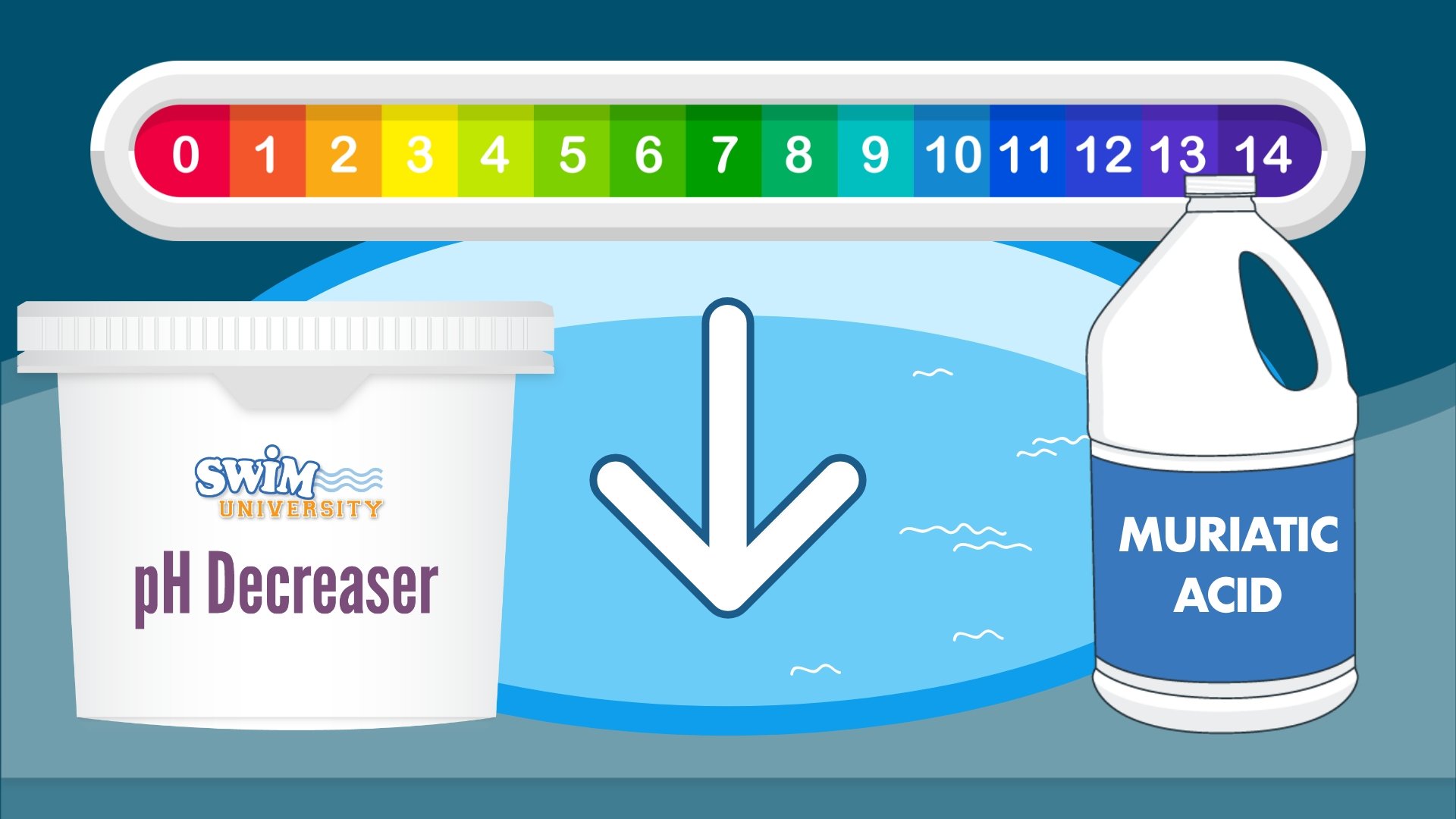
This lowers both your pH and alkalinity. If your pH is a little high, say between 7.8 and 8.0, you’ll need about 12 ounces or ¾ of a pound of
That means you need 1.5 pounds for a 20,000-gallon pool and 6 ounces or ¾ of a cup for a 5,000-gallon pool. If you want to use Muriatic Acid instead, check out our other video since there are a lot more safety precautions needed. 👇
Also, it’s pretty common to have trouble balancing your alkalinity and pH. So be sure to check out our other videos, especially on low and high pH, if you need help getting these levels right.

Use this chemical to lower just the pH level in your pool water.
pH Decreaser Dosing Chart
| Pool Volume in Gallons (Liters) | pH 7.6-7.9 | pH 8.0-8.4 | Above pH 8.4 |
|---|---|---|---|
| 2500 (9464 L) | 2 oz. (57 g) | 4 oz. (113 g) | 6 oz. (170 g) |
| 5000 (18927 L) | 4 oz. (113 g) | 8 oz. (227 g) | 12 oz. (340 g) |
| 10000 (37854 L) | 8 oz. (227 g) | 16 oz. (454 g) | 24 oz. (680 g) |
| 20000 (75708 L) | 16 oz. (454 g) | 32 oz. (907 g) | 48 oz. (1.4 kg) |
4. Chlorine
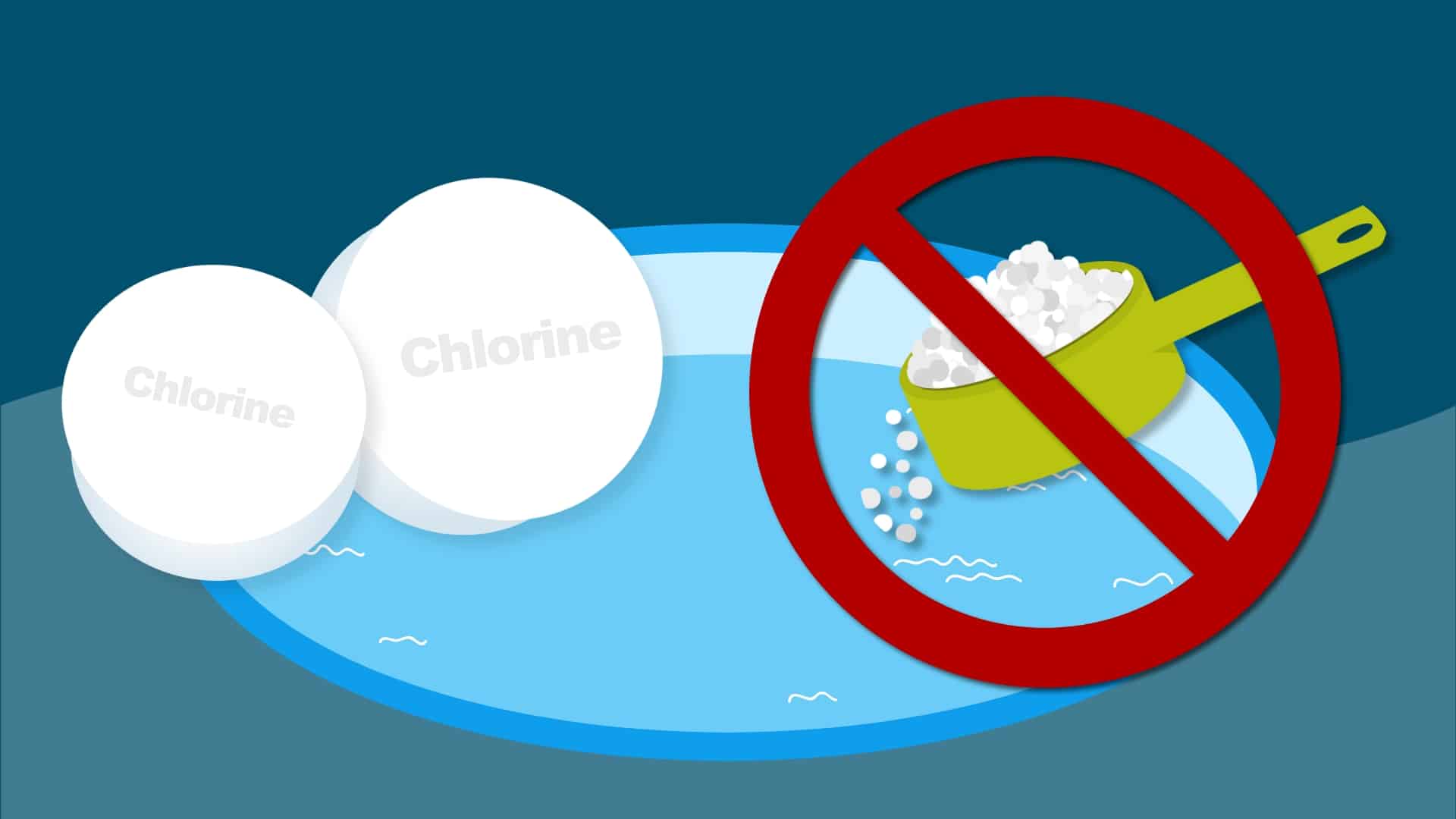
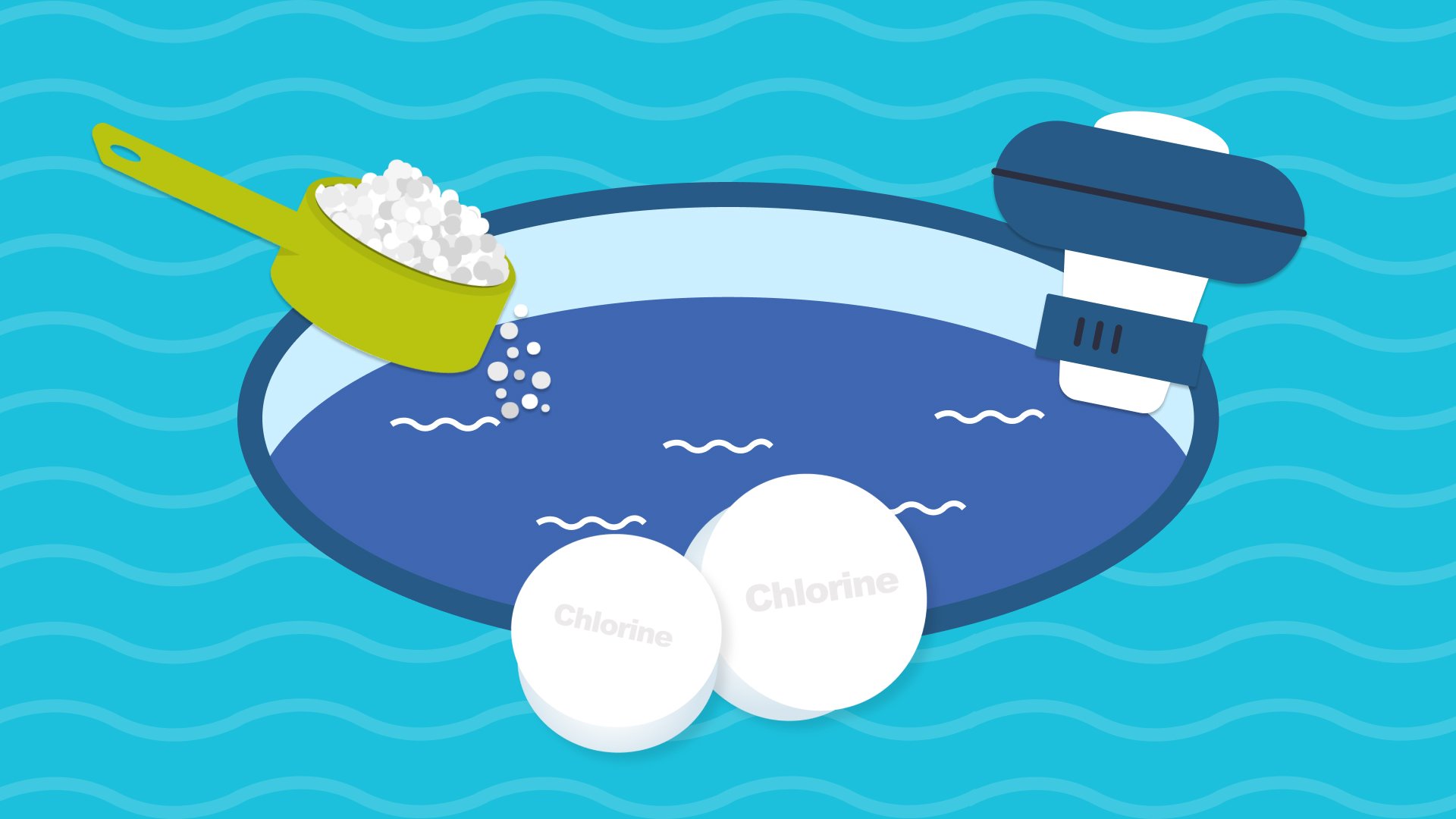
Your free chlorine should be between 1 and 3 PPM, with 3 PPM being ideal. Here’s a dosing chart for how much chlorine to add each week. This assumes your chlorine levels aren’t completely out of range and that you just need to add a maintenance dose.
- For chlorine granules, you’ll need 3 to 4 ounces or about half a cup for every 10,000 gallons of water.
- For 3-inch chlorine tablets, add 2 tablets for every 10,000 gallons of pool water. If your pool holds 10,000 gallons of water or more, 3-inch tablets work great. But they can quickly overwhelm smaller pools, so opt for 1-inch tablets, granules, or liquid chlorine instead.
- Add a gallon of liquid chlorine for every 10,000 gallons of water. This is for pool-grade liquid chlorine, not household bleach, which is less strong.
| Chlorine Type | 5000 Gallons (18927 Liters) | 10000 Gallons (37854 Liters) | 20000 Gallons (75708 Liters) |
|---|---|---|---|
| Granules | 2 oz (4 Tbsp) | 3–4 oz (6–8 Tbsp, 1/2 Cup) | 7 oz (Almost 1 Cup) |
| Tablets (3-Inch) | 1 Tablet (Or Use 1-Inch Tabs) | 2–3 Tablets | 4–5 Tablets |
| Liquid | 1/2 Gallon (1.89 Liters) | 1 Gallon (3.79 Liters) | 2 Gallons (7.57 Liters) |
5. Cyanuric Acid
This is also known as Chlorine Stabilizer or CYA. You do not need to add this if you’re using trichlor chlorine tablets or dichlor chlorine granules, as these already contain CYA. If you’re using bleach or liquid chlorine, you’ll need to add this to your water to help protect your chlorine from breaking down in the sun.
Your levels should be between 30 and 50 PPM. If there is no CYA in the water, you’ll need about 3 pounds of stabilizer to bring your levels up to 30 PPM in a 10,000-gallon pool.
Add this slowly and in small batches to your water. If you add too much, the only way to lower your CYA levels is to partially drain and refill your pool with fresh water.
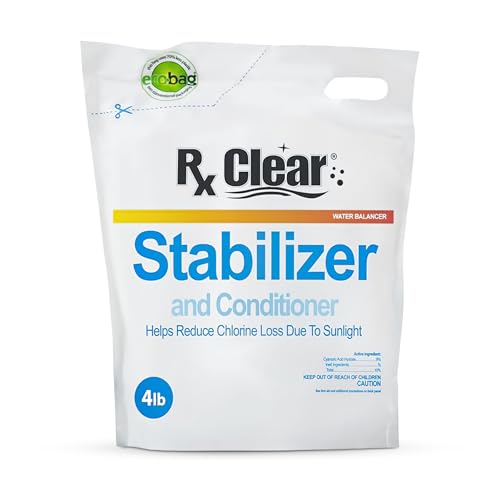
Keep your chlorine from being burned off too quickly by the sun's UV rays. CYA will help you keep a better chlorine reading in your pool.
Chlorine Stabilizer Calculator
Pick the stabilizer you’re using and enter your numbers. The dose updates as you type.
Get exact doses in The Pool Care App
→
Stabilizer (Cyanuric Acid/CYA) protects your chlorine from the sun. Most pools run best at 30–50 ppm CYA (60–80 ppm if you have a salt system).
6. Calcium Hardness Increaser
This helps protect your pool’s surfaces and equipment in the long run. The calcium hardness level for vinyl liners or fiberglass pools should be between 175 and 225 PPM, and for concrete or plaster pools, it should be between 200 and 275 PPM.
To raise your calcium hardness by 50 PPM, you’ll need to add about 5 pounds of increaser for every 10,000 gallons. But if you take your pool down at the end of the season, you don’t need to worry about adding this since poor calcium levels do more damage over time. Unfortunately, the only way to lower your calcium is by partially draining and refilling your pool with fresh, filtered water.

Adding calcium hardness to your pool water will protect and extend the life of your pool walls including vinyl, fiberglass, and concrete.
Calcium Hardness Increaser Dosing Chart
| Increase By (ppm) | 1000 Gallons (3785 L) | 5000 Gallons (18927 L) | 10000 Gallons (37854 L) | 15000 Gallons (56781 L) | 20000 Gallons (75708 L) | 50000 Gallons (189271 L) |
|---|---|---|---|---|---|---|
| 10 ppm | 2 oz. (57 g) | 10 oz. (283 g) | 1 lb. 4 oz. (567 g) | 1 lb. 14 oz. (850 g) | 2 lbs. 8 oz. (1.1 kg) | 3 lbs. 2 oz. (1.4 kg) |
| 20 ppm | 4 oz. (113 g) | 1 lb. 4 oz. (567 g) | 2 lbs. 8 oz. (1.1 kg) | 3 lbs. 12 oz. (1.7 kg) | 5 lbs. (2.3 kg) | 6 lbs. 4 oz. (2.8 kg) |
| 30 ppm | 6 oz. (170 g) | 1 lb. 14 oz. (850 g) | 3 lbs. 12 oz. (1.7 kg) | 5 lbs. 10 oz. (2.6 kg) | 7 lbs. 8 oz. (3.4 kg) | 9 lbs. 6 oz. (4.3 kg) |
| 40 ppm | 8 oz. (227 g) | 2 lbs. 8 oz. (1.1 kg) | 6 lbs. (2.7 kg) | 7 lbs. 8 oz. (3.4 kg) | 10 lbs. (4.5 kg) | 12 lbs. 8 oz. (5.7 kg) |
| 50 ppm | 10 oz. (283 g) | 3 lbs. 2 oz. (1.4 kg) | 6 lbs. 4 oz. (2.8 kg) | 9 lbs. 6 oz. (4.3 kg) | 12 lbs. 8 oz. (5.7 kg) | 15 lbs. 10 oz. (7.1 kg) |
| 60 ppm | 12 oz. (340 g) | 3 lbs. 12 oz. (1.7 kg) | 7 lbs. 8 oz. (3.4 kg) | 11 lbs. 4 oz. (5.1 kg) | 15 lbs. (6.8 kg) | 18 lbs. 12 oz. (8.5 kg) |
| 70 ppm | 14 oz. (397 g) | 4 lbs. 6 oz. (2.0 kg) | 8 lbs. 12 oz. (4.0 kg) | 13 lbs. 2 oz. (6.0 kg) | 17 lbs. 8 oz. (7.9 kg) | 21 lbs. 14 oz. (9.9 kg) |
| 80 ppm | 1 lb. (454 g) | 5 lbs. (2.3 kg) | 10 lbs. (4.5 kg) | 15 lbs. (6.8 kg) | 20 lbs. (9.1 kg) | 22 lbs. 8 oz. (10.2 kg) |
| 90 ppm | 1 lb. 2 oz. (510 g) | 5 lbs. 10 oz. (2.6 kg) | 11 lbs. 4 oz. (5.1 kg) | 11 lbs. 4 oz. (5.1 kg) | 16 lbs. 4 oz. (7.4 kg) | 25 lbs. (11.3 kg) |
| 100 ppm | 1 lb. 4 oz. (567 g) | 6 lbs. 4 oz. (2.8 kg) | 12 lbs. 8 oz. (5.7 kg) | 18 lbs. 12 oz. (8.5 kg) | 25 lbs. (11.3 kg) | 31 lbs. 4 oz. (14.2 kg) |
7. Shock
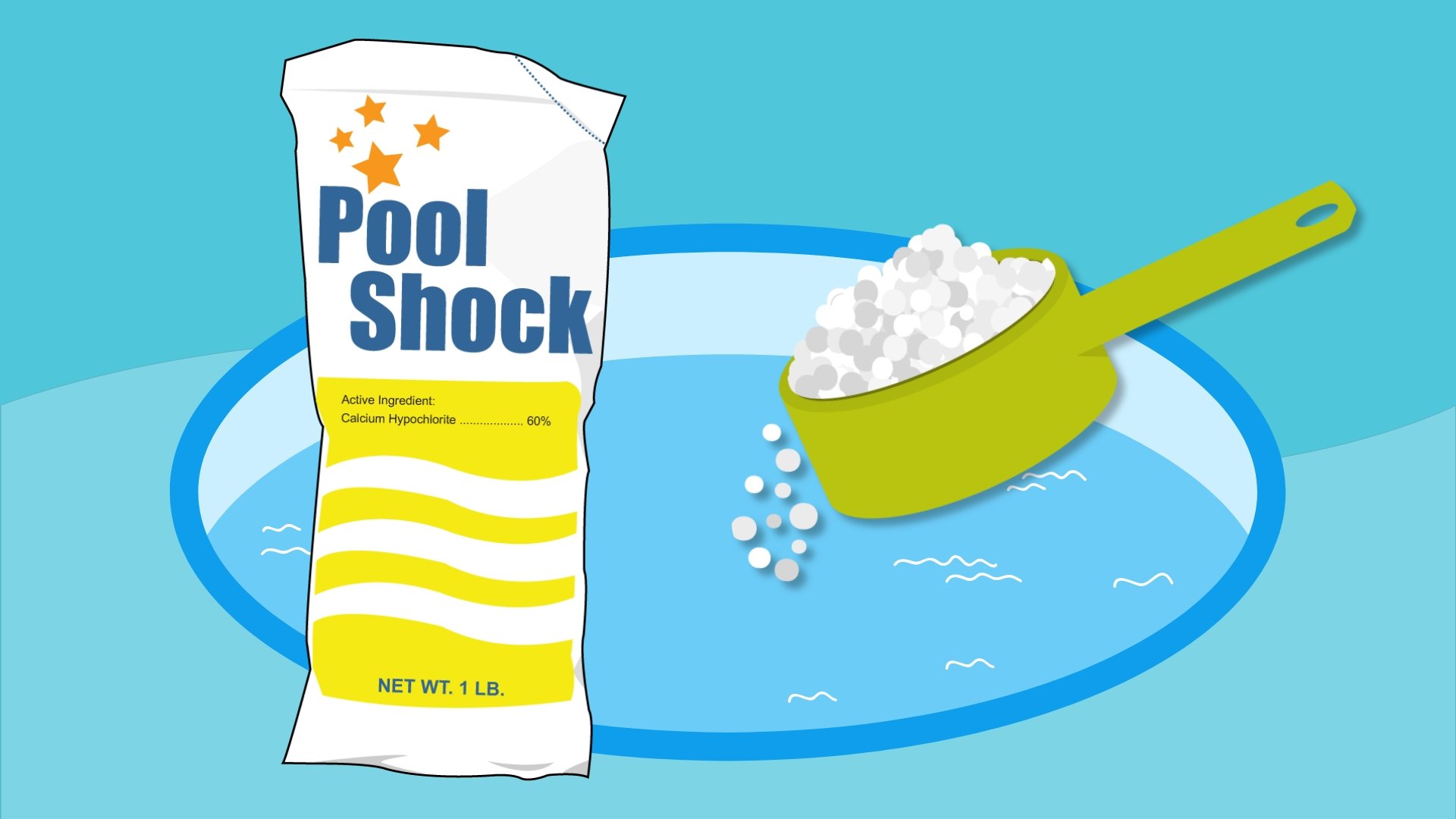
Shock is used to refresh your free chlorine levels and keep them actively sanitizing your water. Both non-chlorine and chlorine shock help do this. Chlorine shock, specifically, is more powerful and handy for getting rid of algae or contaminants.
Non-chlorine shock can be used once a week or as often as needed by following the instructions on the packaging. But if you need to tackle a big water problem and want to use chlorine shock, you may need a double or triple dose of shock.
Algae Removal Calculator
Pick the color of your water and enter your pool volume. You’ll get the exact shock dose to kill the algae, plus a step-by-step plan to get back to clear.
Track this treatment in The Pool Care App
→

 Wait 30 minutes
Run the pump 8+ hours
Wait 24 hours
Wait 30 minutes
Run the pump 8+ hours
Wait 24 hours
Never mix shock products together, and always add shock to water, never water to shock. Keep everyone out of the pool until free chlorine falls back under 5 ppm.
Key Takeaways
- Always test your water before adding anything, then balance chemicals in this order: alkalinity first, then pH, then chlorine. Each level affects the next one.
- For a 10,000-gallon (37,854-liter) pool, you need about 1.5 pounds (0.68 kg) of alkalinity increaser to raise alkalinity by 10 PPM, roughly 6 to 8 ounces (170–227 g) of soda ash to raise pH by 0.2, and 1 gallon (3.79 liters) of liquid chlorine for weekly maintenance.
- Keep your filter running while adding chemicals, wait at least 20 minutes between doses, and never mix chemicals outside the pool.
- If you use stabilized chlorine like trichlor tablets, you’re already adding cyanuric acid (CYA). Only add CYA separately if you use unstabilized chlorine, like liquid chlorine. Target 30 to 50 PPM.
- Calcium hardness targets depend on your pool type: 175 to 225 PPM for vinyl and fiberglass pools, and 200 to 275 PPM for concrete and plaster pools. If you take your pool down each season, you can skip this one.
- Use pool shock weekly to refresh your free chlorine. Double or triple the dose if you’re fighting algae or heavy contamination.
- If you want to know which pool chemicals to use and which ones to avoid, check out how we ranked every pool chemical.