


Pool Filter Balls Review (Do They Really Work?)

Pool FilterBalls promise better filtration, less backwashing, and easier maintenance than sand. But do they actually deliver?
If you’ve ever lugged a huge bag of sand to your filter, you already understand the appeal. FilterBalls weigh almost nothing. One pound (0.45 kg) of FilterBalls replaces 100 pounds (45.4 kg) of sand. That alone gets a lot of pool owners interested. But weight is just one piece of the puzzle, and they come with a few downsides, like cleaning and shedding.
Here’s an honest look at whether it’s worth switching to FilterBalls.
This is the ultimate guide to keeping your pool sparkling clean throughout the year that contains everything you need to know about taking care of your pool the right way. Including saltwater pools.
What Are FilterBalls and Where Do You Put Them?
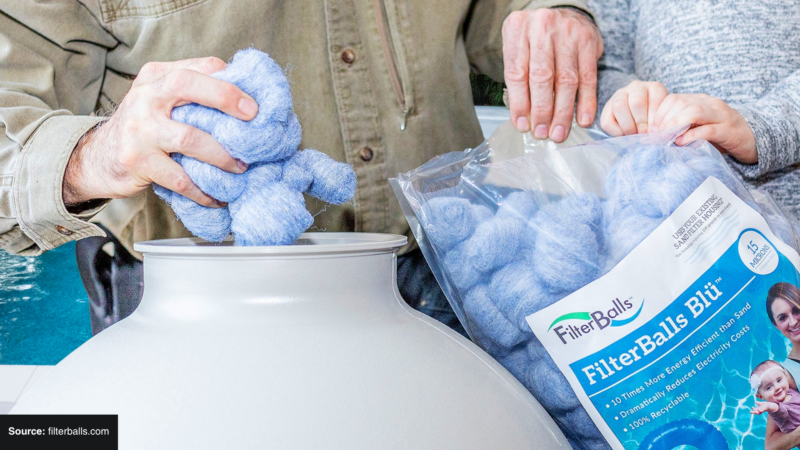
FilterBalls are synthetic fiber media designed to replace sand in your pool’s sand filter. They look like small bundles of compressed fiber, like a scrubbing pad. You drop them directly into your existing empty sand filter tank. You’ll have to drain, clean, and sanitize the filter tank first. But you don’t need any new plumbing or additional equipment.
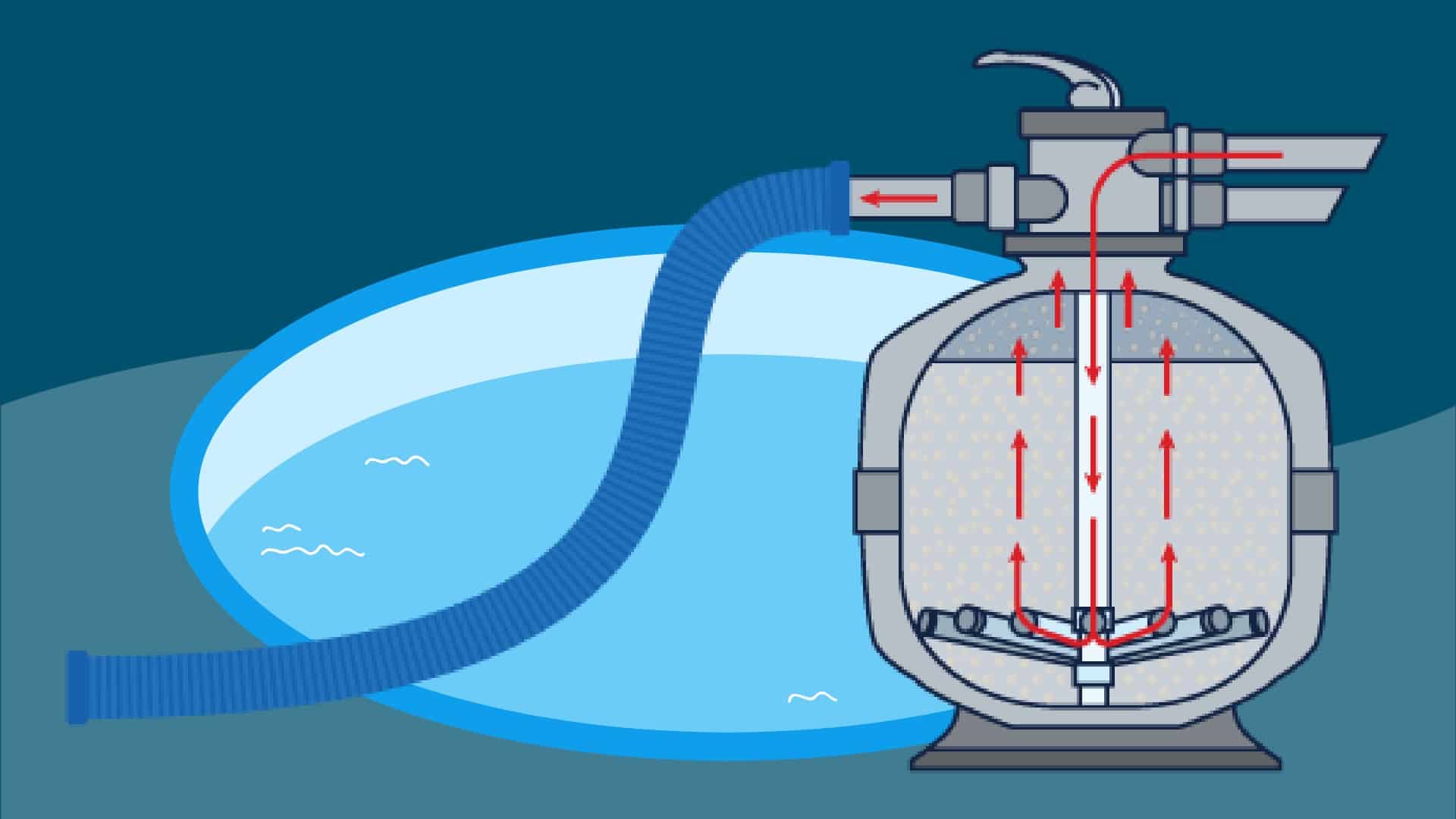
They work the same way sand does: water flows through the media, contaminants get trapped, and clean water returns to your pool. The difference is in how fine they filter. FilterBalls capture particles down to 5–15 microns. Sand only filters down to 20–40 microns. The smaller the micron rating, the finer the filtration.
One thing worth noting: not all sand filters are compatible with FilterBalls. Check your filter’s manual before making any changes, since it might void your manufacturer’s warranty.

Filter Balls to be super easy to manage, 100x lighter than sand filter media and it improved circulation and filtration, with lower filter pressure and higher flow rate. Eliminate hauling and disposal of hundreds of pounds of sand.
Do Pool FilterBalls Really Work?
Yes, FilterBalls do work, and they filter better than sand. You’ll see clearer water, lower filter pressure, and improved circulation after switching. Because they’re less dense than sand, your pump doesn’t have to work as hard to push water through the tank.
But this doesn’t mean they’re the best choice for every pool owner. They come with real tradeoffs that matter depending on how hands-on you want to be with your filter cleaning.
Sand vs. Pool FilterBalls: Which Is Better?
Sand is the classic option for a sand filter. It’s cheap, easy to find, and simple to maintain. You backwash it when pressure climbs, replace it every 3-5 years, and mostly forget about it.
FilterBalls filter finer particles, reduce pump strain, and require less frequent backwashing. But backwashing alone isn’t always enough. Depending on the brand, FilterBalls may still need to be pulled out and hand-washed or machine-washed when they get heavily clogged. That’s a different kind of maintenance than what most sand filter owners expect.
For most pool owners who just want a low-fuss system, sand still makes a strong case. If you want noticeably clearer water and don’t mind the hands-on cleaning process, FilterBalls might be the right choice.
The other option: replace your sand with glass media instead.
Should You Switch to FilterBalls or Glass Media Instead?
FilterBalls are better than sand, but filter glass is better than FilterBalls.
Filter glass filters down to 3–5 microns (finer than FilterBalls at 5–15 microns), lasts 8–10+ years, and is cleaned with the backwash setting. It costs more upfront than FilterBalls, but you get superior water clarity, longer media life, and the same simple backwashing routine you already know from sand.
FilterBalls sit in an awkward middle ground. They filter better than sand but require a more hands-on cleaning process than either sand or glass. They also carry a risk of shedding microplastics over time, especially with lower-quality brands.
If you’re ready to upgrade from sand, we’d recommend going straight to filter glass. You’ll get better performance, less maintenance hassle, and peace of mind knowing you’re not adding plastic fibers to your water. Check out our full review of pool filter glass.

Made from recycled glass, this filter media catches tiny particles much better than sand, lasts way longer, and helps keep your pool water crystal clear while saving water during backwashing.
How Many Pool FilterBalls Do You Need?
Because FilterBalls are so lightweight and efficient, you need far less media by weight. One pound (0.45 kg) of FilterBalls replaces 100 pounds (45.4 kg) of traditional sand.
When filling your tank, the fill level matters more than weight. Measure 12 inches (30.5 cm) up from the lateral assembly on the standpipe and mark that level. Fill FilterBalls up to that line. Before you add any media, cover the open end of the standpipe with a bag or stopper to keep FilterBalls from falling inside.
Always follow the manufacturer’s recommendation for your specific filter size. Overfilling or underfilling the tank affects filtration quality and filter pressure.
Do You Backwash with FilterBalls?
You can backwash FilterBalls, but it works differently than with sand. Because FilterBalls create less resistance than sand, your filter pressure runs lower overall. Backwash when pressure rises 5–7 PSI above your normal baseline (not the 8–10 PSI you might be used to with sand).
The catch is that backwashing alone isn’t always enough. The fibers can become clogged in ways that backwashing can’t fix. When that happens, you need to remove the FilterBalls and wash them manually.
How Do Pool FilterBalls Need to Be Cleaned?
You have a few options for that deeper clean. You can rinse them with a garden hose, squeezing the balls to release dirt. You can soak them in a bucket of water and squeeze repeatedly until the water runs clear. Or you can machine-wash them in a mesh laundry bag on a gentle cycle at around 86°F (30°C) with little to no detergent. Avoid fabric softener or excessive soap. Any suds left in the media will end up in your pool.
Plan to clean FilterBalls at least once per season, or more frequently if you deal with algae, a heavy bather load, or lots of debris.
If you get a significant algae bloom, FilterBalls can become heavily clogged. When that happens, backwashing won’t fix it. You have to pull them out and wash them by hand or machine. Sand filters, by contrast, let you handle most clogs with a quick backwash cycle.
The cleaning process itself isn’t hard, but it’s more involved than sand. Keep that in mind before you switch.
Do Pool FilterBalls Make a Difference?
Here’s what most users report after switching:
- Clearer water: finer filtration catches particles that sand misses
- Lower filter pressure: less dense media means less resistance
- Quieter pump: reduced pressure means the pump works less
- Less frequent backwashing: you won’t need to backwash as often
The difference is most noticeable in water clarity. FilterBalls capture particles down to 5–15 microns, and sand filters capture particles down to 20–40 microns. That shows up as noticeably cleaner, clearer water.
One downside worth mentioning: lower-quality FilterBalls can shed microplastic fibers into your pool water over time. If you see tiny white strings floating at the surface, that’s the culprit. Stick with reputable brands and replace them when they start to break down.
What Is the Life Expectancy of Pool FilterBalls?
FilterBalls last approximately 3–5 years before needing replacement. For comparison, traditional sand lasts 5–6 years, and filter glass lasts 8–10 years or more.
The lifespan depends on how often you clean them, how hard your water is, and how heavily the pool is used. Check them periodically for signs of wear. If they’re falling apart, losing their shape, or can’t be cleaned effectively, it’s time to replace them.
Key Takeaways
- FilterBalls replace sand in your existing sand filter, filtering particles down to 5–15 microns, compared to sand’s 20–40 microns.
- While you can backwash FilterBalls, they usually require extra cleaning and must be removed and hand-washed or machine-washed at least once per season.
- One pound (0.45 kg) of FilterBalls replaces 100 pounds (45.4 kg) of sand; fill the tank to 12 inches (30.5 cm) above the lateral assembly.
- FilterBalls last 3–5 years, which is about the same as sand but significantly shorter than filter glass (8–10+ years).
- Lower-quality FilterBalls can shed microplastic fibers into pool water. Always use reputable brands and replace them when they are worn out.
- Filter glass offers finer filtration (3–5 microns), longer life, and full backwashability, making it a better long-term upgrade than FilterBalls for most pool owners.