

14 Pool Cleaning Hacks That Save Money
 Matt Giovanisci
  March 25, 2026
 I put together these pool cleaning hacks that will help you spend less on chemicals, extend the life of your equipment, and keep your water crystal clear without calling a pro.
Here are 14 money-saving pool cleaning hacks broken into three categories: cheap tools under $20, smart upgrades that pay for themselves, and DIY maintenance tips that keep your pool in top shape. Let’s start with the affordable stuff.
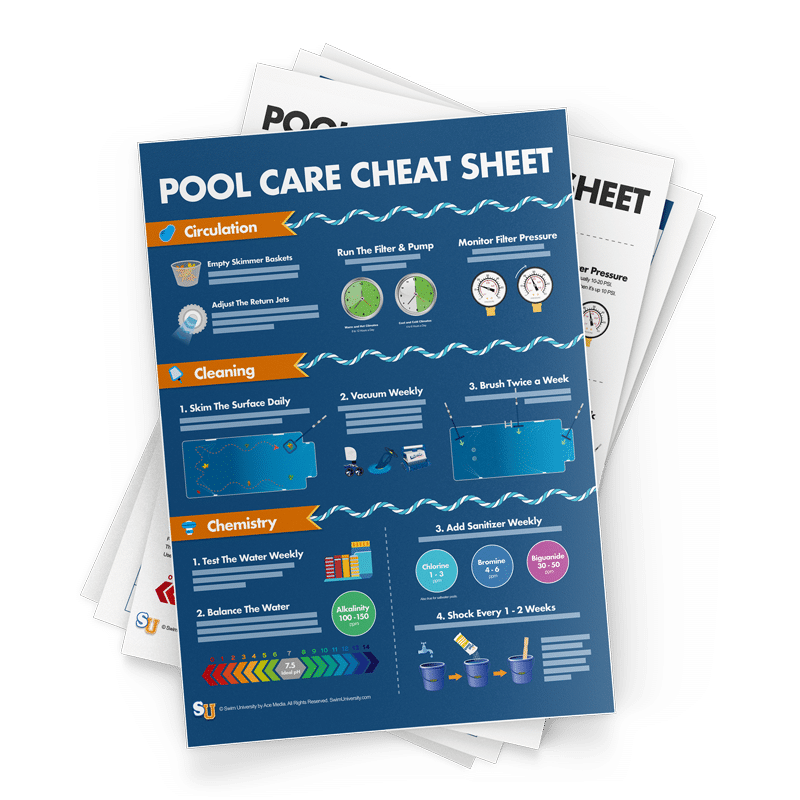
This is the ultimate guide to keeping your pool sparkling clean throughout the year that contains everything you need to know about taking care of your pool the right way. Including saltwater pools.
1. Use a Skimmer Sock to Protect Your Filter
A skimmer sock is a fine mesh fabric that fits right over your skimmer basket. It catches smaller debris like pollen, bugs, and hair before any of it reaches your filter system. That means fewer clogs, less backwashing, and less wear on your filter.
You can grab a pack of 30 disposable skimmer socks. You can also buy a few reusable ones that last much longer.
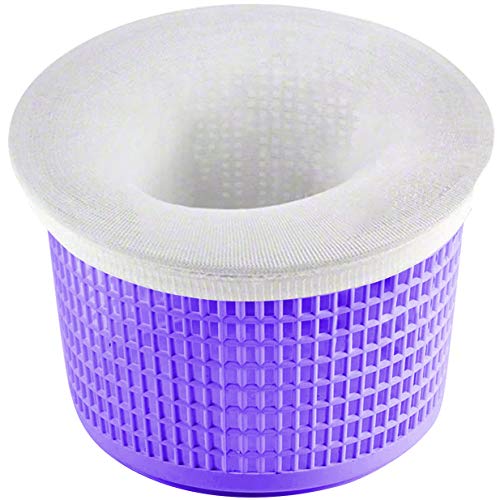
Designed to fit most pool skimmer baskets, it offers a protective layer to prevent pump impeller and shaft seal damage by trapping leaves, grass, hair, and other debris.
CAUTION: These socks are so effective at trapping debris that they can actually clog up your skimmer. If the skimmer gets blocked, your pump could run dry and overheat. Keep an eye on them and clean or swap them out regularly. Don’t go on vacation and leave a skimmer sock on your skimmer.
2. Switch from Alkalinity Increaser to Baking Soda
Alkalinity increaser and baking soda share the same active ingredient: sodium bicarbonate. Pool-branded alkalinity products just cost way more.
One bag covers multiple treatments. That can save you $20 to $30 a month compared to buying the pool-branded version. Here’s the baking soda bag I recommend.
Why Do People Put Baking Soda in Their Swimming Pools?
Baking soda raises your pool’s total alkalinity. Total alkalinity acts as a buffer that keeps your pH stable. When alkalinity is out of range, your pH fluctuates, and that messes with your chlorine’s ability to sanitize the water. And here’s my guide on using baking soda to raise the alkalinity in your pool.
The ideal total alkalinity range is 100 to 150 PPM. If your alkalinity dips below that, adding baking soda brings it back up. It will also slightly raise your pH in the process, so retest both levels after you add it.
One common myth is that baking soda clears cloudy water. It doesn’t. Baking soda stabilizes your chemistry so that your shock treatment and filter can do their jobs. If your alkalinity is already between 80 and 120 PPM, skip the baking soda entirely.
3. Use Teflon Tape to Save Your Equipment
A roll of Teflon tape (also called plumber’s tape) can prevent expensive water leaks around your pool equipment. Apply it to threaded connections on your pump and filter to create watertight seals.
This tiny investment protects your system from losing suction. It keeps everything running without needing early replacements. For the best seal, wrap the threads about four times.
4. Toss Tennis Balls in Your Skimmer Basket
Drop a couple of tennis balls into your skimmer basket. The felt material absorbs body oils, sunscreen, and other greasy residue that would otherwise eat through your chlorine.
When your sanitizer isn’t fighting oils, it works more efficiently. You’ll use less chlorine, save money on chemicals, and prevent cloudy water.
Does Putting a Magic Eraser in the Pool Skimmer Work?
Some pool owners swear by tossing a magic eraser (melamine foam) or filter balls into the skimmer basket instead of tennis balls. The idea is that these materials absorb oils and grime the same way.
There’s NO definitive proof that magic erasers work better than tennis balls. They may absorb some oils, but tennis balls are cheaper and easier to replace. Whichever method you choose, check and replace them every few days. Make sure nothing is restricting water flow to your pump.
5. Use a Hose Filter When Filling Your Pool
A hose filter attachment connects to your garden hose and removes impurities before they enter your pool. This is especially helpful if your source water has minerals or metals.
Starting with cleaner water makes balancing your chemistry easier. You might not need to buy as many chemicals like stain and scale preventers. It’s a small upfront cost that pays off every time you add water.
6. Invest in a Robotic Pool Cleaner
A robotic pool cleaner is one of the best investments you can make. These independent cleaners vacuum your pool without connecting to your filter system. Just plug them in, drop them in the water, and let them do the work.
All you need to do is empty the built-in filter bag when it gets full. You’re not spending your time cleaning the pool yourself. You’re not hiring someone else to do it either. Over time, the savings add up fast.
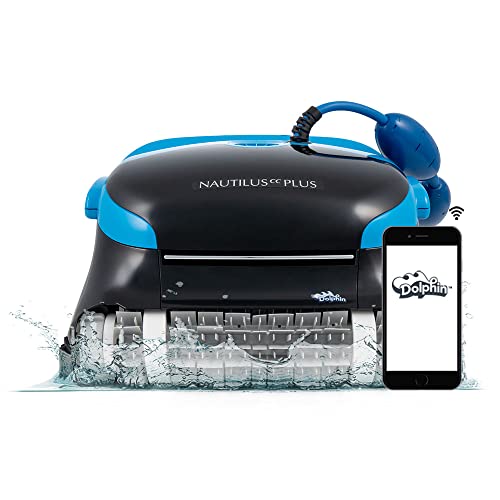
Ideal for pools up to 50 feet. Cleans large pools in just 2 hours. Includes dual scrubbing brushes and a built-in schedule using 3 settings: every day, every other day, or every 3rd day.
Robotic cleaners are more expensive than suction-side or pressure-side cleaners upfront. They also cost more to repair. So buy a high-quality model with a good warranty.
What Is the Fastest Way to Clean a Dirty Pool?
If your pool is really dirty or has turned green, a robotic cleaner alone won’t cut it. The fastest way to clean a dirty pool is a multi-step approach.
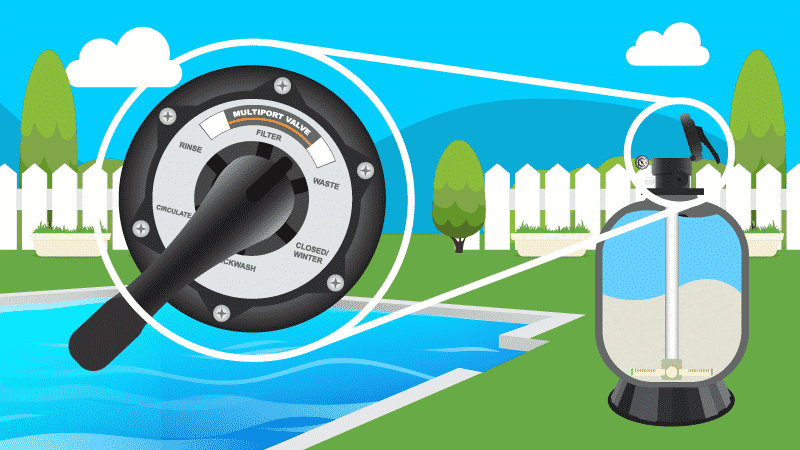
- First, brush all the walls and floor to dislodge algae and debris. Next, manually vacuum the pool on the waste setting to remove contaminated water without sending it through your filter. Then balance your water chemistry, starting with alkalinity (80 to 120 PPM), then pH (7.4 to 7.6).
- After that, shock your pool at night with calcium hypochlorite (cal-hypo) shock. Use 1 pound (0.45 kg) per 10,000 gallons (37,854 liters) for a normal dose. Double or triple that if the water is green. Run your filter 24/7 until the water clears.
- Finally, add a pool clarifier or flocculant to speed things up. Clarifier binds tiny particles into larger clumps that your filter can catch. Flocculant is more powerful and sinks particles to the bottom for you to vacuum out on the Waste setting. Most pools clear within 48 hours using this method.
7. Try a Solar Skimmer for Heavy Debris
If your pool is surrounded by trees, a solar skimmer can be a lifesaver. These devices are powered by built-in solar panels and move across the surface of your pool on their own.
They pick up leaves, twigs, and anything else floating around. Unlike automatic skimmers that connect to your return line, solar skimmers don’t need your pump running to function. They’re more expensive, but they save you from constant manual skimming.
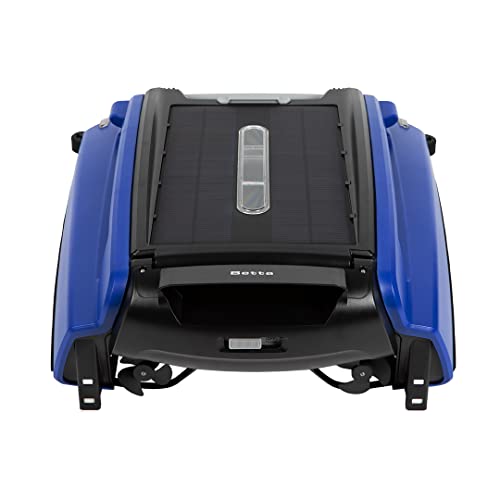
If you deal with a lot of surface debris on your pool, consider investing in this automatic pool skimmer.
8. Cover Your Pool with a Solar Cover
Evaporation is a silent money drain. When water evaporates, you lose both water and chemicals. An average pool can lose 5°F (2.8°C) for every quarter inch (0.6 cm) of water that evaporates.
A solar cover (also called a solar blanket) floats on the surface of your pool. It reduces evaporation and helps retain heat. A solar blanket can prevent 35 to 60 percent of your pool chemicals from disappearing. Clear solar covers can prevent up to 95% of water and chemical evaporation.
If you use a pool heater, a solar cover is even more valuable. Think of it like putting a lid on your coffee. Your heater warms the water, and the cover keeps it warm. Place the cover bubble side down for the best heat transfer.
9. Upgrade to a Variable Speed Pump
If you’re still running a single-speed pump, you’re spending more than you need to on electricity. Single-speed pumps can cost $40 to $150 per month to run. Variable-speed pumps drop that to $10 to $50 per month, saving you 50 to 70 percent on energy costs.
Variable-speed pumps let you run at lower speeds for everyday filtering and ramp up when you’re adding chemicals or cleaning. The motor bearings also last longer because of lower RPM. Most variable-speed pumps pay for themselves within one to two years.
As of recent regulations, all new or replacement pumps over 1.0 horsepower in the United States must be variable-speed.
10. Test Your Water at Least Once a Week
Staying on top of your water chemistry prevents small problems from becoming expensive ones. The three most important levels to test weekly are total alkalinity, pH, and chlorine.
Keep your total alkalinity between 100 and 150 PPM, your pH between 7.4 and 7.6, and your free chlorine between 1 and 3 PPM (with 3 PPM being ideal). When your pH is in range, your chlorine works effectively. When it’s out of range, you’re wasting sanitizer.
Testing takes five minutes. Fixing a green pool takes days and a lot more money.
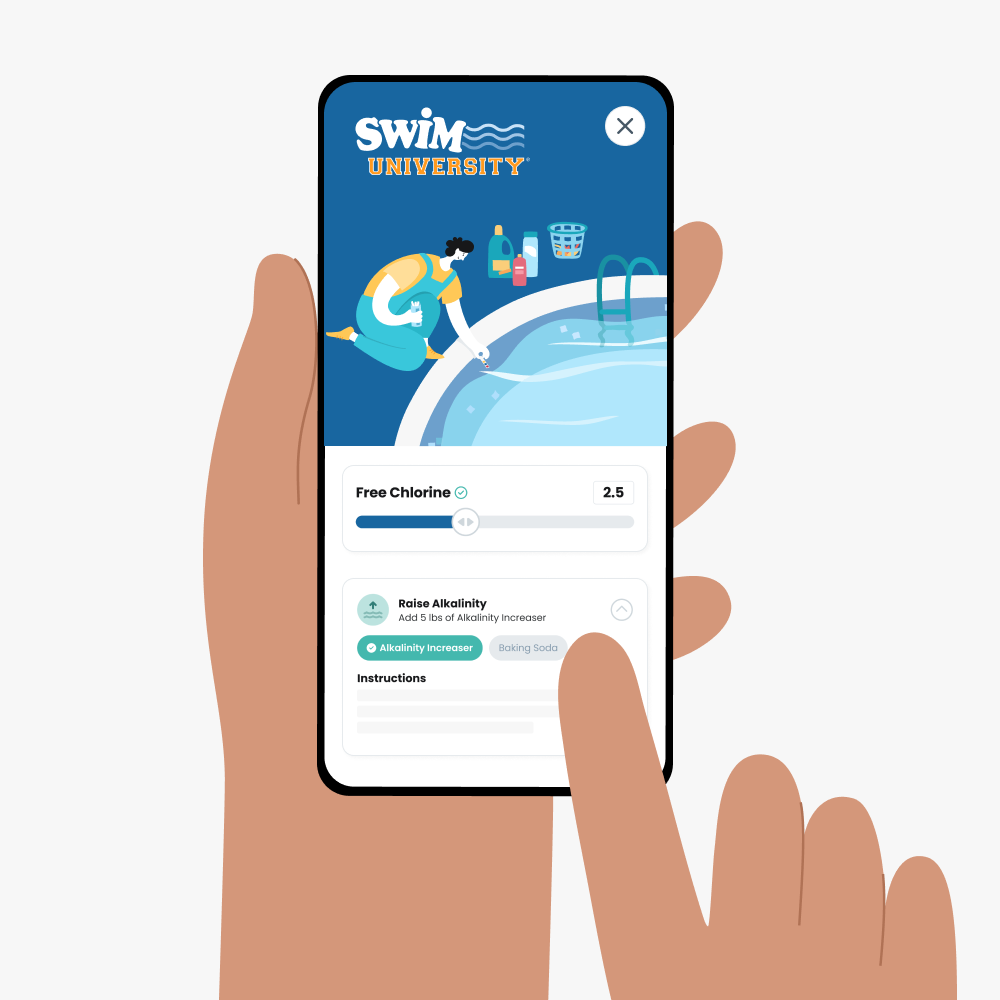
Enter your water test results. Get a custom treatment plan. Know exactly what chemicals to add to keep your pool clear.
11. Keep Your CYA in Range
Cyanuric acid (CYA), also known as chlorine stabilizer, protects your chlorine from breaking down under the sun’s UV rays. Without CYA, it only takes 17 minutes of UV exposure to destroy half your chlorine.
Keep your CYA between 30 and 50 PPM for traditional chlorine pools. For salt water pools, manufacturers recommend 60 to 80 PPM. Your free chlorine level should be about 7.5 percent of your CYA level. So if your CYA is at 40 PPM, keep your free chlorine at 3 PPM.
Too much CYA is just as bad as too little. High CYA weakens your chlorine’s ability to sanitize the water. If your levels climb above 100 PPM, the only effective fix is to partially drain and refill your pool with fresh water.
12. Learn to Open and Close Your Own Pool
Hiring a pool company to open and close your pool can cost hundreds of dollars each year. Learning to do it yourself saves that money every single season.
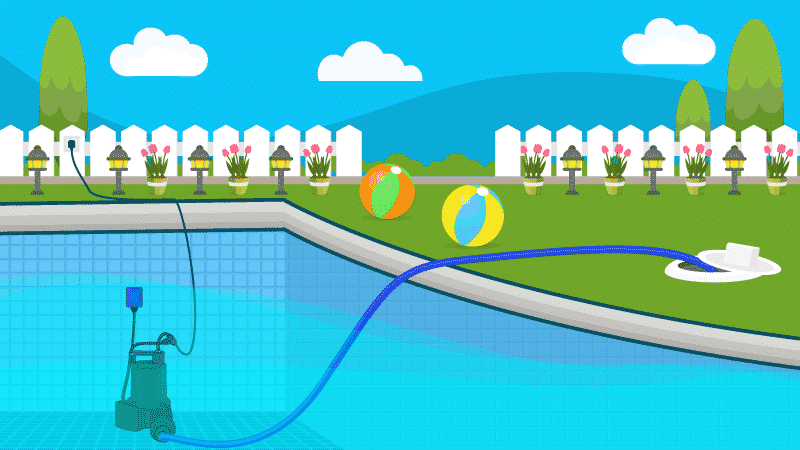
You may need to invest in some equipment, like a sump pump or shop vac. Those one-time purchases cost far less than paying a professional year after year.
The basic process for opening involves removing the cover, cleaning the pool, reconnecting equipment, balancing your water chemistry, and shocking your pool. For closing, you’ll drain your equipment, add winterizing chemicals, and cover everything up.
Here are all of the guides that we have about opening and closing a pool for your specific type of pool. Choose the one that fits your pool.
- How to Open an Inground Pool
- How to Open an Above Ground Pool
- How to Close an Inground Pool
- How to Close an Above Ground Pool
13. Remove Debris and Check Your Filter Weekly
Debris floating in your pool eats through your chlorine. The more debris in the water, the more chlorine you’ll need to keep adding. That gets expensive fast.
Every week, skim out debris, empty your skimmer basket and pump basket, and check your filter. If the filter pressure gauge reads 10 PSI above its normal running pressure, it’s time to backwash or clean the filter.
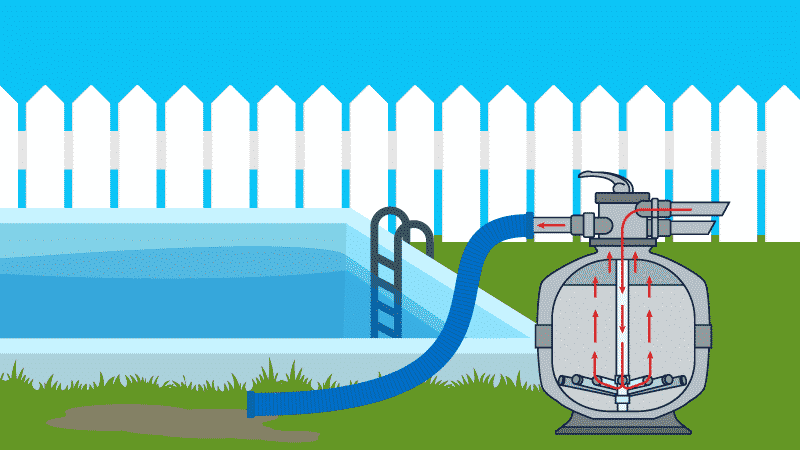
For cartridge filters, spray down the cartridges weekly during heavy use and soak them in cleaning solution once a month. For sand and D.E. filters, backwash when the pressure rises 10 PSI above normal.
14. Learn to Troubleshoot Your Own Equipment
Before you call a professional, try fixing common equipment issues yourself. Problems like priming your pump or fixing low filter pressure are straightforward to troubleshoot at home.
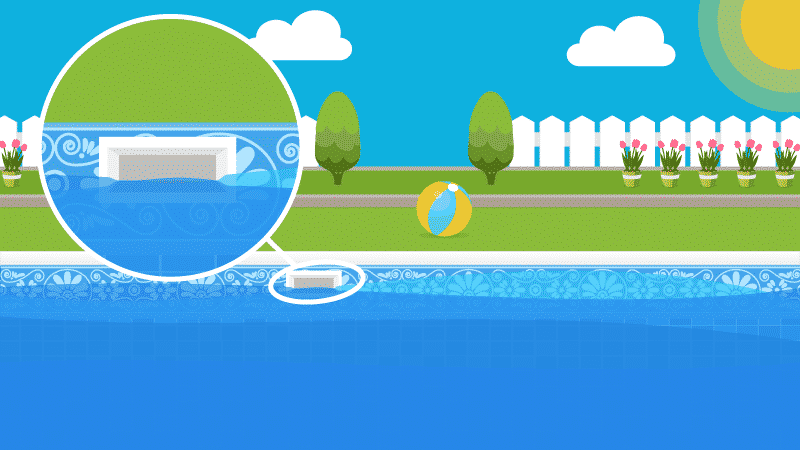
Check your pump basket for debris, inspect connections and O-rings for wear, and make sure your water level is halfway up the skimmer opening. A pump that loses prime often just has an air leak at the lid seal or a clogged skimmer line.
Knowing the basics saves you the cost of a service call for something you could fix in 10 minutes.
Key Takeaways
- Use baking soda instead of an alkalinity increaser to save $20 to $30 per month. Both contain the same active ingredient (sodium bicarbonate) and work identically.
- Invest in a robotic pool cleaner and solar cover to save time and money long-term. Robotic cleaners don’t strain your filter, and solar covers prevent up to 95% of water and chemical evaporation.
- Upgrade to a variable-speed pump to cut energy costs by 50 to 70 percent. Most models pay for themselves within one to two years.
- Test your water weekly and keep CYA between 30 and 50 PPM to prevent chlorine waste. Without a stabilizer, half your chlorine disappears in just 17 minutes of sunlight.
- Clean debris and check your filter every week to reduce chlorine demand and keep your equipment running efficiently. Backwash or clean when pressure rises 10 PSI above normal.
- Learn to open, close, and troubleshoot your pool yourself to save hundreds of dollars a year on professional service calls.
3 Ways We Can Help With Your Pool
- The Pool Care Handbook: An illustrated guide to DIY pool care, including water chemistry, maintenance, troubleshooting, and more.
- The Pool Care Video Course: You’ll get 30+ step-by-step videos and a downloadable guide with everything you need to know about pool maintenance.
- The Pool Care App: Enter your water test results. Get a custom treatment plan. Know exactly what chemicals to add to keep your pool clear.