Every pool is different. Get a free step-by-step plan for yours.
Get My Free PlanHere’s our full in-depth guide to how to vacuum an inground or above ground pool quickly and effectively so you can get back to swimming.
An illustrated, step-by-step guide to taking care of your pool yourself. Works for chlorine and saltwater pools.
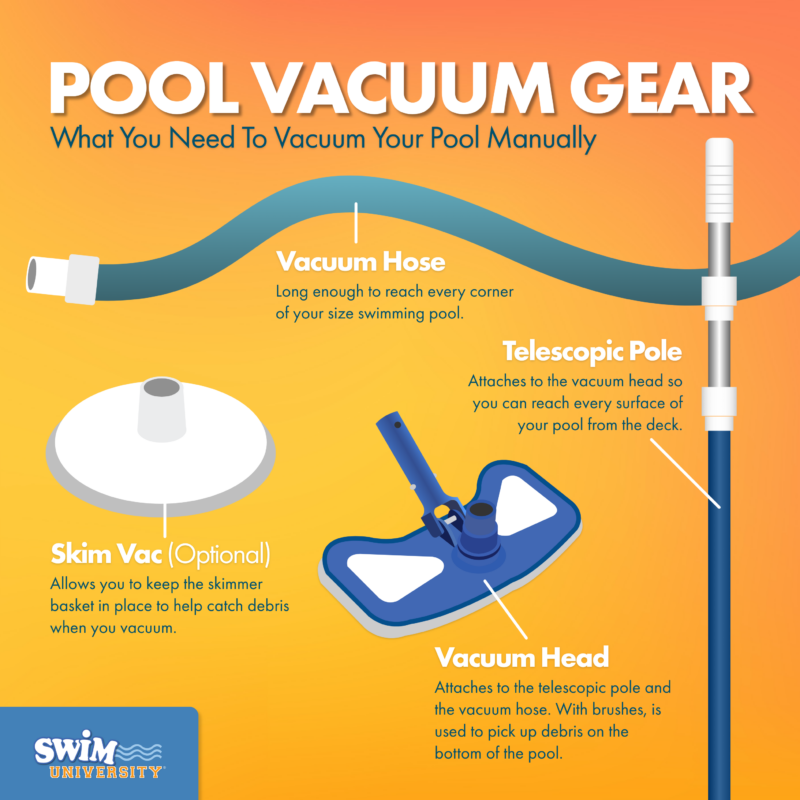
Before you get started, make sure the pool pump and filter are running. You also want to check that you’re running at a good starting pressure. If you have a D.E. or sand filter and the pressure is high, backwash it. If you have a cartridge filter, make sure the cartridges inside are cleaned and ready to go. Here’s our full guide on cleaning every type of filter.
IMPORTANT: If you’re dealing with algae or cloudy water, change your filter valve settings to the waste setting if you have a multiport valve or push/pull valve. This will bypass your filter and send the dirty water out through the waste port. If you have a cartridge filter, just remove the drain plug and attach a backwash hose. Your pool water level will drop while you vacuum. Use a garden hose to add fresh water while you’re vacuuming.
First, ensure the pump and filter are running. Attach the vacuum head to the open end of the telescopic pole. Attach one end of the hose to the vac head. If the hose is slippery, use a hose clamp to keep it in place.


The weighted triangle pool vacuum head is a great way to clean your pool. The weights on the bottom of the vacuum head help to keep it in place while vacuuming.
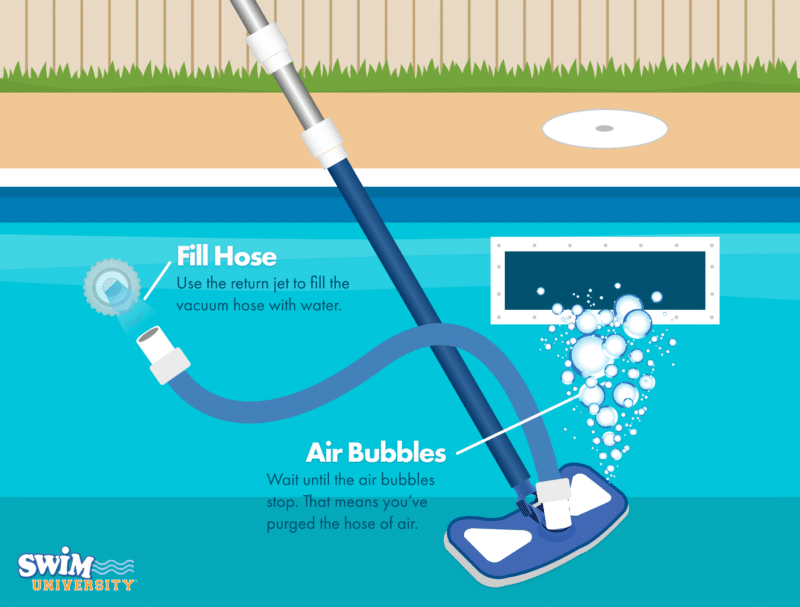
Place the vac head, telescopic pole, and hose in the pool, making sure the vac head rests on the bottom of the pool. Place the other end of the vacuum hose against a return jet in the pool. This will push water through the hose and drive all the air out.
Triple-check to make sure the vacuum inlet is the only line open to the pump. If not, particles and debris will also be sucked in by the pump and undo all your hard work.
NOTE: You’ll see air bubbles rising from the vacuum head on the floor of the pool. Once the air bubbles stop, all the air is out of the hose.

Get those hard to reach places with your leaf net, vacuum, or brush. This professional-grade telescopic pole is what the pros use to clean pools thoroughly.
Attach the skim vac plate to the end of the hose you’d previously placed against the return jet, block the opening with your hand, and bring it over to the skimmer. Insert it in the skimmer on top of the basket and be sure to create a good seal or suction will be lost.
If you’re not using a vacuum plate, remove the skimmer basket inside. Use your hand to block the end of the water-filled hose. Then place the hose into the skimmer inlet, making sure it’s firmly inserted into the suction hole at the bottom of the skimmer.
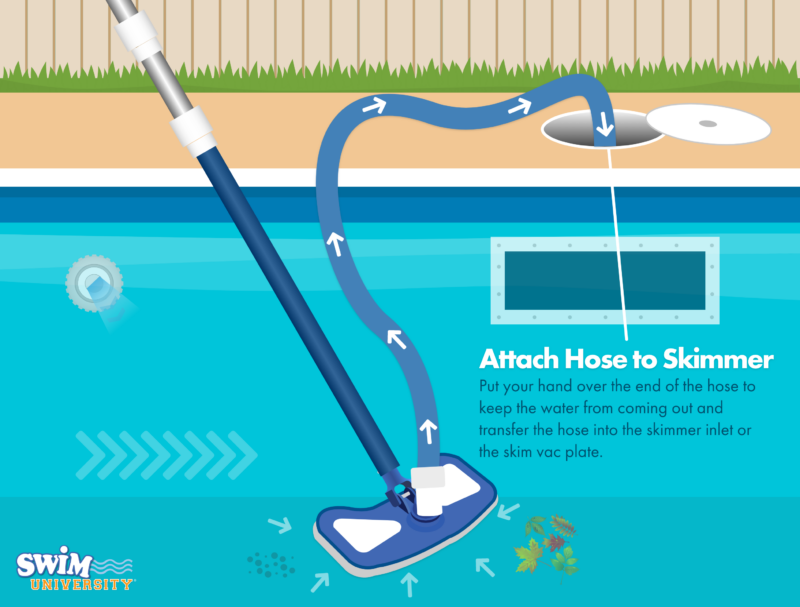
NOTE: Whichever method you choose will create the suction that pulls material through the vac head, up through the hose into the skimmer, and then through the filter system. If your vacuum loses suction, just follow the prep steps again to restore it. Here’s more information on troubleshooting your pool skimmer.

This optional plate allows you to keep your skimmer basket in place when you manually vacuum your pool. Without it, you'd have to remove the skimmer basket.
Now that you’ve built a powerful siphon using your filter system, you can vacuum the floor of your pool. Start at the shallow end (if you have one) and move toward the deep end of the pool. If you have a round pool, just start at one side and move left or right across the floor.
Use long, slow, sweeping strokes to clean. Make sure your strokes overlap slightly to avoid leaving any debris behind. Rushing will just kick up debris, which will reduce visibility and take hours to settle down again.
If the water does become cloudy, give it a couple of hours to resettle, then come back and vacuum again, repeating as necessary.
If the vac head becomes stuck, switch off the pump for a second to break the vacuum force and set it free. Also, be sure to monitor your pool filter’s pressure gauge as you vacuum. If the pressure rises above the levels recommended by the manufacturer, take a break, and backwash your filter.
Once you’ve finished vacuuming your entire pool, it’s time to clean up and get back to swimming.
You don’t have to dread the vac head! When it’s time to vacuum your pool—whether you’re just the hands-on type or waging war on invading algae—you can get the job done by hand with a little preparation, a lot of elbow grease, and a healthy dollop of patience.
Looking for more help with your pool vacuum cleaner? Here are some common questions and answers.
If you’re just doing a light debris vacuum, you can keep it on the “Filter” setting. But if your pool is really dirty, it’s best to put the filter on the “Waste” setting (not “Backwash”) to bypass the filter when vacuuming. The filter is now powerful enough to remove debris that quickly.
If you’re vacuuming a lot of heavy debris out of your pool, your filter setting should be turned to “Waste.” Do not use the “Backwash” setting. The goal is the bypass the filter entirely which is what the “Waste” setting does. Backwashing reverses the flow of water through your filter to clean it out.
If you use a skim-vac plate, you can keep the skimmer basket in place when vacuuming. Otherwise, remove it before attaching your vacuum hose to the skimmer inlet or using a vacuum plate. The basket will get in the way and prevent good suction.
This is because your filter system isn’t powerful enough to filter debris that quickly. If you’re dealing with a lot of fine debris that’s passing through your filter, turn your filter setting to “Waste” and bypass the filter completely when you vacuum. Just be sure to fill with freshwater while you vacuum so the water level in your pool doesn’t get too low.
First of all, welcome to the club! While some people find this to be a form of meditation, it’s still a chore. And thankfully, we live in a world of blossoming technology, so I can help you take this to a swimming pool vacuum that acts like a robot.
Independent cleaners that vacuum your pool using electricity. You plug them in, drop them in your pool, and let them do all the hard work on their own. All you have to do is empty the built-in filter bag when they get full of debris. These are by far the best automatic pool cleaners on the market, but they can be a bit pricer. Hey, you get what you pay for.
We keep an updated list of our favorite robotic pool cleaners. But here’s one we highly recommend:

Ideal for pools up to 50 feet. Cleans large pools in just 2 hours. Includes dual scrubbing brushes and a built-in schedule using 3 settings: every day, every other day, or every 3rd day.
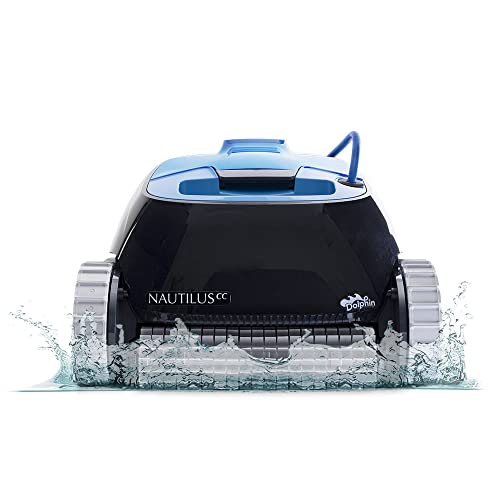
Designed for above ground swimming pools. This robotic pool cleaner scrubs your pool floors and walls on its own, picking up dirt and debris.
These cleaners hook up to your return line and use the water pressure from your filter system to power a self-contained automatic cleaner around the bottom of your pool to pick up debris into a filter bag.
We highly recommend investing in a Polaris Pool Cleaner. But here’s our favorite one:

It connects to the return jet in your pool and uses a patented jet sweep assembly to loosen and remove dirt and other particles from hard-to-reach places.

The Polaris 360 automatic pool cleaner improves water circulation and helps mix chemicals and heat while it cleans the bottom and walls of your pool.

A pressure-side pool cleaner that sweeps, scrubs, and vacuums your pool's floor and walls, picking up large debris like leaves and pebbles into a filter bag.
This is just an automatic version of vacuuming your pool manually. They hook up the same way you do when you vacuum your pool manually. The biggest difference, however, is that they move around the bottom of your pool by themselves. That way, you don’t have to stand there in the hot sun and do it yourself.
However, we recommend if you’re going to make this investment, that you go for a pressure-side or robotic cleaner. That said, here’s our favorite suction-side automatic pool cleaner:

This vacuum attaches directly to your pool skimmer line and is powered by your pool’s pump.

It connects directly to your pool filter system. It's powerful, balanced, and doesn't have any hammering noises (common in other suction-side pool cleaners) for quiet operation.
Answer a few questions and we'll tell you what to test, what to add, and when.
Get My Free Plan
Matt is the founder of Swim University. He's been in the pool and spa industry since 1996. His mission is to make pool and hot tub care easy. Each year, he continues to help people with water chemistry, cleaning, troubleshooting, and more.
No one wants to swim in a dirty, nasty pool! Learn how to clean a swimming pool the right way, and keep it clear, beautiful, and swimmable at all times.
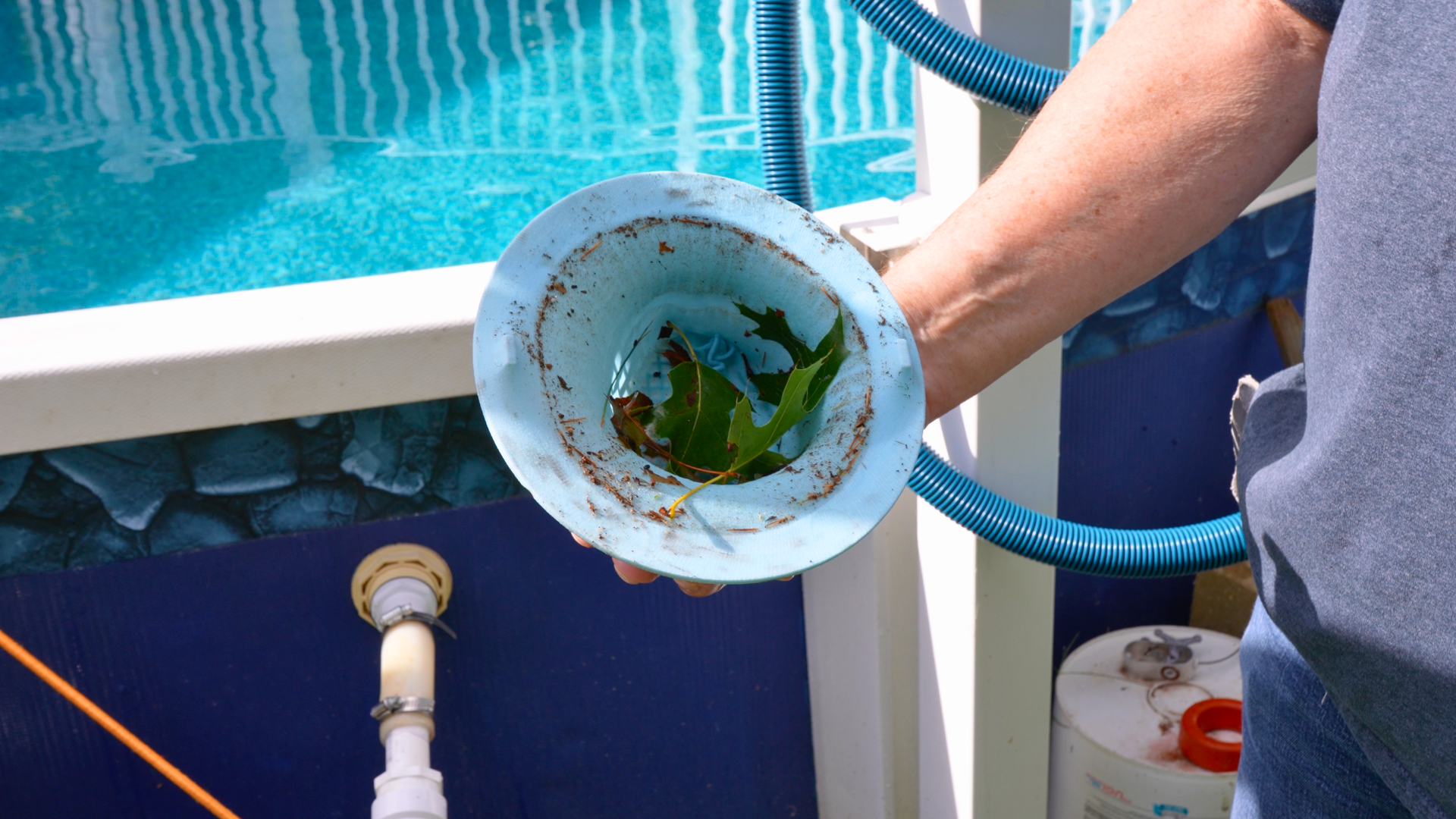
Pool skimmer socks catch fine debris before it clogs your filter. Learn if they're worth it, how to use them, and when to skip them entirely.
Has your pool plaster pooped out? Have the white walls turned gray? Sounds like it's time to acid wash your pool. Get all the how-to info right here.

Want to reduce the number of chemicals in your pool? Try creating your own natural pool cleaner with household products you probably already have on hand.
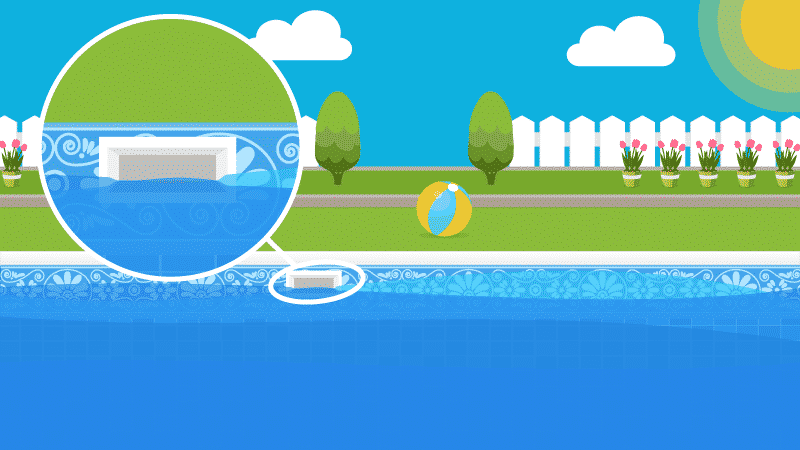
Learn how pool skimmers work, how to keep them clean and running properly, and how to troubleshoot them when things go wrong.
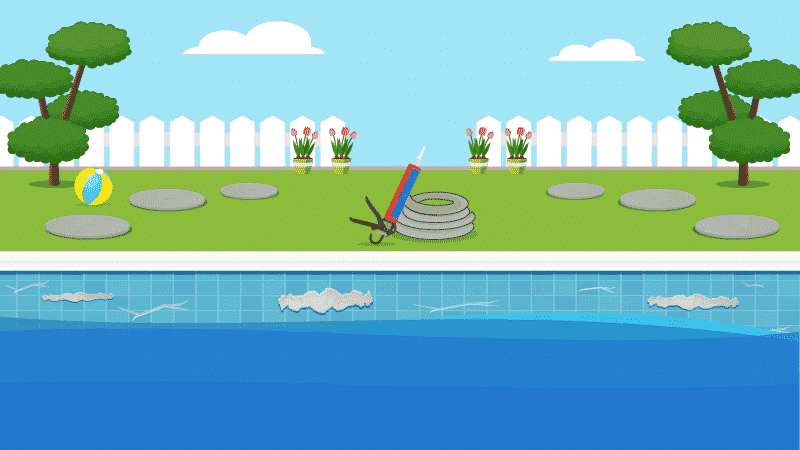
Repairing or replacing pool caulking may sound like a huge chore, but it’s actually pretty simple. More importantly, it can save you thousands of dollars.


