


How to Get Water Off a Pool Cover Fast
 Matt Giovanisci
  December 8, 2025
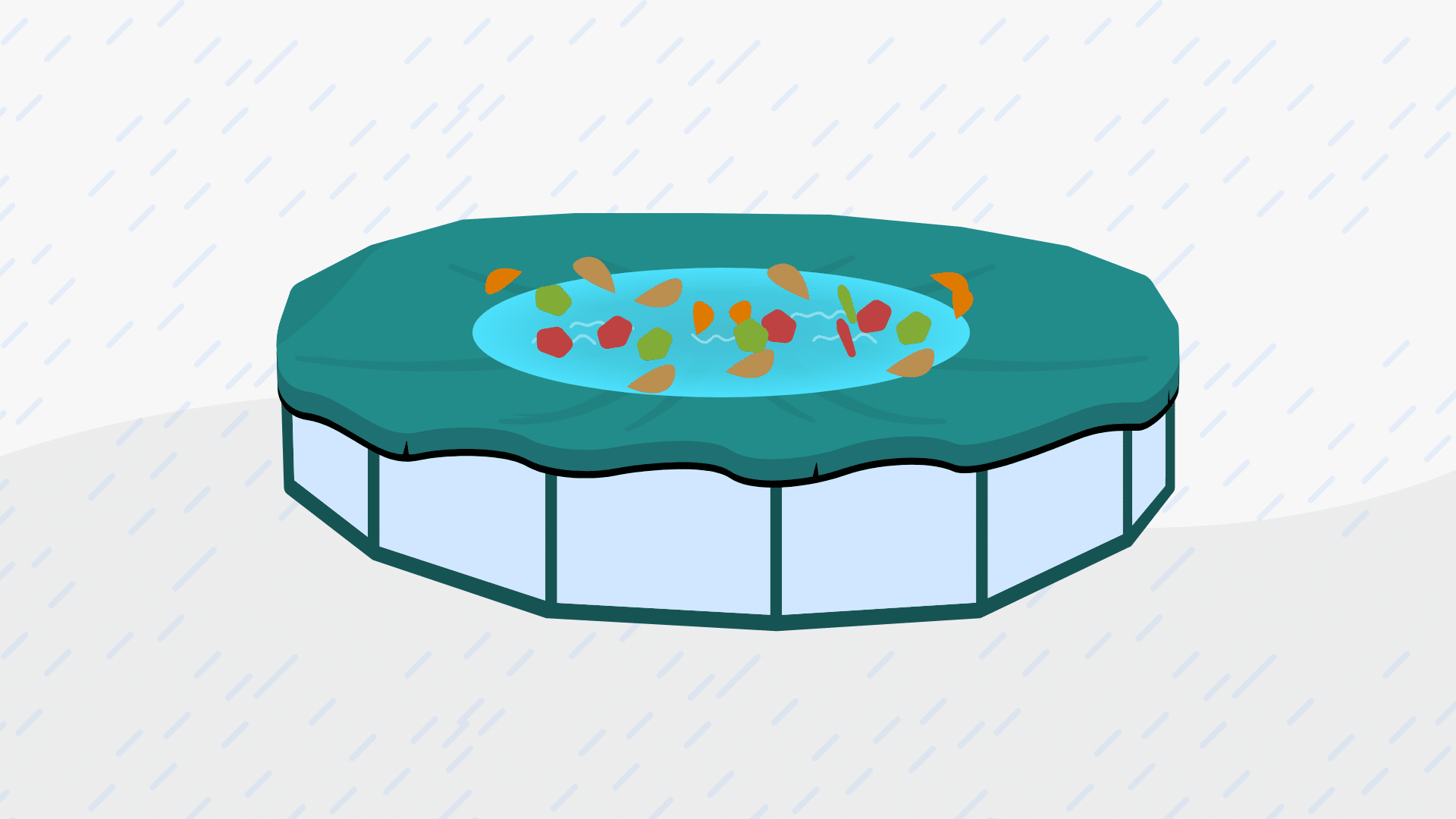
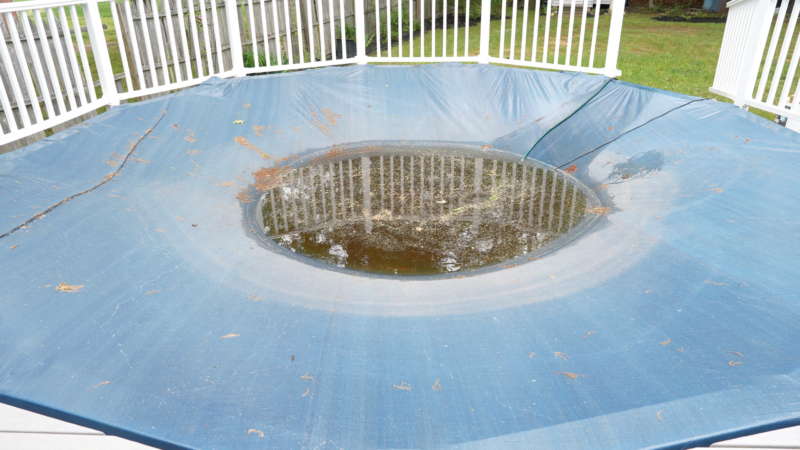
 Standing water on your pool cover should be removed before it damages both the cover itself and your pool walls. The heavy water weight can cause the cover to sag and eventually tear. And if you have an above ground pool, it can pull on the pool walls and cause it to collapse.
There are two ways to quickly remove standing water from your pool cover: use a pool cover pump or a sump pump. You can also prevent water from collecting on your pool cover in the first place by using a mesh cover that allows water and snowmelt to pass through. But this type of cover isn’t the best option if you live in sub-freezing temperatures or if you want clear water when you open in the spring.
Here’s a step-by-step guide on why water accumulates on your cover, how to remove it, and how to prevent it from collecting in the first place.

This is the ultimate guide to keeping your pool sparkling clean throughout the year that contains everything you need to know about taking care of your pool the right way. Including saltwater pools.
Why Standing Water Collects on Your Pool Cover
Rain and snow are obvious culprits for water buildup on a pool cover. But even without precipitation, condensation can cause water to accumulate.
Pool water evaporates and rises as warm vapor. When it hits your cool cover, it condenses into droplets that collect on the surface. This phenomenon happens most in spring and fall, when temperature swings are common.
Your cover’s sturdiness also matters. If it sags or doesn’t have proper support, water pools in low spots instead of draining off the edges. Water weights or tubes that hold the cover down can sometimes create these low points where water collects.
How to Remove Water From a Pool Cover
There are two options for removing a significant amount of standing water from your pool cover: a pool cover pump or a sump pump. Cover pumps are the easiest option to remove water, and sump pumps remove water the fastest. If you have shallow or smaller pockets of water, use a push broom, shop vac, or manual siphon pump.
Use a Pool Cover Pump to Automatically Remove Water
A pool cover pump is the easiest way to remove water from your pool cover. These small electric pumps sit on your cover and automatically turn on when water reaches a certain level.
Place the pump in the lowest spot where water collects. Plug it into a CFCI-protected outlet, and it will run as long as there is at least two inches of standing water. Most pumps can remove thousands of gallons before needing attention.
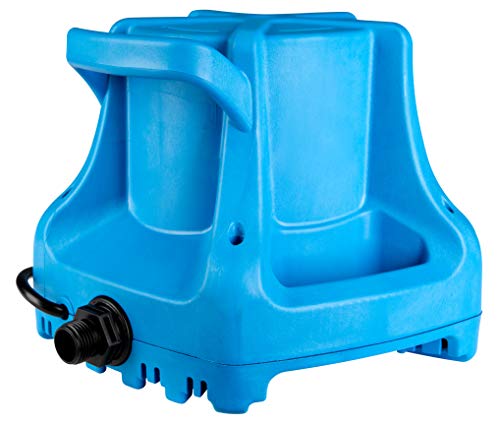
This lightweight pool cover pump removes standing water from above ground pool covers. Includes a removable intake screen for easy cleaning and maintenance, 3/4-inch garden hose connection, and a 550-gallon per hour flow rate.
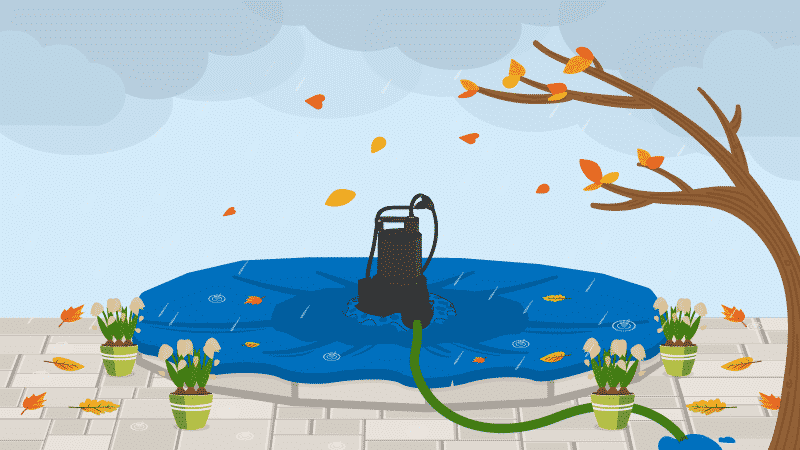
Use a Sump Pump to Quickly Remove Water
These pumps move water much faster than standard cover pumps and are especially beneficial after heavy rainfall or snowmelt. But unlike the cover pump, you will need to run this manually when you notice water accumulation.
Place the pump where the water is deepest. Run the discharge hose away from your pool area. Monitor the pump while it is running, as it may pull debris, and unplug it as soon as it starts sucking in air.

Set it and forget it! The built-in iSwitch technology turns the pump on and off by sensing the presence of water and includes automatic freeze protection to prevent damage during the winter.
Use a Rubber Broom to Push Off Snow or Shallow Water
For light water accumulation, use a rubber broom with a squeegee edge. Push water toward the pool edges where it can drain off naturally.
Work from the center outward in slow, steady strokes. This method takes more effort but works well for maintenance between pump sessions. We also have an article detailing specifically how to remove snow from your pool cover during the winter.

This wide push broom has a pole that makes it longer or shorter so you don't have to bend. The special angle makes sweeping easier, and the big brush head cleans more space at once. Perfect for cleaning patios, driveways, and garages with its strong bristles and comfy handle.
Use a Shop Vac or Manual Siphon Pump for Small Puddles
A wet/dry shop vacuum (also known as a shop vac) can remove water from hard-to-reach areas. Use it for corners or spots where your cover pump can’t fit or where the water is shallow. Only use shop vacs rated for water, and empty the tank frequently since these hold less water than dedicated pumps.
You can also use a manual siphon pump for the same job. These options work best for final cleanup after using a larger pump.
How to Prevent Water From Collecting
Here’s how to minimize water buildup while your pool is closed.
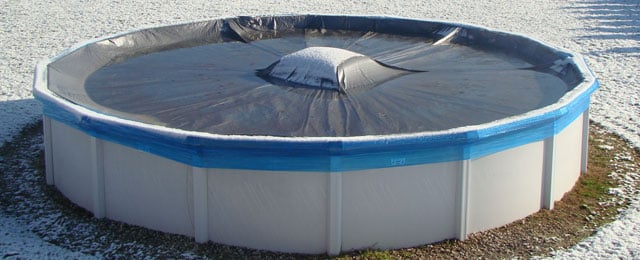
Install a Pool Air Pillow Under Your Cover
A pool air pillow sits in the center of your pool under the cover, creating a peak that helps water run off to the sides instead of pooling in the middle. Inflate the pillow about 60-80% full. Secure it with ropes or straps to keep it centered.
Keep Your Cover Properly Tensioned
Loose covers sag and create pockets where water collects. Check your cover cables or straps periodically to make sure they’re tight. Walk around your pool and inspect the edges. Tighten any loose areas where the cover is drooping.
Use a Mesh Cover or a Solid Cover with Drainage
Mesh covers allow water to drain through into your pool. This eliminates standing water, but it means you’ll deal with more diluted pool chemistry in the spring.
A hybrid cover (or a solid cover with a drain panel) features built-in mesh drainage that allows water to filter through to the pool. This cover still blocks debris and sunlight like a solid cover, and ot requires less spring cleanup compared to a mesh cover.
However, any cover that has drainage means your pool’s water level will rise over time. High water levels can be an issue for pools in sub-freezing temperatures, causing cracked tiles and damaged skimmer intakes. Check your water levels throughout the winter if your cover has drainage.
Check and Clean Drain Holes
Some solid covers have built-in drain panels or grommets that allow some water to pass through. Make sure these areas aren’t clogged with leaves or debris.
Clear any blockages so water can drain properly. Even small drainage points can prevent major water accumulation over time.
Key Takeaways
- Use a pool cover pump to automatically remove standing water from your cover
- Use a sump pump to manually remove standing water
- Use a rubber broom, shop vac, or manual siphon pump to remove shallow water
- Add an air pillow under your cover to create drainage peaks that prevent water from pooling in the center
- Consider a mesh cover or a solid cover with drainage features that allow water to drain through to your pool
- Regularly check the tension of your cover and clean any drain holes
3 Ways We Can Help With Your Pool
- The Pool Care Handbook: An illustrated guide to DIY pool care, including water chemistry, maintenance, troubleshooting, and more.
- The Pool Care Video Course: You’ll get 30+ step-by-step videos and a downloadable guide with everything you need to know about pool maintenance.
- The Pool Care App: Enter your water test results. Get a custom treatment plan. Know exactly what chemicals to add to keep your pool clear.