

What’s in a Pool Opening Kit?
 Matt Giovanisci
  February 24, 2026
 A pool opening kit has the essential chemicals you need to balance your water and get it swim-ready after winter. But before you add anything to the water, you need to know which chemicals are necessary, which are optional, and whether a pre-packaged pool opening kit is actually worth buying.
What’s in a Standard Pool Opening Kit
Most kits are sized by pool volume, typically up to 7,500 gallons (28,390 liters) or 10,000 gallons (37,854 liters) and up. A standard pool opening kit usually includes some combination of the following:
- Shock: Granular chlorine (like cal-hypo shock) or non-chlorine shock to kill bacteria, algae, and other contaminants
- Algaecide: Helps prevent and treat algae growth
- Water clarifier: Coagulates small particles to improve water clarity
- Stain and scale preventer: Protects your pool surfaces from mineral deposits and staining
- Test strips: Measures pH, chlorine, total alkalinity, and stabilizer levels
- Stabilizer/conditioner: Cyanuric acid (CYA) to protect chlorine from UV degradation
- Oil absorber: A scum-absorbing sponge or ball to remove oils and lotions from bathers

Everything you need to open your pool. All pre-measured so there's no guessing. Shock, clarifier, algaecide, and oil absorber work together to get your water clean and ready.
Are Pool Opening Kits Worth It?
The honest answer: it depends on what chemicals you already have.
A kit makes the most sense if you’re starting from scratch or if your supplies ran out over the winter. Bundled kits can save money compared to buying each chemical separately, but only if you actually need everything in the kit.
Many kits include algaecide, stain and scale preventer, and clarifier that you might not need. If you shock your pool properly and balance your water, algaecide and clarifier are usually unnecessary. The shock itself handles algae spores and bacteria. Your filter handles the clarifying. And stain and scale preventer is only necessary if you have metals or hard water.
Also, you will still need to buy extra chemicals that aren’t included in most kits. This includes pH increaser,
So before buying a kit, take stock of what you already have and what you really need. If you’re only missing shock and don’t need a clarifier or stain and scale preventer, skip the kit.
What Chemicals Do You Need When Opening Your Pool?
You don’t need anything special to open your pool. Here’s what you actually need on hand:
The essential chemicals:
- Shock (cal-hypo shock, liquid chlorine, or dichlor) to sanitize the water
- Alkalinity increaser (or baking soda) to balance total alkalinity
- pH increaser (soda ash) to raise low pH
- pH decreaser (muriatic acid) to lower high pH
- Chlorine sanitizer granules, tablets, or salt for ongoing maintenance
You may also need:
- Chlorine stabilizer, a.k.a. cyanuric acid (CYA), to protect against UV breakdown
- Calcium hardness increaser to protect pool surfaces and equipment
- Metal sequestrant, if your source water contains iron, copper, or other metals
Once you test your water, here are the target ranges to hit before swimming:
- Total Alkalinity: 80–120 PPM
- pH: 7.4–7.6
- Chlorine: 1–3 PPM (3 PPM is ideal)
- Cyanuric Acid (CYA): 30–50 PPM (up to 80 PPM for salt water pools)
- Calcium Hardness: 175–225 PPM for vinyl liner and fiberglass pools; 200–275 PPM for concrete and plaster pools
What Order to Add Pool Opening Chemicals
Whether you use a pool opening kit or not, the order of adding chemicals matters. Adding them out of sequence can waste product or cause a reaction. First, make sure your pump is running. Then follow these steps:
Step 1: Test Your Pool Water
Use test strips or a liquid test kit. Check pH, total alkalinity, chlorine, CYA, and calcium hardness before adding anything. Take note of these numbers on a piece of paper or in the Pool Care App.
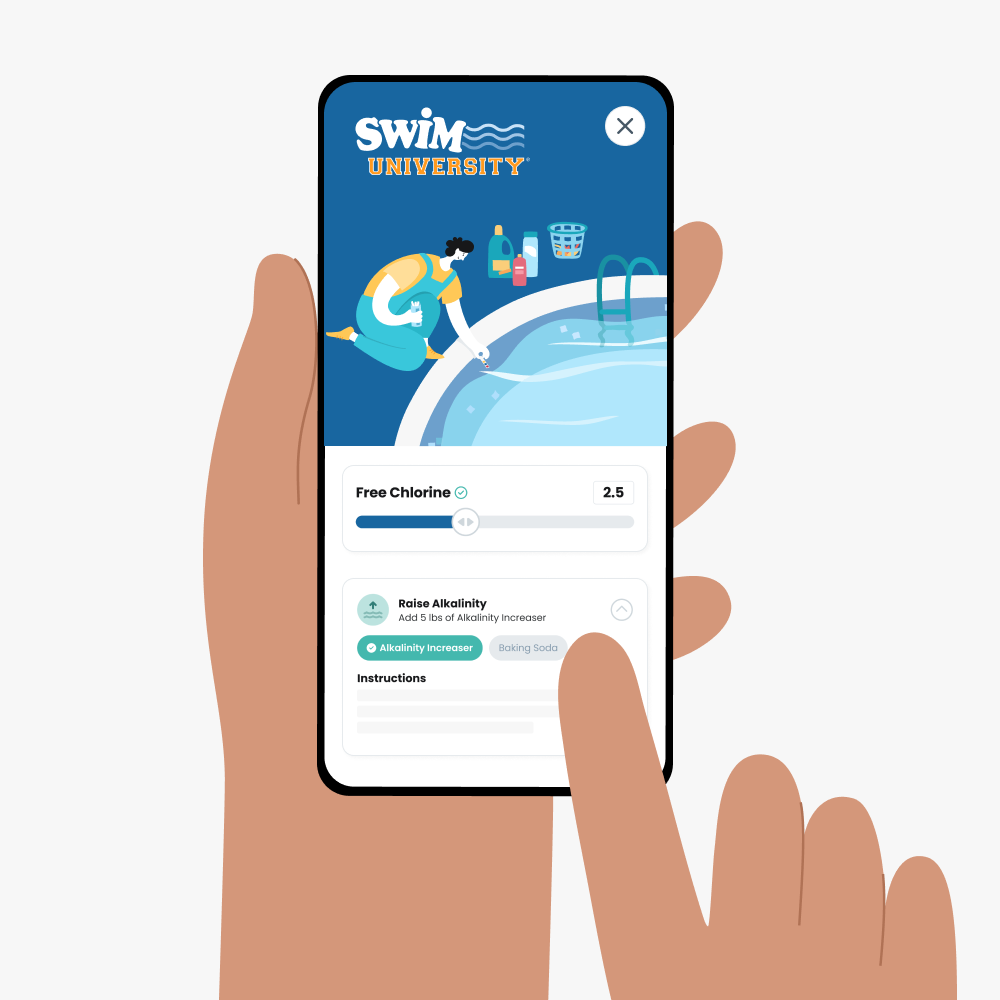
Enter your water test results. Get a custom treatment plan. Know exactly what chemicals to add to keep your pool clear.
Step 2: Add Shock
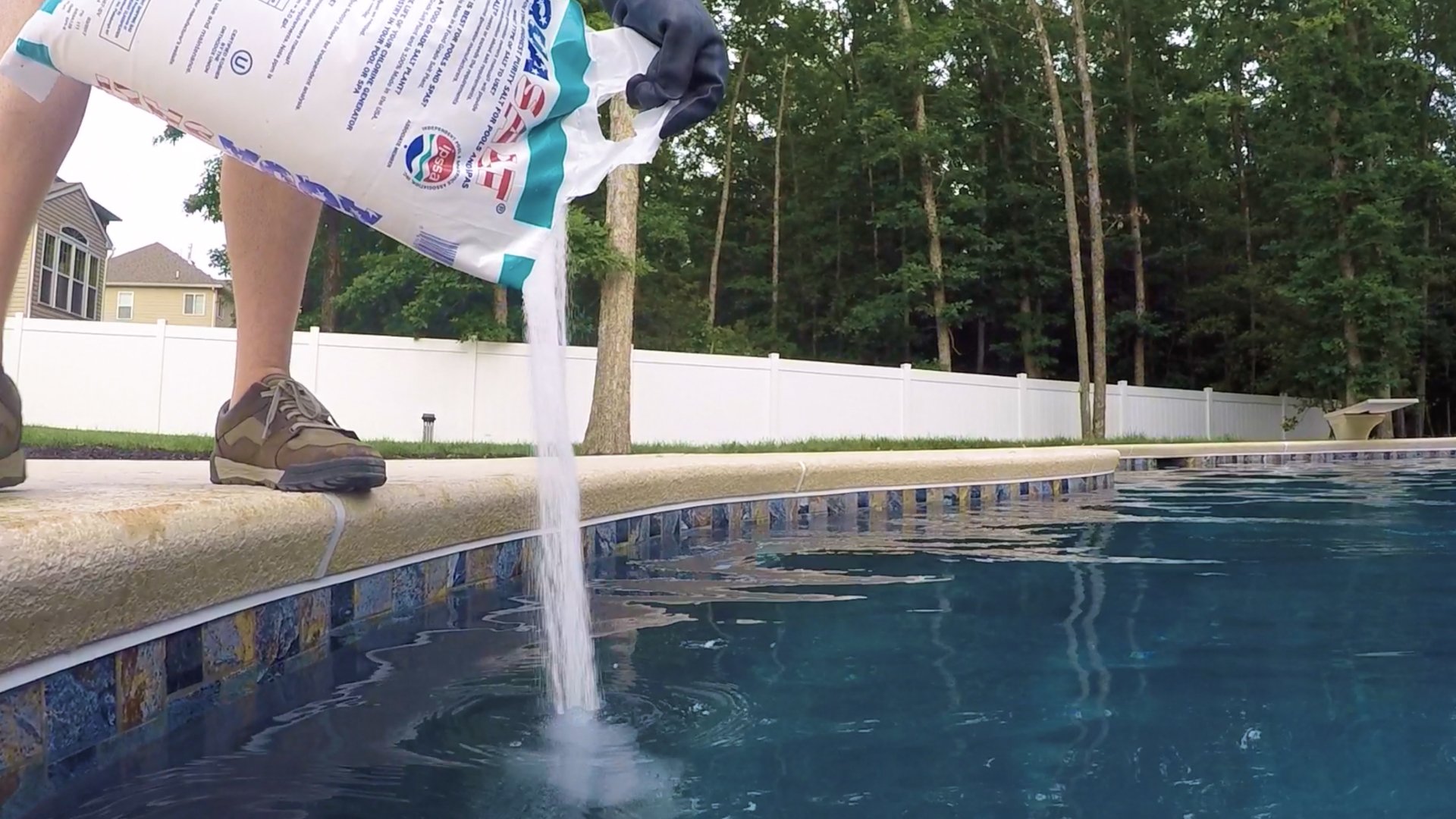
Shocking your pool is the first big step. This kills any algae or bacteria that’s developed in the winter. A standard opening dose is 2 pounds (0.9 kg) of cal-hypo shock per 10,000 gallons (37,854 liters). That’s a double dose, which is recommended at opening even if your water looks clear. Add a triple or quadruple dose if the water is green. Add shock around the perimeter of the pool at dusk with the pump running. Then run your filter for 12 to 24 hours.
Salt water and fiberglass pool owners should use dichlor shock instead of cal-hypo, which can cause calcium buildup in your salt cell. If you’re not sure what shock is right for your pool, check out our guide to shock here.
Step 3: Adjust alkalinity first, then pH
After shocking, retest and adjust total alkalinity first. Your target is 80–120 PPM. Let it circulate for at least 20 minutes before retesting. Then adjust pH to 7.4–7.6. These two levels affect each other, so always do alkalinity before pH.
Step 4: Add chlorine sanitizer
Check your chlorine levels. If they’re already between 1 and 3 PPM after shocking, hold off on adding more. Set up your chlorine dispenser or floater and plan to add sanitizer at least once a week going forward.
Step 5: Add CYA if needed
If you’re using stabilized chlorine tablets or dichlor granules, you can skip this step — they already contain CYA. If you use a salt water pool or unstabilized chlorine, add cyanuric acid to bring your levels to 30–50 PPM.
Step 6: Add calcium hardness increaser if needed
Finally, check your calcium hardness and adjust if necessary. Low calcium can lead to etching, staining, and equipment damage over time.
Salt water pool owners: After balancing your other chemicals, add salt and start up your salt water generator.
If you need more help with pool startup chemicals, check out our guide to 6 Pool Opening Chemicals.
Key Takeaways
- Pool opening kits are convenient, but you may already have most of the chemicals you need. Check your supplies before buying.
- A standard kit typically includes shock, algaecide, clarifier, stain and scale preventer, test strips, and stabilizer, but not all of those are always necessary.
- You’ll also need regular balancing chemicals, like shock, alkalinity increaser, pH increaser or decreaser, and chlorine sanitizer.
- Always add chemicals in the right order: shock first, then alkalinity, then pH, then chlorine, then CYA, and calcium hardness last.
- Use a double dose of shock when opening. Even if your water looks clear, algae spores and bacteria are likely present.
- Target these levels before swimming: alkalinity 80–120 PPM, pH 7.4–7.6, chlorine 1–3 PPM, CYA 30–50 PPM, and calcium hardness 175–275 PPM, depending on pool type.
3 Ways We Can Help With Your Pool
- The Pool Care Handbook: An illustrated guide to DIY pool care, including water chemistry, maintenance, troubleshooting, and more.
- The Pool Care Video Course: You’ll get 30+ step-by-step videos and a downloadable guide with everything you need to know about pool maintenance.
- The Pool Care App: Enter your water test results. Get a custom treatment plan. Know exactly what chemicals to add to keep your pool clear.