


How Long Should I Run My Pool Pump Every Day?

Running your pool pump the right amount of time keeps your water clean, your chemicals balanced, and your energy bill from going through the roof. Get it wrong, and you’ll end up with cloudy water, algae issues, or chlorine levels that keep dropping.
How Long Should a Pool Pump Run Every Day?
Pool pumps should run 8 to 12 hours daily, with some of that time during the hottest part of the day. In high heat or high-use periods, run the pump for 12–16 hours, or up to 24 hours if treating cloudy water or algae.
If you want a more accurate calculation, check out this video or keep reading for how long to run your pump based on your pump size or the outside temperature
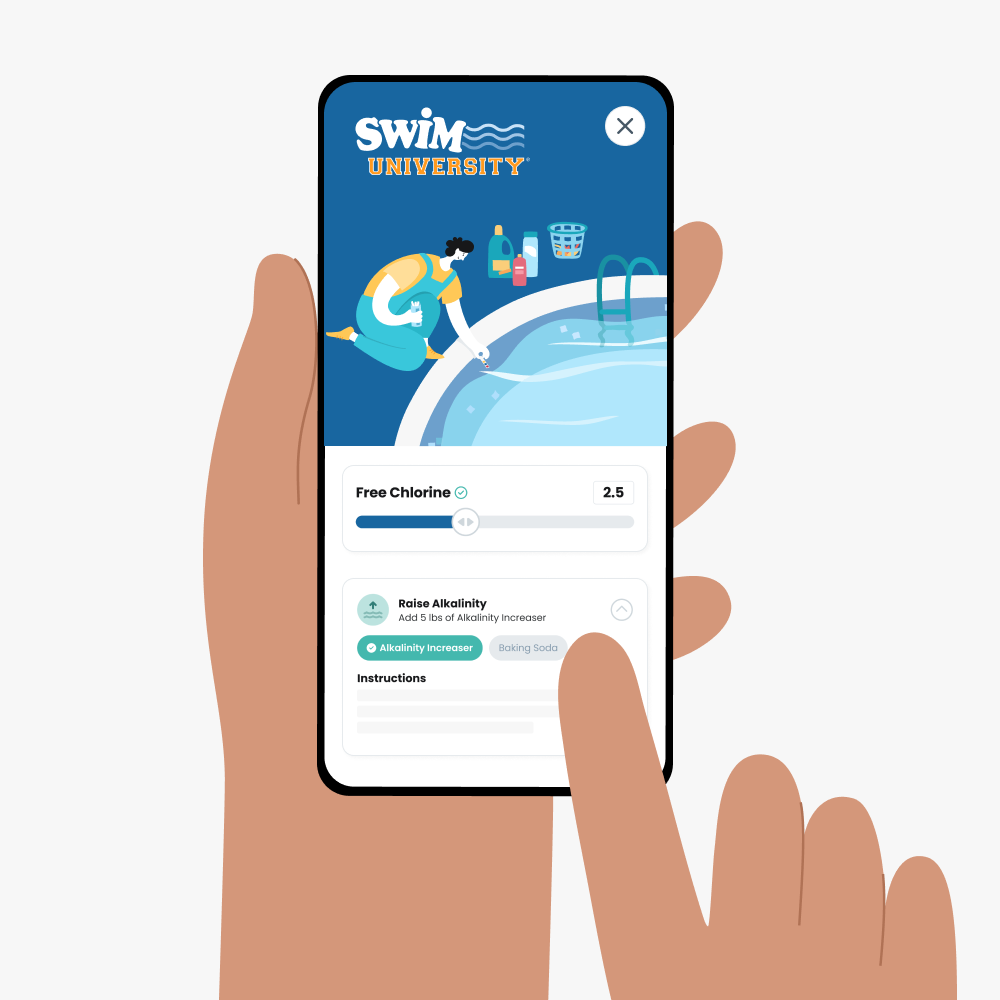
Enter your water test results. Get a custom treatment plan. Know exactly what chemicals to add to keep your pool clear. Saltwater and hot tub compatible.
Run Your Pump Based On Your Turnover Rate
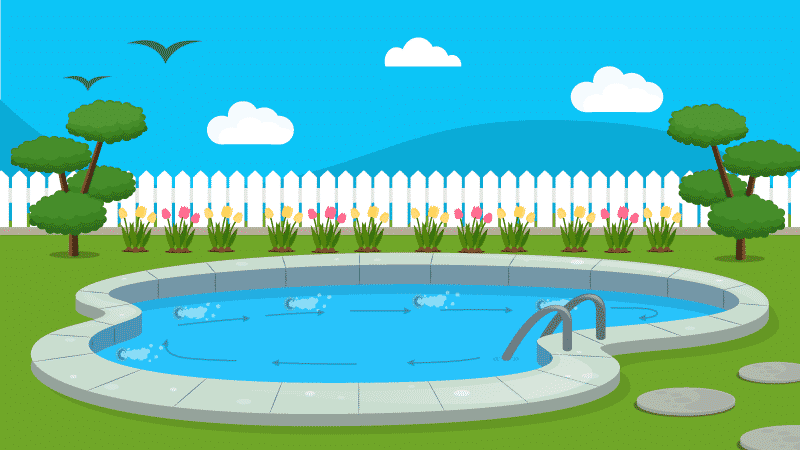
Your turnover rate is how long it takes your pump to filter all the water in your pool at least once. A full turnover usually takes 8 to 10 hours, and this is the minimum amount of time you want to run your pump.
To get your exact turnover time, you need two numbers: your pool’s volume in gallons (or liters) and your pump’s flow rate in gallons per minute (GPM).
Check your pump’s manufacturer label or owner’s manual for the GPM rating. If you don’t know your pool’s volume, use our pool calculator to figure it out:
Pool Volume Calculator
Pick your pool shape and enter its dimensions. The volume updates as you type.
Then, use this formula to calculate your turnover rate:
Pool Volume (gallons) ÷ Pump Flow Rate (GPM) = Turnover Time (minutes)
For example, if you have a 20,000-gallon (75,700-liter) pool and a pump rated at 40 GPM (151 LPM), divide 20,000 by 40 to get 500 minutes. Then divide 500 by 60 to convert to hours. That means your turnover time is 8.3 hours per day.
Pool Turnover Rate Calculator
Enter your pool volume and pump flow rate to see how long it takes to cycle all your water. The result updates as you type.
 Track your pump schedule in The Pool Care App
→
Track your pump schedule in The Pool Care App
→
Not sure of your flow rate? Check the pump’s curve chart, or time how long it takes to fill a 5-gallon bucket from a return jet and multiply out to a minute.
Adjust Your Pump Run Time for Hot Weather
Hot weather is hard on pool water. UV rays break down chlorine faster, and warm stagnant water is a breeding ground for algae. During peak summer heat, you may need to turn your water over more than once per day.
The 10° Pump Run Time Rule
In hot weather, run your pump for 1 hour for every 10°F (5.6°C) of air temperature. So if it’s 80°F (27°C) outside, run your pump for 8 hours. At 100°F (38°C), bump it up to 10 hours.
Use the temperature rule as your baseline. On especially hot days above 90°F (32°C), consider adding an extra 2 hours to your pump run time schedule. If you notice cloudy water or algae forming, increase your run time in 2-hour increments until it clears up.
The sun is strongest midday, so try to have your pump running during those hours. It helps keep chlorine active and fights algae when conditions are most favorable for growth.
Run Your Pump Based On Your Pump Type
The type of pump you have directly affects how long you should run it. Each type has a different efficiency level and optimal runtime.
Single-speed pumps run at one constant speed, all the time. They’re the least energy-efficient option. During swim season, use the 1-hour-per-10°F rule as your guide, and plan to run it longer during hot stretches or algae flare-ups.
Variable-speed pumps are the most efficient option and should actually run longer but at lower speeds. A common variable speed pump schedule is about 12 hours per day: run it 3 to 4 hours on high speed for chemical circulation and debris removal, then 8 to 9 hours on low speed for basic filtration. Because low speeds use so little electricity, it can be more cost-effective to keep a variable-speed pump running continuously (24/7) rather than cycling it on and off.
One important note: if you have a salt water chlorine generator or pool heater, make sure your pump is running fast enough to trigger those flow sensors. They won’t operate properly at very low speeds.
What Is the Best Time of Day to Run a Pool Pump?
When you run your pump matters just as much as how long. A few smart scheduling choices can save you real money over a season.
- Run your pump during the hottest part of the day. During swim season, the best time to run your pump is when the sun is strongest, typically midday through the afternoon. That’s when UV rays are breaking down your chlorine the fastest, and algae growth is at its peak (algae loves stagnant water). Running your pump during those hours keeps water moving and your chemicals working.
- Avoid running your pump during peak electricity hours. Check with your utility provider, but these are typically in the early evening, when demand is highest. Avoiding those windows can lower your energy costs without changing how much you filter.
- Break up your pump run time. The pump doesn’t have to run in one continuous block. As long as it hits its minimum run time in any 24-hour period, you’re good. You could run it for 3 hours in the morning, 5 hours in the afternoon, and 2 hours overnight to hit 10 hours total.
- Run your pump to mix chemicals. Always run your pump after adding chemicals to your pool. The water needs to be moving to distribute them evenly throughout the pool.
Signs You’re Not Running Your Pump Enough
Your pool will usually tell you when it needs more circulation. Watch for these red flags:
- Cloudy water that doesn’t clear up after a day or two
- Weak flow coming from your return jets
- Algae starting to appear on the walls or the floor
- Chemical levels that won’t stay balanced no matter what you add
- Debris that keeps accumulating instead of getting filtered out
If you notice any of these, try adding 2 to 4 hours to your daily pump runtime. Also, make sure you’re cleaning or backwashing your filter regularly, and emptying your skimmer and pump baskets at least once a week.
Should Your Pool Pump Be On All the Time?
Not necessarily, but it depends on your pump type and the season. For most pool owners with a single-speed pump, running it 24/7 is overkill and will cost you more on your energy bill than needed. Aim for at least 8 hours per day during swim season instead.
Variable-speed pumps are a different story. Because low speeds use so little electricity, running one continuously can actually be more cost-effective than cycling it on and off. If you have a variable-speed pump, keeping it on 24/7 at low speed is a perfectly reasonable choice.
The one time any pump should run continuously is when temperatures drop below 40°F (4°C). Moving water won’t freeze in your pipes, so running your pump nonstop during a cold snap is the best way to prevent freeze damage.
How Many Hours Should You Run a Pool Pump in the Summer?
The short answer is at least 8 hours per day during swim season. That’s enough time to turn over all the water in most residential pools at least once. One full turnover per day keeps your chemicals distributed and your water clear.
In hot weather, use the 1-hour-per-10°F rule. At 80°F (27°C), run it 8 hours. At 90°F (32°C), run it 9 hours. At 100°F (38°C), run it 10 hours. Hot weather means more algae risk and faster chlorine loss, so extra runtime is worth it.
Variable-speed pump owners should plan for around 12 hours per day total. About 3 to 4 hours on high speed and 8 to 9 hours on low speed. The low-speed hours are cheap to run and do most of the heavy filtration lifting.
How Many Hours Should You Run a Pool Pump in the Winter?
In mild winter weather when temperatures stay above 40°F (4°C), you can cut back to 4 to 6 hours per day. Cold water below 60°F (16°C) slows algae growth significantly, so your pool doesn’t need as much circulation. Less usage also means less filtering is needed overall.
The 1-hour-per-10°F rule still applies here. If it’s 50°F (10°C) outside, 5 hours of runtime is plenty. If your pool is still in use during winter, bump it back up to at least 8 hours.
When temperatures approach or drop below 40°F (4°C), run your pump continuously until they rise again. Water expands when it freezes, and even a short pump shutdown during a freeze can cause serious damage to your pipes and equipment. The cost of running your pump around the clock is far less than replacing cracked plumbing.
Key Takeaways
- Run your pump at least 8 hours per day during swim season to achieve one full water turnover.
- Use the 1-hour-per-10°F rule as a quick shortcut: 80°F (27°C) = 8 hours, 100°F (38°C) = 10 hours.
- Variable-speed pumps should run about 12 hours per day (3 to 4 hours on high, 8 to 9 hours on low).
- Run your pump during peak sun hours to fight algae and protect chlorine from UV breakdown.
- Split your run time across non-peak electricity hours to cut energy costs without sacrificing filtration.
- Watch for warning signs like cloudy water, algae growth, or weak jets, and increase runtime by 2 to 4 hours if you spot them.