


How to Fix Chlorine Lock and Chlorine Demand

Lock and demand are terms you’ll hear when pool or hot tub chlorine won’t hold. But “chlorine lock” is a myth. What people call chlorine lock is usually a misunderstanding of cyanuric acid. It doesn’t stop chlorine from sanitizing your water; it stabilizes chlorine so it lasts longer.
For pool and hot tub owners who handle water care themselves, the real issue to understand is chlorine demand, which is when something in the water uses up chlorine faster than normal.
Below, we’ll clear up the chlorine lock misconception, show what chlorine demand is, what causes it, how to tell which problem you actually have, and how to fix it with the right shock treatment and accurate pool volume calculations so you can get back to clear, safe, healthy water.
How to Fix Chlorine Demand/Lock
- Maintain CYA: Keep cyanuric acid levels between 30-50 ppm for an outdoor chlorine pool or 60-80 ppm for a saltwater pool. But never let it get above 90 ppm.
- Lower CYA: If cyanuric acid is too high, partially drain and refill your pool with fresh water to dilute it. Or you can switch to using liquid chlorine and let it come down naturally (but slowly) over time. And lastly, you can try using an expensive Cyanuric Acid Reducer (but I don’t recommend this because in my experience it rarely works).
- Feed the beast: Treat chlorine demand by superchlorinating your pool using fast-acting, unstabilized chlorine like calcium hypochlorite (cal-hypo) or sodium hypochlorite (liquid chlorine) to achieve breakpoint chlorination.
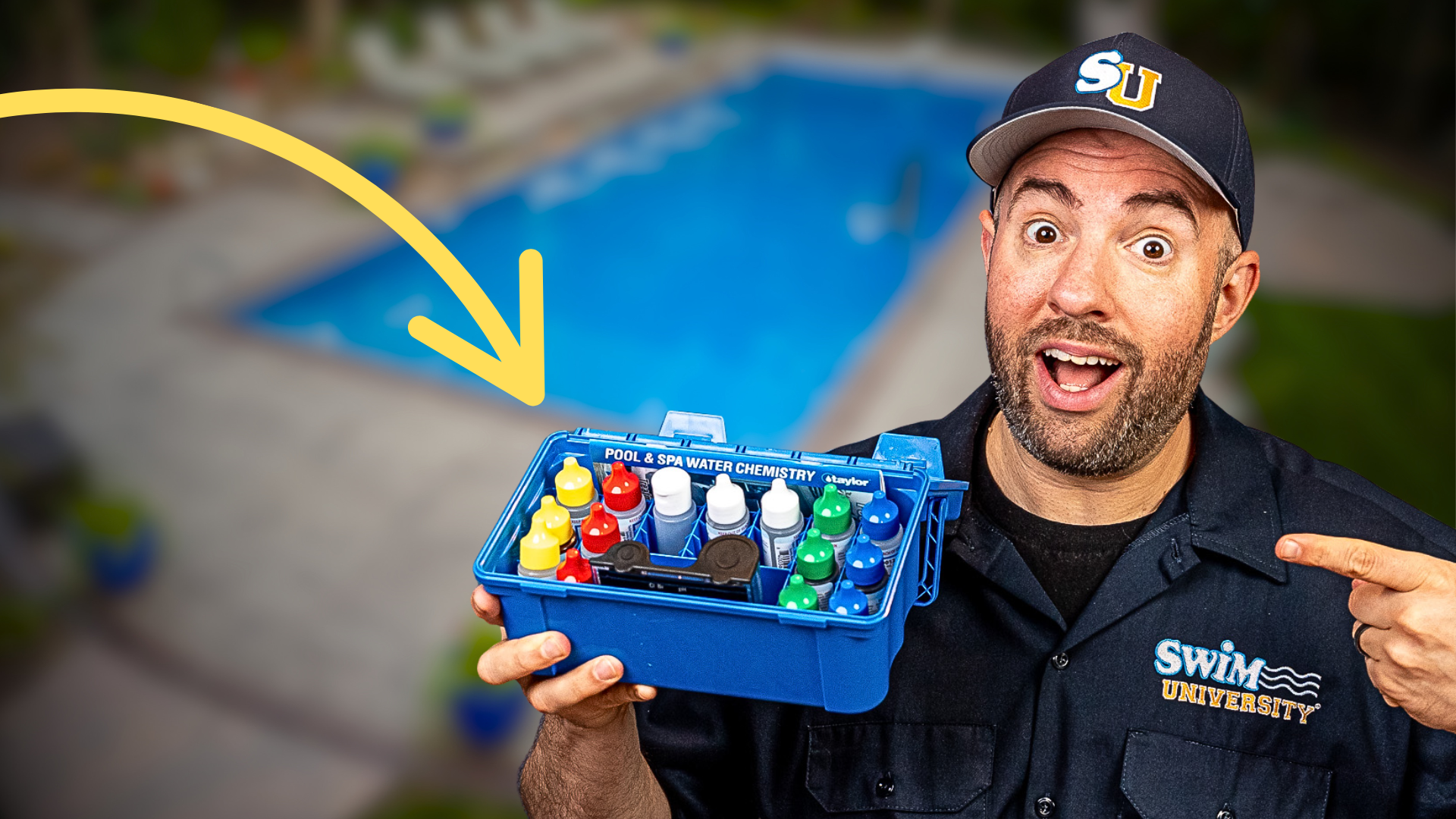
- Test your pool water regularly: Monitor free chlorine, total chlorine, and cyanuric acid levels. You can use The Pool Care App to stay on top of this.
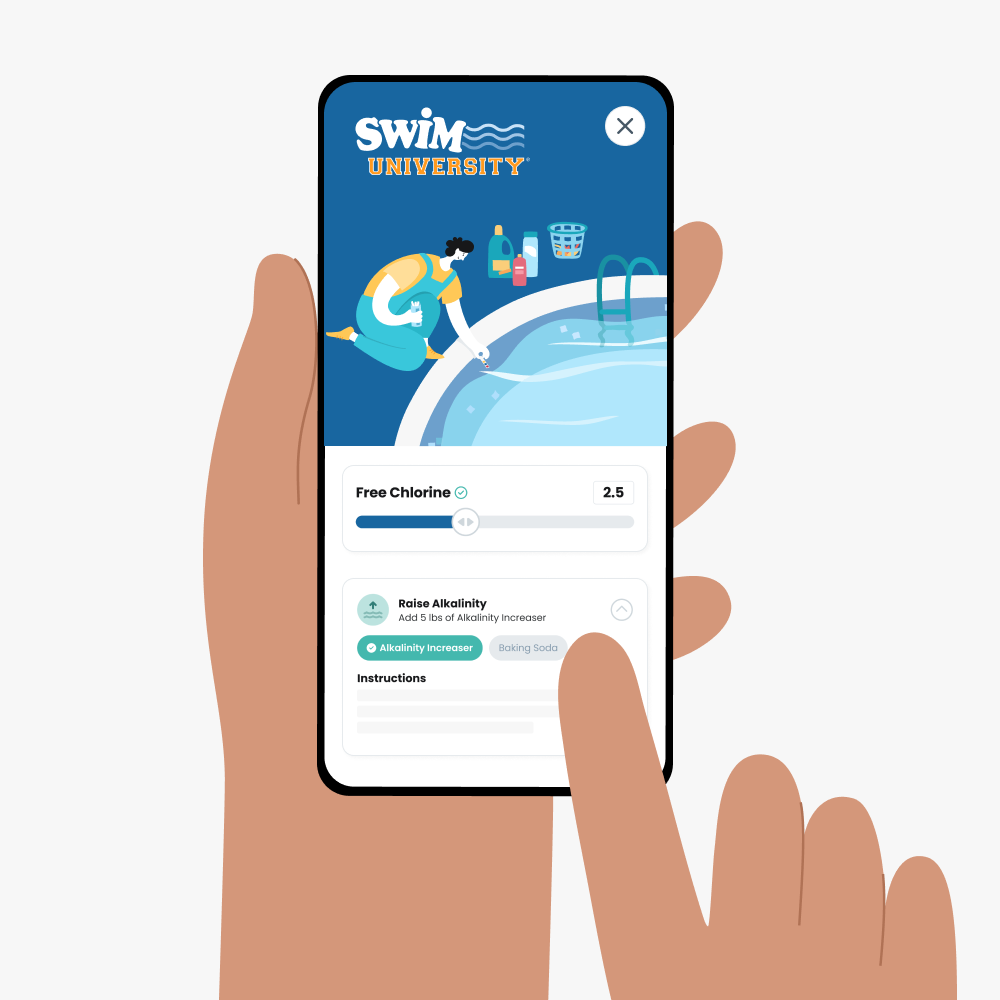
Enter your water test results. Get a custom treatment plan. Know exactly what chemicals to add to keep your pool clear. Saltwater and hot tub compatible.
What is Chlorine Lock?
There’s a theory that chlorine can be inhibited from doing its job by cyanuric acid. The theory goes that, when this happens, the chlorine won’t be able to function as a sanitizer because it’s “locked up.”
This is not a real thing.
There’s a reason cyanuric acid is also known as a chlorine stabilizer. It’s because it actually helps chlorine to do its job by preventing it from breaking down as quickly in sunlight as it would if it weren’t stabilized.
By the way, Cyanuric Acid (CYA) goes by a few different product names in the pool industry:
- Chlorine Stabilizer
- Pool Stabilizer
- Pool Conditioner
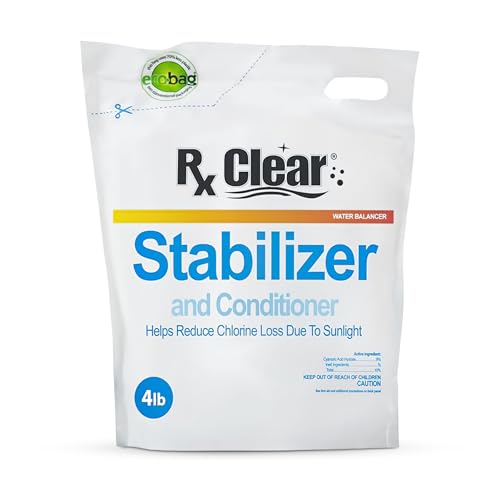
Keep your chlorine from being burned off too quickly by the sun's UV rays. CYA will help you keep a better chlorine reading in your pool.
Also, if you use 3″ chlorine tablets (trichlor) or granular/powdered chlorine (dichlor), those products contain a bit of cyanuric acid. So keep in mind that each time you add these chemicals to your pool, you’re adding a little bit of CYA. Which, if you don’t keep an eye on it, can lead to what I call “CYA creep.”
Can You Have Too Much Chlorine Stabilizer in Your Pool?
Yes! And too much cyanuric acid is what people usually mean by chlorine lock, because high levels of stabilizer can reduce chlorine’s effectiveness.
Unlike chlorine, CYA does not dissipate on its own, so if CYA levels get too high, the problem is caused by buildup and has to be lowered through dilution.
If that happens, partially drain the pool and do a refill with fresh water to reduce it. Just follow the manufacturer’s instructions when you use it, perform regular pool water testing to see what’s going on, and keep the water balanced.
What is Chlorine Demand?
OK, this is a real thing. Chlorine’s effectiveness is finite. If there’s a high bather load (aka more swimmers at one time), or there’s just a lot of debris and other organic contaminants in the pool, more chlorine is required to properly sanitize the water and kill bacteria.
In other words, fighting those contaminants in the water demands more chlorine. So this situation is known as chlorine demand.
When free chlorine reacts with organic contaminants, it can form chloramines, which reduce free chlorine levels and leave less free sanitizer available. It’s rare, but not unheard of.
What Causes Chlorine Demand and Cyanuric Acid Issues?
Aside from bather load and debris, you may also run into this issue in the spring when you open your pool.
During the winter, as the water sat stagnant and untreated, it may have accumulated quite a bit of organic contaminants that will take a lot of chlorine to neutralize. This could also happen if the pool is open, but hasn’t been cared for properly or in a long time.
Repeated use of stabilized chlorine products can raise CYA levels over time, especially through the swimming season or from year to year, making it harder to maintain the right balance in your water chemistry.
Heavy rainfall can also be a factor, depending on the chemical makeup of the rainwater. There’s no way to test this for sure, but if you have trouble maintaining a chlorine reading after a rainstorm, chances are you have chlorine demand.
Runoff can introduce contaminants into the water that will essentially use up all the chlorine. Be sure to keep fertilizers or other non-pool chemicals away from the pool.
Good filtration and circulation also help maintain effective chlorine levels and head off problems before they get worse.
How to Diagnose Chlorine Demand
If you’ve just added chlorine to the pool, or you’ve used chlorine shock, and you test the water and still get a low reading, interpret it alongside CYA and pH, not in isolation, because proper pH improves how effectively chlorine sanitizes.
If free chlorine stays low relative to cyanuric acid, especially when CYA levels are above 90 ppm, many pool owners describe that point as chlorine lock.
How to Cure Chlorine Demand
All you need to do is superchlorinate the water.
The fastest way to do this is by shocking your pool. But not the way you normally do. Your best bet is to triple shock it with calcium hypochlorite (cal-hypo) or sodium hypochlorite (liquid chlorine), an unstabilized chlorine option that will not add cyanuric acid. This helps break heavy chloramine buildup through breakpoint chlorination.

This fast-acting, quick-dissolving swimming pool shock kills bacteria, controls algae, and destroys organic contaminants in pools.
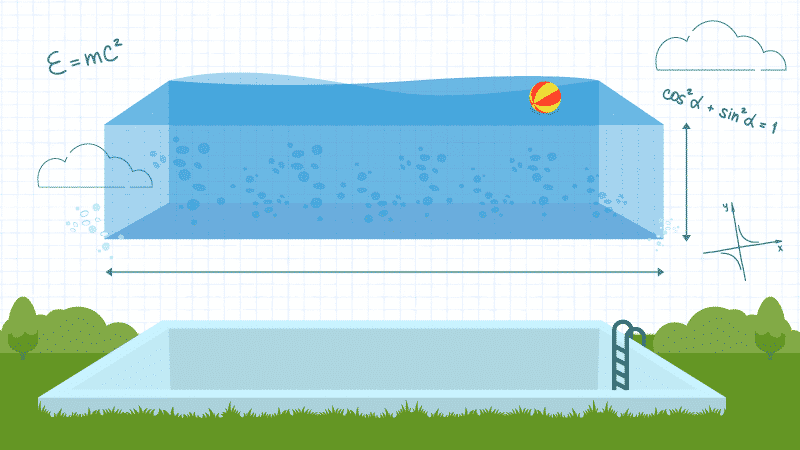
To triple shock, add 3 pounds of cal-hypo shock per 10,000 gallons of water. Breakpoint chlorination is basically reaching about 10 times the chloramine level. You’ll need to know your pool’s volume to do this correctly, which you can determine with a pool volume calculator.
Before adding the shock, make sure the chlorine stabilizer level is somewhere in the range of 30-50 ppm as a troubleshooting target when you suspect chlorine lock. To help prevent the problem, cyanuric acid should not exceed 90 ppm; if it does, dilute the pool instead of just throwing in more chemical.
Also, remember to shock in the evening because the sun’s UV rays destroy chlorine’s effectiveness, which is the very reason you’re using stabilizer.
Are Chlorine Lock and Chlorine Demand the Same Thing or Just a Pool Myth?
These terms are sometimes used interchangeably, but they’re not the same issue.
Chlorine demand is real and solvable by adding enough chlorine to your pool until free chlorine starts to register on your liquid test kit or test strips.
Chlorine lock is a false issue, a term that some pool companies and experts will use when they really mean chlorine lock (should say chlorine demand). So if a pool pro tells you your pool is suffering from chlorine lock, you’ll know the fix is still to add more chlorine to the pool.
That show wouldn’t last long anyway. And neither will chlorine demand if you take swift action to correct it. Proper pH, total alkalinity, and total chlorine testing can also help you avoid confusing chlorine demand with so-called chlorine lock.
A salt system can help maintain sanitizer levels week after week, though testing is still required. And as for chlorine lock, don’t let that old wives’ tale divert you from addressing problems that may actually develop, or from enjoying your well-cared-for pool.
An illustrated, step-by-step guide to taking care of your pool yourself. Works for chlorine and saltwater pools.
Key Takeaways
- Chlorine lock is a myth; the real issue often involves high cyanuric acid (CYA) levels reducing chlorine effectiveness.
- Cyanuric acid stabilizes chlorine but can diminish its sanitizing power if levels exceed 90 ppm.
- Chlorine demand is a genuine condition where contaminants like algae, sweat, and waste consume chlorine faster than normal.
- Superchlorinate your pool with unstabilized chlorine (calcium hypochlorite or liquid chlorine) to break chlorine demand through breakpoint chlorination.
- Regular testing of free chlorine, total chlorine, and cyanuric acid is essential for balanced pool chemistry.
- If CYA is too high, partially drain and refill your pool with fresh water to dilute it.
- Proper filtration, circulation, and pH balance help maintain effective chlorine levels and prevent chlorine demand.
- Avoid adding stabilized chlorine products when cyanuric acid levels are already high to prevent further buildup.
- Saltwater chlorinators can maintain consistent chlorine levels and reduce chlorine demand risks.
- Knowing the difference between chlorine lock (a myth) and chlorine demand (real) enables proper pool care and treatment.