


Pool Conditioner vs Chlorine Stabilizer vs Cyanuric Acid

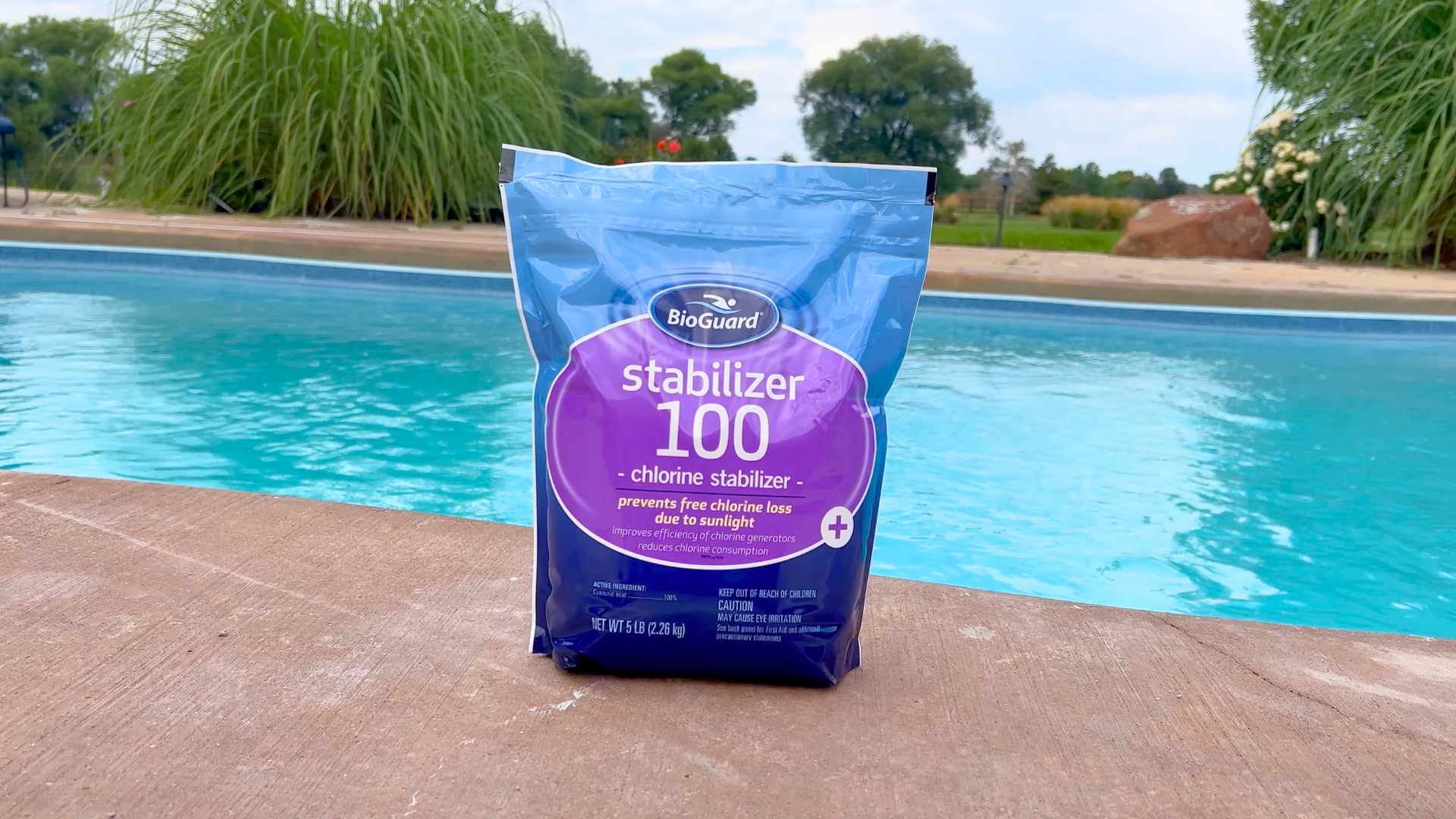
Pool conditioner, pool stabilizer, chlorine stabilizer, and cyanuric acid are all names for the same chemical.
Pool conditioner helps stabilize chlorine levels against ultraviolet rays from the sun. Without protection, sunlight can destroy up to 90% of pool chlorine within two hours on a bright summer day – especially in outdoor pools across Arizona, Texas, and Florida.
Indoor pools usually don’t need conditioner stabilizer because they are not exposed to direct sunlight. This guide focuses on residential backyard pools of all pool types – vinyl, fiberglass, plaster, above-ground, and inground – using chlorine as the primary sanitizer.
I’ll walk through why you need CYA, how to add it, how to manage the ideal level, and how to save money buying the right product.
Why So Many Names? Cyanuric Acid, Stabilizer, Conditioner, and Chlorine Stabilizer
The pool industry has used different names since the 1950s and 1960s, which is why labels at pool stores look confusing. Here is what each name actually means:
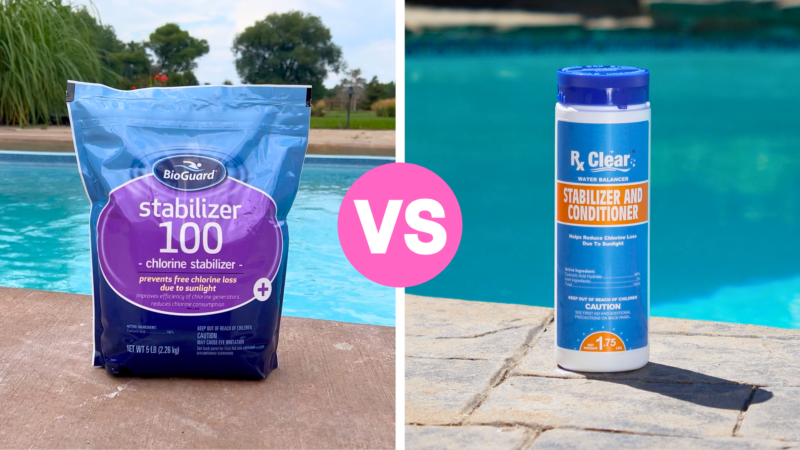
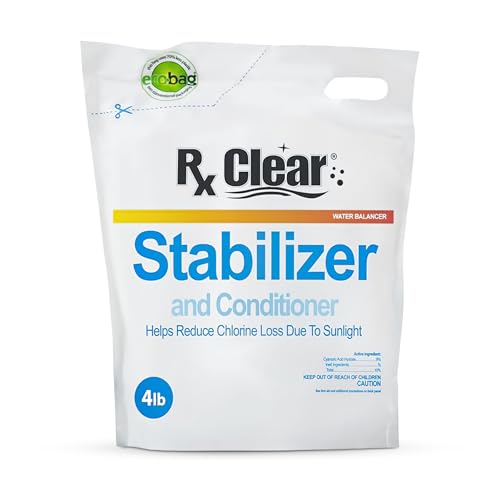
- Cyanuric acid – the chemistry term printed on Safety Data Sheets, ingredient panels, and lab tests. You will see “100% cyanuric acid” or “98% cyanuric acid hydrate” on 1.75 lbs and 4 lbs stabilizer containers. Regular cyanuric acid is what test kits measure.
- Pool stabilizer – the practical, modern label wording most stores use when selling dry granules or powder.
- Chlorine stabilizer – a marketing phrase on brands like HTH and Clorox Pool&Spa to make the purpose obvious: stabilizing chlorine against sunlight.
- Pool conditioner – older industry slang that still appears on jugs labeled “Stabilizer & Conditioner” or “Instant Pool Water Conditioner,” especially liquid 1-gallon bottles.
Treat these as synonyms unless the label clearly says it is something else (like calcium increaser or salt). A product labeled stabilizer and conditioner on the same bottle is not two different chemicals.
Keep your chlorine from being burned off too quickly by the sun's UV rays. CYA will help you keep a better chlorine reading in your pool.
How Cyanuric Acid Works and The Ideal Levels
“CYA” is shorthand for cyanuric acid. Most test kits and digital readers show it as “CYA” or “stabilizer,” measured in parts per million (ppm).
Pool Nerd Alert: CYA molecules bind loosely with free chlorine (hypochlorous acid), forming a reversible shield that slows how quickly sunlight breaks chlorine down.
Cyanuric acid stabilizes chlorine from UV degradation without permanently locking it up. Research from NSW Health shows that at around 40 ppm CYA, hourly chlorine loss drops from roughly 35% to just 2–3%.
Ideal CYA Levels By Swimming Pool Type
| Pool Type | Ideal CYA Range | Why |
|---|---|---|
| Outdoor chlorine pool | 30 – 50 ppm | Enough UV protection without weakening chlorine. |
| Outdoor saltwater pool | 60 – 80 ppm | Reduces stress on the salt cell and lowers operating costs. |
| Indoor or covered pool (no sun exposure) | 0 ppm | No UV exposure, so stabilizer is unnecessary. |
| Indoor or covered pool (some sun exposure) | 0–20 ppm | Some light UV exposure, so stabilizer can be kept at a low level. |
Too little CYA (under 20 ppm) means you’ll burn through more chlorine weekly. Too much (over 80–100 ppm) weakens chlorine’s killing power and can lead to persistent algae, sometimes called chlorine lock.
Testing is essential to ensure cyanuric acid levels are maintained properly because cyanuric acid does not evaporate like chlorine. Instead, it remains in the pool until it’s diluted with fresh water or rainwater. This is why it accumulates over time, leading to what I call “CYA Creep.”
Chlorine Stabilizer Calculator
Pick the stabilizer you’re using and enter your numbers. The dose updates as you type.
 Get exact doses in The Pool Care App
→
Get exact doses in The Pool Care App
→
Stabilizer (Cyanuric Acid/CYA) protects your chlorine from the sun. Most pools run best at 30–50 ppm CYA (60–80 ppm if you have a salt system).
Pool Conditioner Products and How They’re Different
Here is what you are actually looking at on the shelf or online:
- Dry cyanuric acid (granules or powder) – sold as 100% CYA in 4 lb to 50 lb sizes. Granules dissolve slowly, so I recommend pre-dissolving it in a bucket of pool water before adding. Shake the container before scooping to break up any clumps.
- Liquid instant pool water conditioner – typically sold in a 1-gallon (128 fl oz) bottle. Adding 1 gallon raises the stabilizer level by 32 ppm per 10,000 gallons. Liquid conditioners can be added directly to the pool, and the product begins working almost immediately. Instant conditioners protect chlorine from UV sunlight loss right away, making them ideal after a fresh fill.
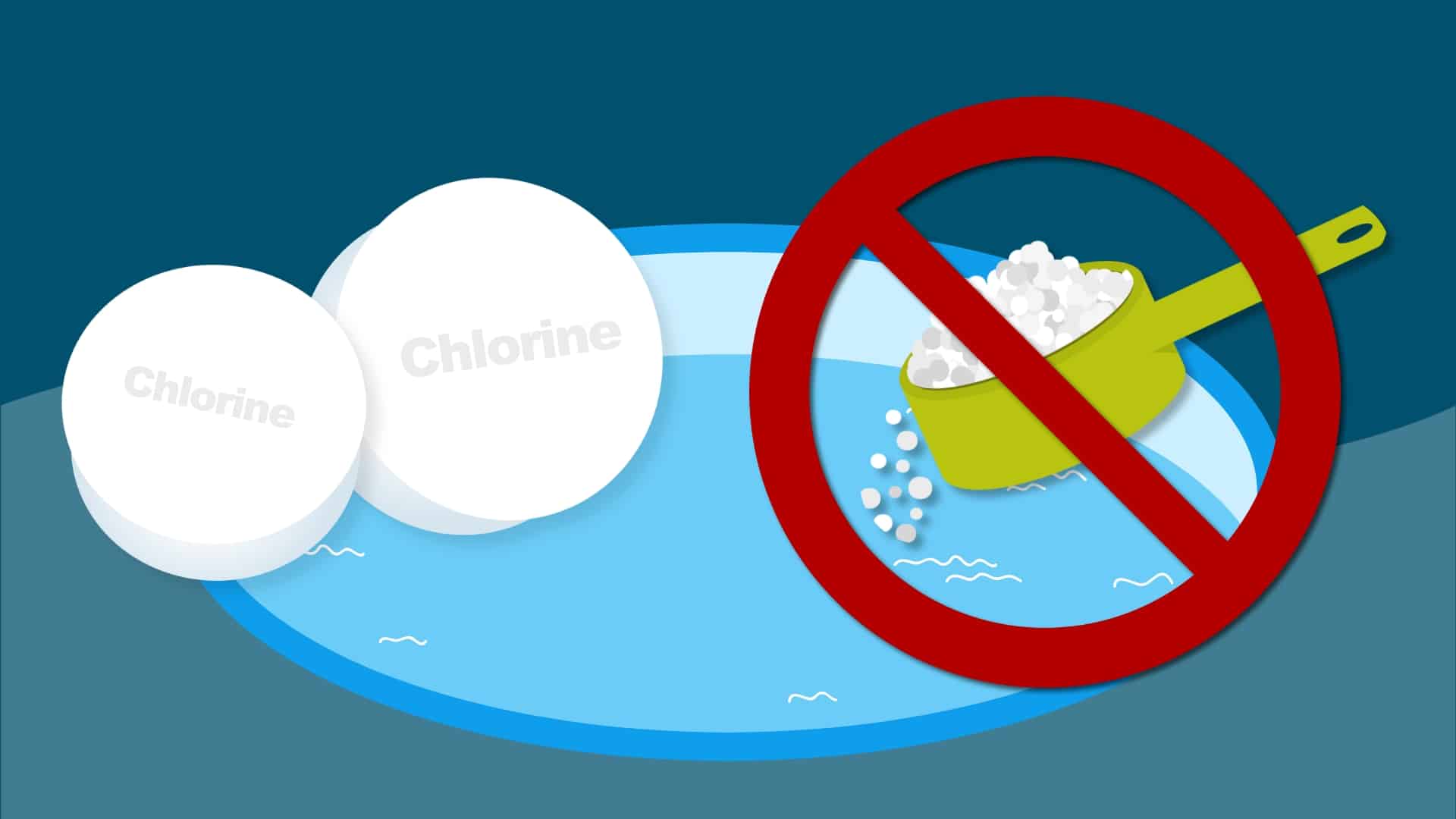
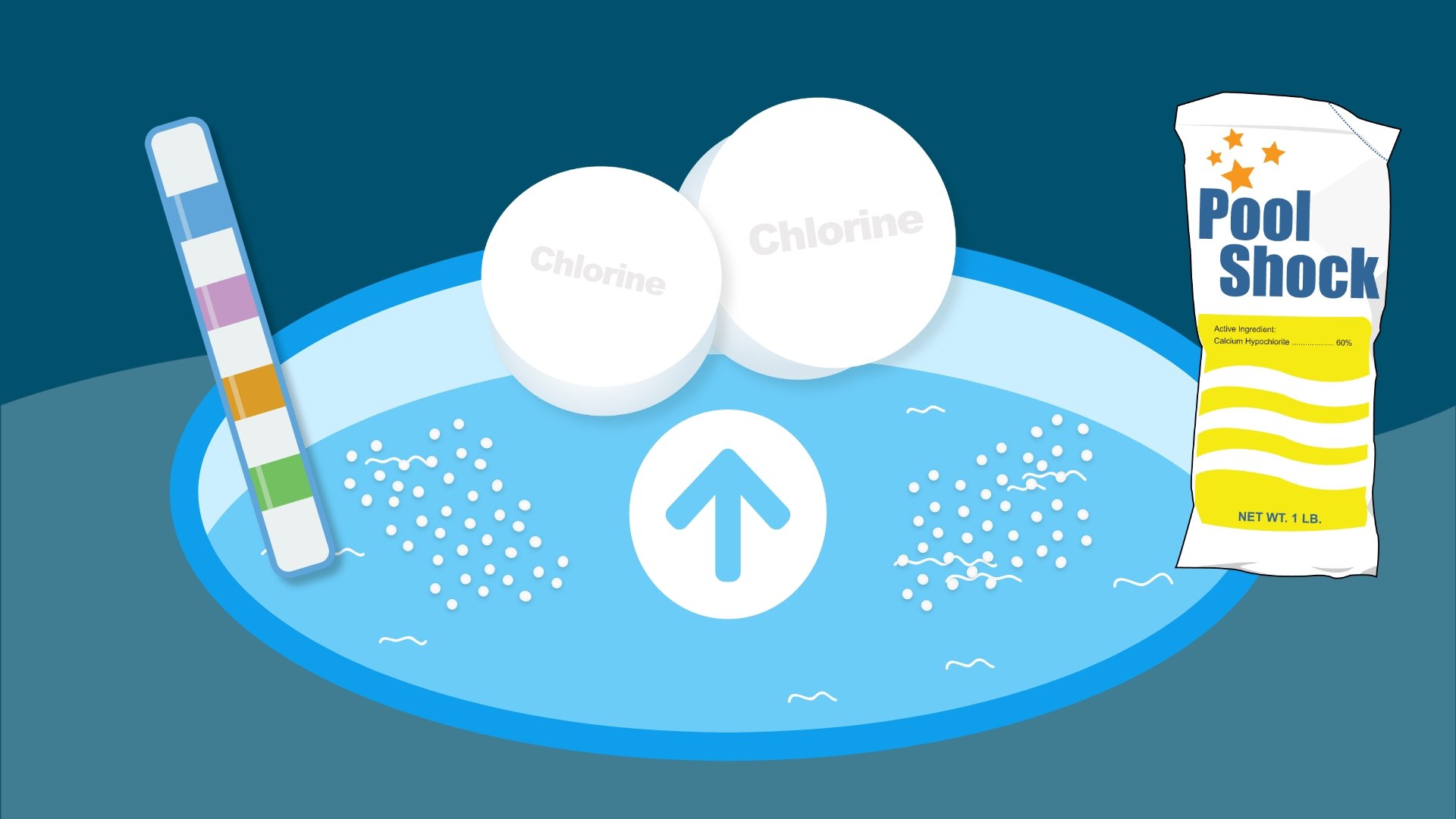
- Stabilized chlorine tablets and dichlor shock – these contain cyanuric acid built into the chlorine. Using trichlor tablets exclusively all summer will slowly raise CYA levels even if you never pour in a separate stabilizer. This is the hidden source of CYA Creep.
Choose a dry stabilizer for slow, planned increases at pool opening. Choose instant liquid conditioner if you need a fast CYA boost after draining and refilling. Always check the product label for dosing directions specific to your pool volume.
How to Use Pool Conditioner Safely (and Avoid Double-Dosing)
You only need to add stabilizer once or twice per season if you track CYA levels correctly. Dumping in extra “just in case” is a costly mistake.
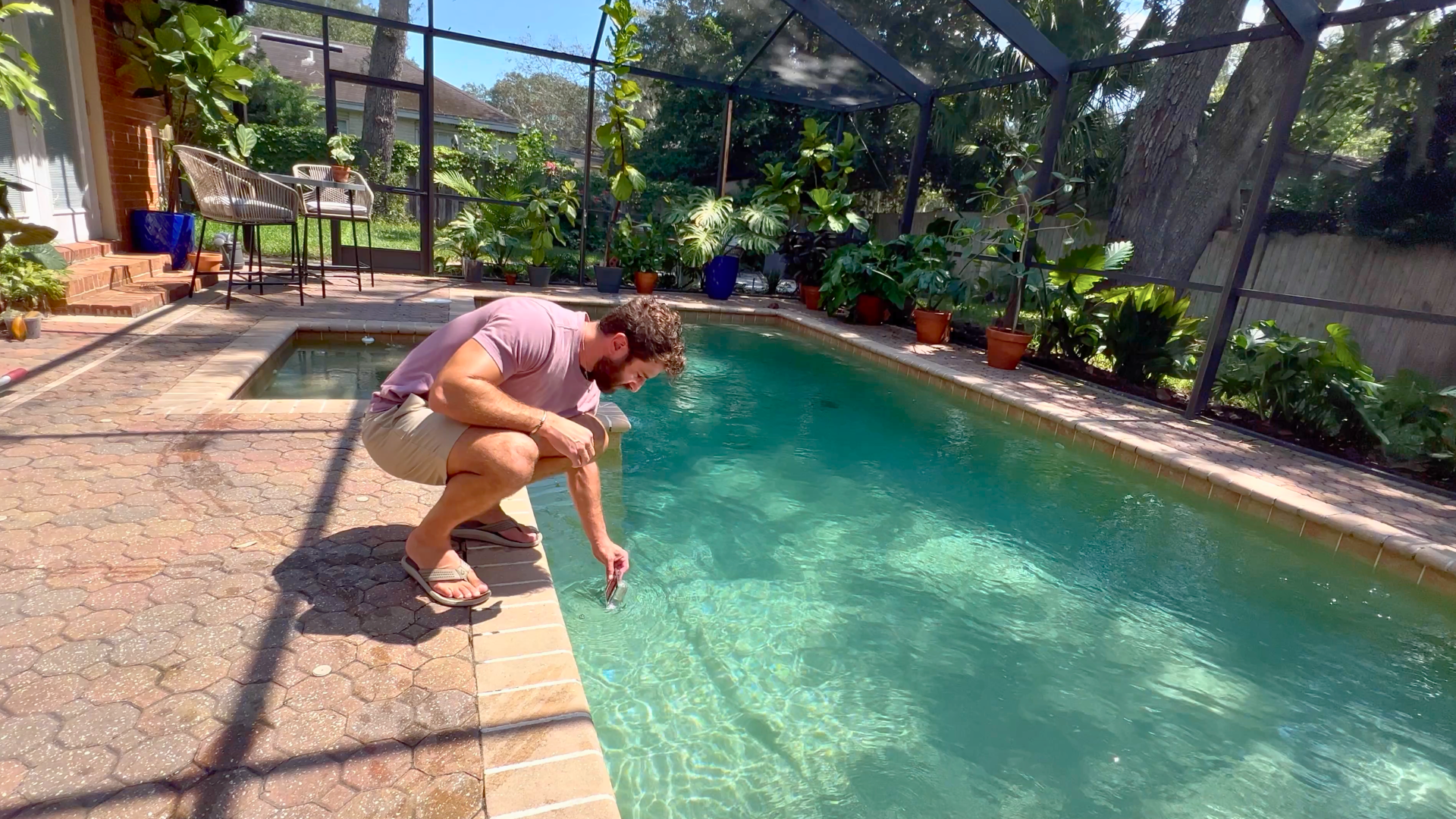
- Test first. Always test your current CYA level with a liquid test kit or test strips before adding any conditioner or stabilizer product.
- Account for all CYA sources. Consider dry stabilizer, liquid instant conditioner, and any stabilized chlorine tablets or dichlor shock you have already used. Other chemicals like trichlor and dichlor contribute CYA with every dose.
- Dose in stages. To raise CYA from 0 to about 30 ppm in a 10,000-gallon pool, you need roughly 2.5 lbs of dry stabilizer or about 1 gallon of liquid conditioner (as directed on the package). Increase gradually, retest after a full circulation cycle (8-10 hours), then add more only if needed.
- Watch for an overdose. Overusing conditioner stabilizer can push CYA over 100 ppm, where the only practical fix is draining and refilling part of the pool. There’s a chemical CYA reducer you can try, but from my experience, they don’t always work effectively. And it’s expensive as hell!
- Protect pool surfaces. Do not let undissolved granules sit on vinyl liners or fiberglass surfaces because it’s a dry acid that can damage them. Follow both the product label and your pool manufacturer’s directions.
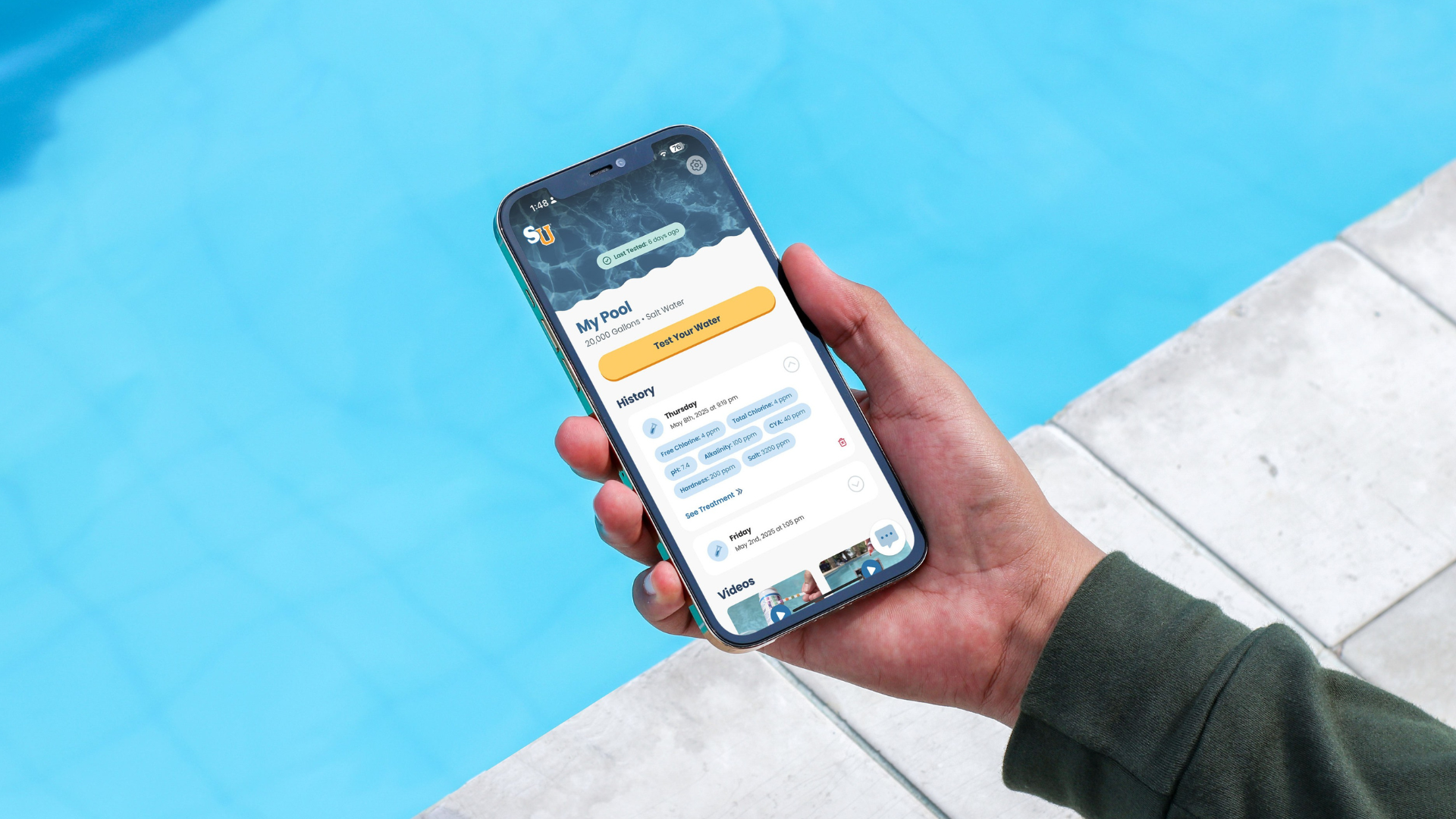
Note: Adding cyanuric acid can temporarily affect pH, so retest your pool after dosing and adjust with other chemicals if needed. The Pool Care App can log CYA readings and automatically calculate future stabilizer doses based on your pool volume, equipment, and sanitizer type.
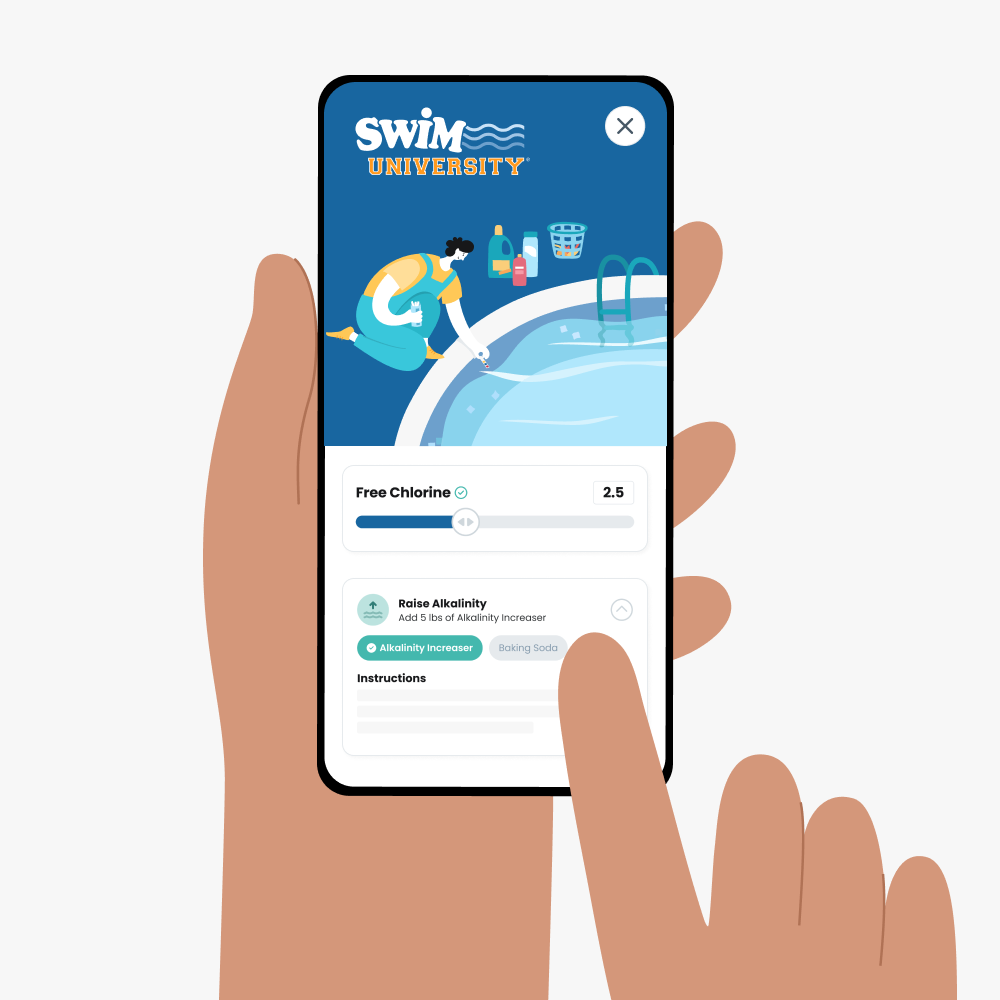
Enter your water test results. Get a custom treatment plan. Know exactly what chemicals to add to keep your pool clear. Saltwater and hot tub compatible.
Which Name Should You Use, and How Should You Shop for It?
Most pool owners say “stabilizer” or “conditioner,” while test kits and online advice say “cyanuric acid.” All are correct.
- When searching online or talking to a pool store, use “pool stabilizer” or “chlorine stabilizer” to match product names. Use “cyanuric acid” when you want 100% pure CYA with no extra additives.
- Avoid impulse buys of any product promising to “fix chlorine lock” or “super condition water” unless the ingredients list includes cyanuric acid and states how many parts per million it will add. Read reviews from other customers before you click order and stock up on anything unfamiliar.
- Compare price per pound (dry) or per fluid ounce (liquid) of actual CYA. A 4 lb granule pouch and a 1 gallon liquid conditioner may raise CYA by different amounts. Always check the label rather than submitting to front-label marketing claims or social media.
Use “CYA” when thinking about test results and target levels. Use “stabilizer” or “conditioner” as your shopping word. For deeper guidance, Swim University has a complete guide to cyanuric acid for your pool, plus focused articles on how to raise stabilizer, how to lower stabilizer, and how to protect chlorine with pool stabilizer.
FAQs About Pool Conditioner and Chlorine Stabilizer (Cyanuric Acid/CYA)
Is pool conditioner the same as chlorine stabilizer?
Yes. Pool conditioner, pool stabilizer, chlorine stabilizer, and cyanuric acid all refer to the same chemical used to protect chlorine from sunlight. Some packages say “stabilizer & conditioner” to cover both common names, but they raise the same CYA level in your pool.
Do I need pool conditioner in a saltwater pool?
Absolutely. Saltwater pools generate chlorine from salt, and that chlorine needs the same protection from UV rays. For saltwater pools, the typical cyanuric acid range is 60 to 80 ppm – slightly higher than standard chlorine pools. Most saltwater system manuals specify this range.
How often should I add pool stabilizer?
CYA does not evaporate, so you typically only add it at pool opening, after large backwashes, or after draining and refilling. Test CYA monthly during peak swim season (May through September) and only dose when levels drop below your target.
Can high cyanuric acid cause cloudy water or algae?
High CYA does not directly cloud water, but it weakens chlorine’s killing power. If chlorine and pH look correct but algae keeps returning, CYA over 80–100 ppm is a common culprit. Lowering it usually requires a partial drain and refill.
Key Takeaways
- Pool conditioner is also known as cyanuric acid, pool stabilizer, and chlorine stabilizer – they are all the same chemical that shields chlorine from sunlight so you do not burn through it in a single afternoon.
- The ideal cyanuric acid level for outdoor chlorine pools is between 30 and 50 ppm. For saltwater pools, the typical cyanuric acid range is 60 to 80 ppm. Too much cyanuric acid can cause chlorine to become less effective.
- The main product forms you will find are dry cyanuric acid granules, liquid instant pool water conditioner (often a 1-gallon bottle), and stabilized chlorine tablets – do not double-dose by using several forms at once without testing first.
- Cyanuric acid stabilizers save money on chlorine costs by dramatically reducing how fast sunlight destroys free chlorine.
- Swim University teaches how to test, raise, and lower CYA in detail, and The Pool Care App can track your stabilizer level for you.