


How Long After Shocking a Pool Can You Swim?

How long to wait before swimming after shocking your pool depends on the type of shock you use: chlorine or non-chlorine. You can swim in 15 minutes after using non-chlorine shock in your water.
As a rule of thumb, you should wait at least 8 hours before swimming after adding chlorine shock to your pool water. You’ll know it’s safe to swim if your free chlorine levels have dropped down to the normal range of 5 ppm (parts per million) or less.
So be sure to test your water before and after shocking your pool, and make sure your filter is running to circulate the water after you’ve added shock.
Enter your water test results. Get a custom treatment plan. Know exactly what chemicals to add to keep your pool clear. Saltwater and hot tub compatible.
How Long Does Pool Shock Take to Dissolve?
Non-chlorine shock dissolves almost instantly when you add it to the water. And you can swim 15 minutes after adding it.
Most other pool chemicals that adjust levels, like alkalinity, pH, and calcium hardness, dissolve in your pool water in under an hour. But because chlorine pool shock is a powerful, highly concentrated dose of chlorine, it takes longer to work in the water.
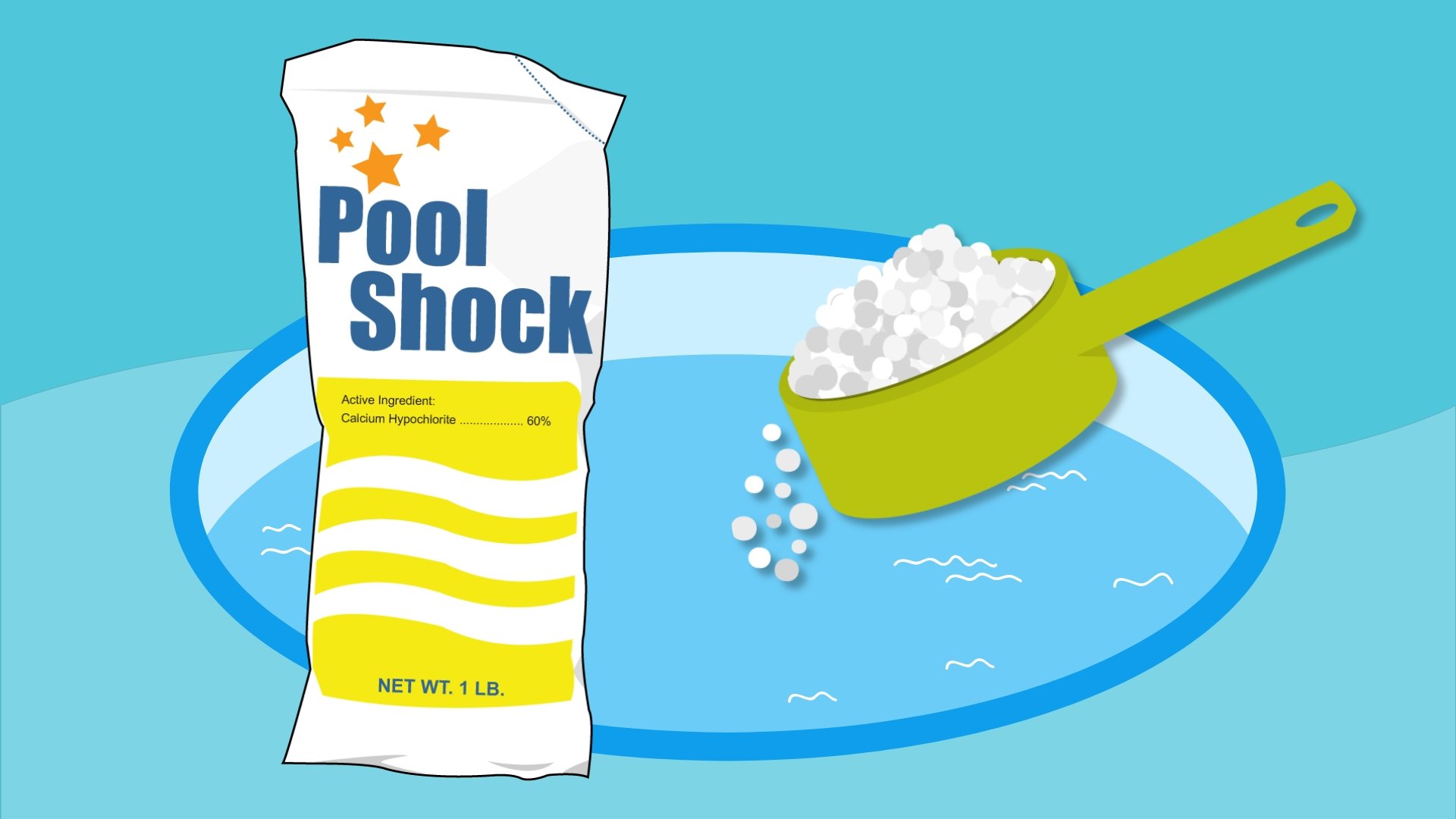
The goal of adding chlorine shock, such as cal-hypo shock or dichlor, is to quickly raise your chlorine levels. This removes algae, chloramines, and other contaminants by raising your chlorine levels above 10 ppm in a short period. And while that high chlorine concentration is great for killing algae and eliminating chloramines, it’s not safe to swim in.
That’s why you need to wait at least 8 hours after adding shock to your water or whenever your chlorine levels drop back to a safe range (ideally 3 ppm, or under 5 ppm). After shocking your pool, always retest your water chemistry by using either a test kit or test strips.

This test kit lets you check all your pool's important chemical levels at home in minutes, so you always know exactly what to add and never waste money overtreating your water.
When Should You Shock Your Pool?
Shocking your pool with either chlorine or non-chlorine shock removes chloramines (combined chlorine) and revitalizes your existing chlorine. Chloramines are what make your pool smell like chlorine. So when you smell that, it usually means the chlorine has killed contaminants and needs to be oxidized with a shock product.
Chlorine shock prevents and kills algae growth if you already have a significant algae bloom.
Technically, you only need to shock your pool when your combined chlorine is above 0.5 ppm. You can figure out this number by testing your pool with a test kit or taking a sample to a trustworthy pool store.
You can test for Free Chlorine and Total Chlorine. FREE Chlorine (FC) is the active chlorine (the good stuff), and TOTAL chlorine (TC) is the sum of FREE and COMBINED chlorine (CC).
FC – TC = CC
I know it can be confusing, so here’s the best way to think about it. If your total chlorine is 0.5 ppm higher than your free chlorine, you need to shock your pool. Otherwise, you don’t have to.
You can enter your test results into our app, and it will automatically tell you when it’s time to shock.
Should You Shock Your Pool Every Week?
I only recommend doing this because it’s easy to remember. And it’s a good insurance policy against algae and cloudy water. But it can get expensive.
You only need to use non-chlorine shock if your total chlorine is 0.5 ppm higher than your free chlorine. And you only need to use chlorine shock when you have low chlorine or fighting an algae issue.
What Type of Shock Should You Use In Your Pool?
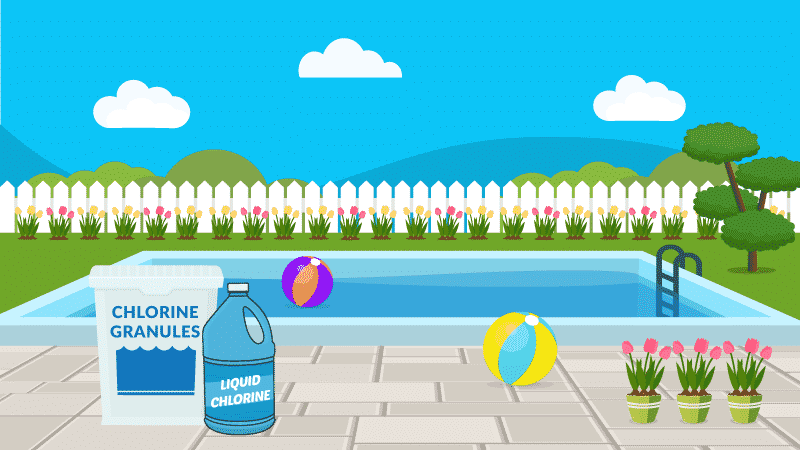
If you’re dealing with a significant water problem, we recommend using an unstabilized chlorine-based shock, like calcium hypochlorite (cal-hypo) or liquid chlorine. The powerful concentration of chlorine will help kill contaminants and algae. But because they will significantly increase the amount of chlorine in your water, your pool won’t be safe to swim in until your chlorine levels drop back down.
You can also use a dichlor shock. But I would use this sparingly because it contains cyanuric acid (CYA). If you add too much of this over time, it could lead to “CYA creep,” which will make your chlorine less effective. We have a whole article on lowering CYA in your pool if this happens.
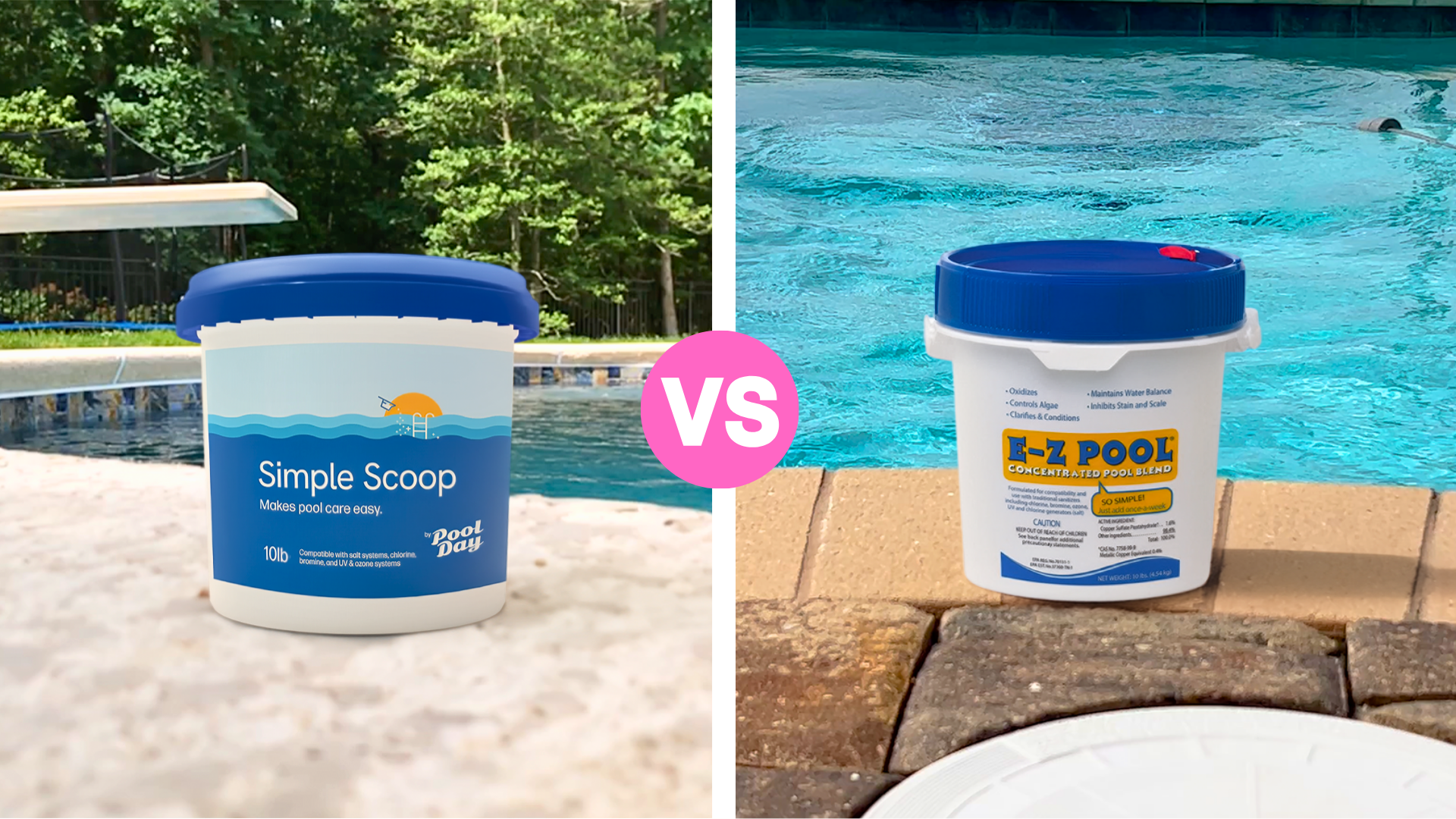
If you’re looking for a shock for regular maintenance or to refresh your sanitizer, use a non-chlorine shock. Also known as oxidizers, non-chlorine shocks allow you to resume swimming 15 minutes after they’re added to the water. That’s because it won’t affect your chlorine levels.
But while this type of shock will help bring balance back to your water, it’s usually not powerful enough for pool owners dealing with major issues like algae. For that, we’ve built this handy calculator to help you determine how much chlorine shock you’ll need to kill the algae in your pool. Also, check out our full guide on getting rid of pool algae.
Algae Removal Calculator
Pick the color of your water and enter your pool volume. You’ll get the exact shock dose to kill the algae, plus a step-by-step plan to get back to clear.
 Track this treatment in The Pool Care App
→
Track this treatment in The Pool Care App
→

 Wait 30 minutes
Run the pump 8+ hours
Wait 24 hours
Wait 30 minutes
Run the pump 8+ hours
Wait 24 hours
Never mix shock products together, and always add shock to water, never water to shock. Keep everyone out of the pool until free chlorine falls back under 5 ppm.
What Should You Do After Shocking Your Pool?
Once you’ve shocked your pool, allow your filter to circulate the water. Keep the pump running for at least 8 hours (ideally overnight) after shocking with chlorine. And remember, always add shock at night if you’re using an unstabilized shock, like calcium hypochlorite (cal-hypo) or liquid chlorine. Otherwise, the shock will burn off in the sun before it has a real good chance of working.
And if you need a step-by-step walkthrough on how to add shock to your pool water, check out our guide on How to Shock a Pool the Right Way.
Frequently Asked Questions About Shocking a Pool
Need more help understanding pool shock? Here are some frequently asked questions and answers.
Can you swim in the pool after you shock a pool?
You need to wait at least 8 hours after using a chlorine-based shock before you can swim. Retest your water to make sure your free chlorine is at or below 5 ppm and your pH levels are between 7.2 and 7.6 before allowing swimmers.
What happens if you go in a pool that was just shocked?
Avoid this! If you use a pool after adding high concentrations of bleach, liquid chlorine, or another type of chlorine-based shock, you may experience skin and eye damage. Chlorine shock and large concentrations of chlorine are highly corrosive. Do not swallow the water. If accidentally swallowed, seek immediate medical attention.
How long should you run a filter after shocking a pool?
Run your pool pump and filter for at least 8 hours after you shock your swimming pool. This provides enough time for the filter to clean the water and for the pump to circulate the chemicals. If you’re treating algae, plan to run the filter for ideally 24 to 72 hours.
Is it okay to shock a pool during the day?
You can shock your pool during the day if you’re using non-chlorine shock or dichlor shock (which contains cyanuric acid). Cyanuric acid (CYA) protects chlorine from being destroyed by the sun’s UV rays. However, if you’re using unstabilized chlorine, like calcium hypochlorite (cal-hypo) shock or liquid chlorine, it will be destroyed by the sun too quickly. Check out our guide on the best pool shock.
Why does the pool water turn cloudy after shocking?
It’s normal to experience cloudy water after shocking your pool. This means that the algae and contaminants are dead and suspended in the water. You can use a clarifier or flocculant to clear up your water.